The Hidden Stress of Owning a Rooftop Power Plant
I still remember standing in my driveway, staring up at my roof with a sinking feeling in my stomach. A thick, ugly layer of brown dust and bird droppings had completely covered my expensive solar panels. My energy bill had slowly been creeping up over the past few months, and I knew exactly why my system was underperforming.
But the thought of climbing up there and accidentally scratching the glass terrified me. I was so worried about making a costly mistake that would completely ruin my heavy investment. The last thing I wanted was to void my manufacturer warranty just because I used the wrong type of soap or equipment.
If you own a solar system, you probably understand this exact feeling of helplessness. We invest thousands of dollars to gain energy independence and reduce our monthly bills. We expect these shiny panels to sit on our roofs and quietly generate free electricity for decades.
But nobody warns you about the intense anxiety that comes when the dirt starts piling up. You watch your daily energy production drop on your mobile app, and you feel like you are losing money every single day.
You go online to find a quick solution, and you are immediately bombarded with conflicting advice. One person tells you to use a pressure washer, while another warns that high pressure will shatter the glass instantly. Some neighbors swear by heavy-duty detergents, while experts claim chemicals will strip the protective coating right off.
This massive overload of information leaves homeowners completely paralyzed. You just want to keep your panels working at maximum capacity without doing permanent damage. The fear of breaking a panel or voiding a twenty-year warranty is enough to make anyone avoid the chore altogether.
Decoding the Fine Print of Your Solar Agreement
Before you even think about grabbing a hose, we need to talk about the rules set by the people who built your system. Solar companies want your system to last, but they will not pay for damages caused by poor maintenance.
Most major manufacturers include very specific clauses in their warranty agreements regarding physical maintenance. If you use abrasive sponges, harsh chemical cleaners, or high-pressure water, you are instantly breaking their rules.
They use special anti-reflective coatings on the glass to help absorb as much sunlight as possible. If you scrub that coating away with a harsh brush, the panel will permanently lose its ability to generate maximum power. Once that coating is scratched or stripped, the manufacturer will simply cancel your coverage and leave you with a massive replacement bill.
Common Cleaning Myths vs Reality
To clear up the confusion, let us look at some of the most common misunderstandings homeowners have about washing their systems. I created a quick breakdown to show you what people think works versus what is actually safe.
Seeing these facts laid out really highlights how easy it is to make an accidental mistake. This is why following a safe, scientifically backed routine is your best defense against energy loss and broken equipment.
Planning Your Wash: Safety and Timing
You cannot simply wake up on a Saturday afternoon and decide to spray down your roof. The time of day you choose to wash your system is one of the most important factors for safety and success.
Glass expands when it gets hot and shrinks when it cools down. If your panels have been baking under the midday sun, they are incredibly hot to the touch. Spraying cold water from your garden hose onto hot glass causes a rapid temperature change known as thermal shock.
This thermal shock can cause the glass to crack, shatter, or completely spider-web across the entire surface. To prevent this disaster, you must only wash your system early in the morning or late in the evening. Morning is usually the best time because the overnight dew has already started to loosen the stubborn dirt.
Prioritizing Your Personal Safety
No amount of saved electricity is worth risking a terrible fall from your roof. If you have a steep roof or a two-story home, you must prioritize your physical safety above everything else.
Whenever possible, try to manage the job from the ground using tools with long extension poles. If you absolutely must use a ladder, ensure it is properly secured on flat, solid ground.
Wear shoes with excellent grip, and never step directly onto the solar glass under any circumstances. The surface becomes incredibly slippery the moment water and soap are applied. If you feel dizzy, unsteady, or uncomfortable at any point, climb down immediately and consider hiring a certified professional.
Building Your Damage-Free Cleaning Kit
The secret to a perfect, warranty-safe wash lies entirely in the tools you choose to use. You do not need expensive commercial machines, but you do need items designed specifically for delicate surfaces.
First, you need a high-quality water source, ideally something that will not leave hard mineral deposits behind. Second, you need a highly soft, non-abrasive brush attached to a long, sturdy telescoping pole.
Avoid anything that feels rough to the touch, like kitchen scrubbers, steel wool, or hard plastic bristles. Think of your solar panel glass like the paint on a luxury sports car; you would never scrub a sports car with a hard broom.
I once made the terrible mistake of using hard tap water from my garden hose to rinse my panels on a sunny afternoon. The water dried quickly, leaving behind stubborn mineral spots that actually blocked more sunlight than the original dust. Now, I always attach an inline water filter to my hose, and it makes an unbelievable difference.
The Magic of Deionized Water
If you want to achieve professional results at home, deionized water is your greatest weapon. Tap water is naturally filled with microscopic minerals like calcium and magnesium.
When tap water evaporates on your solar panels, those minerals are left behind as ugly white streaks. These hard water spots create tiny shadows over the solar cells, blocking the sun and reducing your energy output.
Deionized water goes through a special filtration process that removes all of these heavy minerals completely. Because it contains no minerals, it acts like a magnet, pulling dirt off the glass and drying completely spot-free. You can buy portable water deionizer tanks online and easily attach them directly to your standard garden hose.
The Gentle Soft Brush Technique
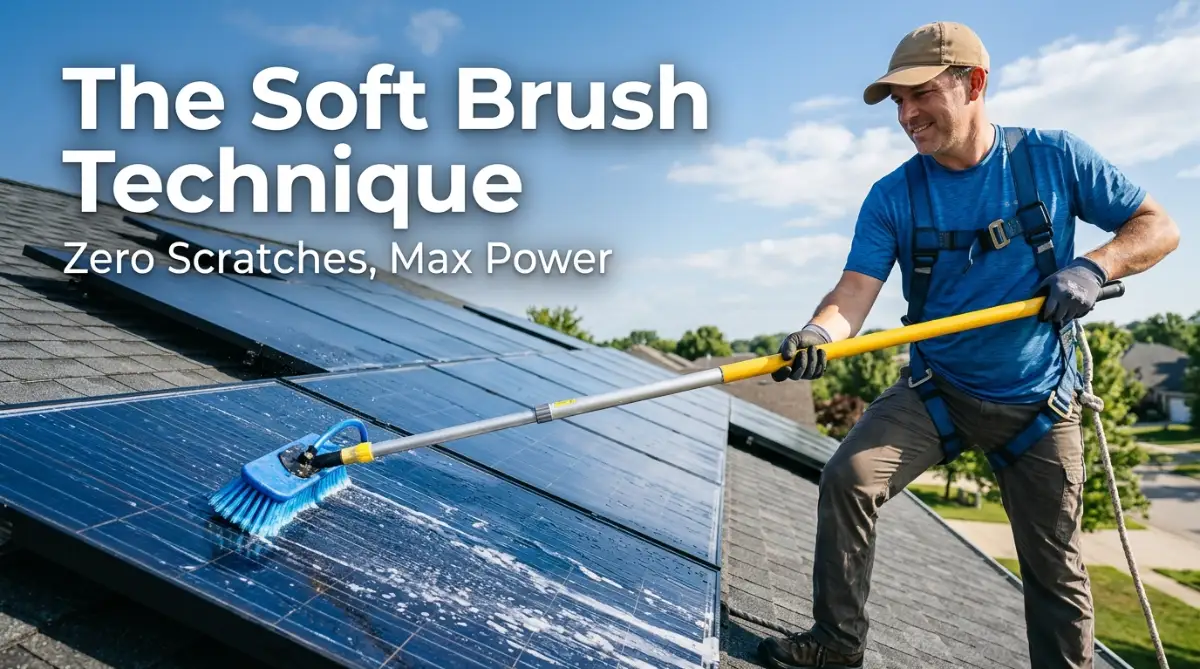
Now that you have the right tools and the perfect time of day, it is time to start the actual physical work. The goal here is to use gentle agitation rather than aggressive scrubbing to loosen the grime.
Start by lightly spraying the entire solar array with plain water to rinse away the loose surface dust. Let this water sit for about five minutes to soften up tough spots like dried bird droppings or sticky tree sap.
Once the dirt is softened, dip your soft-bristle brush into your bucket of pure water or specialized solar cleaning fluid. Gently glide the brush over the glass in smooth, overlapping side-to-side motions.
Let the weight of the brush do the heavy lifting; you should never press down hard on the glass. If you encounter a stubborn spot, just hold the wet brush over it for a few extra seconds to loosen it up naturally.
See The Gentle Brushing Technique In Action:
Watch this quick demonstration to see exactly how much pressure you should apply when brushing your delicate solar panels.
Rinsing and Drying for Maximum Shine
After you have gently brushed away the stubborn grime, you need to rinse the panels before the water has a chance to dry. Use a gentle fan spray setting on your hose nozzle to wash away the dirty water.
Start from the very top row of your system and slowly work your way down to the bottom. This ensures that the dirty water flows harmlessly into your gutters instead of re-soiling the lower panels.
If you used high-quality deionized water, you can simply let the panels air dry in the morning breeze. However, if you are forced to use regular tap water, you must remove the excess moisture to prevent mineral spotting. Use a high-quality rubber squeegee attached to your extension pole to gently pull the water off the glass, just like cleaning a massive window.
Managing Stubborn Stains and Debris
Sometimes, regular dust is the least of your worries when it comes to maintaining your system. Trees near your house can drop sticky sap, thick pollen, and heavy leaves directly onto your expensive equipment.
Bird droppings are especially dangerous because they contain high levels of acid that can actually eat into the glass over time. These stubborn stains require a bit more patience and a slightly different approach to remove safely.
Never use a sharp scraper, razor blade, or metal tool to chip away at dried bird droppings. Instead, soak a soft microfiber cloth in warm water and let it sit directly on top of the stain for ten minutes. The warm moisture will slowly dissolve the hardened mess, allowing you to easily wipe it away with zero scraping required.
Dealing with Snow and Winter Conditions
For homeowners living in colder climates, winter brings a completely different set of challenges for energy production. A heavy layer of snow will completely block the sun, bringing your daily power generation down to zero.
Many people panic and try to shovel the snow off their roofs, which often results in badly scratched panels. Most solar systems are installed at an angle, meaning the snow will naturally slide off once the sun warms the surface slightly.
If you absolutely must remove the snow to get the power flowing, invest in a specially designed solar snow rake. These rakes feature soft foam edges that gently pull the snow down without ever letting hard plastic touch the delicate glass surface.
Setting Up a Smart Maintenance Schedule
Cleaning your system is not a task you need to do every single weekend, but ignoring it entirely is a massive mistake. Establishing a smart, predictable maintenance schedule ensures your system always operates at peak performance.
The frequency of your washes will depend heavily on exactly where your house is located and your local environment. If you live in a dry, dusty desert or near a busy highway, you will gather grime much faster than someone in a rainy green suburb.
As a general rule, inspecting and washing your system twice a year is a highly effective strategy for most average homeowners. Spring is the perfect time for the first wash to clear away winter debris and prepare for the long, sunny days of summer.
Your second wash should happen in late autumn to clear off fallen leaves and sticky pollen from the changing seasons. By sticking to this simple twice-a-year habit, you protect your warranty while keeping your daily energy production incredibly high.
Monitoring Your Power Output for Clues
You do not always have to climb a ladder to know exactly when your panels need a good scrub. Your system's monitoring software is constantly giving you hidden clues about the physical condition of your roof.
Check your mobile solar app at least once a week to monitor your daily kilowatt-hour production. Look for sudden drops in power generation that cannot be explained by cloudy weather or changing seasons.
If you notice that your system is producing ten or fifteen percent less power than it did the previous month, dirt is usually the culprit. Using your app as an early warning system saves you from unnecessary climbing and helps you pinpoint exactly when maintenance is needed. This proactive habit keeps your investment safe, your energy bills low, and your mind completely at ease.
Next-Level Tactics for Crystal Clear Energy Production
Once you master the basic washing techniques, you can start looking at more advanced ways to keep your system running perfectly. You do not need a degree in engineering to apply these next-level strategies. You just need a little bit of patience and a willingness to understand how your glass behaves outdoors.
Many homeowners completely ignore the quality of the water they use for their regular maintenance routines. They assume that if water is safe enough to drink, it is perfectly fine for washing delicate outdoor equipment.
However, local tap water is often filled with invisible minerals that turn into a thick, crusty layer when baked under the sun. You can actually buy a cheap total dissolved solids (TDS) meter online to test your outdoor spigot right now. If your meter shows a reading higher than fifty parts per million, that water will definitely leave heavy white spots on your glass.
Treat your solar setup with the same care you would use to stop ruining your laptop battery and maximize its life. Both rely on smart, consistent daily habits to preserve their long-term power capacity and save you money.
The Truth About Automated Roof Sprinklers
I often hear people asking about installing automated sprinkler systems directly on their roofs to wash the panels every morning. On paper, this sounds like a brilliant way to save time and completely avoid climbing a tall ladder.
In reality, these systems often cause much more harm than good over a long period. Roof sprinklers usually rely on regular hard city water, which slowly sprays tiny layers of calcium across the entire array.
Over time, this creates a thick white haze over the anti-reflective coating that is nearly impossible to scrub off safely. According to recent studies on solar soiling losses conducted by national research laboratories, calcification from hard water can block up safety sensors and reduce power output faster than regular dry dust. You are much better off doing a proper manual wash twice a year with purified water.
Safe Solutions for Stubborn Biological Stains
Nature is rarely kind to expensive outdoor equipment, and bird droppings are the ultimate enemy of maximum power generation. Bird droppings are highly acidic and can literally etch into the glass if you leave them sitting there for too long.
When you spot a heavy stain, resist the sudden urge to grab a heavy-duty kitchen sponge. The green side of a standard dish sponge contains tiny abrasives that will immediately scratch the top layer of your system.
Instead, mix a tiny drop of specialized, pH-neutral solar cleaning fluid into a bucket of warm water. Dip a soft microfiber towel into the bucket and gently press it completely flat against the hardened stain. Leave the wet towel sitting there for ten minutes, and the acidic mess will wipe away like soft butter.
I used to spend hours aggressively scrubbing stubborn sap spots off my glass, totally terrified that I was causing permanent damage. One afternoon, a professional window cleaner saw my struggle and told me to just let a warm, wet towel do the heavy lifting for me. That one piece of advice completely changed my maintenance routine and saved my shoulders from incredible soreness.
Disastrous Moves That Will Wreck Your System
Making a mistake while washing your car might result in a temporary ugly streak on your paint job. Making a mistake while washing your rooftop power plant can instantly destroy a massive financial investment. It is incredibly easy to accidentally cross the line from helpful maintenance to permanent physical damage.
The biggest threat to your system is not the dirt itself, but the aggressive methods people use to remove it quickly. Homeowners often panic when they see their energy bills rise, leading them to make rash and dangerous decisions.
We need to openly discuss the worst possible habits you can develop so you can protect your wallet. Think of your manufacturer's warranty as a strict security shield for your investment. Just as understanding how a VPN protects your online privacy on public networks keeps your sensitive data safe, following the correct maintenance rules keeps your financial protection fully active.
The High-Pressure Washing Nightmare
The absolute worst thing you can ever point at your roof is a motorized pressure washer. These powerful machines blast water at thousands of pounds per square inch, which is strong enough to peel paint off a wall.
When you hit a solar panel with that much force, the water gets violently pushed underneath the waterproof weather seals. Once moisture breaches that rubber seal, it enters the sensitive electrical components and immediately shorts out the entire panel.
The pressure can also cause microscopic stress fractures in the tempered glass that you cannot even see with the naked eye. According to the federal guidelines for maintaining residential solar systems, using any form of high-pressure water is the fastest way to permanently void your coverage. Always stick to the gentle shower setting on a standard plastic garden hose nozzle.
Chemical Cleaners and Stripped Coatings
Walking down the cleaning aisle at your local grocery store can give you some terrible ideas for your roof. Heavy-duty degreasers, bleach, and ammonia-based window cleaners are amazing for your bathroom, but they are toxic to your solar array.
Your panels feature a highly specialized, microscopically thin anti-reflective coating baked directly into the top layer of the glass. This invisible layer traps sunlight and prevents it from bouncing off the surface, maximizing your daily energy capture.
Harsh chemical detergents will instantly burn through this delicate coating, leaving ugly, permanent cloudy patches on the glass. Once that coating is chemically burned, the panel will never produce its maximum rated power ever again. You should only use pure water or cleaners specifically marked and certified for photovoltaic glass.
Ignoring the Hidden Danger of Overheating
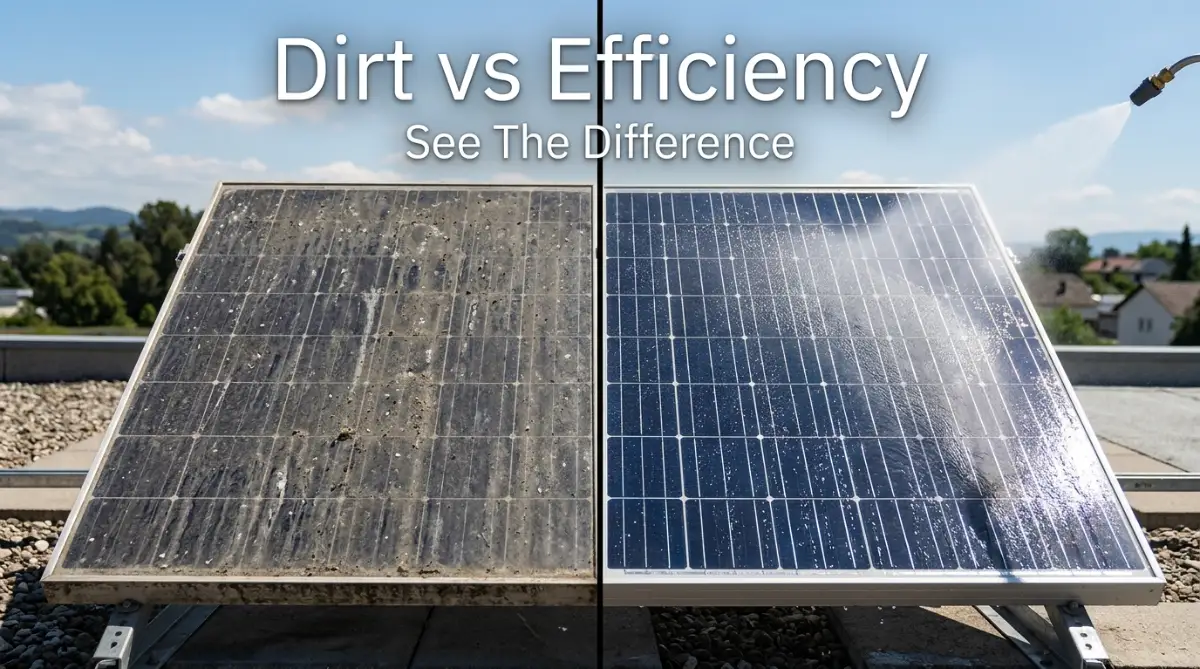
Many people assume that a thick layer of dust just blocks the light, but it actually causes severe temperature problems too. Heavy dirt buildup can actually cause localized hot spots on your solar cells.
This is surprisingly similar to diagnosing overheating issues in high-performance laptops, where blocked airflow causes permanent hardware damage inside the machine. When a specific spot on the panel is heavily shaded by thick bird droppings, that individual cell has to work much harder than the rest.
This creates intense, concentrated heat that can literally burn out the internal wiring of that specific cell over time. Keeping the surface completely clear of heavy debris ensures that the entire array absorbs sunlight and dissipates heat perfectly evenly.
Underestimating the Danger of the Roof
We naturally focus so much on protecting the expensive glass that we often forget to protect ourselves. Climbing a ladder with a heavy bucket of water is one of the most dangerous things an average homeowner can attempt.
Standing up high on a slanted roof staring down at dirty glass can easily make you feel dizzy or disoriented. If you already struggle to stop VR motion sickness and enjoy gaming longer, you should absolutely hire a professional instead of climbing a tall ladder yourself.
Water mixed with any type of soap turns your roof shingles and the panel glass into a deadly ice rink. Never step, lean, or put any of your body weight on the actual panels while trying to reach a tough spot. If you cannot reach the top rows safely with an extension pole from the ground, you need to call a certified maintenance crew immediately.
Your Master Plan for Maximum Solar Power
Taking care of your rooftop energy system does not have to be a stressful or overly complicated chore. You simply need to treat the equipment with the respect and gentle care it naturally requires. By understanding how the glass works and what voids your coverage, you are already ahead of most homeowners.
Let us look at a quick action plan you can start using tomorrow:
- Check Your App: Open your monitoring app in the morning and look at your historical power generation charts.
- Visual Inspection: Safely look at your roof from the ground using binoculars to check for heavy debris or bird droppings.
- Gather Tools: Order a soft-bristle brush, a long extension pole, and an inline water filter if you do not have them yet.
- Pick a Date: Schedule an early morning wash for the upcoming weekend before the sun has a chance to heat the glass.
Following national solar industry warranty standards guarantees that your investment remains fully protected for decades to come. Consistency is your best friend when it comes to free electricity, so set a reminder on your phone for a spring and autumn cleaning session.
A clean system captures more morning light, absorbs more afternoon energy, and puts significantly more money directly back into your bank account. You made a brilliant financial decision by going solar, and now you have the exact knowledge needed to protect that choice.
I know how intimidating it feels to look up at that massive system and worry about breaking it. But once I got the right soft brush and started doing my early morning washes, the anxiety completely disappeared. You have absolutely got this, and you will love watching those energy numbers jump back up to full capacity!
Frequently Asked Questions on Keeping Panels Pristine
Can I just use regular dish soap to wash my solar array?
You should strictly avoid using regular dish soap on your expensive outdoor system. Dish detergents leave behind a very sticky chemical film that actually attracts dust and pollen much faster. Stick to pure, filtered water or a specialized pH-neutral fluid designed specifically for photovoltaic surfaces.
Does rain completely clean solar panels naturally?
Rain is great for washing away light, loose dust, but it will never replace a proper manual scrubbing. Rainwater actually carries atmospheric dirt, pollen, and smog, which leaves a thin, hazy residue when the water evaporates. To maintain maximum daily power generation, you still need to physically wipe away that sticky film twice a year.
How much power do you actually lose when solar panels get dirty?
The amount of energy lost depends heavily on your local environment and weather conditions. However, global reports on photovoltaic efficiency drops show that heavily soiled systems can easily lose up to twenty-five percent of their total generating capacity. That is a massive amount of free electricity and money lost simply because of a thin layer of dust.
Is it safe to clean the snow off my system during winter?
You can gently remove snow, but you must use the correct tools to avoid causing major damage. Never use a standard plastic snow shovel, as the hard edges will deeply scratch the anti-reflective coating. Always use a specially designed soft foam roof rake that gently pulls the heavy snow down without harming the delicate glass.
Should I turn my solar system off before I start washing it?
Yes, it is highly recommended to completely power down your system before you start spraying large amounts of water around electrical components. Check your main inverter box for a large safety shut-off switch and turn it to the off position. This prevents any risk of electrical shock if there happens to be exposed wiring or a cracked seal you did not notice.
Disclaimer: This article is for informational and educational purposes only. Working on roofs and dealing with electrical systems carries significant physical risks. Always refer to your specific manufacturer’s warranty manual before performing any maintenance. If you are unsure about your safety or the proper procedures, strongly consider hiring a licensed, bonded, and insured solar maintenance professional.