Staring at Gray Skies: The Anxiety of a Solar Owner
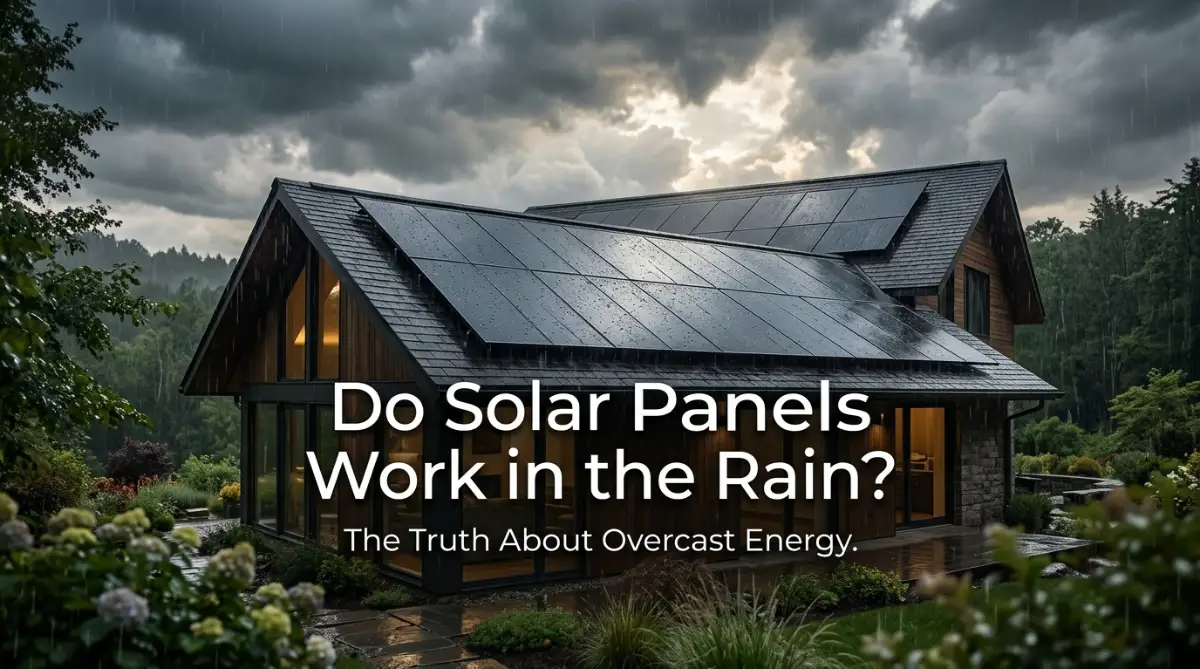
I remember sitting at my kitchen table, nursing a hot cup of coffee, and staring out the window at a deeply gloomy, overcast sky. The rain was coming down in thick sheets, turning my entire neighborhood into a dark, watery mess.
Just a few weeks earlier, I had spent a massive chunk of my savings installing a beautiful, shiny solar energy system on my roof. The salesperson promised me incredible energy savings and complete peace of mind.
But looking up at those thick black clouds, my stomach tied itself into heavy knots. I honestly felt a sudden rush of panic creeping up my neck.
I grabbed my smartphone and immediately opened my solar monitoring app, fully expecting to see a big, fat zero on the production screen. I thought I had made a terrible financial mistake.
If there is no visible sunshine, how on earth could these expensive glass rectangles generate any electricity for my home?
This is a terrifying feeling that almost every new solar owner experiences at least once. We are taught from a young age that solar power needs bright, blinding sunshine to do its job.
When the sky turns gray and the rain starts pouring, the natural assumption is that our expensive energy system simply goes to sleep. We start stressing out about our next electric bill.
We begin turning off unnecessary lights, yelling at our kids to shut off the television, and completely changing our daily habits just because the weather took a bad turn. This constant weather anxiety completely destroys the mental peace that renewable energy is supposed to bring.
You find yourself obsessively checking the weather forecast, praying for clear skies just so you can run your washing machine without feeling guilty. The heavy burden of not knowing exactly how your system performs under bad weather can make everyday living incredibly stressful.
But what if I told you that this panic is largely based on a massive misunderstanding of how light actually works?
Breaking Down the Clouds: What Actually Happens Up There?
To really solve this headache, we need to look at exactly how solar technology captures energy from the sky. It is completely natural to think that heat and direct sunlight are the main ingredients for electricity.
However, your panels do not actually care about the heat of the sun. They only care about the tiny particles of light called photons.
The Sunburn Analogy You Need to Remember
Think about the last time you went to the beach on a cloudy day. You probably did not bother wearing sunscreen because the sun was hiding behind a thick layer of clouds.
Yet, when you came home, you looked in the mirror and noticed your shoulders were completely bright red and sunburned. How did that happen without direct sunshine?
The answer is ultraviolet (UV) light and ambient light rays. These powerful light particles easily push through thick clouds, fog, and rain to reach the surface of the earth.
Your solar setup works in the exact same way. Even when you cannot see the actual shape of the sun in the sky, those invisible photons are still raining down on your roof.
Myth vs. Reality: The Low-Light Energy Trap
There are so many rumors floating around the internet about solar power and bad weather. Let us clear up some of the biggest misunderstandings right now.
- The Myth: Solar panels completely shut down when it rains.
- The Reality: They never shut down during daylight hours. They simply operate at a reduced capacity, usually pulling in about 10% to 25% of their normal maximum output.
- The Myth: Heavy rain damages the glass surface of the panels.
- The Reality: High-quality modules are tested against massive hailstones. Normal rain is completely harmless and actually highly beneficial for the system.
- The Myth: You cannot run heavy appliances on a cloudy afternoon.
- The Reality: If your system is sized correctly, the ambient light combined with the power grid or your battery storage will easily keep your refrigerator and air conditioner running.
Why Rain Might Actually Be Your Secret Weapon
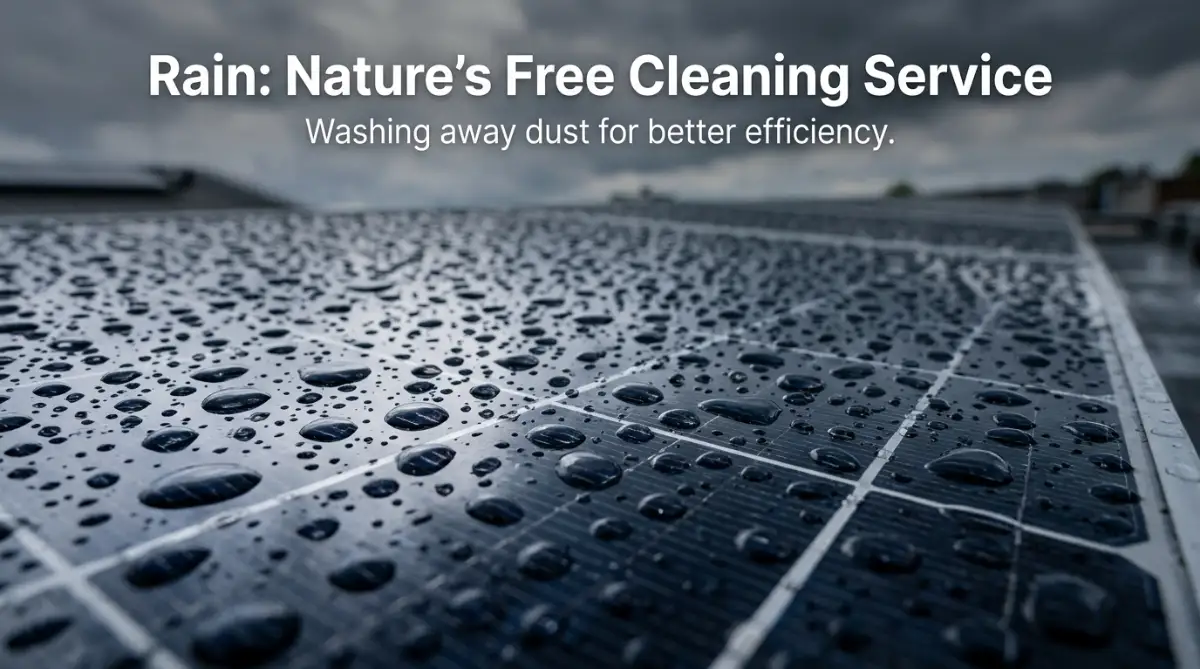
Here is an interesting fact that most people completely ignore when they complain about bad weather. Rain is essentially nature's free maintenance service for your roof.
During long, dry, and sunny periods, your panels slowly collect a thick layer of dirt, pollen, bird droppings, and industrial dust. This nasty buildup blocks the sunlight from reaching the sensitive energy cells hidden under the glass.
A heavy layer of dust can easily drop your overall energy production by 5% to 15% over a few months. When a strong rainstorm finally hits your neighborhood, it aggressively washes all of that stubborn dirt away.
Once the storm passes and the clouds finally break, your freshly washed system will absorb sunlight much faster and generate significantly more power than it did the previous week. So, instead of being angry at the rain, you should actually view it as an automatic cleaning cycle that boosts your future savings.
A Quick Look: Energy Output Across Different Weather Conditions
To help you understand exactly what to expect, I have put together a simple breakdown of how different skies affect your daily power generation. This is based on real-world averages.
As you can clearly see, the power never drops all the way down to zero as long as the sun is technically up. You are still feeding free electricity into your home, even when you have to keep your indoor lights switched on.
Maximizing Your Setup: Smart Equipment Choices for Overcast Weather
If you live in an area that gets a lot of heavy rainfall or long winters, the specific equipment you choose becomes incredibly important. Not all solar technology handles gray skies the same way.
The Magic of Monocrystalline Technology
When you are shopping for a system, or checking what is currently sitting on your roof, you will usually hear about two main types of cells. These are monocrystalline and polycrystalline.
Monocrystalline modules are cut from a single, pure source of silicon. They usually look totally black and have a very sleek, premium appearance on your roof.
Because of this high purity, they are noticeably better at grabbing weak, scattered light during a heavy rainstorm. If you regularly face dark skies, these black panels will consistently give you a much stronger energy yield compared to the older, blue-tinted polycrystalline versions.
Want to understand exactly how different panels perform in the real world when the clouds roll in? Check out this incredibly helpful visual breakdown below.
Why Your Inverter Choice Makes a Massive Difference
Most homeowners obsess over the panels themselves, but they completely ignore the brain of the entire operation. The inverter is the magic box that takes the raw solar energy and turns it into the usable electricity that powers your television.
If you have a traditional "string inverter" system, all of your panels are connected in one long chain. The massive problem here is that if a thick cloud shadows just one corner of your roof, the entire chain drops its power output to match the weakest link.
To completely beat the cloudy day problem, you need Microinverters or Power Optimizers. These tiny devices attach to the back of every single panel individually.
This means if one panel is heavily shaded by a dark cloud, the other panels in brighter spots will continue pumping out maximum power. This one simple hardware choice can easily recover up to 15% more power on a rainy afternoon.
Building Your Own Personal Power Grid
Let us address the absolute best way to completely eliminate weather anxiety forever. If you really want to ignore the forecast, you need to think about adding a home battery system.
When you have a brilliantly sunny Tuesday, your roof is likely producing way more electricity than your house actually needs right then. Without a battery, that extra energy gets sent back away to the city grid.
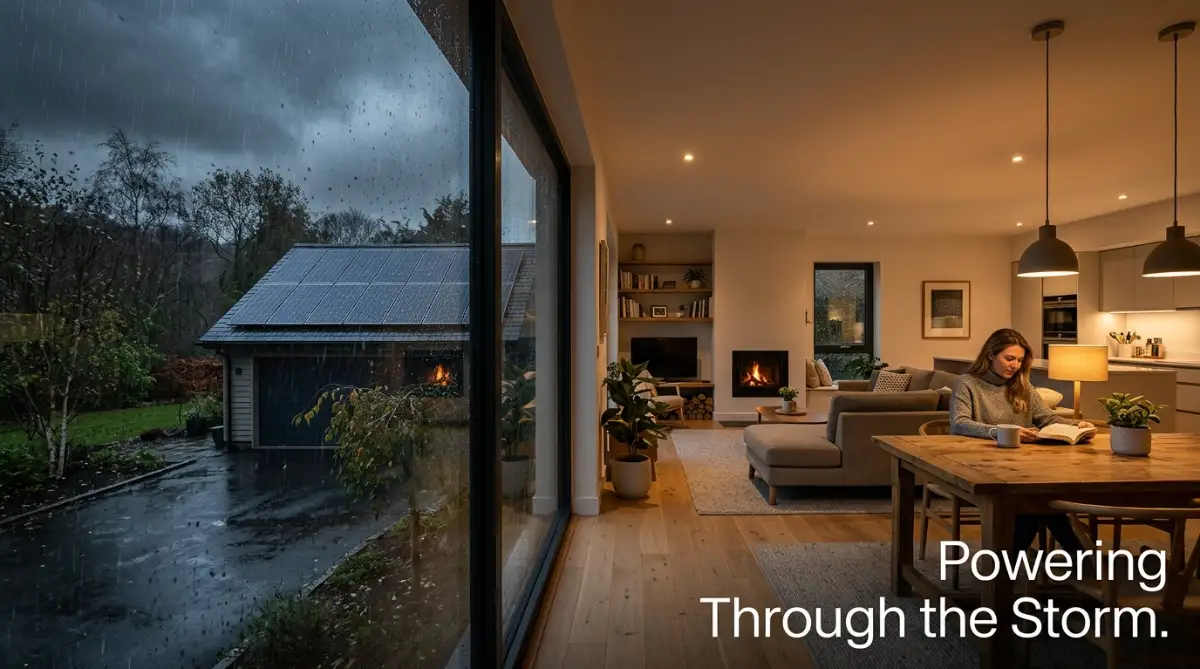
Pro Tip from My Own Experience: I spent my first entire year without a battery, constantly watching the sky and trying to do all my laundry right exactly at noon. The day I finally installed a battery pack, my stress completely vanished. Now, my system stores all that extra daytime sunshine, and I happily use it to run my house during the darkest, rainiest thunderstorms without paying the electric company a single dime.
With a battery connected, your home stops relying on live, real-time sunshine. You become your own personal power station, using yesterday's bright afternoon to power today's gloomy rainstorm.
Practical Steps to Keep the Power Flowing Today
You might be thinking, "This is great information, but what can I actually do right now in my own house to manage a string of bad weather days?" There are several extremely simple habits you can start today.
1. Master Your Energy App
Every modern setup comes with a smartphone application that shows you your real-time electricity generation. Stop looking at it as a source of anxiety, and start using it as a highly valuable tool.
Check your app in the morning to see your baseline production under the current cloudy conditions. If your system is currently pulling in 1.5 kilowatts during a rainstorm, you instantly know your safe spending limit.
2. Time Your Heavy Appliances Carefully
You do not need to sit in the dark during a storm, but you should absolutely be smart about your highest-draining machines. The biggest energy hogs in your house are the electric dryer, the oven, and the air conditioner.
If it is pouring rain outside, try to delay running the dishwasher or doing massive loads of laundry until the weather clears up a bit. Simply shifting these heavy tasks to a slightly brighter part of the day will prevent you from accidentally pulling expensive power from the main grid.
3. Check for Unnecessary Shading
Cloudy days already reduce your overall ambient light, so you cannot afford to lose any more sunshine to avoidable obstacles. Take a walk out into your yard and look closely up at your roof.
Are there any large, overgrown tree branches hanging directly over your panels? Even a thin branch can cast a surprisingly dark shadow that severely blocks the weak ambient light.
Grab a ladder and carefully trim back those branches, or hire a local professional to safely clear the airspace above your roof. Giving your system an unobstructed view of the entire sky is absolutely essential for grabbing every last drop of low-light energy.
4. Understand Your Utility Company's Net Metering
If you do not have a home battery installed, you need to closely understand your local Net Metering agreement. This is basically a trade system between you and the power company.
When your panels overproduce on a perfectly clear Sunday, you send that extra power to the grid, and the utility company gives you digital credits on your account. Then, when a heavy rainstorm hits on Wednesday and your panels slow down, you automatically spend those stored credits to run your house for free.
Take five minutes today to call your power company or read your latest bill. Knowing exactly how many credits you have banked up will completely cure your fear of rainy days, because you will realize you have a massive safety net waiting for you.
As we look deeper into managing our home energy, we start to see that bad weather is not actually an enemy to our renewable lifestyle. It is simply a different type of operating environment that requires a slight shift in how we manage our daily power flow.
Next-Level Strategies to Outsmart Bad Weather
Now that we understand how ambient light pushes through the thickest clouds, it is time to take complete control of your home grid. You do not have to just sit around and hope for the best when the sky turns gray.
There are several highly effective habits you can build right now to keep your house running smoothly during a heavy rainstorm. These are the exact methods professional installers use in their own homes.
Automate Your Energy Consumption
The biggest secret to mastering cloudy days is a concept called load shifting. This simply means moving your heaviest power usage to the specific times when your panels are actually grabbing light.
Most modern home appliances come with built-in delay timers. You can easily set your dishwasher or washing machine to automatically run at exactly midday, even if you are stuck at the office.
By forcing these heavy machines to run when the ambient UV light is at its highest point, you use the incoming solar energy instantly. You avoid pulling expensive electricity from the main utility grid later in the evening when the sky gets completely dark.
Protect and Optimize Your Battery Health
If you rely on a home storage system, managing your stored power during a long week of rain is absolutely essential. A common habit is to let the home battery drain all the way down to zero on a cloudy evening.
This is actually a terrible idea for the long-term health of your equipment. Just as you should carefully follow proven steps for maximum life to stop ruining your laptop battery, you must set proper discharge limits for your massive solar storage wall.
Most smart apps allow you to set a Reserve Limit, usually around 20%. This ensures your battery never fully dies during a long storm, protecting the internal chemical cells from permanent damage.
For a deeper understanding of how these chemical limits work, you can read more about optimizing your residential battery backup system directly from energy experts. Keeping a small reserve also gives you a safety net just in case a heavy storm knocks out the neighborhood power lines.
Monitor Your Setup Safely and Securely
When the weather gets nasty, it is completely natural to constantly check your energy dashboard on your smartphone. I used to open my monitoring app five times a day while sitting at the local coffee shop.
However, you have to remember that your solar app is directly connected to your home network and your personal utility data. Checking this sensitive information on a public Wi-Fi network at a cafe or airport can easily expose your private habits to local hackers.
To stay completely safe while weather-watching on the go, you must understand what a VPN is and how it protects your online privacy on public networks. A secure connection lets you manage your solar production from anywhere in the world without compromising your smart home.
Embrace the Natural Cleaning Cycle
We touched on this earlier, but I want to dive a bit deeper into the physical surface of your setup. A lot of homeowners get extremely frustrated when they see a week of rain on the forecast.
They assume the water is somehow blocking the light from entering the cells. In reality, scientists exploring how diffused sunlight affects energy generation have found that a perfectly clean, wet surface actually bends ambient light nicely into the module.
The heavy rain washes away bird droppings, sticky tree sap, and heavy dust layers that completely ruin energy efficiency. Think of a heavy downpour as a free, automatic maintenance routine that immediately boosts your power generation the moment the sun comes back out.
The Quiet Saboteurs of Rainy Day Efficiency
Even with the best intentions, many smart homeowners accidentally sabotage their own energy production when the weather turns bad. These simple errors can cause a massive spike in your monthly utility bill and completely ruin your peace of mind.
Let us walk through the most dangerous pitfalls you need to avoid when the dark clouds roll in.
The Panic Shutdown Reflex
This is arguably the most common and financially painful mistake I see new solar owners make. When a massive thunderstorm hits, complete with intense lightning and heavy rain, people panic and manually turn their entire system off.
They wrongly assume that leaving the inverter running during a lightning storm will somehow attract a strike or cause a massive electrical short circuit. Modern residential solar panels are rigorously tested and beautifully grounded against severe weather.
When you flip that emergency switch off, you are instantly completely relying on the main power grid. You are throwing away all of that valuable ambient light energy that your system could be safely harvesting.
Ignoring the Hidden Ghost Drains
When a cloudy day severely reduces your solar output, every single watt of power becomes incredibly valuable. Yet, most people leave their phantom appliances plugged in all day long.
Things like older gaming consoles, extra refrigerators in the garage, and massive desktop computers constantly draw power even when they are asleep. On a bright summer day, your system easily covers this invisible drain without breaking a sweat.
But during a dark, rainy afternoon, these ghost drains quietly eat up the small amount of power your panels are struggling to produce. This unnecessary strain can easily cause system stress, much like diagnosing and fixing overheating issues in high-performance laptops when too many background programs are running.
Refusing to Read Inverter Warnings
Your inverter is the hard-working brain of your entire operation, and it constantly talks to you through small LED lights or app notifications. After a heavy storm passes, many people completely ignore a blinking red or yellow light on their main control box.
They assume the light is just a temporary glitch caused by the bad weather. In reality, a heavy rainstorm can occasionally cause moisture to trip a sensitive ground fault switch in your outdoor wiring.
If you ignore that tiny warning light, your system might stay in safe mode for weeks, producing zero electricity while you happily assume everything is fine. Always check your physical hardware the morning after a severe weather event.
The Obsessive Weather Checking Trap
This mistake is entirely psychological, but it can absolutely ruin your daily life. Constantly refreshing your weather app and stressing over every single passing cloud creates terrible mental fatigue.
This dizzying anxiety is almost exactly like trying to stop VR motion sickness and enjoy gaming longer; you have to train your brain to adapt to the changing environment and simply trust the technology.
Your renewable setup is a marathon, not a quick sprint. You will have highly productive days and slow, rainy days, but the long-term financial average will almost always work heavily in your favor.
If you constantly obsess over every single drop of rain, you completely erase the peaceful, off-grid lifestyle you originally paid for. Trust the math, trust the self-cleaning properties of modern photovoltaic glass, and simply let the system do its job.
Your Personal Blueprint for Renewable Confidence
Living with renewable energy does not mean you have to be perfectly blessed with flawless sunshine every single day. The moment you realize that your panels are actively pulling power from gray, cloudy skies, all of that weather anxiety completely melts away.
Rain is not your enemy; it is simply a natural part of the energy cycle that keeps your system clean and optimized for the future. By managing your heavy appliances, monitoring your battery health safely, and avoiding unnecessary panic during storms, you take complete control of your energy independence.
I clearly remember the exact day I stopped worrying about the rain. I was sitting on my porch, drinking tea, watching a heavy storm roll through, and knowing my smart habits were keeping the lights on for free. My system was quietly pulling in those invisible UV rays, completely ignoring the gloom above, and I felt an incredible sense of freedom.
Common Questions About Solar and Storms
Do solar panels break easily during heavy rain or hail?
Modern solar modules are incredibly tough and built to withstand intense weather extremes. They are thoroughly factory-tested to survive massive hail impacts and hurricane-level winds without shattering. Ordinary rain and mild storms pose absolutely zero physical threat to the tempered glass surface.
Should I completely turn off my solar system when it rains?
No, you should never turn your system off simply because it is raining outside. Even during heavy downpours, ambient light reaches the surface and generates free electricity for your home. Turning it off means you instantly start paying your utility company for power you could be making yourself.
Will a dark thunderstorm completely stop my power production?
While a very dark, severe thunderstorm will significantly drop your energy generation, it rarely hits absolute zero during daytime hours. You might only produce 10% of your normal maximum capacity, but that small trickle of power still helps offset your active usage.
Does rainwater actually clean solar panels effectively?
Yes, natural rainfall is a fantastic, highly effective way to wash away accumulated dirt, dust, and pollen. A strong downpour acts as a free cleaning service, instantly improving your system's light absorption the moment the storm passes.
How much energy is completely lost on an average cloudy day?
On a standard overcast day with thin clouds, you can expect to capture around 50% to 70% of your normal power generation. The exact loss heavily depends on the thickness of the clouds and whether you are using high-efficiency monocrystalline panels.
Disclaimer: The information provided in this article is for educational and informational purposes only. Solar energy generation can vary significantly based on your specific geographic location, weather patterns, local utility rules, and the exact hardware you have installed. Always consult with a licensed, certified solar professional or local electrician before making any changes to your home energy system, wiring, or battery storage settings.