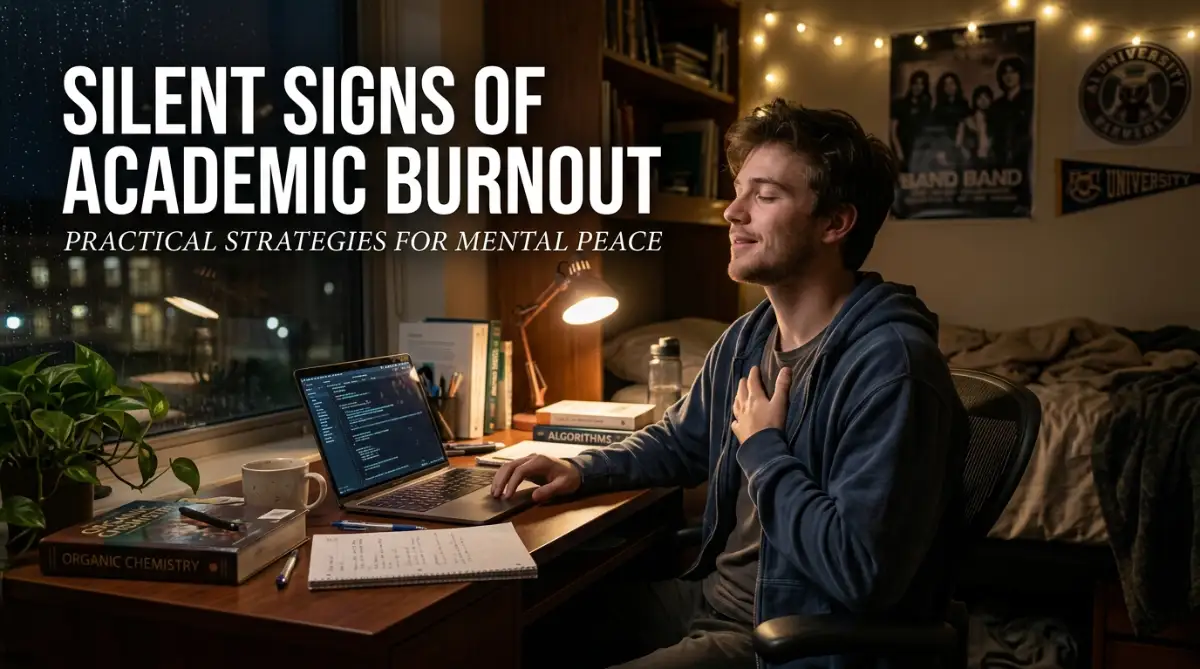
The Hidden Anxiety Behind the Blank Academic Page
I remember staring at a blinking cursor at three in the morning, feeling my chest tighten with every passing second. My heart was racing wildly because I had a massive twenty-page assignment due in exactly two days, and my Microsoft Word document was completely blank. I had already downloaded dozens of scholarly journals and saved them in a messy desktop folder. Yet, the more I looked at the glowing white screen, the heavier my breathing became. I honestly thought I just wasn't smart enough for college-level writing. My brain felt like a completely scrambled jigsaw puzzle with pieces missing.
If you have ever felt this exact same way, I want you to know that you are deeply understood. The pressure to produce high-level academic work is silently destroying the mental peace of millions of students worldwide. You sit down at your desk with good intentions, but the sheer volume of reading material quickly becomes overwhelming. It feels like you are drowning in a sea of academic jargon that makes absolutely no sense.
This daily struggle creates a severe form of imposter syndrome. You start looking around the lecture hall, assuming everyone else has it completely figured out. You lose precious hours of sleep worrying about getting a bad grade or facing harsh criticism from a strict professor. Your daily routine becomes a cycle of extreme procrastination followed by intense, panic-driven typing sessions.
The worst part is the physical toll it takes on your body. Constant neck pain from hunching over a laptop, burning eyes from late-night screen time, and a stomach tied in knots from stress. You might even find yourself avoiding your friends and family because the guilt of that unfinished assignment is always hanging over your head. The joy of learning completely disappears, replaced by a desperate survival mode just to meet the deadline.
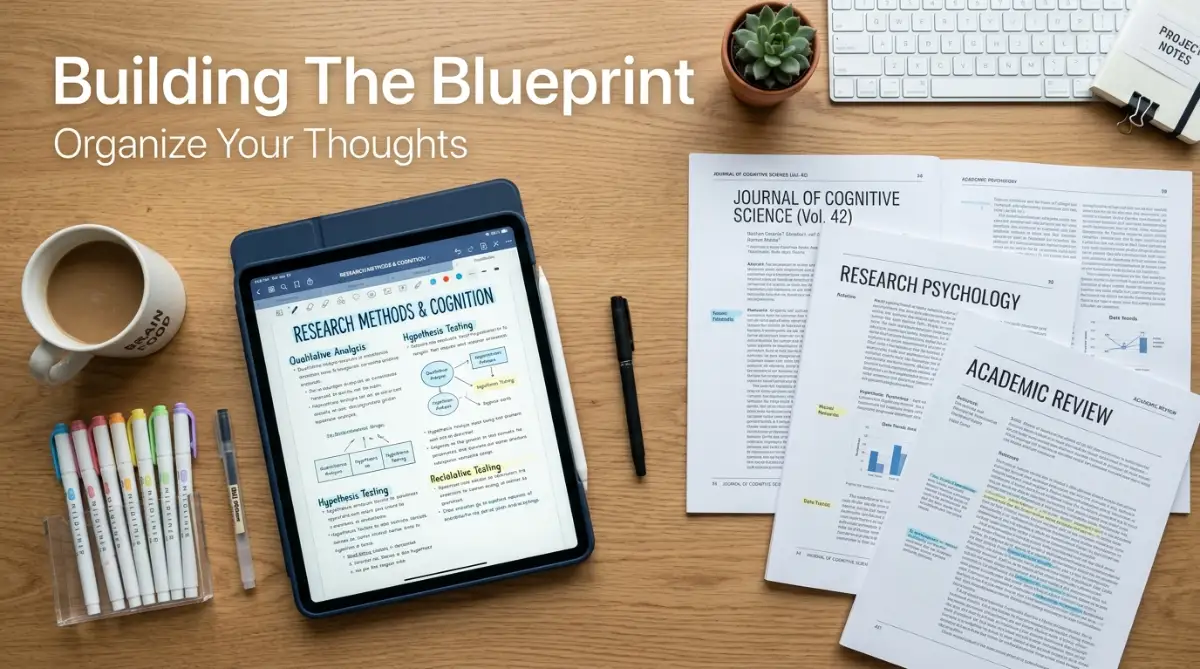
Escaping the Blank Screen Trap: A Proven Blueprint
Writing an excellent academic essay does not require natural-born genius or a magic wand. It simply requires a highly organized, step-by-step system that removes the guesswork from the equation. When you treat your writing process like a clear set of building blocks, the fear naturally starts to melt away. We are going to completely break down this intimidating monster into small, easily digestible actions you can take today.
By using logical frameworks and proven psychology, we can train your brain to actually enjoy the drafting process. You will no longer sit in front of a blank screen wondering where to begin. Let us explore the most practical actions you need to take to build a solid academic foundation.
Phase One: Deconstructing the Professor's Prompt
The biggest mistake you can make is rushing straight into the university library database without understanding what your professor actually wants. Before you type a single word, you must act like a detective examining a crime scene. Grab a bright physical highlighter and print out the assignment rubric.
You need to look for specific action verbs hidden inside the instructions. Words like analyze, compare, evaluate, or synthesize all require completely different styles of writing. If the prompt asks you to evaluate a concept, but you only summarize it, you will automatically lose half of your grade.
Take a moment to rewrite the core assignment question in your own simple words. Ask yourself, "What exactly am I trying to prove here?" This simple mental exercise forces your brain to narrow down the focus and ignore irrelevant information.
Phase Two: The Strategic Literature Gathering
Once you know what you are looking for, it is time to find high-quality evidence. Think of this phase like grocery shopping for a master chef; you only want the freshest, most reliable ingredients. Stop relying on basic web searches and start using dedicated academic databases like Google Scholar or JSTOR.
When you find a promising article, do not read it from start to finish. That is a massive waste of your limited energy. Instead, read the abstract first to see if it matches your topic. If it does, jump straight to the conclusion to understand their final findings. Only if both sections are highly relevant should you read the middle methodology section.
Keep your sources aggressively organized from day one. Create a simple spreadsheet with columns for the author's name, the main argument, and a specific quote you might want to use. This small habit will save you hours of frustrated searching when you are trying to write your reference list later.
Phase Three: Formulating a Magnetic Thesis Statement
Your thesis statement is the absolute beating heart of your entire paper. Without a strong thesis, your writing will wander aimlessly, confusing both you and the person grading it. A good thesis does not just state a basic fact; it takes a firm stance that someone else could reasonably argue against.
A simple formula you can use is: "Although [opposing view], clearly [your main argument] because [reason 1], [reason 2], and [reason 3]." This framework instantly gives your paper a clear direction and a sense of authority. It tells the reader exactly what journey you are about to take them on.
I used to skip the outlining phase completely because I wanted to feel productive right away and just hit my word count. That mistake once cost me three agonizing days of rewriting when I realized my main arguments contradicted each other on page eight. Now, I never write a single paragraph without drawing a messy, detailed mind map first.
Phase Four: Engineering the Perfect Outline
An outline is the skeleton that keeps your academic body of work standing upright. You should never try to build a house without a blueprint, and you should never write a long paper without an outline. Start by creating major headings for your introduction, body paragraphs, and conclusion.
Under each body paragraph heading, write down the specific claim you want to make. Then, immediately paste the supporting evidence or citation directly below it. This guarantees that every single paragraph you write has a strong, logical purpose.
If you are still feeling stuck on how to map out your initial ideas, this short breakdown will completely change the way you organize your thoughts and save you hours of frustration.
The Myth vs Reality of Academic Drafting
Many students hold onto false beliefs about how writing should happen, which only increases their stress levels. Let us clear up some of the most common misunderstandings right now.
Breaking these mental barriers is the first step toward becoming a highly efficient writer. When you give yourself permission to write a terrible first draft, the words start flowing naturally. You can always go back and fix the grammar later.
Phase Five: Mastering the Introduction
The introduction is your one and only chance to grab the reader's attention and make them care about your topic. You want to start broad and slowly narrow down to your specific thesis statement. Think of it like a funnel collecting rainwater.
Begin with a strong hook that highlights a surprising fact, a common misconception, or a real-world problem. Avoid starting with generic phrases like "Since the beginning of time." That immediately makes professors roll their eyes and prepare for a boring read.
After your hook, provide just enough background context so the reader understands the setting of your argument. Define any complex terms that are central to your topic. Finally, place your highly polished thesis statement at the very end of this opening section.
Phase Six: Building Unbreakable Body Paragraphs
Every single body paragraph you write needs to follow a predictable, logical rhythm. A popular and highly effective framework for this is the MEAL plan: Main idea, Evidence, Analysis, and Link.
Start with a clear topic sentence that introduces the main idea of that specific paragraph. Next, introduce your evidence from your scholarly sources. Do not just drop a quote and run away; you must carefully integrate it into your own sentence.
The most important part of the paragraph is your Analysis. This is where you explain exactly why that quote matters and how it proves your overall thesis. Finally, the Link sentence gently transitions the reader into the next paragraph, keeping the flow incredibly smooth.
Developing Your Unique Academic Voice
One of the hardest things for students to learn is how to sound professional without sounding like a completely emotionless robot. You want to maintain a formal tone, but you also want your personal intelligence to shine through. Avoid using slang or overly casual phrases, but do not hide behind massive vocabulary words you barely understand.
A great way to develop your voice is to read your sentences out loud. If you run out of breath while reading a sentence, it is definitely too long and needs to be cut in half. If a sentence sounds incredibly awkward when spoken, it will read awkwardly on the page.
You should also practice disagreeing politely with published authors. Instead of saying an author is completely wrong, say their research "overlooks a significant variable." This shows high-level critical thinking and a deep respect for the academic process.
Phase Seven: The Art of Seamless Transitions
Have you ever read an essay that felt jerky, like riding in a car with a bad driver? That usually happens because the writer forgot to use transition words. Transitions are the bridges that connect your isolated islands of thought.
Instead of just jumping to a new topic, use words like similarly, contrastingly, or consequently at the start of your paragraphs. You can also refer back to a concept mentioned in the previous paragraph. For example, "While the economic impact is clear, the psychological effects require deeper investigation."
These small connective tissues make your argument feel like one continuous, unstoppable force. Your professor will unconsciously find the paper much easier to read, which often results in a much higher final score.
Phase Eight: Synthesizing Instead of Summarizing
A massive trap many writers fall into is turning their research paper into a boring summary of other people's work. Your job is not to act like a human book report. Your job is to create a meaningful conversation between your different sources.
Imagine you are hosting a formal dinner party and all your authors are sitting at the table. You want to point out where Author A agrees with Author B, and where Author C completely challenges them both. Synthesis means blending these different perspectives to create a brand new insight.
When you do this correctly, you move from being a passive student to an active scholar. You are actively contributing to the academic field rather than just repeating what is already known.
Phase Nine: Crafting a Memorable Conclusion
Your conclusion is the final impression you leave on the grader. Do not just blindly copy and paste your thesis statement again. That feels lazy and repetitive.
Instead, restate your main argument using fresh language that reflects the journey you just took the reader on. Summarize your main points briefly, but quickly move toward the bigger picture. Why does this entire topic actually matter in the real world?
Leave the reader with a final thought to ponder. This could be a call for future research, a warning about a current trend, or a proposed solution to the problem you discussed. Make sure the last sentence rings with undeniable confidence.
Phase Ten: The Ruthless Editing Process
Writing and editing use two completely different parts of your brain. You should never try to do both at the exact same time. Once your messy first draft is finished, close the laptop and walk away for at least twenty-four hours.
When you come back with fresh eyes, you will be shocked at how many obvious mistakes you notice. Start by checking the overall structure and flow. Are the arguments in the most logical order? Do any paragraphs wander off-topic?
Only after the structure is perfect should you worry about commas, spelling, and citation formats. I highly recommend printing the paper out and reading it on physical paper with a red pen. Your brain catches errors on paper much faster than on a glowing screen.
Elevating Your Academic Writing to Professional Standards
Writing a good essay will help you pass a single class, but developing a professional writing system will serve you for the rest of your life. Once you master the basic building blocks of academic writing, you can start applying advanced strategies that top-tier students use. These methods do not require extra study hours; they simply require you to work much smarter.
The goal here is long-term sustainability and protecting your mental energy. You want to reach a point where receiving a twenty-page assignment prompt feels like an exciting challenge rather than a heavy burden. Let us explore some powerful secrets that will completely transform how you approach your university assignments.
Building a Long-Term Knowledge Vault
One of the biggest time-wasters in college is searching for the exact same information multiple times across different semesters. Instead of starting from zero every single time, you should build a permanent digital library of your research. Every time you read a fascinating article or find a strong quote, save it into a dedicated digital folder sorted by topic.
This habit creates a personal search engine filled with high-quality, pre-screened information. When a new assignment pops up, you simply search your own vault first before scouring the internet. However, you must protect this hard work, as losing your notes right before a deadline is a complete nightmare.
I strongly recommend keeping your research backed up online while protecting your sensitive files with end-to-end encryption. This guarantees that even if your computer completely crashes the night before submission, your precious research remains safe and accessible.
The Reverse-Engineering Technique
Professional writers rarely start from scratch without looking at successful examples in their specific field. You can dramatically improve your skills by reading published papers and breaking down exactly how they are structured. Go to a trusted academic database and find the most heavily cited paper related to your major.
Do not read it for the content; read it strictly for the hidden architecture. Notice how the author transitions between opposing viewpoints and how many sentences they dedicate to analyzing a single quote. For excellent examples of this structural breakdown, you can review the resources provided by the Harvard College Writing Center, which offers incredible templates for building strong arguments.
When you deconstruct professional work, you start noticing repetitive patterns that you can easily borrow. You will suddenly realize that high-level academic writing is just a predictable formula that anyone can learn to replicate.
Managing Your Physical Writing Environment
Your physical comfort directly impacts the quality of your thoughts and your overall typing speed. If you are constantly shifting in your chair or squinting at a hot screen, your brain gets deeply distracted. Long writing sessions push your hardware to the absolute limit, which can cause frustrating performance drops.
If your fan sounds like a jet engine while you are trying to type, it might be time to look into diagnosing and fixing overheating problems in your laptop. A smooth, quiet computer allows you to stay in the creative flow state much longer. You should also invest in a comfortable chair and ensure your monitor is right at eye level to prevent serious neck strain.
Treat your study space exactly like a professional office environment. When you sit down at that specific desk, your brain should automatically recognize that it is time for serious academic work.
Mastering the Art of "Stealth Editing"
Most students write their paper, run a quick spell check, and immediately hit the submit button. This is a massive missed opportunity to catch awkward phrasing and weak logical connections. The best editing technique is something I call "stealth editing," where you change the entire format of your text to trick your brain.
Change the font to something completely different, like Comic Sans, and increase the size to 14 or 16. This makes the text look unfamiliar, forcing your eyes to actually read every single word instead of just skimming over them. You will easily spot repetitive words, missing commas, and sentences that make absolutely no sense.
You can also use text-to-speech software to have your computer read the essay back to you out loud. Hearing your words spoken in a robotic voice instantly highlights clunky transitions and overly complicated vocabulary.

Silent Traps That Ruin Great College Essays
Even the most organized students can fall into hidden academic traps that severely damage their final grades. These mistakes often happen because of stress, tight deadlines, or simply a lack of clear understanding. Knowing exactly what to avoid is just as important as knowing what to do. Let us look at the most common pitfalls that can destroy an otherwise excellent paper.
The "Frankenstein" Draft Disaster
This is what happens when you write all your paragraphs on different days and just forcefully stitch them together at the end. The paper reads like five completely different people wrote it, with no clear transition or overall harmony. The tone shifts wildly from highly formal in one section to completely casual in the next.
This usually occurs when you copy and paste large blocks of quotes without taking the time to weave them into your own narrative. Your professor will instantly recognize this lazy method and your grade will suffer heavily. You must always read the entire paper from start to finish in one sitting to ensure the central argument flows perfectly.
Accidental Plagiarism and Citation Panic
Nothing strikes fear into a student's heart quite like the word plagiarism, yet it happens accidentally all the time. You might mix up your personal notes with a copied quote and forget to add the quotation marks. Or, you might struggle with the incredibly strict formatting rules required by your university.
If you ever feel deeply overwhelmed by referencing, spending time reviewing the official American Psychological Association (APA) style guidelines can save you from a major academic offense. Never leave your citations for the final hour before submission. Keep a running reference list open in a separate document from the very first day of your research.
Letting External Stress Destroy Your Focus
Writing requires intense mental clarity, but real-life problems often try to steal your attention. It is incredibly hard to write a brilliant analysis when you are constantly worrying about how to pay next month's rent. Financial stress is one of the biggest silent killers of academic performance among university students today.
If money anxiety is clouding your thoughts, taking control by setting up a reliable zero-based budget can help clear your mind. Additionally, if heavy college debts are keeping you awake at night, you might want to look into negotiating lower personal loan rates with your bank. When you actively manage your real-world problems, your brain finally feels safe enough to focus on creative academic tasks.
Ignoring the Counterargument
A very common mistake is writing a completely one-sided essay that ignores any opposing viewpoints. You might think that mentioning an opposing idea will weaken your own argument, but the exact opposite is true. When you address the other side, you show the professor that you have deeply researched the entire topic.
Bring up the strongest point of your opposition, and then politely and logically tear it down using better evidence. This proves you are a critical thinker, not just someone who only reads things they already agree with. An essay without a counterargument often reads like a biased opinion piece rather than a scholarly investigation.
Falling Into the Productivity Burnout Trap
Many students believe that they need to sit at their desks for eight hours straight to produce good work. This method almost always leads to severe mental burnout and a complete hatred for the writing process. According to research from the National Institutes of Health (NIH), chronic academic stress can actually shrink the areas of your brain responsible for memory and learning.
You must take frequent, completely disconnected breaks to let your subconscious mind process the research. Sometimes taking a quick break to play a video game is exactly what your brain needs, just be sure to manage any potential motion sickness during your VR gaming sessions so you can return to your desk feeling refreshed. Protect your mental energy fiercely, because a rested mind will always write better sentences than an exhausted one.
Your Path to Academic Excellence Starts Today
You now have a complete, realistic roadmap to tackle any writing assignment your university throws at you. The blank screen is no longer an enemy to fear; it is simply a canvas waiting for your organized thoughts. By breaking the massive project into small, daily habits, you completely remove the anxiety and the need to procrastinate.
Remember that nobody is born a perfect academic writer. It is a highly specific skill that requires patience, lots of messy first drafts, and a willingness to learn from your mistakes. Treat every single assignment as an opportunity to sharpen your analytical thinking and improve your communication skills.
I used to cry out of sheer frustration over my college essays, completely convinced I was meant to fail. My turning point was finally realizing that success is just about following a proven system, step by careful step. If I can learn to conquer my writing fears and consistently earn top grades, I know with absolute certainty that you can do it too.
Common Questions About Academic Writing Addressed
How much time should I actually spend on the research phase?
You should ideally spend about forty percent of your total project time just reading, taking notes, and organizing your sources. Good research makes the actual typing phase incredibly fast because you already know exactly what you want to say. Never rush the reading process just to get words on the page quickly.
Is it acceptable to use "I" or "my" in a college essay?
In most traditional academic papers, you should avoid first-person pronouns and maintain a completely objective, formal tone. However, if you are writing a personal reflection or specific types of qualitative research, it might be allowed. Always check your professor's specific grading rubric before using first-person language.
What should I do if my paper is significantly under the word count?
Do not try to fix a short paper by adding unnecessary adjectives or repeating the same point multiple times. Instead, find a specific claim in your body paragraphs and explain it with a new, detailed real-world example. You can also expand your literature review by bringing in an additional author who offers a slightly different perspective.
How can I easily tell if my sources are truly credible?
A reliable scholarly source usually comes from a peer-reviewed journal, a university press, or a recognized government institution. Check the author's credentials to see if they hold an advanced degree or teach at a well-known university. Avoid using random personal blogs, highly biased news outlets, or articles without a clear publication date.
What is the absolute best way to handle writer's block?
Writer's block usually happens when you are trying to be a writer and an editor at the exact same time. Give yourself full permission to write the absolute worst paragraph imaginable, just to get your ideas out of your head. Once the bad words are on the screen, your brain relaxes, and you can easily edit them into something great later.
Disclaimer: This content is for informational and educational purposes only and does not constitute professional academic counseling. Always consult your university's specific writing guidelines, honor code, and your professors directly for the most accurate requirements regarding your assignments.