The Hidden Nightmare of Unverified Education
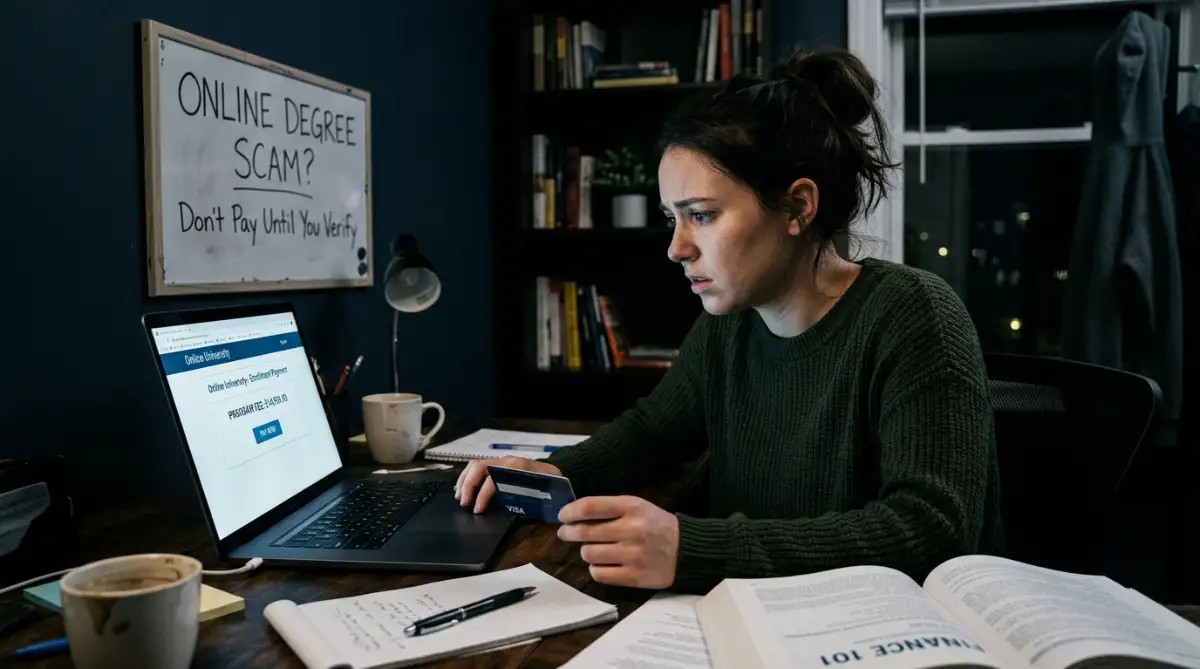
I still remember sitting at my desk late at night, staring at a payment page for what I thought was my dream online degree. My mouse hovered over the "Submit Payment" button, and my heart was racing with excitement about my future. But something deep inside my gut told me to open a new tab and do just a little more research on the university. That single, late-night Google search ended up saving me from wiring my hard-earned savings to a complete scam. I realized I was minutes away from buying a worthless piece of paper from an unaccredited diploma mill.
The truth is, everyday people are losing their peace of mind and their life savings to these sophisticated educational traps. You work incredibly hard to save up for your tuition, dreaming of a better job and a brighter future for your family. When you finally proudly present that degree to a hiring manager, only to be told it is completely unrecognized, the emotional crush is devastating. It is not just about the lost money; it is about the intense shame and embarrassment of realizing you have been tricked.
People spend years studying late at night after a long day at work, sacrificing time with their kids, only to find out their effort means absolutely nothing in the real job market. This creates a massive mental toll on students who feel like they can no longer trust any online institution. The anxiety of wondering "Is my school actually real?" keeps thousands of online learners awake at night. You start second-guessing every email from your college and worrying about background checks at your dream job.
The True Meaning of a Valid College Education
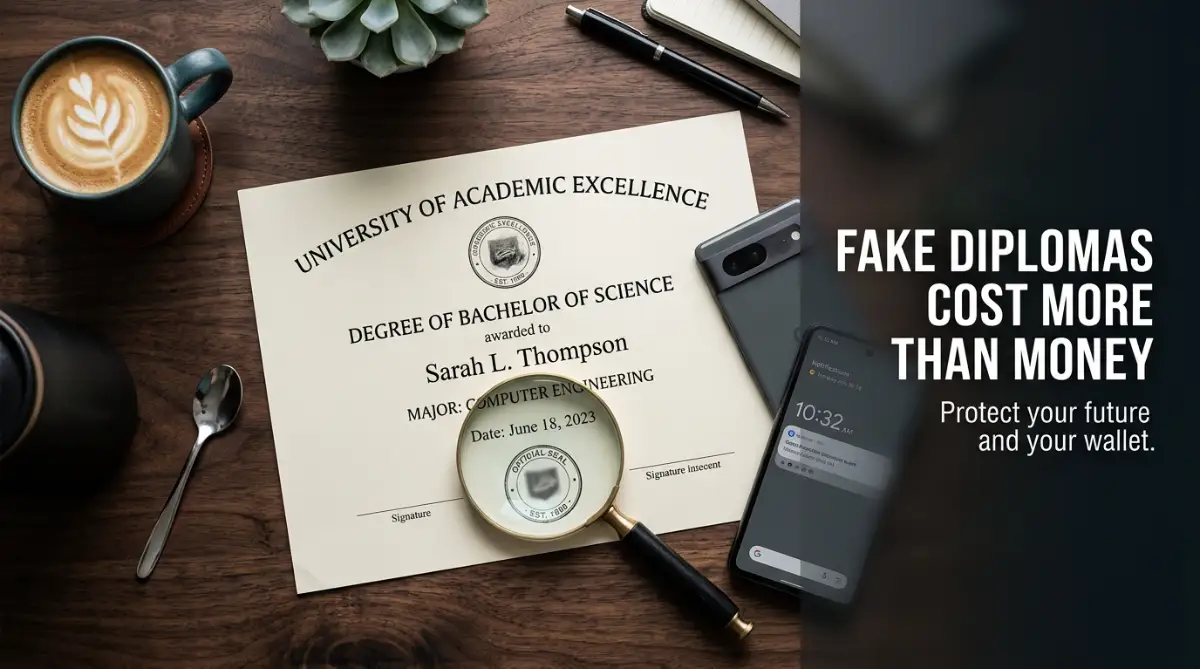
We need to understand what makes an online degree actually worth the paper it is printed on. When you buy a house, you always hire an inspector to make sure the foundation is solid and the roof won't collapse. Accreditation is exactly like that home inspection, but for your education. It is an independent review process that guarantees a university meets strict academic standards of quality.
Without this official stamp of approval, an institution can basically teach you whatever they want, or teach you absolutely nothing at all. They might have a beautiful website featuring smiling students, modern graphics, and incredibly low tuition rates. But behind that flashy screen, there is no real academic rigor, no qualified professors, and no value for your career.
What Happens When You Skip the Check?
Imagine spending four years reading textbooks, writing essays, and passing exams. You finally graduate and apply for a promotion at your company. The HR department runs a standard background check on your new qualifications. When they discover your school is not recognized by official educational boards, you do not just lose the promotion.
You actually risk losing your current job because submitting a fake degree is often considered professional fraud. Employers take this incredibly seriously because it speaks directly to your integrity and judgment. If you cannot be trusted to verify your own education, how can they trust you with important company decisions?
Myth vs. Reality in Online Learning
Let's clear up some massive confusion that trips up so many eager students.
The Myth: If an online university is legally registered as a business, their degrees must be valid everywhere.
The Reality: Having a business license simply means they can accept payments and pay taxes. It has absolutely zero connection to academic quality or global recognition.
The Myth: A school is safe if they send you a printed diploma with a fancy gold seal.
The Reality: Anyone can buy heavy parchment paper and a gold sticker from a local craft store. A physical diploma is meaningless if an official accrediting agency does not back the institution.
Unmasking the Diploma Mills
Diploma mills are essentially fake schools that exist only to take your money and hand you a meaningless piece of paper. They are incredibly good at looking like real universities. They use names that sound very similar to famous colleges, hoping you will get confused and enroll.
You must learn how to spot their clever tricks before you hand over your credit card details. One of the biggest warning signs is an extreme focus on "life experience" credits. Real universities might offer a small amount of credit for your professional background, but they will never award you an entire Master's degree just because you have worked in an office for ten years.
Another massive red flag is high-pressure sales tactics from their admissions team. A legitimate university admissions counselor acts like an advisor to help you make the right choice. A diploma mill agent acts like a desperate car salesperson, offering you special "today only" discounts on tuition. If a university tells you that you must pay immediately to secure a scholarship, you should run the other way.
How to Verify an Institution Like a Professional
Now that you know the hidden dangers, you need a bulletproof method to protect yourself. Checking a university's status is not as complicated as it sounds, but you must know exactly where to look. You cannot just rely on the university's own "About Us" page, because anyone can type the word "Accredited" on their website.
Instead, you have to go straight to the official government or recognized educational databases. These databases are the ultimate source of truth, and they cannot be manipulated by fake colleges.
Use the Official Department Databases
The very first step is to locate the exact name of the accrediting agency the university claims to use. Once you have that name, leave the university's website completely. Go directly to the official government education department website for your country, or the country where the school is based.
Type the university's name into the official government search tool. If the school does not appear in that official database, they are not properly accredited. It really is that simple and black-and-white.
I remember learning this the hard way when I was researching schools. I saw a college claiming to be recognized by the "Global Board of Higher Online Education."
My realization was a huge wake-up call for me. I assumed any agency with an official-sounding name was real, until I discovered fake universities actually create their own fake accrediting agencies to trick students like me. Always check if the government actually recognizes the accrediting agency itself!
Bold Introductory Text: Before you commit to a long-term study plan, watch this quick breakdown of how to identify shady online colleges and protect your educational investment.
The Great Debate: Regional vs. National Standards
If you are looking at universities based in the United States, you will quickly run into two very confusing terms. You will see schools boasting about either "Regional" or "National" accreditation. This confuses almost every new student, but understanding the difference is essential for your future career.
Even though the word "National" sounds much bigger and better, it is actually the opposite in the academic world. Regional accreditation is the gold standard of higher education. The most famous and prestigious universities in the world hold regional recognition.
Credits earned at a regionally recognized school easily transfer to other top universities. If you plan to get a Bachelor's degree now and maybe a Master's degree later, you absolutely need a regionally recognized school.
National accreditation is usually meant for trade schools, vocational programs, and religious institutions. While these schools are completely legal and real, their academic credits often do not transfer to regional universities. Imagine finishing two years of online study, deciding to switch to a local state college, and finding out you have to start all over from zero.
A Quick Comparison to Keep You Safe
To make this crystal clear, I have created a simple breakdown of what you should expect from a real school versus a fake one.
The Silent Career Killer: Employer Background Checks
Many students think that once they get the diploma in their hands, the hard part is over. They believe employers just glance at a resume, see the word "Degree," and happily offer them the job. This might have been true twenty years ago, but today's job market is entirely different.
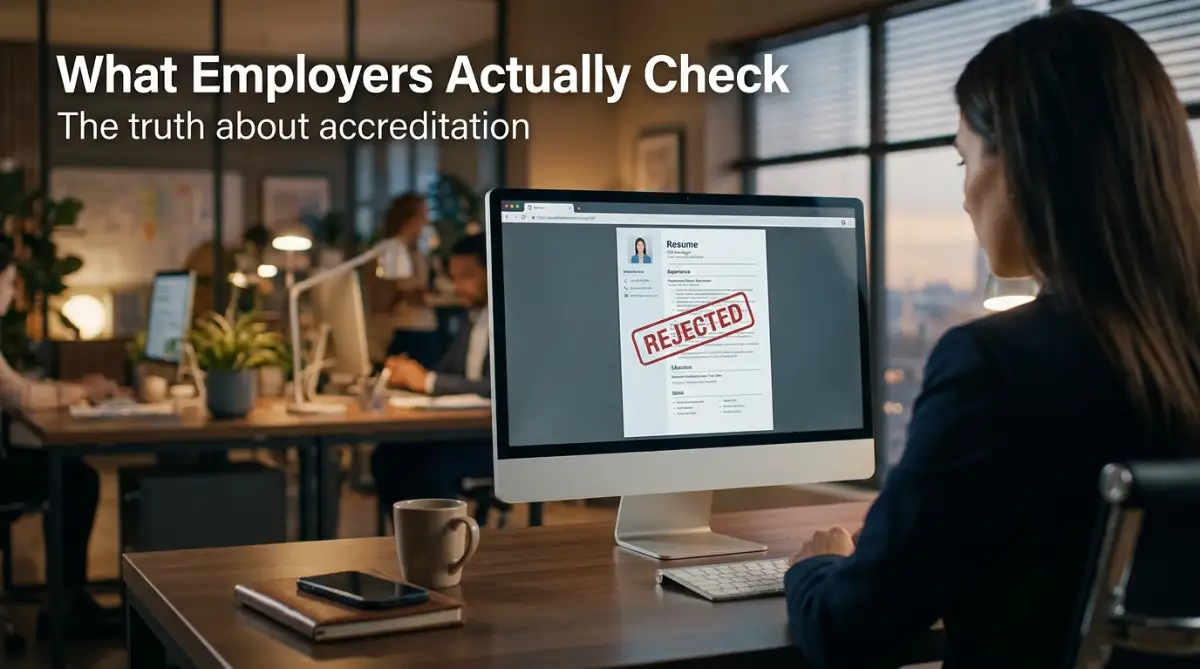
Corporate hiring processes have become incredibly advanced and thorough. Most medium to large companies now use third-party background verification agencies before they finalize a job offer. These agencies do not just look at your piece of paper; they contact the university directly to verify your exact enrollment dates and graduation status.
If the verification agency discovers that your university does not hold proper academic recognition, they will flag your application immediately. The employer will receive a report stating your education cannot be verified. At this point, the hiring manager will quietly move on to the next candidate, and you will probably never even know why you were rejected.
This silent rejection is the most heartbreaking part of the fake degree industry. You will keep applying for jobs, wondering why no one is calling you back, completely unaware that your resume is toxic. Your unverified education acts like a massive roadblock, keeping you stuck in your career while your peers move forward.
Protecting Your Financial Future
Online education is one of the largest financial investments you will ever make in your life. You would never hand a stranger thousands of dollars to buy a car without seeing the engine, checking the tires, and looking at the official registration. You must treat your education with the exact same level of financial caution.
Many unaccredited schools specifically target vulnerable people who are looking for a quick way to improve their lives. They prey on single parents, military veterans, and low-income workers who desperately need a better salary. They promise a fast, easy path to success, knowing full well that they are selling an empty dream.
When you pay for a recognized program, you are not just buying a document. You are buying access to a real alumni network, dedicated career services, and knowledge that actually holds weight in the real world. You are purchasing a key that will genuinely unlock doors in your professional life.
Taking an extra thirty minutes to verify a school's credentials seems like a small task, but it is the most important step in your academic journey. It protects your bank account, your future resume, and most importantly, your personal dignity. You deserve an education that makes you proud, not one that makes you anxious and fearful of being discovered.
Next-Level Verification Secrets Every Student Should Know
Finding a safe online college requires you to act a little bit like a private investigator. You cannot just trust what a website tells you because scammers are incredibly good at building beautiful, convincing web pages. To truly protect your future, you need to dig deeper into how the academic world actually works.
One of my favorite tricks is what I call the "Alumni Trace Method." Real universities produce real graduates who go on to build normal, verifiable careers. You can easily jump onto professional networking sites like LinkedIn and search for the school's name in the education filter.
If the school claims to have thousands of active students, you should instantly see hundreds of alumni profiles pop up. Look at where these people are currently working and see if their career progression makes logical sense. If a so-called university has absolutely zero alumni online, or the profiles look like fake bot accounts, you should immediately walk away.
The Ultimate Admissions Phone Call Test
Scam universities run their admissions offices exactly like high-pressure call centers. When you call a legitimate university, you will usually have to navigate an automated menu, wait on hold, and speak to a professional academic advisor. This advisor will ask about your career goals, discuss the heavy workload, and explain their strict entry requirements.
On the other hand, diploma mills will answer the phone on the first ring. The person on the other end will immediately start pushing you to sign up on the spot. They will offer you special discounts that magically expire by the end of the day. Real education is never sold like a clearance item at a used car lot.
Before you make any financial commitment, you must cross-reference the school with an official government education database to see their exact legal standing. If the representative on the phone gets angry or defensive when you ask for their specific government identification codes, hang up the phone immediately.
Follow the Money and Financial Aid Trail
Here is an incredibly powerful secret that most new students completely miss during their research. Legitimate, government-recognized universities are almost always eligible to participate in federal or state financial aid programs. This means their students can apply for standard government grants and student loans.
Fake schools and diploma mills absolutely hate government financial aid systems because applying for them requires massive amounts of legal paperwork and audits. Therefore, unverified schools will often claim they completely bypass the government to "keep costs low for you." They will insist you pay them directly via credit card, PayPal, or even wire transfer.
Do not let a scammer drain your savings account while you are already working so hard to force your bank to lower your personal loan rates just to afford tuition. Real colleges want to help you secure official funding, while fake colleges just want direct access to your wallet as fast as possible.
Look at the Technology and Tools They Use
A real online university invests millions of dollars into proper learning management systems like Canvas or Blackboard. They require you to log in, participate in live discussions, and take proctored exams where someone actually watches you via webcam. The workload is heavy, and the technology is robust.
Fake colleges usually just send you a few basic PDF files via email and ask you to write a single essay to graduate. If your entire Master's degree can be completed simply by replying to a few emails, you are not receiving a real education.
Because real online learning is so demanding, your hardware needs to be ready for long, intensive study sessions. Knowing how to diagnose and fix overheating issues in high-performance laptops ensures you never miss a strict exam deadline just because your computer crashed. Real schools will not accept "my computer got too hot" as an excuse for missing a final test.
The Trap Doors: Where Smart People Lose Their Money
It is easy to think that only naive people fall for education scams, but that is completely false. These fake institutions are run by clever marketing teams who specifically design their traps to catch smart, ambitious professionals. They know exactly what you want to hear, and they know exactly how to hide their flaws.
Navigating this messy industry can sometimes feel as dizzying as trying to stop VR motion sickness and enjoy gaming longer, but you just need to keep your eyes focused on the facts. The biggest mistake you can make is letting your desire for a quick promotion blind you to the obvious red flags.
When we want something really badly, our brains tend to ignore the warning signs. Let's break down the most dangerous pitfalls that regularly trap eager students.
Falling for the "Sound-Alike" Name Trick
This is perhaps the oldest and most successful trick in the scammer playbook. Fake colleges will purposely choose a name that sounds almost identical to a highly prestigious, famous university. They do this hoping you will get confused and just assume they are affiliated with the real institution.
For example, you might see an advertisement for "The University of Oxford Technological Studies" or "Stanford Online Business Institute." At first glance, these names sound incredibly impressive and trustworthy. However, they have absolutely zero connection to the actual Oxford or Stanford universities.
They are legally separate businesses using clever branding to steal your trust. Always look at the specific, exact name of the school and search for independent consumer protection alerts regarding education scams tied to that exact name. Just one extra word in the title completely changes the legal reality of the degree.
Trusting Fake Accreditation Boards
Earlier, we talked about how important it is to check a school's official recognition. But scammers have figured out a way around this rule too. When people started demanding to see accreditation, the fake universities simply created their own fake accrediting agencies.
They build a secondary website with a very official-sounding name, like "The Global Council of Higher Educational Standards." When you ask the fake college if they are approved, they proudly point you to their fake council's website. It looks like a real endorsement, but it is just a hollow shell created by the exact same scammers.
This is why you must verify the agency itself. A recognized agency will always be listed on a highly trusted platform like the recognized higher education council directories. If the agency is not on that master list, their seal of approval means absolutely nothing.
The "Life Experience" Shortcut
We all value our hard work, and we all believe our years in the workforce should count for something. Diploma mills aggressively target this exact emotion. They will look at your resume and tell you that your ten years of retail management instantly qualifies you for a full Bachelor's degree.
They will claim you do not need to take any classes, read any books, or pass any tests. You just pay a flat fee of two thousand dollars, and they will mail you the diploma based purely on your "life experience." While this sounds like a dream come true, it is an absolute nightmare for your career.
No legitimate university in the world awards entire degrees based solely on past work history. Real schools might offer a few transfer credits for professional certifications, but you still have to complete the majority of the academic coursework. If a school offers to trade your resume directly for a diploma without any studying, you are dealing with a dangerous fraud.
Forgetting to Protect Your Real Documents
Once you do find a legitimate online program and start completing your courses, you will start accumulating highly sensitive digital files. Your official transcripts, financial aid documents, and graded exams are incredibly valuable personal records. Many students make the mistake of leaving these documents scattered across unsecure email folders.
If you ever need to prove your education to an employer years down the road, losing access to these files can cause massive headaches. Understanding the hidden dangers of cloud storage and how end-to-end encryption saves you is a smart way to keep your academic identity safe from hackers. Treat your educational records with the exact same security as your bank statements.
Your Blueprint for a Safe Educational Journey
Protecting yourself from educational fraud does not require a law degree; it just requires a little bit of patience and a healthy dose of skepticism. You now have the exact same verification tools that professional background investigators use every single day. You know how to bypass the flashy marketing and look directly at the legal reality of an institution.
The most important thing is to slow down and never let a pushy admissions representative rush your decision. Choosing a college is a major life event that deserves careful planning and solid financial management. When you map out a beginner's blueprint to zero-based budgeting, you want every single dollar to go toward a real, respected qualification that actually moves your career forward.
Your education is an investment in yourself, your family, and your future earning potential. By taking the time to confirm those credentials, you guarantee that your late-night study sessions will actually pay off. You will be able to walk into any job interview with complete confidence, knowing your resume is bulletproof and respected by professional hiring standard guidelines.
I know exactly how stressful and overwhelming this research phase feels, because I have walked this exact same path myself. My biggest advice to you is to trust your gut, do the extra government database search, and never settle for a shortcut that sounds too good to be true. You are fully capable of finding a brilliant, highly respected online program that will genuinely change your life for the better!
Answers to Your Biggest Accreditation Worries
Can an online school be legally registered but still be a scam?
Absolutely yes. Having a legal business license simply means the company is allowed to accept money and pay taxes in their local city. A business license has absolutely zero connection to academic quality, educational standards, or global degree recognition.
How long does it actually take to verify a university?
If you know exactly where to look, it usually takes less than five minutes. You just need to find the school's accrediting agency and type it into the official government education database. If the search results come up empty, you instantly have your answer.
Will employers really call my online college to check my degree?
Yes, most modern companies now use strict third-party background screening services before making an official job offer. These verification companies will contact your university's registrar office directly to confirm your specific enrollment dates and final graduation status.
Why do fake universities always rush me to pay today?
Scammers use high-pressure sales tactics because they do not want you to have time to research their background. If they can create a false sense of urgency with a "vanishing discount," they increase their chances of getting your credit card details before you realize it is a trap.
Does regional recognition really matter for online programs?
It is the most widely respected standard in the academic world. If you ever plan to transfer your online credits to a local state university, or if you want to apply for a Master's program later, having regional approval makes the process smooth and universally accepted.
Disclaimer: The information provided in this article is for educational and informational purposes only and does not constitute official legal or financial advice. Educational standards and government databases change frequently. Always conduct your own independent research and consult with official government education departments or certified academic advisors before making any financial commitments or enrollment decisions. We are not responsible for any actions taken based on the contents of this guide.