
The Day We Almost Lost Everything: My Hardest Lesson in Startup Intellectual Property
I still remember the morning I opened my laptop and felt my stomach drop to the floor. A former advisor had just launched a product that looked exactly like my software.
I had spent eighteen months of sleepless nights and poured my life savings into building that tool. Because I trusted them, I never asked them to sign any official paperwork.
That simple mistake almost destroyed my entire business before we even launched. I felt completely helpless, embarrassed, and unsure of how to pick up the shattered pieces of my dream.
Many founders face this exact nightmare every single day without warning. You put your heart and soul into a fresh idea, only to see someone else steal it and take the credit.
This constant fear makes you lose sleep and ruins your mental peace. You stop trusting your team, your partners, and even your closest friends, which makes you feel isolated.
The stress can feel so heavy that you start doubting your ability to lead. It is not just about the money you might lose, but the deep pain of losing control over your own creative vision.

How to Shield Your Assets: A Simple Guide to IP Risk Management
To protect your business, you must first understand what you actually need to guard. Your intellectual property is the heart of your company.
It is the unique code you wrote, the beautiful logo you designed, and the special way you solve a customer's problem. If you do not claim ownership of these things, anyone else can walk away with them.
Think of your startup as a new house in a busy neighborhood. You would not leave the front door wide open with all your valuables sitting on the living room table.
Before you can protect anything, you need to know exactly what you own. Sit down with your team and make a complete list of every creative asset.
This list should include your software code, your brand name, your customer lists, and your unique product designs. Many founders forget to write down their secret processes or internal guides.
Once you have this list, group them into categories so you can apply the right legal tools. This simple exercise gives you a clear view of your business value.
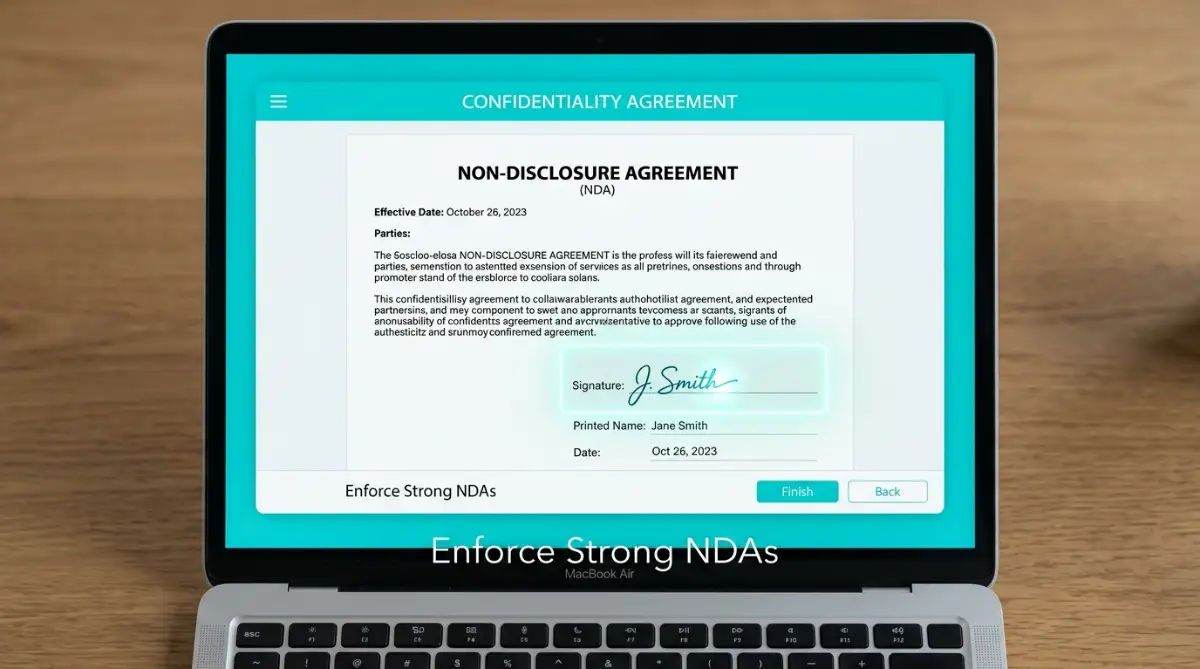
Every person who works with you must sign an agreement before they touch your project. This includes your co-founders, your employees, and any freelance helpers you hire.
A clear contract states that the work they do belongs entirely to your startup. Without this paperwork, a freelancer might legally own the code they wrote for you.
Keep these agreements simple, honest, and easy to understand for everyone involved. It builds a healthy relationship based on trust and clear boundaries.
Pro Tip: I learned this the hard way when our first designer walked away with our early logo sketches. Now, I never let anyone start work without a clear written agreement. This simple habit saves time, money, and unnecessary worry.
Do not wait until your business is famous to register your intellectual property. The registration process can take time, so starting early is a smart move.
You should apply for trademarks on your brand name and logo to stop others from using them. If you have a unique physical invention, look into the process of getting a patent.
For your written content, software code, and visual designs, use copyright protections to secure your ownership. These official registrations act as a strong shield in the business world.
Physical locks are great, but most startup assets live in the digital world. You must limit who has access to your secret files and core software code.
Use strong, unique passwords for every business account and turn on two-factor authentication. Share your files only with the specific people who need them to do their daily jobs.
When an employee leaves your company, make sure to turn off their digital access immediately. These simple security habits prevent accidental leaks and keep your ideas safe.
Want a deeper look at how to protect your brand? Watch this simple breakdown of the best security habits for growing startups.
Protecting your startup does not stop after you register your assets. You must actively watch the market to make sure no one is using your brand.
Set up free internet alerts for your brand name and your main product terms. If you find a copycat, address the issue quickly before it hurts your business reputation.
Sometimes, a polite message is all it takes to resolve a misunderstanding. Being active shows the world that you take your business security seriously.
Many new founders believe that intellectual property protection is only for giant tech companies. This is a dangerous myth that leaves small businesses open to easy attacks.
Another common mistake is believing that a simple handshake agreement is enough to secure your rights. In the business world, if it is not written down on paper, it does not exist.
Finally, do not assume that buying a web domain means you own the trademark for that name. Take the extra step to check official registries and secure your brand properly.
When your business begins to grow, simple steps are no longer enough to keep copycats away. You need to think like a seasoned security expert.
One excellent method is setting up a clean development space for your builders. This means your team writes new software code in an environment completely isolated from external materials.
It ensures that no competitor can ever claim you stole their work or used their private designs. By keeping clean records of your source code creation, you build a solid shield of proof.
Another smart approach is to conduct regular internal asset audits. Every three months, look closely at what new things your team has created.
You might find that you have designed a new logo, built a new tool, or written a unique piece of software. Adding these to your official registry quickly keeps your business protected as you scale up.
Working with overseas contractors is another area where you must be extremely careful. Many local contracts do not work the same way in other countries.
You should always check international laws to make sure your agreements are legally binding across borders. The World Intellectual Property Organization provides excellent resources on how different countries handle these rights.
Additionally, think about your online files and where you keep your most sensitive work. Storing your source code or customer lists on unsecure shared drives is a massive safety threat.
Before you upload anything, understanding the hidden dangers of cloud storage and how end-to-end encryption saves you is an important step to keeping your code safe. Secure your digital files with the same care you use for physical paper contracts.
Another pro-level secret is a practice known as defensive publishing. Sometimes, getting a patent is simply too expensive or takes too much time for a small startup.
By publishing your technical methods openly in a public journal, you make it public knowledge. This prevents any of your competitors from patenting the exact same idea later on.
You can search the databases at the United States Patent and Trademark Office to see what other companies have already made public. This helps you avoid wasting money on ideas that are already out there.
Finally, build a strong security culture within your company from day one. Train your team members to recognize phishing attempts and social engineering tricks.
When your staff understands how to handle sensitive data, your risk of an accidental leak drops significantly. It is always easier to prevent a leak than to clean up the mess afterward.
The Hidden Traps That Can Leave Your Brand Exposed
Many new business owners make simple mistakes that end up costing them their entire company. These traps are often quiet and hard to see until it is too late.
One major trap is sharing your project too early with the world. You might feel excited to pitch your fresh idea at a local startup meetup or a public contest.
However, talking about your unique methods before securing them is a massive risk. If you reveal your invention publicly, you might lose the legal right to patent it in the future.
Another common mistake is assuming your co-founders own nothing individually. When a group of friends builds a startup together, they rarely think about what happens if someone leaves.
If a co-founder walks away without signing a proper asset transfer agreement, they still legally own a piece of your code. This can make it impossible to attract investors or sell your business later.
Just like you would track every single cent with the beginner's blueprint to zero-based budgeting to avoid wasting money, you must account for every line of code to avoid wasting your brand's future. Keeping clear records of who wrote what is absolutely necessary.
We also see founders overpaying for legal mistakes that could have been avoided with simple planning. A legal battle over a stolen brand name can drain your startup funds in a matter of weeks.
While you can learn how to stop overpaying and force your bank to lower your personal loan rates to manage your money, preventing a lawsuit is always the best option. Do not let preventable legal fights force you into heavy debt.
Another mistake is using free, generic contracts you found on the internet. These templates are often outdated and do not cover your specific industry or local laws.
Relying on them gives you a false sense of safety while leaving your assets completely exposed. A customized agreement written by a professional is always worth the investment.
Ignoring the digital safety of your hardware is another quiet threat that many teams ignore. If your developers do not use secure, updated systems, your software code can be stolen directly from their machines.
A legal crisis is like a computer running too hot; it can shut down your operations entirely. Just as you would learn how to diagnose and fix overheating issues in high-performance laptops before the hardware breaks, you need to catch these security issues before they break your company.
Finally, many founders feel overwhelmed by the legal side of business and decide to ignore it completely. Stepping into the legal space unprepared can make you feel dizzy and disoriented.
This feeling is much like trying out virtual reality for the first time without knowing how to stop VR motion sickness and enjoy gaming longer. Take it one simple step at a time, and do not let fear stop you from acting.
To make your protection even stronger, consider holding a quarterly review with your core team. During this meeting, review all the new code, marketing materials, and designs created in the last ninety days.
This proactive habit ensures that nothing slips through the cracks as your company grows. It also helps you identify assets that might need immediate trademarking or copyright registration.
When dealing with independent contractors, always use a specific assignment agreement. This document explicitly transfers all ownership rights of the created work to your startup entity.
Without this specific clause, the contractor may retain the right to use the work they did for you with other clients. This can lead to a messy legal situation where a competitor ends up using your same designs.
Another huge mistake is failing to set aside a specific budget for legal protection. Many founders spend all their seed money on product development and marketing, leaving zero dollars for trademarks or contracts.
When an emergency happens, they find themselves without the funds to hire a lawyer or file a claim. Treating legal protection as an afterthought is a recipe for disaster.
Just like you would not launch a boat without life jackets, you should not launch a business without a basic legal budget. Even a small monthly savings fund dedicated to legal fees can save your company when a crisis hits.
Your Action Plan for Complete Brand Protection
Protecting your startup does not have to be a confusing or expensive process. By taking small, consistent steps, you can build a strong shield around your ideas.
Start by making a simple list of your assets tomorrow morning. Talk to your team about signing ownership contracts and review your digital password safety.
Remember, the goal is not to worry about every single competitor. The goal is to build a business that is too secure and well-organized for copycats to target.
As you move forward, keep learning and staying informed about new rules in your industry. You can read current legal studies on Google Scholar to see how modern courts handle startup copyright cases. This knowledge will help you make smart choices as your business scales.
I know how scary it feels to worry about your ideas being copied by others. But taking control of your legal safety today will give you the peace of mind you need to succeed.
I want you to take a deep breath and start protecting your hard work right now. You have built something truly amazing, and you deserve to see your dream grow safely.
Common Questions About Startup Intellectual Property
Here are some of the most common questions new founders ask about keeping their ideas safe.
Can I protect an idea before building it?
No, you cannot protect a pure idea on its own. You can only protect the actual expression of that idea, such as written code, designs, or physical prototypes. This is why you should start building and registering your assets as soon as possible.
How much does it cost to register a trademark?
The cost varies depending on your country and the number of asset classes you want to protect. In the United States, official filing fees typically start around two hundred and fifty dollars per class. You can find detailed fee structures directly on the USPTO website.
Do I need a lawyer to write a basic NDA?
While you can find standard templates online, having a professional review your contract is always the safest route. A lawyer ensures the agreement fits your specific industry and local state laws. This prevents legal loopholes that could leave your startup exposed down the road.
What is the difference between a copyright and a trademark?
A copyright protects original creative works like software code, written guides, and videos. A trademark protects brand identifiers like company names, logos, and slogans. Both are essential tools for a complete startup security plan.
Disclaimer: The information provided in this article is for educational and informational purposes only. It does not constitute formal legal or financial advice. If you need specific advice for your business, please consult with a qualified attorney in your local area.