
The Silent Risk Hanging Over Your Digital Portfolio
You've spent years buying Bitcoin, stacking Ethereum, and maybe exploring a few altcoins. You've guarded your seed phrases like state secrets. But what happens to all that wealth if you aren't around tomorrow?
Most people assume their family can just log into their exchange account or figure it out. They can't. Without a clear plan, your hard-earned crypto becomes ghost money forever locked in the blockchain.
It’s a terrifying thought. You're trying to build generational wealth, yet one sudden accident could wipe it all out because your loved ones don't know your PINs, passwords, or private keys.
Let's fix that right now.
The Crypto Inheritance Planning Quick Summary
If you're in a rush, here's the quick blueprint of what we'll cover to keep your digital assets safe and accessible for your family:
- The Problem: Traditional wills don't automatically cover decentralized crypto wallets.
- The Danger: Centralized exchanges freeze accounts without legal death certificates and lengthy probate processes.
- The Solution: Split your instructions, use hardware wallet backups, and leave clear, non-technical recovery steps for your heirs.
- The Golden Rule: Never write your actual seed phrase in a standard last will and testament that becomes a public legal record.
Why Traditional Estate Planning Fails Digital Assets
Most standard lawyers write wills that mention bank accounts, real estate, and physical cars. They rarely understand how a decentralized blockchain ledger works.
If you leave your crypto on a centralized exchange like Binance or Coinbase, your family faces a nightmare of red tape. Customer support won't hand over funds easily. They'll demand death certificates, court orders, and endless verification documents.
Things get even trickier if your funds sit in self-custody wallets like MetaMask or Ledger. If nobody knows the seed phrase, the crypto is gone. Forever. No password resets exist on the blockchain.
Think about it this way. Decentralization gives you total financial freedom, but it also removes the safety net. You're your own bank, which means you're also your own executor.
Pro Tip: Never store your raw seed phrase in a cloud drive or take a photo of it with your phone. A simple cloud hack strips away all your security before you even think about estate planning.
Comparing Your Options: Centralized vs. Self-Custody Inheritance
To build a solid plan, you need to understand how different storage methods affect your family's ability to access your funds. Let's look at how they compare.

The table above highlights a harsh reality. While self-custody hardware wallets keep hackers away during your lifetime, they can also lock out your spouse or children if you don't leave precise instructions.
You've got to strike a balance between absolute security and practical accessibility. If your security is so extreme that even your trusted family can't break through it in an emergency, it's flawed.
Let’s talk about how to bridge this gap without risking a theft today.
When planning your digital legacy, you must separate your access credentials from your legal wishes. Your will should state who gets the assets, while a separate, secure document should explain how to physically access them.
Pro Tip: Consider using a trusted digital vault service or a split-key inheritance setup where trusted friends or relatives hold pieces of the puzzle that only come together upon your passing.
If you want a clearer visual breakdown of how modern investors handle secure digital handovers, watch this helpful breakdown:
Watch this quick video to understand the basics of setting up digital legacy vaults:
Now that we've covered the hidden traps of ignoring crypto estate planning and why traditional wills fall short, we're ready to dive into the exact step-by-step framework to secure your hardware wallets and draft your emergency instructions.
Setting Up Device-Specific Access Playbooks
You've got your hardware wallet, and you know what a seed phrase is. But how does your family actually access your device using their own technology?
Let's break down the exact playbooks based on what operating systems and email providers your family uses. Don't leave them guessing.
If your spouse uses a Mac while you use a Windows PC, instructions change drastically. You can't assume they know how to install companion apps like Ledger Live or Rabby Wallet.
The Windows vs. Mac Recovery Guide
For Windows users, your family needs to know how to navigate File Explorer and download verified software safely. Tell them to double-check URL extensions to avoid phishing scams.
Mac users have a slightly different workflow. They rely heavily on Finder and security permissions in System Settings to allow third-party wallet extensions.
Write down specific instructions for your operating system. Mention where your encrypted backup files live and which browser extensions you use.
iOS vs. Android Mobile Wallet Recovery
If you store funds on mobile apps, your family's phone type matters. An iPhone backup behaves entirely differently than an Android backup linked to Google Drive.
If you use an Android device, ensure your seed phrase isn't accidentally synced to an unsecured cloud trash folder. iPhone users must know your iCloud recovery credentials or have physical access to a trusted backup device.
Make sense? Clear device guidelines save hours of panicked searching during a crisis.
The Emergency Damage Control Template
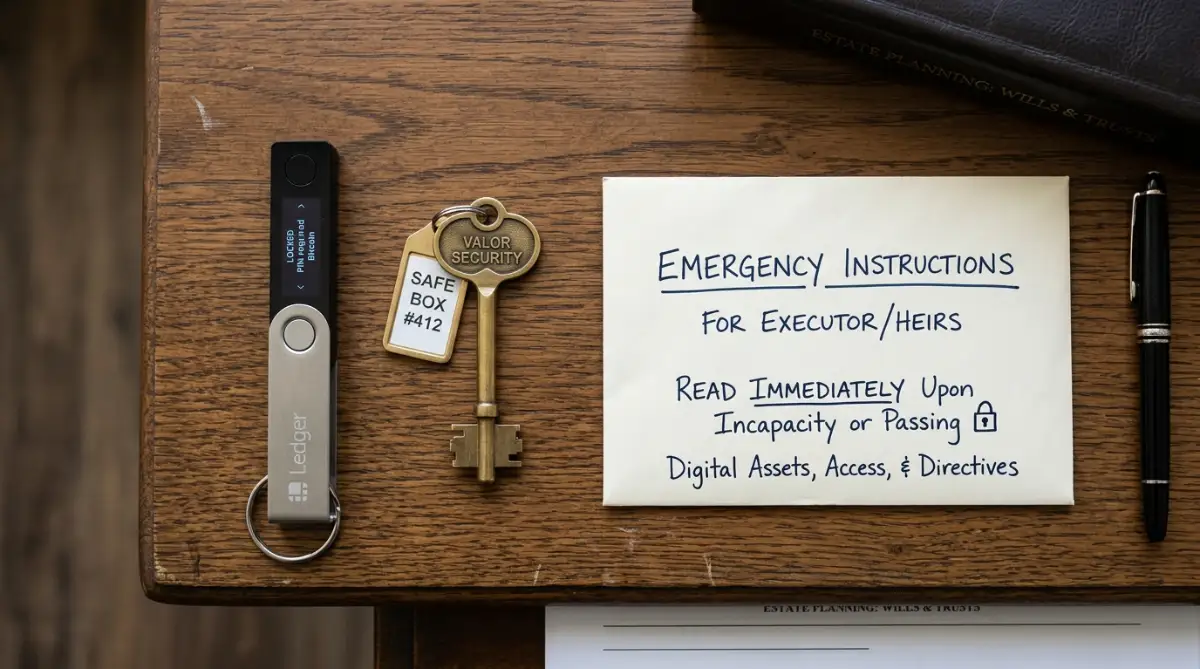
You need to leave a literal roadmap for your family. A document that tells them who to call, what to open, and what never to do.
Here's a practical template you can copy, paste, and modify for your own offline emergency letter. Keep this locked in a physical home safe alongside your hardware wallet.
📄 Emergency Digital Asset Memo
To My Dearest Family,
If you are reading this, it means I am no longer here to manage our digital investments. Please don't panic, and don't rush into making quick financial moves.
- Do not throw away any hardware devices (Ledger, Trezor, USB drives).
- Look inside the bottom shelf of the office safe for the physical seed phrase notebook.
- Contact our trusted family tech advisor [Insert Name/Contact] before interacting with any online links or DMs offering help.
- Read our portfolio strategy guide on platforms like Naxus Journal to understand how we diversify our portfolio with digital assets safely.
— With love and preparation
Print that out, sign it, and store it safely. It bridges the gap between raw code and human empathy.
The Do's vs. Don'ts of Digital Asset Transfer
When dealing with high-stakes crypto handovers, small mistakes cause permanent losses. Let's look at what you should and shouldn't do.
Common Pitfalls and Myths to Avoid
Many investors fall for bad advice when trying to set up their digital estate plans. Let's clear up some dangerous myths right now.
Some people think they can just put their private keys in a bank safety deposit box and walk away. They forget that banks require court orders or death certificates to open boxes, which can take months.
Another massive trap is leaving all your passwords in a web browser auto-fill cache. If your computer locks automatically upon your passing or requires your biometric fingerprint to unlock, that cache stays sealed forever.
You've got to use physical, offline redundancies. Real security relies on analog backups paired with modern cryptographic awareness.
To protect your long-term wealth, you should also read up on how to secure crypto assets from hackers and build the ultimate defense guide before passing access down to others.
Taking Action Today
Don't close this tab and think you'll do it next month. Next month turns into next year, and the blockchain doesn't wait for anyone.
Grab a notebook tonight, write down your hardware locations, and brief your partner on the basic steps. It's the greatest financial gift you can leave behind.
Frequently Asked Questions About Crypto Inheritance
Can a lawyer include my crypto seed phrase in my legal will?
No, you shouldn't do this. A traditional will becomes a public legal record after you pass away, meaning anyone who reads it can instantly steal your funds. Keep your access keys private and off public filings.
What happens to crypto on an exchange if no one claims it?
If an exchange account remains inactive for a specific state-mandated period, the funds are eventually turned over to the state government as unclaimed property through a process called escheatment.
Do my heirs have to pay taxes on inherited crypto?
Yes, tax laws vary by region, but heirs usually receive a step-up in basis based on the asset's market value on the day of your passing. Always consult a licensed local tax professional to confirm local rules.
Disclaimer: This guide is provided for educational and informational purposes only and doesn't constitute formal legal, tax, or financial advice. Crypto assets carry substantial risks, and you should consult with a certified estate planning attorney before finalizing your digital asset inheritance strategy.