Why Your Brain Is Your Worst Enemy in the Crypto Market
You stare at the green candles shooting straight up. Your heart races. You feel that familiar itch in your fingers telling you that if you don't buy right now, you'll miss life-changing wealth.
Two hours later, the market dumps. Panic sets in. You sell at the absolute bottom just to stop the bleeding.
Sound familiar? It's happening because your biological wiring is fighting against a ruthless digital asset class.
The Crypto Trading Psychology Quick Summary
- The Root Cause: Your brain treats market volatility like physical danger, triggering primitive fight-or-flight responses.
- FOMO Trap: Chasing green candles leads to buying local tops, which almost always ends in heavy bag-holding.
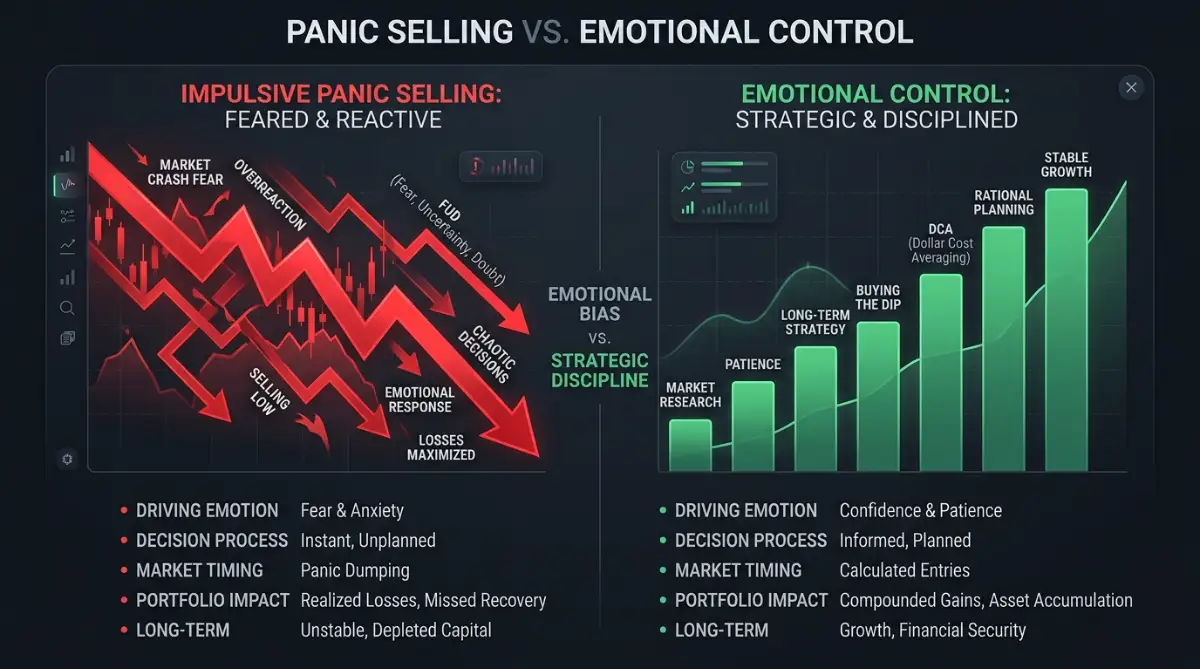
- Panic Selling: Selling during a red dip destroys compounding gains and locks in permanent losses.
- The Fix: Implement strict rule-based systems, predefined exit plans, and emotional detachment to protect your capital.
Breaking Down the Dopamine Loop of High-Frequency Fear
Look, markets don't care about your feelings. They're giant psychological battlegrounds designed to transfer money from the impatient to the disciplined.
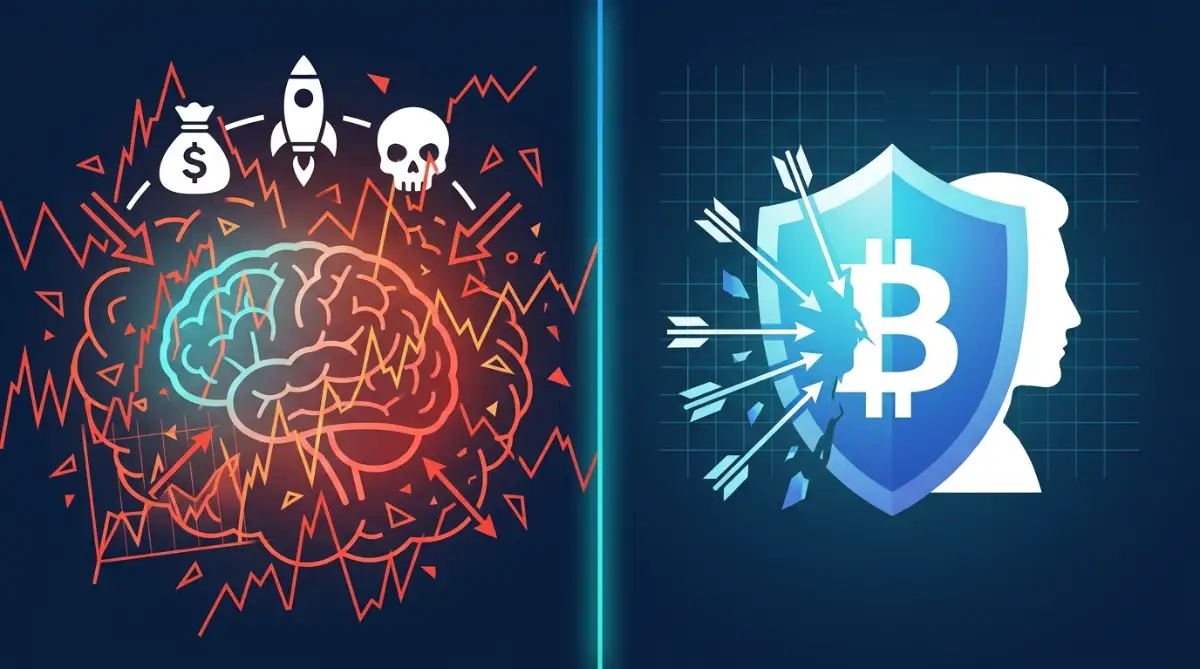
When you see a coin pump fifty percent in a single day, your brain releases a massive hit of dopamine. You stop thinking logically. You stop looking at market caps, liquidity, or project fundamentals. You just want a piece of the action.
It's a trap. Exchanges thrive on this emotional cycle.
To survive, you've got to recognize when your decisions are driven by biology rather than strategy. When you feel a sudden surge of urgency to buy or sell, step away from the screen. That pause is where your survival lives.
Pro Tip: Set an alarm on your phone that locks you out of your exchange app for two hours after any major market dump. Breaking the immediate feedback loop prevents impulsive panic selling.
How Panic Selling Destroys Your Portfolio Over Time
Let's talk about the anatomy of a crash. A sudden macro dip happens, or a major exchange stumbles. Prices drop ten percent. To an amateur, it looks like the end of the world.
Your chest tightens. You think, "I'll sell now and buy back lower."
Except you rarely buy back lower. You usually buy back higher after the relief rally starts, or you stay out in terror while the market recovers without you. It's a double penalty.
Watch this quick visual breakdown of how market makers exploit retail investor panic during high-volatility events.
Think about it like driving a car through heavy fog. If you panic and slam on the brakes in the middle of the highway, you're going to get hit. The market works the same way.
When things get bloody, doing nothing is often the hardest yet most profitable action you can take. You've got to build an internal barrier against the noise.
Spotting Your Personal Psychological Triggers
Everyone has a unique breaking point. For some, it's seeing a portfolio drop by twenty percent. For others, it's watching crypto Twitter brag about massive gains on a random meme coin.
You need to write down your specific triggers. Keep a trading journal. When you make an emotional trade, note down what you felt right before clicking the button. Was it boredom? Was it anger from a previous loss? Was it envy?
Once you map out your emotional triggers, they lose their power over you. You can't fix a leak if you don't know where the pipe is broken.
Pro Tip: Never trade or check charts when you're tired, stressed, or intoxicated. Your prefrontal cortex—the part of your brain responsible for risk assessment—is already offline.
Build a Multi-Device Shield Against Impulse Trading
You can't trade on impulse if you can't access your exchange instantly. It's that simple.
Most traders keep their primary exchange apps logged in on every device they own, making self-destruction just a thumb-tap away. You need a device-specific lockdown strategy to enforce friction.
Here is how you secure your trading setups across different operating systems.
iOS and Android App Store Restrictions
If you trade mostly from your phone, you're living in the danger zone. Push notifications scream at you every time a token drops or pumps.
Turn off all push notifications for crypto apps immediately. Go into your iPhone or Android settings, find your exchange app, and strip away notification permissions.
Next, use screen time limits or third-party app lockers. Set a passcode that you don't even know, or give it to a trusted friend. Make logging into your mobile app a 15-minute chore instead of a 2-second reflex.
Windows and macOS Browser Isolation
Desktop trading presents a different set of psychological traps. Open tabs of live charts feed your anxiety all day long.
If you use Windows, create a dedicated, stripped-down user profile strictly for long-term holding, and keep your active trading browser completely separate.
If you're on macOS, use Safari for casual browsing and isolate your trading accounts inside a locked-down Chrome or Brave profile with extensions like cold-storage blockers installed.
Clear your browser cookies every single evening. Forcing yourself to re-enter two-factor authentication codes every morning creates a natural mental pause before you enter the market.
The Ultimate Portfolio Damage Control Checklist
When the market crashes and your heart starts racing, you shouldn't rely on willpower. You need a physical or digital checklist to pull you back from the edge.
Read through this damage control workflow whenever panic creeps in:
- Step 1: Close all trading charts and turn off your phone screen.
- Step 2: Drink a glass of water and walk away from your desk for at least thirty minutes.
- Step 3: Review your original investment thesis. Did the fundamental utility of your asset change, or is it just price fluctuation?
- Step 4: Check if your losses affect your living expenses. If your rent money is safe, you have zero reason to panic sell.
- Step 5: If you must make a portfolio adjustment, use a structured approach like learning 7 proven ways to diversify your portfolio with digital assets without the fear instead of dumping everything at a loss.
The Psychological Danger of Herd Mentality
People love company when they're losing money. That's why social media platforms turn into echo chambers of despair during a market correction.
When you scroll through online forums, you're absorbing other people's panic. This herd mentality makes you believe that the sky is falling even when historical data shows standard market cycles.
To break free, you need to understand how institutional players manipulate retail sentiment. According to research published by behaviorists at the American Psychological Association, high-stress financial environments cause cognitive tunneling, where humans lose the ability to see long-term outcomes and focus entirely on immediate pain relief.
You can counter this by studying 7 hidden crypto red flags you must avoid save your money to filter out fake market hype and project scams.
Crafting Your Routine for Emotional Stability
Trading success isn't about predicting every market top or bottom. It's about managing your own behavior when things go sideways.
If you want to stop bleeding cash, automate your entries so you don't have to look at the charts all day. Explore options like stop losing money in crypto the secret dca strategy without fear to take the emotion entirely out of your accumulation phase.
When you remove decision fatigue, FOMO and panic selling naturally disappear from your routine.
Frequently Asked Questions About Crypto Psychology
Why do I always buy at the peak and sell at the bottom?
It's a classic symptom of emotional trading driven by social proof and fear of loss. When prices peak, media hype draws you in. When prices crash, fear forces you out. Sticking to a rules-based system fixes this habit instantly.
How can I stop checking my crypto portfolio every five minutes?
Delete exchange apps from your phone's home screen and set daily screen time caps. If you treat your portfolio like a long-term savings account rather than a slot machine, your urge to check prices will fade.
Is dollar-cost averaging effective against FOMO?
Yes, absolutely. DCA removes the pressure of timing the market. When you invest fixed amounts on a set schedule, you stop stressing about daily price swings.
Disclaimer: This guide is provided for educational and informational purposes only and does not constitute financial or trading advice. Cryptocurrency markets carry high risks, and you should never trade with money you can't afford to lose.