

The Hidden Reality of Car Crashes and Insurance Traps
I still remember the sickening sound of crunching metal when a distracted driver hit my rear bumper at a red light. My hands were shaking so badly that I could barely unbuckle my seatbelt to step out.
I thought I handled everything correctly at the scene, but one tiny mistake cost me thousands of dollars later. The insurance representative sounded so friendly on the phone, so I casually mentioned that I was feeling okay right after the crash.
That simple sentence came back to haunt me when severe neck stiffness started two days later and my injury claim was flatly denied.
A car crash changes your entire world in a single fraction of a second. Your heart races rapidly, your mind scrambles for answers, and panic sets in immediately.
You start worrying about high vehicle repair bills, missed work hours, and taking care of your family. This overwhelming emotional shock makes it almost impossible to think clearly when you need your judgment the most.
Insurance companies understand this emotional vulnerability very well and often take advantage of it. They train their claims adjusters to ask specific leading questions while you are still shaken up.
A single wrong word spoken in a state of confusion can instantly wipe out your financial recovery. Innocent accident victims end up losing sleep, struggling with medical debt, and feeling completely betrayed by the system.
Losing your peace of mind while dealing with aggressive insurance tactics is a painful situation that no one should endure. You deserve fair treatment, but getting justice requires knowing the exact traps set before you.
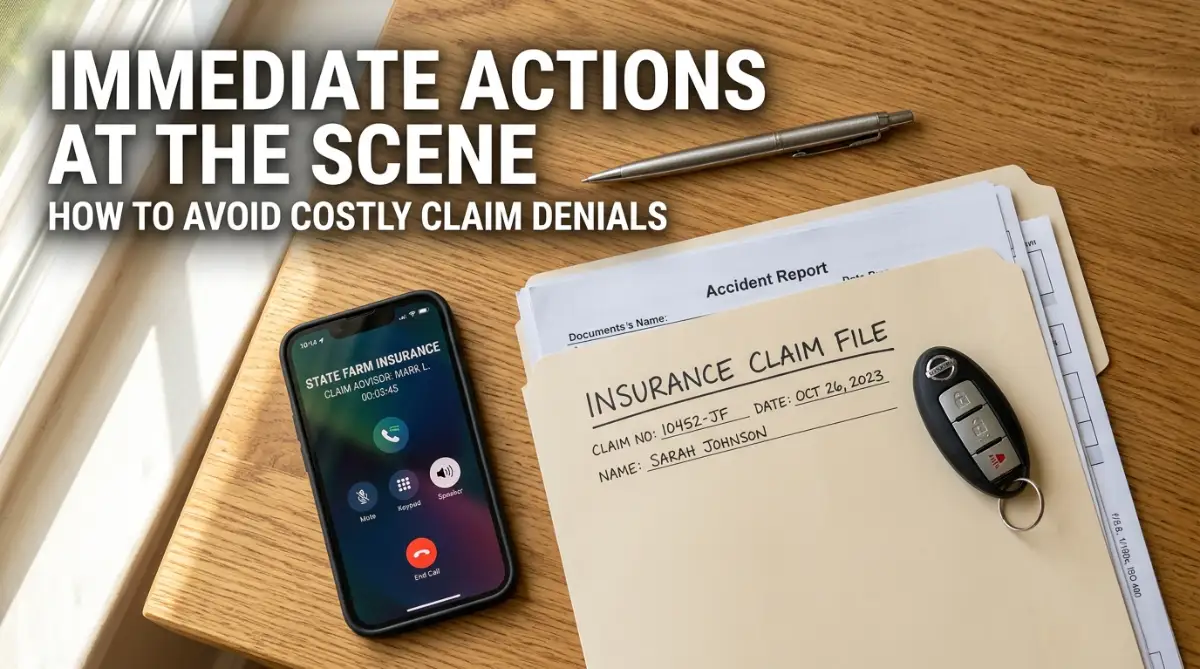
The Silent Claim Killers You Must Avoid Immediately
When an auto accident occurs, what you do in the first few hours determines whether your insurance provider pays your bills or rejects your claim completely. Most drivers assume their insurance policy acts as a safety net, but insurance companies operate as profit-driven businesses.
Understanding these frequent post-accident errors is your strongest defense against an unfair claim denial.
1. Apologizing or Admitting Fault at the Crash Scene
Being polite is a natural human instinct, especially during a traumatic event on the road. Many drivers automatically say "I am sorry" or "I did not see you" simply to calm the situation down.
In the legal world, any statement of apology can be documented as an admission of fault. Adjusters will use your polite words against you to shift liability away from their policyholder.
Always stick strictly to factual statements when talking with the other driver or law enforcement officers. State what happened clearly without offering personal opinions, assumptions, or unnecessary apologies.
2. Delaying Immediate Medical Evaluation and Documentation
Adrenaline is a powerful chemical that masks physical pain immediately after a collision. You might walk away from a ruined car believing you escaped without a single injury.
Internal injuries, soft tissue damage, and whiplash frequently take several days or weeks to show clear symptoms. If you wait to seek medical attention, insurance adjusters will argue that your injuries were caused by a totally separate event.
When I had my accident, I skipped the emergency room visit because I felt fine right away. My doctor later told me that adrenaline hides serious neck trauma for up to forty-eight hours. Now, I always urge my friends to get checked immediately no matter how small the crash seems.
Seeking prompt medical care creates an undeniable official record connecting your physical injuries directly to the car accident.
Understanding How Insurance Adjusters Assess Your Injury Records
Watch this insightful breakdown to discover how insurance adjusters analyze your medical documentation after a car accident.
3. Failing to Collect Comprehensive Evidence on the Road
Relying entirely on a police report to document the accident scene is a massive mistake. Police officers arrive after the crash occurred and often miss small but vital physical details.
Use your smartphone camera to capture high-quality photographs from multiple angles before vehicles are moved. Take close-up shots of vehicle damage, road skid marks, traffic signals, weather conditions, and visible bodily injuries.
Collect contact information, phone numbers, and full names from any neutral bystanders who witnessed the incident occur. Neutral witness testimonies provide powerful leverage when insurance companies try to contest liability.
4. Giving Recorded Statements Without Proper Preparation
Insurance claims adjusters often call victims within twenty-four hours of an accident. They speak in a warm, helpful tone and ask permission to record the telephone conversation.
These calls are designed to extract statements that minimize your injuries or create confusion about crash details. They might ask leading questions like "How are you feeling today?" to trap you into saying "I feel fine."
Myth vs Reality Regarding Insurance Call Policies
- Myth: You are legally required to give a recorded statement immediately when an adjuster calls you.
- Reality: You have the legal right to decline recorded statements until you review your policy or consult an attorney.
You can politely inform the claims adjuster that you will provide a written statement after reviewing your medical status. This simple delay prevents you from making accidental statements that ruin your financial recovery.
5. Accepting the First Fast Settlement Offer
Insurance companies frequently offer quick cash settlements shortly after an accident takes place. These early offers look attractive to victims who face immediate stress over towing fees and missed work.
Accepting a quick settlement requires you to sign a liability waiver that permanently releases the insurance company. This means if you develop chronic back pain three months later, you cannot ask for another penny.
Early settlement offers are almost always lowball estimates that fail to cover long-term medical care or lost earning capacity. Never sign a release agreement until your medical doctor confirms you have reached maximum medical recovery.
6. Sharing Accident Details or Images on Social Media Platforms
In our connected world, sharing life updates on social media is a daily habit for millions. However, insurance defense investigators routinely monitor the public accounts of injury claimants.
Posting a simple photo at a family dinner with a smile can be presented as proof that you are not suffering. Even a post saying "Thankfully it was just a minor crash" can be weaponized to disprove your injury claims.
It is best to maintain absolute silence on all social media platforms while your insurance claim remains active. Instruct your family members not to post photos or tag you in updates until your case concludes officially.
7. Missing Official Reporting Deadlines and Policy Requirements
Every auto insurance policy contains specific contractual clauses requiring prompt notification after an accident occurs. Failing to report an accident within your provider's required timeframe can lead to an automatic claim denial.
State laws also enforce strict statutes of limitations for filing personal injury lawsuits and property damage claims. Waiting too long to file paperwork allows vital evidence to disappear and witness memories to fade away completely.
Notify your insurance carrier promptly about the facts of the crash while keeping detailed written records of every conversation. Write down the name, phone number, and extension of every representative you speak with throughout the process.
Expert Insight: Navigating Communication with Insurance Adjusters
Navigating the aftermath of a vehicle collision requires extreme patience and a careful approach to communication. Adjusters work hard to protect their company's bottom line, which means you must act as your own strong advocate.
By avoiding hasty decisions, documenting every physical symptom, and keeping detailed records, you protect your rights effectively. Treating your insurance claim as an official business matter ensures that you receive fair treatment and proper financial recovery.
Insider Secrets to Protect Your Payout Over the Long Haul
Navigating the financial chaos after a car accident demands a clear strategy that goes far beyond the first afternoon on the highway. Most crash victims lose focus after filing their initial police reports, which leaves them vulnerable during settlement talks.
Protecting your legal rights requires continuous effort and careful organization until your final settlement check clears the bank. Along with these accident protocols, ensuring that your broader financial house is in order—such as knowing how to handle legal challenges like tenant eviction rights misconceptions or knowing how to protect family assets before disaster strikes—keeps you fully secure. Here are advanced strategies that legal professionals use to keep insurance companies accountable throughout the entire process.
Creating a Bulletproof Incident Documentation System
Building a detailed record folder is one of the smartest moves you can make after a crash occurs. Every time you speak with an adjuster, doctor, or mechanic, write down the date, time, and exact summary of the conversation.
Store digital copies of your crash scene photos, repair estimates, and medical bills in a safe location. If you upload these sensitive legal documents to the internet, make sure you understand the hidden dangers of cloud storage and how end-to-end encryption saves you from unauthorized access.
Organized records prevent adjusters from misquoting your past statements or claiming that your medical treatment was inconsistent. Having every paper ready gives you immense confidence during negotiations.
Tracking Unseen Losses with a Daily Recovery Journal
Insurance adjusters love to focus exclusively on medical bills and auto repair receipts because hard numbers are easy to minimize. They routinely ignore non-economic damages, such as chronic physical pain, sleep disruption, and emotional stress.
Start writing in a daily recovery journal to document how your injuries impact your normal lifestyle. Note the daily pain levels you experience, social events you missed, and simple household tasks you could not complete.
Detailed personal journal entries provide convincing evidence of your genuine suffering when your lawyer negotiates for full pain and suffering compensation. This daily routine turns invisible physical pain into concrete evidence that adjusters cannot dismiss easily.
Managing Medical Treatment Timelines Without Interruption
Insurance representatives search endlessly for gaps in your medical treatment plan to justify reducing your payout. If your doctor prescribes physical therapy twice a week, missing sessions creates an easy excuse for the adjuster to claim you recovered fully.
Follow every medical instruction carefully, attend all follow-up appointments, and fill all prescriptions on time. If you must reschedule a doctor visit due to work obligations, inform the clinic immediately and request a written confirmation note.
Keeping an unbroken medical record proves to the insurance provider that your injuries are serious and require full financial coverage.
Understanding Policy Limits and Uninsured Driver Coverage
Every auto policy contains specific coverage limits that cap the maximum payout available for an accident. If the driver who hit you carries only basic state minimum coverage, their insurance policy may not cover all your medical expenses.
Check your own auto insurance agreement to see if you carry uninsured or underinsured motorist protection. According to policy guidelines published by the Insurance Information Institute, this extra protection steps in to cover your remaining medical bills when the at-fault driver lacks sufficient coverage.
Reviewing your coverage details early prevents nasty financial surprises when bills exceed the other driver's policy cap.
Preserving Electronic Evidence from Modern Vehicles
Modern vehicles contain internal computer modules that log speed, braking pressure, and steering angles during a collision. This electronic data offers objective proof of how the accident unfolded on the road.
If liability is disputed, ask your legal representative to send a formal spoliation letter to the other party. Federal legal standards outlined by the Legal Information Institute require parties to preserve electronic crash data once formal notice is served.
Securing vehicle computer logs early prevents crucial technical proof from being erased during vehicle repairs.

Unexpected Financial Traps That Destroy Accident Recoveries
When dealing with the aftermath of a collision, innocent victims often fall into dangerous psychological and financial traps. Panic leads to quick decisions that seem harmless in the moment but cause massive financial ruin down the road.
Recognizing these severe pitfalls helps you stay clear-headed and focused on protecting your future financial health.
Falling for Emergency Financial Quick-Fixes
Waiting for an insurance payout can take several months, leaving you overwhelmed by daily living costs and medical debt. Many accident victims panic and turn to high-interest payday loans or predatory cash advances to keep afloat.
Taking on high-cost emergency debt adds immense pressure to accept a lowball settlement offer prematurely just to pay off high interest. Instead of rushing into bad loans, take time to learn about how to force your bank to lower your personal loan rates through direct negotiation.
Managing your current debt calmly prevents you from making desperate choices that destroy your final financial recovery.
Neglecting Personal Budget Adjustments During Recovery
A sudden loss of income combined with delayed insurance payouts can quickly wreck your household finances. Failing to adjust your monthly spending right after an accident forces you to rely on credit cards for basic necessities.
When income drops due to missed work hours, implementing the beginner's blueprint to zero-based budgeting give every dollar a purpose helps keep household expenses under control. If court actions or formal legal disputes become necessary alongside your insurance claim, reviewing steps detailed in guides like how to navigate small claims court can also guide you through self-representation successfully.
Assigning a specific job to every remaining dollar prevents credit card debt from piling up while your claim is pending.
ACCIDENT CLAIM RECOVERY ROADMAP