
The Heavy Strain of Unresolved Financial Disputes
I still remember sitting at my kitchen table staring at an unpaid $3,200 invoice from a contractor who walked off the job half-finished. My heart sank every time I looked at the unfinished work in my hallway.
I called several local attorneys to ask for help with my situation. Every single lawyer told me that hiring them would cost more than the money I was trying to recover.
I felt completely helpless, frustrated, and cheated out of my hard-earned cash. I worried that my money was gone forever simply because I could not afford legal representation.
When someone owes you money or damages your property, the financial stress quickly spills into your everyday life. You lose sleep wondering how people can get away with taking advantage of your good faith.
Your mind races during dinner, and you feel a burning sense of injustice that just will not go away. Watching your hard-earned savings evaporate while the responsible party ignores your phone calls feels unfair.
Many people suffer in silence because they assume the judicial system is built only for the wealthy. They believe taking legal action requires thousands of dollars in retainer fees and complex legal jargon.
This emotional drain creates endless anxiety and leaves you feeling powerless in your own community. Fortunately, you do not need a law degree or deep pockets to demand justice and recover what belongs to you.
Navigating the Legal System on Your Own Terms
Deciding If Small Claims Court Fits Your Situation
Small claims court exists specifically to give everyday people a simple way to settle monetary disputes. It operates with relaxed rules so you can present your side without hiring a professional lawyer.
You must first verify whether your financial claim falls under your local court's dollar ceiling. Most small claims courts handle cases valued between $2,500 and $15,000 depending entirely on your specific county rules.
If your dispute involves unpaid personal loans, broken service contracts, or minor property damage, this platform is ideal. However, these courts cannot order someone to perform a specific action or issue injunctions.
They only deal in cash judgments to compensate you for actual financial loss. Take time to calculate your exact financial damages down to the penny before taking any formal steps.
Calculating Your True Financial Damages Accurately
You cannot ask the judge for an arbitrary amount of money just because you feel upset. You must prove every single dollar you demand in your initial court filing papers.
Gather every receipt, estimate, contract, bank statement, and text message related to your dispute. Add up the direct expenses you incurred as a direct result of the other party's actions.
For example, if a mechanic broke a part while fixing your engine, gather the replacement invoices. Do not include emotional distress unless you have clear medical bills directly tied to the event.
Keeping your calculation realistic and backed by physical receipts builds immediate credibility with the judge. Judges appreciate clear arithmetic supported by written evidence rather than rounded guesses.
Draft and Send an Official Final Demand Letter
Before you fill out a single legal form, you should always send a formal written demand letter. This document outlines exactly how much money is owed and why you plan to sue if unpaid.
State the facts clearly without using angry words, name-calling, or emotional outbursts. Give the defendant a firm deadline, usually 10 to 14 days, to pay the specified balance.
Send this document using Certified Mail with a Return Receipt requested through your local post office. This step creates official proof that the person received your warning before you filed the lawsuit.
Pro Tip: I once had a dispute where the other party claimed they never received my warning letter in the mail. Because I kept the official Certified Mail tracking receipt signed by them, the judge immediately dismissed their excuse and noted my thorough preparation.
Many disputes actually settle right after the defendant receives a formal demand letter in their mailbox. It shows them that you are serious about taking them to court if they keep ignoring you.
Selecting the Right Judicial Venue for Your Case
You cannot simply file your case at whichever court building is closest to your current home address. You must file in the court that holds proper legal authority over the person or business you sue.
Generally, you file in the county where the defendant currently resides or operates their business. Alternatively, you can file in the county where the contract was signed or where property damage occurred.
Filing in the wrong location can result in the judge dismissing your entire lawsuit on day one. Save yourself time and filing fees by double-checking venue rules on your local government website.
If you are suing a corporation, search your state's business registry to find their registered agent. The registered agent is the official representative designated to accept legal papers on behalf of the company.
Understanding Common Pitfalls and How to Avoid Them
Many self-represented litigants lose valid claims simply because they make basic clerical errors during preparation. Knowing what to avoid keeps your lawsuit moving forward smoothly without sudden delays.
- Filing Against the Wrong Entity: Make sure you sue the official legal name of a business rather than just its store sign name.
- Missing the Statute of Limitations: Legal deadlines exist for filing claims, so do not wait years after an incident occurs.
- Relying on Verbal Promises: Oral agreements are hard to prove without supporting text messages or email threads.
- Ignoring Local Court Rules: Every single county has minor local rules regarding document formatting and evidence submission.
Avoid these mistakes by creating a checklist before submitting any paperwork to the court clerk. Careful preparation stops small errors from destroying an otherwise strong legal claim.
Completing Your Statement of Claim Form Correctly
Visit your local court clerk office or download the official Statement of Claim form from their website. This form requires basic information including full names, addresses, dispute details, and the precise dollar amount sought.
Write a clean, factual summary of what happened using simple chronological order. Use exact dates, times, and clear sentences rather than long-winded stories about your personal feelings.
Watch this helpful video walkthrough to see exactly how to organize your evidence folder before heading to the courthouse:
Double-check every name and street address on the form for typos or spelling errors. Small mistakes on official paperwork cause delays and can even prevent proper legal service later on.
Sign the documents in front of a notary public if your local court requires notarized signatures. Pay the required filing fee, which usually ranges between $30 and $100 depending on your area.
If you cannot afford the filing fee due to low income, ask the clerk for a fee waiver form. Courts provide these financial hardship forms to ensure everyone has equal access to legal resolution.
Serving the Legal Notice Paperwork Properly
Once the clerk processes your claim, you must formally notify the defendant about the legal action. This formal process is called "service of process" and follows strict rules enforced by law.
You cannot hand the legal papers to the defendant yourself in most jurisdictions across the country. You must use an impartial third party who is over eighteen years old and not involved in the case.
Common options include paying the local sheriff department or hiring a professional process server. Many courts also allow service via certified mail handled directly by the court clerk for a small fee.
The server must complete a document called a Proof of Service after delivering the paperwork to the defendant. File this signed Proof of Service form with the court clerk immediately to keep your hearing date valid.
If the defendant avoids being served, you may need to request permission for alternate service methods. The court clerk can explain local procedures for serving evasive individuals legally.
Organizing Unshakeable Evidence for the Hearing Day
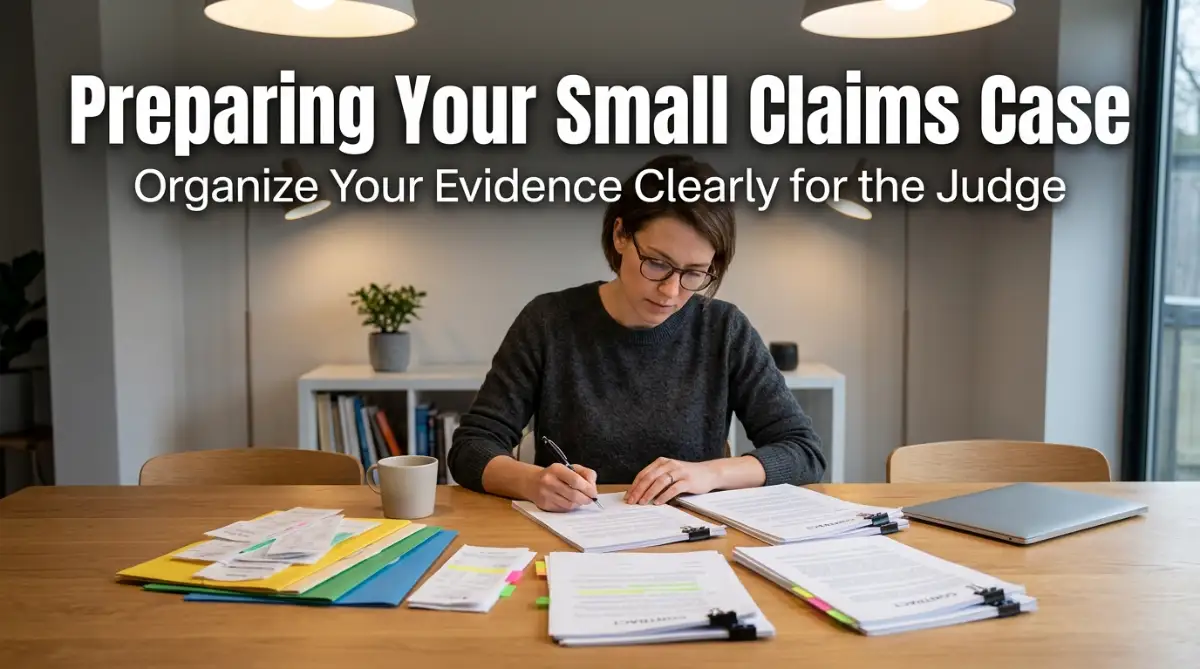
Your evidence is the foundation of your entire case when standing before a small claims judge. Do not arrive at court with a messy stack of unsorted papers jammed into a folder.
Create three neat identical binders or folders containing all your printed evidence documents inside. One binder goes to the judge, one goes to the defendant, and one stays in your hands during testimony.
- Written Contracts: Include signed agreements, estimates, work orders, and clear invoices.
- Proof of Payment: Print clear bank statements, canceled checks, or digital payment receipts.
- Visual Proof: Print clear color photos showing property damage, poor workmanship, or relevant locations.
- Communication Logs: Print text message chains, emails, and notes from phone conversations in date order.
Use numbered tab dividers so you can point the judge directly to specific pages during your presentation. Clear organization shows the judge that you respect their time and take the legal process seriously.
Practice pointing to specific evidence pages out loud while sitting at home before your court date arrives. Smooth presentation reduces nervousness and helps you explain complex events clearly under pressure.
Preparing Your Verbal Presentation for Court Day
Judges handle dozens of small claims cases every single day and value concise, focused presentations. Plan to explain your entire dispute clearly in under five minutes using simple language.
Start your statement by telling the judge who you are, who you are suing, and the exact dollar amount requested. Then, explain the background events in clear chronological order starting from the original agreement.
Focus strictly on facts, actions, and clear numbers rather than making personal attacks against the defendant. Refer directly to your tabbed evidence binder whenever you mention a key agreement or unpaid bill.
Rehearse your statement in front of a mirror or record yourself on your phone to check your speech pace. Practice remaining calm and polite even if the defendant interrupts or disagrees with your statements.
Never argue with the defendant or talk over the judge while court is in session. Always address the judge as "Your Honor" and pause completely whenever the judge speaks to you.
What Happens During the Courtroom Hearing
On the day of your trial, arrive at the courthouse at least thirty minutes before your scheduled hearing time. Park your car early, clear security checkpoints, and locate your assigned courtroom door carefully.
Dress in professional attire such as business casual clothing to show respect for the judicial system. Turn off your mobile phone completely before stepping inside the courtroom doors to avoid disruptions.
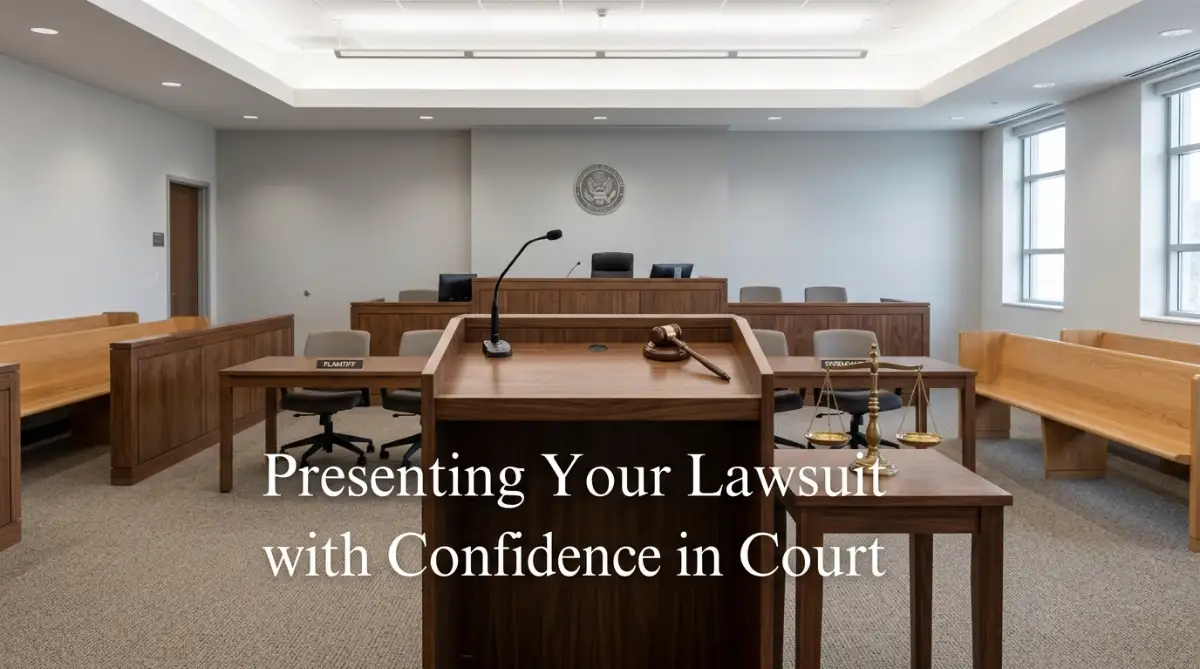
When the clerk calls your case name, step forward calmly and sit at the designated plaintiff table. The judge will usually place both parties under oath to tell the truth before taking statements.
You will present your side of the story first while presenting your organized evidence binder to the court. Speak clearly directly to the judge, stay calm, and answer any questions directly without making excuses.
The defendant will then have an opportunity to present their defense and hand over their own evidence. Listen quietly without shaking your head, sighing loudly, or interrupting their statement to the judge.
What to Do After the Judge Issues a Decision
The judge may announce their decision immediately from the bench or send a written judgment by mail later. If you win, the court issues a formal judgment stating the exact money the defendant owes you.
However, winning the lawsuit is only half the battle because the court does not collect the money for you. You must take active collection steps if the losing party refuses to pay the judgment voluntarily.
You can request a bank levy to collect funds directly from the defendant's active checking account. You may also apply for wage garnishment through their employer depending on state collection regulations.
Another option includes recording a judgment lien against real estate owned by the defendant in your county. Liens prevent the owner from selling or refinancing their property until your judgment balance is fully paid.
Keep careful records of any partial payments you receive after the court issues its final judgment. Once the debt is paid completely, file a Satisfaction of Judgment form with the court clerk to close the file.
Advanced Strategies for Maximizing Your Legal Success
Mastering Pre-Trial Settlement Negotiations
Filing your paperwork with the court clerk often shifts the power dynamic instantly. Many defendants suddenly become eager to talk once they receive an official court summons in their hands.
You can use this moment to negotiate a fair settlement before ever stepping foot inside the courtroom building. Reach out with a professional email offering a reasonable payment plan if they cannot pay the full cash sum immediately.
Always document any settlement agreements in a written contract signed by both parties involved in the dispute. File a formal stipulation of dismissal with the court clerk only after the settlement check has fully cleared your bank.
Securing Subpoenas for Reluctant Witnesses
Sometimes your strongest witness may hesitate to testify voluntarily due to work obligations or personal discomfort. You can ask the court clerk to issue an official legal subpoena that compels them to attend your hearing.
A subpoena provides your witness with legal protection from missing work or school on the day of trial. Hand-deliver the subpoena well in advance according to your local judicial procedures and guidelines.
Make sure to brief your witness beforehand on the exact facts they observed during the original dispute. Keeping their testimony focused on direct observations helps the judge understand the truth without wasting precious courtroom time.
Protecting Your Credit Score and Personal Assets
Dealing with unpaid debts or legal disputes can place a massive strain on your personal budget and monthly cash flow. If court fees or unresolved damages force you to juggle monthly bills, keeping your personal finances organized is key. In parallel with legal actions, taking steps such as those outlined in guides on how to understand tenant eviction rights or how to protect family assets before disaster strikes can ensure your broader household security remains airtight.
Learning how to apply the beginner's blueprint to zero-based budgeting can help you set aside extra cash for court filing fees and process server costs. Assigning every dollar a specific job keeps your daily living expenses secure while you pursue justice.
If court expenses or unpaid loans have created financial pressure, you should also take steps to protect your credit profile. You can learn how to fix a damaged credit score without falling for scams while your court case progresses through the judicial system. Furthermore, if you are a small business owner or freelancer whose professional reputation is being maliciously attacked by the opposing party during the dispute, it is critical to implement proper legal strategies to protect your brand online before permanent damage occurs.
Creating an Unbreakable Paper Trail for Long-Term Security
Digital records like text messages, emails, and bank receipts are easily lost if your hard drive crashes or your phone breaks. Storing sensitive financial records in secure online folders ensures you always have access to legal proof when needed.
Understanding how end-to-end encryption saves your sensitive data will help you back up contract PDFs and evidence photos safely without risking privacy breaches. Having secure backups guarantees that you can print fresh evidence sheets whenever the court clerk requests them.
If your dispute involves high-interest borrowing or personal debts, you may also want to explore ways to lower your personal loan rates to reduce your monthly financial burden. Check out helpful resource collections on Naxus Journal for broader financial tips as you resolve your legal issues.
Utilizing Official Legal Resources and Consumer Agencies
Before attending your hearing, review official state and federal guides on consumer rights to strengthen your legal arguments. The official USA.gov legal aid directory provides access to free local resources and self-help court forms for citizens representing themselves.
If your lawsuit involves dishonest business practices, file a complaint with the Federal Trade Commission before your court date. Mentioning official government filings in your evidence binder shows the judge that your complaints are documented by regulatory bodies.
For disputes regarding credit reporting errors or financial contracts, consult the guidelines on the Consumer Financial Protection Bureau portal. Citing established consumer protection standards adds powerful weight to your claims during court testimony.
Costly Mistakes That Can Ruin Your Small Claims Case
Letting Emotional Outbursts Destroy Your Credibility
The fastest way to lose a winning case is letting your anger take over inside the courtroom. Small claims judges deal with heated arguments daily and have zero patience for disrespectful personal attacks.
Focus strictly on concrete actions, dates, and financial records rather than attacking the defendant's character or moral choices. Raising your voice, rolling your eyes, or interrupting the opposing party makes you appear unreasonable and unprofessional.
Remember that the judge judges the evidence, not who can shout the loudest at the podium. Staying calm and collected demonstrates maturity and reinforces the strength of your written evidence.
Relying on Hearsay Evidence Without Direct Documentation
Many people show up to court claiming their friend or neighbor told them key information about the dispute. Judges consider these unverified statements to be hearsay and will ignore them completely during deliberation.
If a witness cannot attend the hearing in person, ask them to write a signed, notarized sworn statement. Attach real documentation like bank receipts or work orders to support every statement made in that letter.
Do not expect the judge to take your word on repair costs without written mechanic estimates or formal invoices. Paper receipts always carry far more weight than unverified personal recollections of prices.
Failing to Verify the Defendant's True Legal Entity
Suing a business under its trade name instead of its registered corporate name can nullify your entire legal judgment. If you win a judgment against "Joe's Auto Repair" instead of "Joe's Automotive Services LLC," banks will refuse to honor your levy.
Always search your state secretary of state database to find the exact registered name of the bu