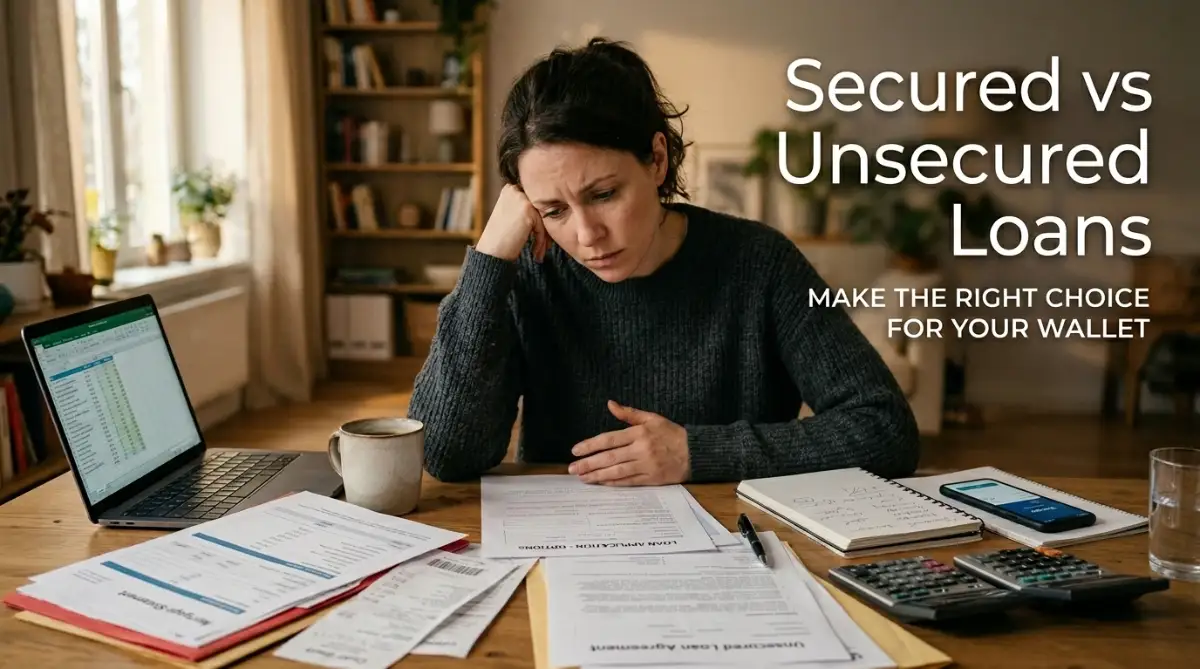
The Heavy Burden of Making the Wrong Financial Choice
I remember sitting at my kitchen table at two in the morning, staring blindly at a massive pile of unexpected medical bills. My chest felt tight, and my hands were actually shaking as I searched for emergency funding options on my smartphone.
I had to decide between putting my family car up as collateral for a quick cash injection or taking a massive hit on interest rates with a signature loan. I honestly felt paralyzed by the fear of making the wrong choice and losing everything I had worked so hard to build.
The banking jargon on those websites looked like a completely foreign language to me. Nobody gave me a straight, simple answer about what would actually happen if things went wrong and I missed a payment.
It was easily one of the most terrifying financial moments of my life. I felt completely alone, desperately trying to make sense of a system designed to confuse average people.
When you are already stressed about money, trying to decode confusing banking terms feels like carrying a heavy boulder on your back. You wake up every single morning with a sinking feeling in your stomach, wondering if you are about to sign your life away. Everyday folks are just trying to consolidate debt, fix their homes, or handle an emergency, but the system makes it incredibly complicated.
This deep fear of making a massive mistake steals your daily joy and ruins your sleep. You might find yourself snapping at your kids or staring blankly at the television because your mind is constantly racing with negative thoughts.
If you pick the wrong borrowing option, you could easily end up paying thousands of extra dollars in hidden fees and interest. Worse yet, you could actually lose the roof over your head or the reliable car you need to get to work.
This endless cycle of worry drains your mental energy and makes you feel completely trapped by your own bank account. You just want a clear, honest explanation so you can fix the problem and get back to living a normal, peaceful life.
Decoding the Borrowing Puzzle: Your Clear Path to Smart Financing
Making a smart decision about borrowing money requires looking past the shiny bank advertisements. Banks are businesses designed to make a profit, and they use different types of lending to manage their own risk. We need to shift the power back into your hands by breaking down exactly how these systems operate behind closed doors.
By understanding the basic math and legal rules, you can walk into any bank with absolute confidence. Let us explore the core differences between these two paths so you can protect your wallet and your peace of mind.
The Foundation of Asset-Backed Borrowing
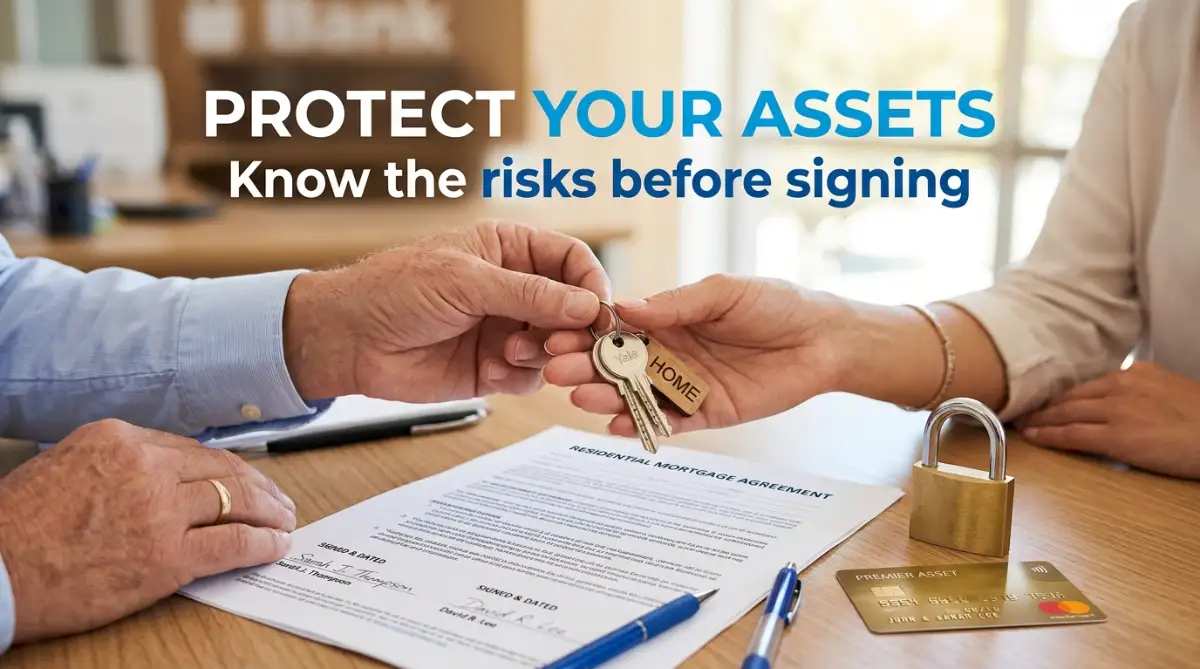
To understand how banks think, you first need to understand the concept of a secured loan. In very simple terms, this means you are offering the bank a physical item of value to hold onto just in case you stop paying. This item is legally called "collateral," and it acts as a massive safety net for the lender.
Think of it like renting an expensive bicycle while on vacation. The rental shop will usually ask you to leave your driver's license or a cash deposit behind before you ride away. If you steal the bicycle, they keep your deposit to cover their loss.
When you get a mortgage to buy a house, the house itself acts as the collateral. If you lose your job and cannot make your monthly mortgage payments, the bank has the legal right to take the house back. This legal process is known as foreclosure, and it completely wipes out your ownership of the property.
Why Banks Love Collateral (And Why You Might Too)
Because the bank holds a legal claim over your property, they feel incredibly safe giving you a large amount of cash. This low level of risk directly translates into a much lower interest rate for you as the consumer. You will always get the cheapest borrowing costs when you put your own assets on the line.
Another massive benefit is that you can usually borrow a much larger sum of money. If you need fifty thousand dollars to completely remodel your kitchen, an unsecured option might deny you instantly. But if you borrow against the equity in your home, the bank will happily write you a check.
This path is also much easier to qualify for if your financial history is less than perfect. Even if your credit score is slightly damaged, lenders are more willing to overlook past mistakes because they know they can just take your car or house if you default.
If you are struggling to understand how interest rates truly impact your monthly budget, watch this simple breakdown before you talk to a banker.
The Freedom and Cost of Trust-Based Borrowing
On the other side of the coin, we have unsecured loans, which operate purely on trust and mathematical formulas. When you take out this type of funding, you do not have to pledge your car, home, or jewelry to the bank. You are simply signing a piece of paper that legally promises you will pay them back over time.
Because there is no physical asset for the bank to repossess, they are taking a massive financial risk on you. If you lose your job and stop paying, the bank cannot simply come to your driveway and tow your vehicle away. Their only real option is to send your account to a collections agency and ruin your credit score.
To make up for this high level of danger, lenders charge significantly higher interest rates. The extra money they collect from these high rates acts as an insurance policy for the bank. If a few people fail to pay back their unsecured debts, the bank still makes a profit from the high interest paid by everyone else.
Understanding the Heavy Reliance on Credit Scores
Since the bank cannot take your property, they rely entirely on your past behavior to predict your future actions. This is exactly why your credit score becomes the absolute most important factor when applying for an unsecured loan. Your credit report acts as a detailed report card showing how well you have handled money over the past seven years.
If you have a history of missed payments or maxed-out credit cards, lenders will see you as a major flight risk. They will either deny your application completely or offer you an interest rate so high it feels like a scam. To get the best terms here, you generally need a score well above seven hundred.
My Personal Realization About Credit Checks
I used to apply for every single credit card offer that came in the mail, thinking it was basically free money. I had no idea that every single application dragged my score down, making me look desperate to future lenders. My biggest realization was that protecting my credit score is actually the cheapest way to borrow money. When I finally stopped applying for random cards and paid off my small balances, my unsecured loan offers suddenly dropped by five percent in interest.
The Speed Factor: Getting Cash in an Emergency
Sometimes, life throws a massive curveball, and you need cash deposited into your checking account by tomorrow morning. This is where unsecured options completely outshine their asset-backed counterparts. Because there is no property to appraise or inspect, the approval process is incredibly fast.
You can often fill out a simple online application from your couch and get a decision in less than sixty seconds. If you are approved, many modern online lenders will wire the funds directly to your bank account within twenty-four hours. This speed makes it the perfect solution for sudden medical bills or emergency home repairs.
Secured borrowing, on the other hand, is a painfully slow and tedious journey. If you want to take out a home equity line of credit, the bank has to send a professional appraiser to your house to verify its exact market value. This entire process involves mountains of paperwork and can easily take four to six weeks to finalize.
What Happens When Life Goes Wrong?
It is incredibly uncomfortable to think about failing to pay your bills, but you must understand the worst-case scenario before you sign a contract. If you default on a secured auto loan, the repo man can legally tow your car away in the middle of the night. You instantly lose your transportation, and they will still sue you if the car sells for less than what you owe.
If you default on an unsecured personal loan, the immediate damage is entirely digital. Your credit score will plummet by over a hundred points, making it impossible to rent an apartment or get a new cell phone plan. The bank will call you relentlessly and eventually sell your debt to aggressive debt collectors.
While losing your good credit hurts deeply, you will at least wake up the next morning with your car in the driveway and a roof over your head. This is the exact reason why many people gladly accept higher interest rates. They are essentially paying extra money just to protect their most valuable physical assets from the bank's grasp.
The Myth of the "Easy" Consolidation
Many people turn to secured loans because they want to consolidate a large amount of credit card debt. The logic seems very sound on the surface. You can pay off all your twenty percent interest credit cards with a single five percent interest home equity loan.
Your monthly payments drop drastically, and you finally feel like you have room to breathe in your budget. However, this strategy is incredibly dangerous if you do not change your spending habits. You have essentially taken unsecured debt and tied it directly to your family's home.
If you lose your job and cannot pay that new consolidation loan, you will lose your house. You transformed a frustrating credit card problem into a massive housing crisis. Never tie your house to consumer debt unless you have a rock-solid emergency fund and a strict monthly budget in place.
The Role of Co-Signers in Trust-Based Lending
If you desperately need an unsecured loan but your credit history is poor, you might feel completely stuck. Lenders will look at your low score and immediately deny your application because the risk is simply too high. In this specific situation, banks might ask you to bring a co-signer to the closing table.
A co-signer is a trusted friend or family member with excellent credit who legally promises to pay the debt if you vanish. The bank uses their good reputation to approve the loan and offer a much better interest rate. It feels like a massive win because you finally get the cash you need to survive.
However, you must treat this relationship with the utmost respect and extreme caution. If you miss a single payment by just thirty days, it goes directly onto your co-signer's credit report. You could easily ruin a lifelong relationship by dragging a loved one into your financial mess.
Analyzing the Total Cost of Borrowing
When choosing between these two paths, you cannot just look at the monthly payment amount. You must look at the total amount of money you will pay over the entire life of the loan. A loan that looks cheap on a monthly basis might actually cost you thousands of extra dollars by the end.
Let us say you need ten thousand dollars for a major home repair. A secured option might offer you a five-year term at seven percent interest, costing you roughly eighteen hundred dollars in total interest. An unsecured option might give you the exact same five-year term but at fifteen percent interest, costing over four thousand dollars in interest.
You have to ask yourself if keeping your house off the legal paperwork is truly worth paying an extra two thousand dollars to the bank. There is no perfect answer that fits every single person. It entirely depends on your job stability, your comfort with risk, and your long-term financial goals.
Smart Moves for Long-Term Borrowing Success
Getting approved for a loan is only the very first step of your financial journey. The real challenge is managing that debt intelligently over the next few crucial years. Many folks make the mistake of relaxing once the funds hit their bank account. You need a solid, proactive plan to handle these monthly payments without losing sleep.
Let us explore some insider strategies that wealthy individuals use to manage their borrowed money. These simple, everyday habits will protect your bank account and keep your stress levels incredibly low.
Master the Art of Pre-Payments
One of the best-kept secrets in banking is the unbelievable power of making extra payments toward your principal balance. Most standard loan agreements are heavily front-loaded with interest charges. This means that during the first few years, your regular monthly payment barely even touches the actual amount you borrowed.
You can easily break this expensive cycle by sending just fifty extra dollars directly toward the principal every single month. By doing this, you instantly shrink the amount of money the bank can charge interest on next month. Over a standard five-year term, this tiny extra effort can easily save you hundreds of hard-earned dollars.
Before you try this, always call your lender and explicitly tell them the extra cash goes straight to the "principal only." Some sneaky banks will just apply the extra cash to your next regular payment. You have to be extremely clear with your instructions so they do not take advantage of your hard work.
Keep Your Digital Footprint Locked Down
When you are desperately searching for the best interest rates online, you leave a massive trail of personal data behind. Predatory lenders actually buy this browsing data to target vulnerable people with terrible, high-interest offers. They will flood your email inbox and call your phone endlessly until you finally give in to their pressure.
You should always protect your personal information just like you protect your physical wallet. Taking a few minutes to learn what is a VPN and how it protects your online privacy on public networks can easily save you from a massive headache. Masking your location stops aggressive salespeople from building a digital profile on your financial struggles.
When lenders cannot track your desperate late-night searches, they lose their negotiating power. You want to remain completely anonymous until you are ready to formally apply with a trusted institution.
The "Do's and Don'ts" of Asset Management
Do create an emergency buffer: Always keep at least two months of loan payments sitting untouched in a separate savings account. If your car breaks down or you miss a week of work, this buffer prevents you from instantly defaulting on your agreement.
Don't tie up multiple assets: Never offer the bank two physical assets when one is perfectly sufficient to secure the loan. If a lender asks for both your car title and your boat title for a small personal loan, they are being greedy. You always want to limit the bank's power over your property.
Do review official financial guidelines: It is always a brilliant idea to read the Federal Trade Commission rules on consumer lending before signing anything. Knowing your legal rights prevents shady finance managers from sneaking illegal terms into your final contract.
Treat Debt Like High-Performance Machinery
Ignoring a small financial leak is exactly like ignoring a strange noise inside your expensive computer. You have to actively learn how to diagnose and fix overheating issues in high-performance laptops before the entire motherboard melts down. Your family budget works in the exact same logical way.
If you notice that making your monthly payment is becoming harder each month, do not just close your eyes and hope for the best. You must open your bank statements and identify exactly where your cash is leaking out. Catching a budget problem early is the only way to stop a complete financial disaster.

Dangerous Borrowing Traps You Must Avoid
Making a wrong turn while managing borrowed money can completely derail your future plans. People often make huge mistakes simply because they feel rushed or heavily pressured by aggressive sales tactics. Dealerships and private lenders actively rely on this nervous energy to maximize their own profit margins.
If you do not know exactly what these hidden traps look like, you will easily fall right into them. Let us break down the most devastating errors everyday folks make when choosing between borrowing options. Avoiding these specific pitfalls is the absolute best way to secure your family's financial peace.
The Emotional Pledging of Family Assets
One of the most heartbreaking mistakes I see is people aggressively pledging their most vital assets out of pure panic. Let us look at a very common, real-life scenario to understand this danger. A family suddenly faces a ten-thousand-dollar medical bill and feels completely overwhelmed by the debt collectors calling them.
Out of pure desperation, they go to a local title loan company and hand over the title to their only reliable minivan. They just want the harassing phone calls to stop immediately. But by doing this, they completely changed the nature of their problem from a digital annoyance to a physical threat.
When they inevitably miss a payment two months later, the lender legally tows the minivan away in the middle of the night. Now they cannot get to work, they lose their income, and they still owe the medical debt. Never let temporary emotional panic force you into risking the physical tools you need to survive.
Misunderstanding the True Cost of the APR
When people shop for funding, they usually only look at the large, bold interest rate printed on the advertisement. They completely ignore the Annual Percentage Rate (APR), which is actually the most important number on the entire page. This simple misunderstanding costs average families an absolute fortune every single year.
The interest rate is just the basic cost of borrowing the money itself. The APR includes that interest rate plus all the hidden origination fees, closing costs, and processing charges the bank tacks on. A loan might advertise a beautiful five percent interest rate but hide massive fees that push the true APR to twelve percent.
Always force the banker to tell you the final APR before you agree to move forward. If you want to dive deeper into how these calculations work, the Consumer Financial Protection Bureau explains loan estimates perfectly. Comparing the APR is the only honest way to see which lender is truly offering the cheapest deal.
Failing to Protect Your Good Habits
Getting out of a messy financial situation requires a total shift in your daily habits. Just as you can learn to stop ruining your laptop battery with simple, consistent actions, you must protect your credit profile. Once you consolidate your debt, you cannot go back to your old spending routines.
Many people take out a large signature loan to completely pay off their maxed-out credit cards. They feel incredibly relieved because their credit card balances instantly drop to zero. However, they leave the credit card accounts open and slowly start buying things on them again a few weeks later.
Within an entire year, they have maxed out the credit cards again, but now they also have a massive monthly loan payment to deal with. This double-debt trap leads straight to personal bankruptcy. If you consolidate your bills, you must completely freeze your credit cards and stop borrowing immediately.
The Dangers of Variable Interest Rates
Some lenders will try to tempt you with an incredibly low "introductory" interest rate that looks totally unbeatable. However, buried deep in the fine print, you will see that this is a variable rate loan. This means the bank has the legal right to change your monthly payment based on national economic trends.
For the first six months, your payment is perfectly affordable and easily fits into your budget. But when the central banks raise rates, your monthly payment suddenly shoots up by two hundred dollars without any warning. This sudden spike creates massive anxiety and can easily push you into default.
Always demand a strict fixed-rate contract when you are borrowing large sums of money. A fixed rate guarantees that your payment will never change, no matter what happens in the global economy. Predictability is your best friend when you are trying to maintain a stable household budget.
The "Pre-Payment Penalty" Surprise
Imagine working extra shifts for two years straight just to pay off your debt early and finally find freedom. You excitedly call the bank to make your final, massive payment and close the account forever. Instead of congratulating you, the customer service agent hits you with a five-hundred-dollar "pre-payment penalty."
Many shady lenders actually punish you for being responsible and paying them back early. They do this because they rely on collecting those monthly interest charges for the entire five-year term. If you pay early, you ruin their profit margins, so they legally fine you to make up the difference.
Before you ever sign on the dotted line, explicitly ask the finance manager if there are any penalties for paying off the balance ahead of schedule. If they say yes, stand up, shake their hand, and walk right out the door. You should never do business with a company that actively punishes good financial behavior.
Getting Dizzy in the Finance Office
Sitting in a cramped banking office while someone rapidly throws confusing numbers at you is highly intimidating. They show you charts, graphs, and extended protection plans until your brain completely freezes up. The spinning numbers might actually make you feel like you need to understand how to stop VR motion sickness and enjoy gaming longer just to regain your physical balance.
When you feel confused, your natural human instinct is to just sign the papers quickly to escape the uncomfortable room. This is exactly what the aggressive finance manager is desperately hoping for. Never let social pressure force you into making a thirty-thousand-dollar mistake.
Take a deep breath, politely ask them to stop talking, and read the document at your own comfortable pace. If you are ever looking for more ways to manage your modern life smoothly, you can always browse the amazing guides at the Naxus Journal. Remember, you are the customer, and you have the absolute right to slow the entire process down.
Your Personal Roadmap to Debt-Free Living
Navigating the complicated world of banking does not have to be a terrifying or confusing experience. You now possess the exact knowledge needed to clearly understand the difference between risking your property and relying on your signature. By carefully evaluating your own credit score and knowing your true budget, you completely strip away the bank's power to manipulate you.
Taking out any form of debt is a serious commitment that requires honesty, discipline, and a clear long-term strategy. Always read the fine print, demand a fixed interest rate, and aggressively protect your physical assets from greedy lenders. If you make smart, calculated moves today, you will absolutely set yourself up for incredible financial freedom tomorrow.
I know exactly how suffocating it feels to be overwhelmed by confusing loan terms because I have been trapped in that exact same dark place. But taking complete ownership of my financial education quite literally saved my family's future and gave me my life back. You absolutely have the power to make the right choice today, so trust your instincts and take control of your wallet!
Real Answers to Your Biggest Borrowing Fears
Can I get an unsecured loan with a bad credit score?
It is very difficult, but not completely impossible. You will likely face extremely high interest rates and very low borrowing limits. Lenders view bad credit as a high risk, so they charge extra money to protect themselves.
What actually happens if I stop paying a secured loan?
The lender has the complete legal right to repossess the physical asset you used as collateral. If you used your car, they will tow it away, sell it at auction, and still sue you if the sale does not cover your full debt. It is a devastating process that severely damages your credit report.
Is it smarter to use my home equity to pay off credit cards?
This can save you money on interest, but it is extremely risky. You are basically taking unsecured credit card debt and attaching it directly to your family's home. If you lose your job and cannot pay, you could easily lose your house.
How quickly can I get approved for a signature loan?
Many modern online lenders and local credit unions can approve your application in just a few minutes. If everything goes smoothly, the funds can be directly deposited into your checking account within twenty-four to forty-eight hours.
Do I really need a co-signer to get better rates?
A co-signer with excellent credit will significantly lower your interest rate and boost your chances of getting approved. However, their own credit score is on the line if you miss a payment. Only use a co-signer if you are absolutely certain you can afford the monthly bills.
Disclaimer: This article is strictly for educational and informational purposes and does not constitute professional financial, legal, or investment advice. Banking terms, interest rates, and lending laws change frequently and vary by location. Always consult with a certified financial planner or a legal professional before signing any binding financial contracts or pledging your personal assets.