

The Silent Anxiety of Relying on a Single Financial Basket
Ever stared at your screen at 3 AM while your portfolio bleeds out? It's a gut-wrenching feeling. You're not alone. Let's fix that vulnerability before the next market shift hits.
I still remember waking up in a cold sweat in the middle of the night, grabbing my phone, and frantically checking my investment app. My entire life savings were tied up in just one traditional asset class, and the market was crashing hard. I watched the numbers drop, feeling a heavy knot in my stomach and a deep sense of helplessness. It felt like I was riding a rollercoaster without a seatbelt, completely at the mercy of things I could not control.
Quick Summary:
- Limit high-risk digital assets to 1–5% of your total net worth to keep anxiety low.
- Move assets off exchanges immediately using a hardware wallet to ensure true self-custody.
- Automate purchases using Dollar-Cost Averaging (DCA) to remove emotional trading decisions.
I kept asking myself why I had put all my hard-earned money into a single basket. My friends had warned me about this exact scenario, but I always thought traditional methods were enough to keep me safe. That single, terrifying night changed my entire perspective on money and security. I realized that true financial peace of mind does not come from hoping the market goes up; it comes from building a shield around your money.
Many of you reading this probably know exactly what this heavy anxiety feels like. You work incredibly hard for your money, saving every extra penny you can, only to watch inflation quietly steal your purchasing power. You try to play by the rules, keeping your money in standard accounts, but it barely grows enough to cover your basic daily expenses.
This constant worry creates a dark cloud over your everyday life. It ruins your focus at work, makes you irritable around your family, and robs you of a good night's sleep. When your financial security feels fragile, every piece of global news suddenly feels like a personal threat.
You deserve to sleep peacefully, knowing your future is protected against unexpected economic storms. There is a way out of this trap.

Breaking free from this constant worry requires a complete shift in how we think about holding value. Adding digital assets to your financial plan is no longer just a weird internet trend for tech geeks. When approached with a calm and logical mindset, it becomes a powerful way to build an unbreakable wall around your wealth.
Rebuilding Your Wealth Strategy from the Ground Up
If you're tired of losing sleep over your financial future, you need a completely new approach to managing your money. We're going to walk through a highly practical, stress-free method to slowly introduce new asset classes into your life. The goal here is never to gamble your savings, but rather to build a sturdy financial house with multiple strong pillars.
The Foundation: Why Asset Allocation Matters
Before you even think about buying a digital asset, we need to talk about basic math and risk balance, and how to diversify portfolio digital assets effectively without taking on unnecessary risk. Think of your investment portfolio like a professional football team. If you only put defensive players on the field, you'll never score any goals and you'll slowly lose the game.
On the other hand, if you only play aggressive attackers, one simple mistake will destroy your entire strategy. True safety comes from finding the perfect harmony between highly secure, slow-moving assets and carefully chosen growth assets. Digital currencies act as your agile attackers, but they should never make up your entire team.
Most successful investors suggest keeping these volatile assets to a very strict percentage of your total wealth. A common mathematical rule is to limit this exposure to somewhere between one and five percent of your total savings. This specific number is incredibly powerful because of a simple psychological trick.
If this tiny percentage grows massively, it can significantly boost your overall wealth and give you amazing returns. However, if the market faces a heavy crash, losing such a small fraction won't ruin your life or force you to change your living standards. This strict boundary is your ultimate safety net.
2. Categorizing the Digital Ecosystem Like a Pro
The biggest mistake beginners make is treating all digital currencies exactly the same. The reality is that the digital asset market is like a massive supermarket with very different aisles. You need to know exactly what you're putting in your shopping cart.
First, you have assets designed specifically to act as digital gold and store value over long periods. These are heavily decentralized, meaning no single company controls them, making them highly resistant to sudden manipulation. They're built on pure mathematics and are meant to be held tightly as a long-term defense against inflation.
Next, you have utility networks, which function more like digital oil or internet infrastructure. These platforms allow developers to build global applications, smart contracts, and decentralized financial tools. Investing in these is similar to investing in the early days of the internet infrastructure.
Finally, we have stablecoins, which are digital tokens directly tied to the value of standard money like the US Dollar. These are your quiet waiting rooms. When the market gets too crazy and you want to lock in your profits without moving money back to a slow bank, you simply move your funds into these stable tokens.
3. The Ultimate Shield: Mastering Self-Custody and Security
You can pick the best assets in the world, but if your security is weak, you're building a castle on quicksand. Keeping your assets on a public exchange platform is exactly like leaving your gold bars in a public train station locker. Sure, it's convenient, but you don't actually own the keys to that locker.
Before we move to the exact security protocols, I highly recommend watching this amazing visual breakdown. It completely helped me look at market cycles and will save you from making emotional decisions during market dips.
If the platform goes bankrupt, gets hacked, or simply decides to freeze your account, your money is gone forever. This is why you must learn the beautiful art of self-custody. This means taking full, absolute control of your digital wealth by using a private wallet.
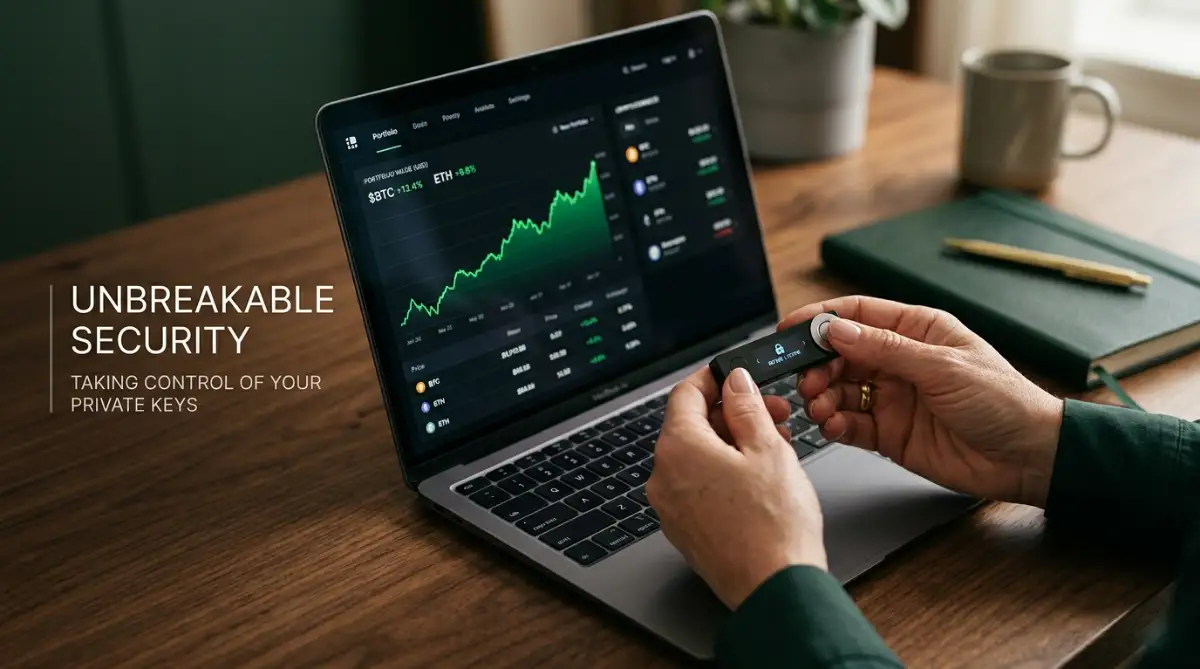
A hardware wallet is a small physical device, often looking like a basic USB drive, that keeps your digital keys completely disconnected from the internet. Hackers can't steal what they can't reach. Setting this up takes maybe thirty minutes of your time, but it provides a lifetime of absolute peace of mind.
I've personally learned this lesson the hard way. I once left a significant chunk of my portfolio on a popular trading platform just because I was too lazy to move it to my private wallet. When the platform suddenly paused all user withdrawals during a market panic, I was completely locked out of my own money for months, and the stress almost broke me. Always take custody of your own assets the very minute you buy them.
4. Creating an Emotionless Dollar-Cost Averaging Plan
Humans are deeply emotional creatures, and our emotions are our absolute worst enemy when it comes to investing. When prices are shooting up to the moon, our greed takes over and we desperately want to buy at the absolute top. When prices crash, our fear paralyses us, and we end up selling everything at a massive loss.
To protect yourself from your own brain, you must automate your buying process. This strategy is widely known as Dollar-Cost Averaging, and it's the ultimate stress-killer. Instead of trying to guess the perfect day to buy, you simply commit to buying a small, fixed amount every single week or month.
Let's say you decide to put fifty dollars into the market every single Friday, no matter what the news says. When prices are high, your fifty dollars naturally buys fewer digital tokens, aligning with standard historical market volatility research on systematic investing. When prices crash and everyone else is panicking, your fifty dollars automatically buys a much larger pile of tokens on sale.
Over a long period, this completely smooths out the crazy price jumps and gives you a highly stable average entry price. You stop checking the charts every five minutes. You stop caring about the daily news. You simply let the automated system do its magic while you enjoy your weekend with your family.
5. The Art of the Annual Portfolio Rebalance
Building a diversified portfolio isn't a "set it and forget it" task for the rest of your life. As months pass, the value of your different assets will grow at entirely different speeds. This natural movement will slowly destroy the careful balance you initially created.
Imagine you started with a strict plan of having five percent of your wealth in digital assets and ninety-five percent in traditional safe assets. If the digital market goes on a massive run, that five percent might suddenly grow to represent twenty percent of your total wealth. You're now taking on way more risk than you originally agreed to.
This is why you must perform a strict portfolio rebalance at least once or twice a year. You log into your accounts, look at the current percentages, and forcefully bring them back to your original target. This forces you to do the smartest thing in investing: selling a little bit of your winners while they're high.
You take those profits and gently move them back into your safer, traditional assets. It feels incredibly difficult to sell an asset that's currently going up, but this disciplined action protects your profits. It ensures that a sudden crash doesn't wipe out all the amazing gains you just made.
6. Evaluating Market Noise and Building Mental Resilience
The digital asset space is incredibly noisy, filled with loud influencers, constant hype, and overwhelming amounts of daily news. Every single day, someone on the internet will tell you that a new random token is going to make you rich overnight. Learning to completely ignore this toxic noise is your absolute biggest superpower.
Real wealth is built through extreme patience and deep boredom. If your investment strategy feels highly exciting, like a trip to a casino, you're probably doing it entirely wrong. Good investing should feel as boring as watching paint dry on a wall.
Whenever you feel the sudden urge to buy something because of a hyped-up social media post, force yourself to wait exactly forty-eight hours. Step away from your computer, go for a long walk, and let your brain calm down. Nine times out of ten, that intense feeling of missing out will completely disappear after two days.
You must accept that you'll never catch every single opportunity in the market, and that's perfectly okay. Your goal is not to be the smartest person in the room or the fastest trader on the internet. Your only goal is to slowly protect your purchasing power and build a comfortable future for your family.
The Costly Illusion of Quick Wealth
Most beginners fall into the trap of overtrading during high-volatility events. Data from major market exchanges shows that over 70% of retail traders lose money during sudden market spikes because they chase green candles. Emotional attachment to random tokens destroys capital faster than inflation ever could. Treat your strategy like a quiet blueprint, not a lottery ticket.
Here's a quick look at how emotional bias compares to rational portfolio structuring during high-stress market cycles:
| Market Phase | Emotional Retail Investor Action | Rational Pro Investor Action |
|---|---|---|
| Market Peak | Buying heavily out of FOMO | Rebalancing and trimming profits |
| Market Crash | Panic selling at a massive loss | Accumulating steadily via DCA |
| Flat Market | Bored and shifting to high leverage | Doing nothing, letting systems run |
Pro Tip: Set a strict calendar reminder to check your portfolio only once every month. If you don't look at the daily noise, you won't react to it. It's that simple.
7. Protecting Your Privacy in a Digital Age
As you begin to hold more digital wealth, you suddenly become a target for highly sophisticated online scammers. They use fake emails, dangerous website links, and clever social engineering to trick you into giving away your private information. Protecting your assets means completely changing how you behave online.
Never, under any circumstances, brag about your investments on social media or tell random strangers how much you own. Treat your digital portfolio with the exact same secrecy you use for your standard bank account passwords. Use dedicated, highly secure email addresses strictly for your financial accounts, separate from your personal or work emails.
Always use heavy two-factor authentication on every single application you use. However, you must avoid using SMS text messages for this security step, as phone numbers can easily be stolen by clever hackers. Instead, use a dedicated authenticator app on your physical phone to generate those temporary login codes.
By treating your privacy like a fortress, you block out ninety-nine percent of the common attacks happening on the internet every day. Security in this space isn't about being a computer genius; it's simply about following basic, strict rules without ever cutting corners.
Bridging the Gap Between Old and New Finance
You don't have to choose between the traditional financial system and the new digital economy. The smartest people in the world are quietly building bridges between both sides. They hold real estate, standard index funds, and a carefully measured slice of modern digital networks.
This beautiful hybrid approach gives you the absolute best of both worlds. You get the comforting stability and regular dividends of the old world, combined with the exciting growth potential of the new internet economy. You're never fully exposed to the failures of either system.
When standard bank interest rates are low, your digital assets might provide the extra push your portfolio needs. When the digital markets face a heavy winter of falling prices, your traditional investments act as a warm blanket, keeping your total wealth steady. This dual-engine approach is the ultimate secret to long-term survival.
Take your time with this journey. Read carefully, start with ridiculously small amounts of money, and focus heavily on understanding the technology before trying to make a profit. Education is your best defense mechanism, and patience is your most valuable asset.
Upgrading Your Strategy for Long-Term Wealth Protection
Once you understand the basic rules of balancing your money, it's time to look at some professional habits that separate successful investors from everyday gamblers. These advanced strategies will help you protect your profits and keep your stress levels completely at zero. You don't need a degree in finance to apply these concepts.
The smartest investors treat their digital portfolios like a quiet business. They don't check the prices every morning, and they never make decisions based on temporary internet hype. Instead, they follow a set of strict personal rules that guide every single move they make in the market.
Mastering the Psychology of Market Cycles
Financial markets move in distinct, repetitive waves, much like the changing of seasons throughout the year. When you understand these seasons, you stop panicking during the cold winters of falling prices. You also stop getting overly greedy during the hot summers of massive price jumps.
During a market winter, everyone on television will tell you that digital assets are completely dead and worthless. This extreme public fear is actually the best time to quietly build your portfolio at a massive discount. The professionals are secretly buying while the average person is running away in absolute terror.
When the market summer returns, your friends and neighbors will suddenly start asking you how to buy digital tokens. This extreme public greed is your signal to stop buying and start thinking about taking some profits off the table. Following behavioral finance principles on market timing can help you stay completely rational when everyone else is acting crazy.
The Smart Way to Handle Asset Taxes
One of the biggest headaches for new investors is figuring out how to deal with the tax authorities. Every time you sell a digital asset for a profit, or even trade one token for another, you create a taxable event. If you ignore this reality, you might face heavy fines and audits down the road.
The secret here is to use automated tax tracking software from the very first day you buy an asset. These secure programs connect safely to your public wallet addresses and keep a perfect record of your purchase prices and selling prices. When tax season arrives, you simply click a button and print a clean report for your accountant.
By keeping your records perfectly organized, you remove a massive layer of anxiety from your financial life. You can also strategically sell losing assets at the end of the year to lower your overall tax bill. Reading up on official guidelines for digital property taxation is a smart habit that protects your wealth from unnecessary government penalties.
Utilizing Your Assets Without Selling Them
As your portfolio grows in value, you might eventually need access to cash for an emergency or a large purchase. The average person simply sells their assets, pays heavy taxes on the profit, and loses their position in the market. However, there's a much smarter way to handle this situation.
You can actually use your secure digital holdings as collateral to borrow standard cash. This method allows you to get the money you need today while keeping your long-term investments perfectly intact. Learning about Smart and Safe Ways to Get a Crypto Loan Without Selling is a powerful tool for maintaining your wealth.
This strategy requires careful planning, as borrowing too much against highly volatile assets can be incredibly dangerous. You must always maintain a very safe loan-to-value ratio to avoid forced liquidations during sudden market dips. When done correctly, it's a brilliant way to access liquidity without triggering massive tax bills.
The Hidden Traps That Quietly Destroy Wealth
Even the smartest people can lose their life savings if they fall into common behavioral traps. The digital economy is full of amazing opportunities, but it's also filled with hidden landmines waiting for greedy or careless investors. Let's walk through the most dangerous mistakes you must avoid at all costs.
The Screenshot Security Disaster
When you set up a private hardware wallet, you're given a backup recovery phrase, usually consisting of twelve to twenty-four random words. This phrase is the ultimate master key to your entire digital fortune. If anyone gets their hands on these specific words, they can empty your accounts in seconds.
The absolute biggest mistake you can make is taking a digital photo of these words with your smartphone. When you take a photo, it often syncs automatically to your remote internet storage without you even realizing it. Understanding The Hidden Dangers of Cloud Storage and How End-to-End Encryption Saves You is absolutely mandatory for anyone holding digital wealth.
Hackers constantly scan cloud accounts looking for these specific photos, and they'll steal your funds while you're sleeping. You must write your recovery phrase on a physical piece of heavy paper or stamp it into a solid metal plate. Store this physical backup in a fireproof safe or a highly secure bank deposit box, completely cut off from the internet. Taking the time to understand How to Secure Crypto Assets from Hackers: The Ultimate Defense Guide will save you from unimaginable heartbreak.
The Shiny Object Syndrome
The internet is absolutely flooded with influencers promoting new, shiny digital tokens that promise to make you a millionaire by next Tuesday. They use flashy cars, fake luxury lifestyles, and aggressive marketing to trigger your deepest fear of missing out. This is a highly calculated psychological trap designed to take your hard-earned money.
These promoters often buy massive amounts of a useless token before they talk about it on social media. When their followers rush in to buy it, the price temporarily shoots up, and the promoter quietly sells everything for a massive profit. The price then crashes to zero, leaving innocent beginners holding completely worthless digital bags.
You must stick to the large, established networks that have survived multiple heavy market crashes. Official agencies constantly publish consumer alerts regarding highly speculative digital investments for a very good reason. Never buy a digital token just because someone on a video platform told you it was going to the moon.
The Over-Leveraging Nightmare
Greed is a very silent poison that can ruin a perfectly good investment strategy in a matter of days. Some investors get bored with slow, steady growth and decide to use borrowed money to multiply their trading profits. This is known as leverage trading, and it's th