
The Heartbreak of an Unexpected Rejection
Getting turned down for a car loan, an apartment lease, or a credit card when you always pay on time feels like a punch in the gut. Most people blame themselves, but the reality is simple: one in every five credit reports contains a serious mistake that drags scores down without warning. You do not need to pay thousands of dollars to a shady repair company to clean this up. In this guide, I will walk you through the exact certified mail strategy I used to force credit bureaus to delete bogus negative marks and restore my score.
Unfortunately, you are probably reading this right now because you have experienced a similar shock. Millions of hardworking people face this exact same nightmare on a regular basis. You pay your bills on time, you live within your means, and you try your best to maintain good financial habits. Then, out of nowhere, you get denied for an apartment lease, rejected for a mortgage, or offered a shockingly high interest rate.
Real-Life Scenario: The Hidden Typo
Have you ever wondered why innocent people get their loan applications destroyed? Often, it comes down to a lazy data entry mistake.
Q: Are banks and lenders just careless with our data?
A: Yes, sometimes they truly are. A tired employee might type a "3" instead of an "8" on a keyboard. Suddenly, a stranger's unpaid medical bill from another state is glued to your personal financial file.
You should never have to pay thousands of dollars in extra interest just because someone else made a typo. It is time to take your financial power back and clear your good name.

How Innocent Mistakes Turn Into Massive Financial Roadblocks
Before we start fixing the problem, we need to understand how these errors actually happen. Your credit score is not generated by magic. It is calculated based on raw data provided by massive data collection agencies known as credit bureaus.
The three major bureaus—Equifax, Experian, and TransUnion—collect billions of pieces of data every single month. They gather this information from data furnishers. Data furnishers are simply the companies you do business with, like credit card issuers, auto lenders, and utility companies.
These furnishers send huge electronic files to the bureaus to update your payment history. Because the volume of data is so massive, the bureaus rely on automated matching algorithms to assign the data to the correct person.
This is exactly where the system breaks down. The algorithms look for similarities in names, addresses, and Social Security numbers. If you share a similar first name with your father, or if you live in a large apartment complex, the algorithm might accidentally merge two completely different files.
Expert Insight on Mixed Files
Financial experts call this a "mixed file," and it is one of the most common reasons for a sudden drop in your score. The algorithm wrongly assumes that you and your neighbor are the same person because you share the exact same street address and a similar last name. The bureaus are fully aware that their matching algorithms are imperfect, yet the burden of fixing these mistakes always falls on the consumer.
The Initial Strategic Move: Securing Your Official Documents
You cannot fix a problem if you refuse to look at it. The very first step to fixing your score is getting your hands on the raw data. You need to see exactly what the banks are seeing.
Many people make the mistake of using free tracking apps to monitor their scores. While those apps are great for a quick glance, they do not show you the deep, technical details of your financial history. You need the full, unedited official documents from all three major bureaus.
By federal law, you are entitled to free copies of your reports from each of the major bureaus through a central government-mandated website. You should request these documents regularly to ensure no strange accounts are popping up.
When you go online to request your files, the system will ask you a series of very specific security questions to verify your identity. They might ask you about a mortgage you took out in a specific city, or a car you purchased years ago.
Do not panic if you see a question about a loan you never had. This is actually a standard security trick to confuse identity thieves. You simply need to select the "none of the above" option. If the online system fails to verify your identity, they will ask you to mail physical copies of your driver's license to prove who you are.
Myth vs Reality: Checking Your Own Score
- The Common Myth: Checking your own credit report will permanently damage your score and make you look desperate to lenders.
- The Scientific Reality: Pulling your own personal file is considered a "soft inquiry." Soft inquiries have absolutely zero impact on your score, no matter how many times you check them. Only "hard inquiries" from lenders applying for new debt will affect your numbers.
A Quick Breakdown of the Big Three Bureaus
You must request reports from all three because errors rarely appear across all of them evenly. A local bank might only report data to TransUnion, meaning a massive mistake could be completely invisible on your Experian file.
Scanning the Fine Print Like a Professional Detective
Once you download your official documents, it is time to sit down with a highlighter and examine every single word. You need to treat this process like an investigation.
Do not just look at the final score at the top of the page. The score itself is just a math calculation. The real secrets are buried deep in the individual account summaries and personal information sections.
Start by checking your personal identity details. Look at your full name, previous addresses, and your listed employers. If you see an address where you have never lived, that is a massive red flag. It heavily indicates that someone else's data is mixed with yours, or worse, you are a victim of identity theft.
Next, carefully review your account statuses. A very common mistake happens when you successfully pay off a loan, but the bank forgets to update the final status. The account might still show up as open, or incorrectly marked as late.
Imagine paying off your entire student loan, feeling an amazing sense of total freedom, only to find out months later that the system still thinks you owe thousands of dollars. This error artificially inflates your debt-to-income ratio, making you look highly risky to future lenders.
Finally, verify the exact dates of any negative items. Negative marks, like late payments or collections, are legally required to fall off your report after a specific number of years. However, shady collection agencies sometimes change the "date of first delinquency" to keep the negative mark on your file much longer than legally allowed. This illegal practice is called "re-aging debt," and you can absolutely fight it.
Before you write your letter, use this quick diagnostic table to identify your exact error type, its severity, and the specific paperwork you must attach:
Organizing Your Evidence for the Upcoming Fight
Finding the error is only half the battle. Now, you need to prepare a rock-solid case to force the bureaus to delete the incorrect data. You cannot simply call them and expect them to take your word for it. You need hard, undeniable proof.
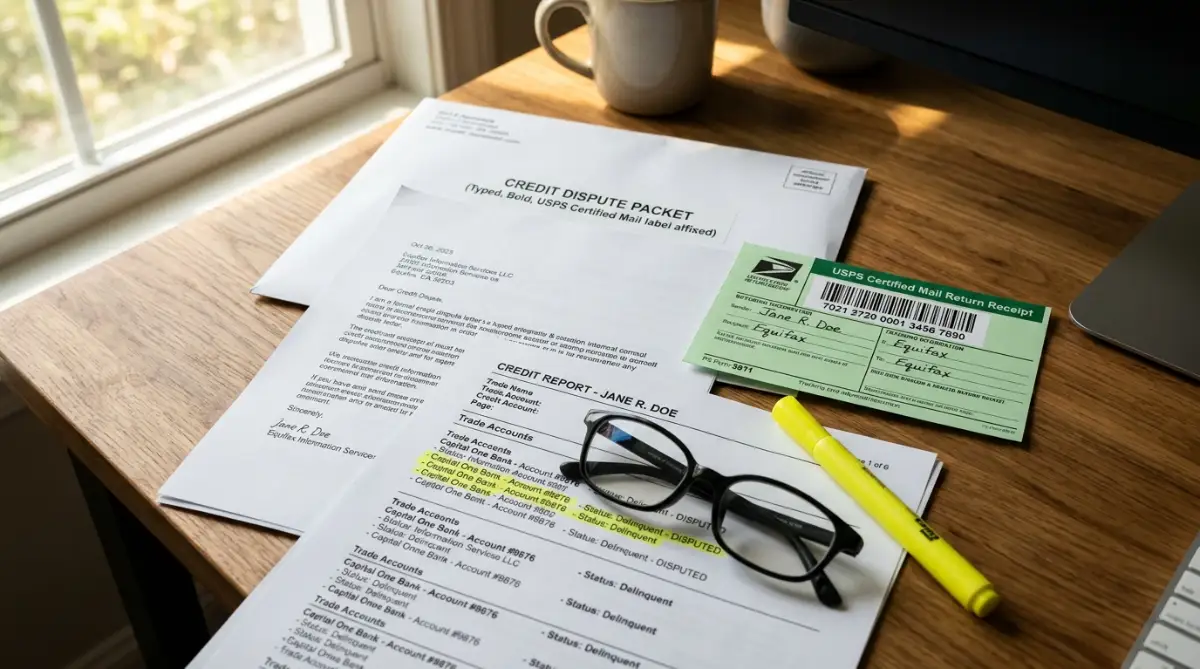
Start creating a physical folder on your desk. Print out the pages of your credit report that contain the incorrect information. Take a brightly colored pen and circle the exact mistakes so they are impossible to miss.
Next, gather any supporting documents that prove your side of the story. If a bank says you missed a payment, print out your actual bank statements showing the exact date the money left your checking account. If a collection agency is chasing you for a medical bill you already paid, find the final receipt from the hospital.
I once tried to dispute a major error by calling a random customer service number I found online, which wasted three weeks of my time because they had no official record of my call. Always put your complaints in writing and send them by certified mail so you have hard proof they received your documents.
If you are completely confused about how to read your credit report line by line, this quick visual guide breaks it down perfectly.
Remember, the clerks reviewing your dispute at the bureau are processing thousands of letters every single shift. They do not have time to read a ten-page emotional letter. You need to make your evidence incredibly clear, highly organized, and easy to verify within two minutes.
Provide a simple bulleted list of what is wrong, why it is wrong, and exactly what action you want them to take. Attach copies of your driver's license and a recent utility bill to prove your identity right away, so they cannot use a minor technicality to reject your dispute.
Advanced Strategies to Win the Paper Trail War
Once you have gathered your documents, you are ready to engage in a formal battle with the reporting agencies. Most ordinary people send a basic letter, cross their fingers, and hope for the best. To actually win this fight, you need to use advanced strategies that hold these massive companies legally accountable.
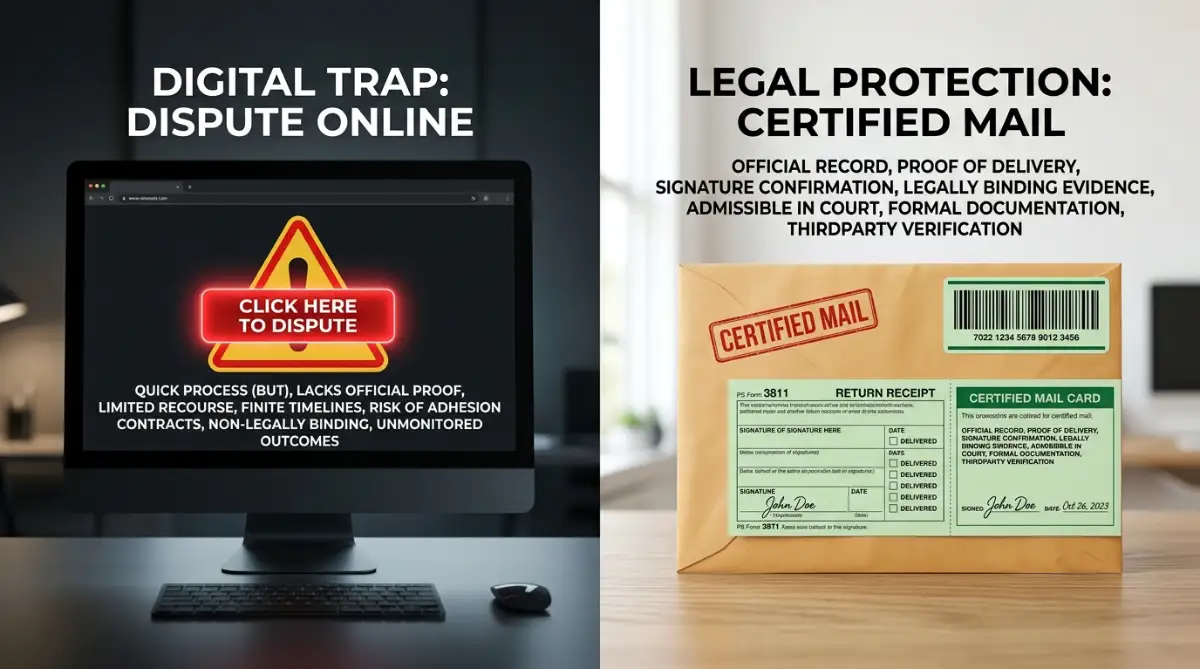
The most powerful weapon you have is the post office. You must always send your dispute packets via certified mail with a return receipt requested. This creates an undeniable physical paper trail. The exact moment a clerk signs for your green postal card, a strict legal countdown clock begins. Under federal law, the bureaus have exactly thirty days to investigate your claim and respond.
If they fail to respond within that timeframe, the law demands that the negative item must be completely deleted from your file. This happens more often than you might think. Bureau employees are completely overwhelmed with paperwork, and sometimes your file simply times out. But what happens if they respond and claim the error is actually correct? This is where you use a highly effective expert secret called the "Method of Verification" request.
Here is a fast 30-day timeline showing what happens behind the scenes after the bureau signs for your letter:
- Day 1 to 3 (Intake): Your physical mail arrives. An automated scanning system converts your paper into an internal e-OSCAR code.
- Day 4 to 15 (Furnisher Notification): The bureau sends a digital verification request to the bank or collection agency that reported the item.
- Day 16 to 30 (Legal Deadline): The creditor must verify the debt with original signed documents. If they ignore the request due to backlogs, the bureau must delete the mark.
- Day 31 to 35 (Final Resolution): You receive an updated credit report showing the item removed, along with your updated credit score.
The Real-Life Scenario: Fighting the "Verified" Response
Imagine you send a perfect letter proving a medical collection is wrong. Three weeks later, you get a generic letter back saying, "We verified this debt is accurate." It feels like a punch to the stomach.
Q: Do I just give up when they say the debt is verified?
A: Absolutely not. This is usually an automated response. You immediately send a second letter demanding they reveal exactly how they verified it.
You have the legal right to ask for the name, address, and phone number of the specific human being who verified the incorrect data. Because they heavily rely on automated computer systems, they almost never have an actual human name to give you. When you push them for the legal standards for debt reporting, they often quietly delete the account rather than face a regulatory complaint.
Once you successfully force them to remove these ugly marks, your score will likely jump up significantly. To protect these new gains, you need to understand exactly how the FICO credit scoring model operates behind the scenes. Maintaining your newly cleaned profile requires setting up automatic alerts on your bank accounts so you never accidentally miss a payment again.

The Hidden Traps That Destroy Your Case
The path to a clean financial file is filled with dangerous traps designed to make you fail. These companies want the process to be highly frustrating so you will eventually give up and go away. If you fall for these common traps, you could accidentally lock the bad data onto your profile permanently.
One of the absolute worst things you can do is use the bright, colorful "Dispute Online" button found on monitoring apps and bureau websites. These buttons look incredibly convenient, but they are a massive trap.
When you submit a complaint through their digital portal, you are forced to choose your reason from a highly limited dropdown menu. You cannot explain the subtle context of your situation. Even worse, by using their digital system, you often accidentally agree to forced arbitration clauses hidden deep in the terms of service. This strips away your right to sue them if they refuse to fix a blatant error. Always stick to physical paper letters.
Another dangerous mistake is disputing every single negative mark on your file at the exact same time. If you mail a letter demanding they remove fifteen different late payments across five different banks, their computer system will instantly flag your letter as "frivolous."
Once your file is marked as frivolous, they legally do not have to investigate anything you send them. You must treat this like a game of chess. Attack the most damaging, high-impact errors first, such as a major collection account or a false bankruptcy. Wait for those to clear before moving on to smaller issues.
You also need to be highly careful about who you trust during this emotional process. When you are feeling desperate, it is incredibly easy to pay a shady company thousands of dollars because they promise overnight results. Learning how to fix a damaged credit score without falling for scams is an essential skill. No outside company can do anything that you cannot do yourself for the cost of a few postage stamps.
Finally, never lie about an accurate debt. If you genuinely missed a payment because you lost your job, do not dispute it as identity theft. Lying on these official forms is considered fraud. Instead, if the data is accurate, you should write a polite "Goodwill Letter" to the original bank, explaining your temporary hardship and asking for forgiveness.
Your Next Steps to Financial Freedom
The heavy burden of bad financial data does not have to haunt you forever. You now hold the exact blueprint needed to force these massive data companies to respect your rights. The system might seem totally overwhelming at first, but taking consistent, targeted action will eventually break through their automated walls.
Let's break down your immediate action plan for tomorrow morning:
- Download the Raw Data: Go to the official government-mandated website and pull your physical reports from all three major bureaus.
- Search and Destroy: Grab a bright red pen and carefully circle anything that looks slightly suspicious, focusing heavily on incorrect personal details and unauthorized accounts.
- Build the Evidence File: Print out your bank statements, paid receipts, and anything else that proves your side of the story.
- Mail the Demand: Send your highly detailed, organized complaint via certified mail so you have an ironclad paper trail backed by official federal consumer protection guidelines.
- Master the System: Once the errors are gone, protect your new score by strictly following the secret rules of credit utilization to maximize your future borrowing power.
I know exactly how heavy and suffocating the burden of a destroyed financial profile feels, because I carried that shame for a very long time. It feels like an invisible chain holding you back from the life you actually deserve. My biggest piece of advice is simply to take that very first step today—print out those unedited pages, grab a highlighter, and permanently reclaim your financial peace of mind. You have the power to change this narrative starting right now.
Frequently Asked Questions About Cleaning Your Profile
How long does the investigation process actually take?
Once the reporting agency receives your formal complaint, they are legally required to complete their investigation within 30 days. They will then send you the final results via mail within five days of finishing their review.
What happens if the bank puts the error back on my file later?
This sneaky practice is known as "reinsertion." If a bureau puts a previously deleted item back on your profile, federal law strictly requires them to notify you in writing within five days. If they fail to notify you, you can force them to remove it immediately.
Should I just wait for the negative marks to fall off naturally?
Most negative marks naturally expire after seven years. However, waiting seven years means paying insanely high interest rates and facing constant loan rejections during that entire time. If the item is truly an error, fighting it now will save you thousands of dollars in the long run.
Disclaimer : The information provided in this article is strictly for educational and informational purposes and does not constitute formal legal or financial advice. We strongly recommend consulting with a certified financial planner or a legal professional regarding your specific personal circumstances before making major financial decisions.