
Why Does a Simple Three-Digit Number Feel Like a Financial Trap?
Most people treat credit scores like an unfair guessing game designed to keep them broke. In reality, that three-digit number is just a bank's risk checklist—and once you know what they are grading, you can easily control it. In this guide, I will break down the exact math behind the FICO formula so you can stop overpaying for loans, rent, and insurance.
Millions of people wake up every single morning feeling trapped by this exact same invisible net. You work incredibly hard, you pay your rent on time, and you try your best to save a little money from every paycheck. Yet, when you want to take a big step forward—like buying a reliable car to get to work or renting a safer apartment for your family—you hit a massive brick wall. The system basically tells you that you are not good enough.
Have you ever noticed how expensive it is to have bad credit? When your rating is low, you do not just get rejected for bank loans. You get hit with heavy cash security deposits just to turn on the electricity or the internet in a new home. Your auto insurance premiums often skyrocket because insurance companies use your financial history to predict your behavior.
Common Questions We Ask Ourselves:
- Is it just a math equation, or is it a test of my personal character?
- Why do banks keep my score a secret until I apply for a loan?
- How can I win a game when I do not even know the rules?
This is the painful reality we face. We are never taught this system in high school or college. We graduate, get handed plastic cards, and are expected to figure out the rules of the game while completely blindfolded. When I first started working, I proudly avoided debt, thinking cash was king. But when I finally needed a loan, the bank treated me like a ghost. Having no history was just as bad as having a terrible history.

Before we dive into the details, here is what you need to know:
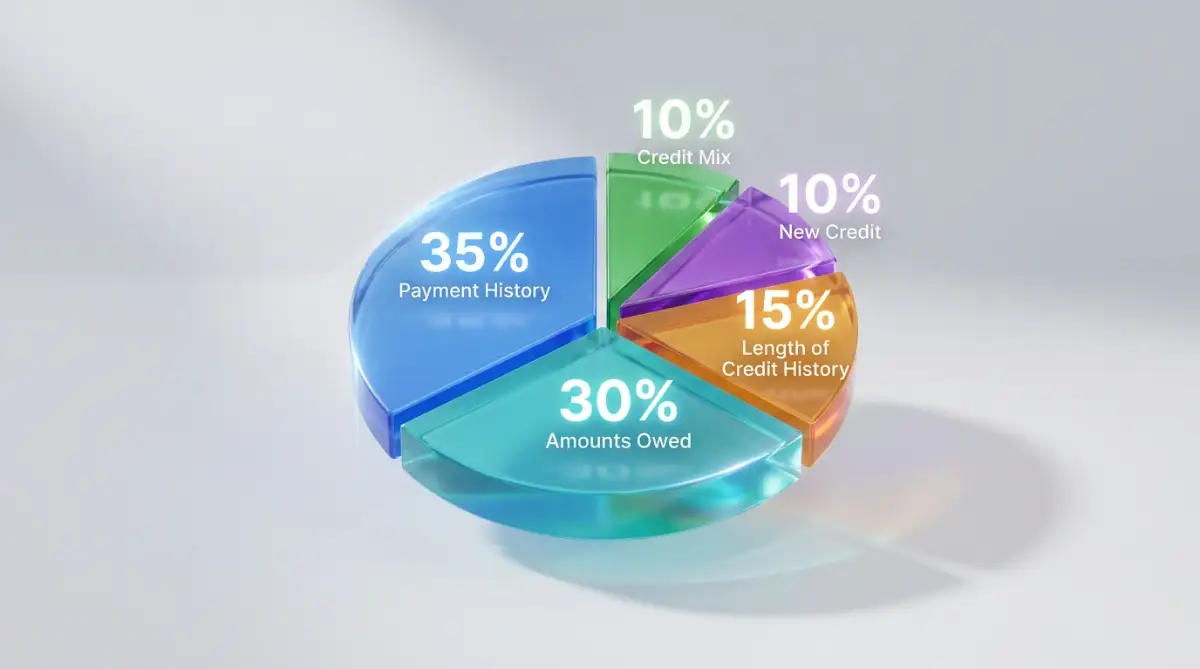
- The Big Two Rule: Your payment track record (35%) and credit utilization (30%) make up nearly two-thirds of your entire FICO score.
- The 10% Sweet Spot: Keep your revolving card balances under 10% of your total limit for the highest possible rating.
- Age Matters: Keep your oldest, no-fee credit cards open to protect your borrowing history length.
- Rate Shopping Safety: Multiple loan inquiries made within a 14-to-45 day window count as a single inquiry to prevent score drops.
Unlocking the Mystery of Your Financial Report Card
We hear so many wild rumors about what actually hurts or helps our borrowing power. Let us look directly at the science and logic behind the numbers. The Fair Isaac Corporation (which is where the name FICO comes from) created a highly specific formula to predict one simple thing. They want to know the exact mathematical chance that you will fall 90 days behind on a bill in the next 24 months.
That is it. It is entirely based on risk prediction. To figure this out, the algorithm looks at five specific categories in your background.
The Heavyweight Champion: Your Payment Track Record
This single category makes up 35% of your total grade. Think of it like a close friend asking to borrow fifty dollars. If that friend has a history of paying you back on time, every single time they ask, you will happily lend to them again. Banks and credit unions think the exact same way. They want absolute proof that you honor your agreements.
Every late payment sends a loud warning signal to future lenders. Even a single missed credit card bill can drop a great rating by dozens of points almost overnight. The algorithm tracks exactly how severe the late payment is. Being 30 days late is a mistake, but being 90 days late is viewed as a financial disaster.
Pro Tip: I learned this the hard way during my early twenties. I completely forgot to pay a small $25 medical bill, thinking it was no big deal. That tiny mistake ended up on my record as a collection account and tanked my overall standing for years. Always double-check your mail and set up automatic payments for at least the minimum amount due to protect yourself.
If you are still feeling confused about how late payments impact your future, this short breakdown explains exactly how banks view your timeline.
Here is a quick breakdown of how missed payments hit your credit report:
The Silent Score Killer: Understanding How Much You Owe
Accounting for 30% of your total score, this factor looks directly at your current debt load. However, it is not just about the total dollar amount you owe. The algorithm cares heavily about a concept called "credit utilization."
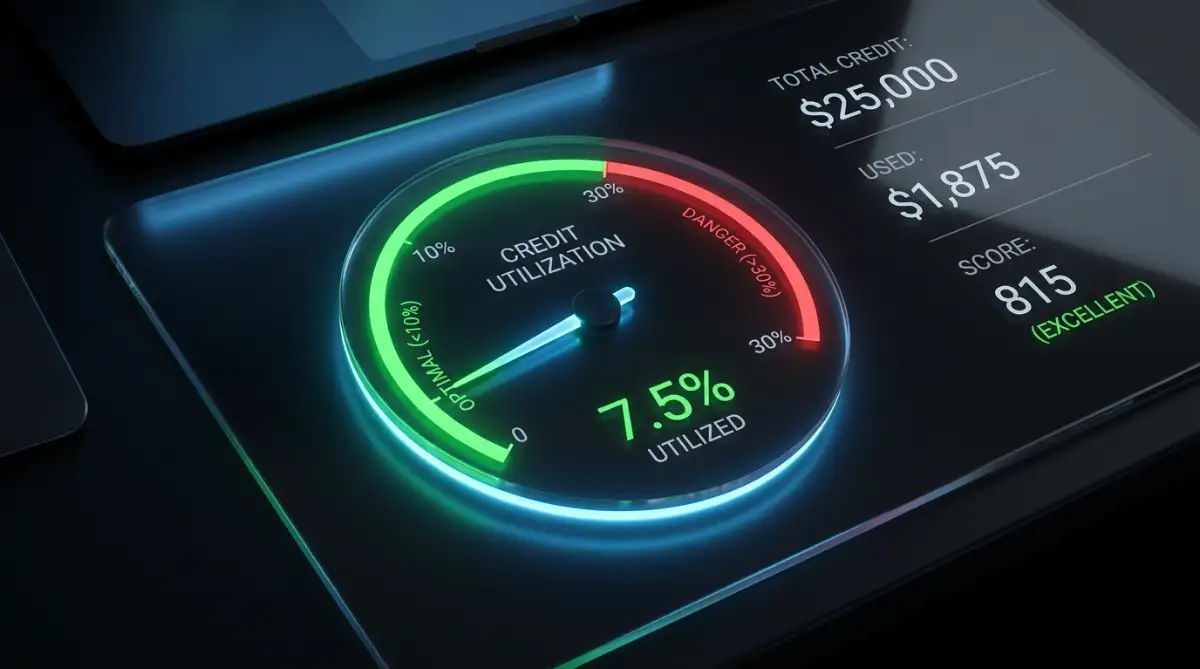
This simply means how much of your available spending limit you are actually using at any given time. Let us use a simple analogy to make sense of this. Imagine you have a credit card with a $10,000 limit. If you spend $9,000 on that card, you are using 90% of your available limit. To a bank, you look desperate for cash. It seems like you are barely keeping your head above water and relying on plastic to survive.
On the other hand, if you only spend $1,000 and pay it off quickly, you are using just 10%. This shows great restraint and financial discipline. Experts generally recommend keeping your utilization below 30%, but keeping it under 10% is the real sweet spot for top-tier results.
Myth vs Reality:
- The Myth: Carrying a small balance from month to month helps build your score because it shows you actively use the card.
- The Reality: Carrying a balance only costs you money in unnecessary interest charges. Paying your statement balance in full every single month is the absolute best way to prove you are a responsible and safe borrower.
The Test of Time: Length of Your Borrowing History
Making up 15% of the pie, the length of time you have been borrowing money matters a lot. A long, positive track record makes lenders feel safe and secure. The system looks at three specific things: the age of your oldest account, the age of your newest account, and the average age of all your accounts combined.
This is exactly why closing an old credit card can sometimes hurt you unexpectedly. When you shut down your very first account, you might accidentally shorten your average history. If an old card has no annual fee, keeping it open and using it once a year for a small purchase can safely anchor your average account age.
The Danger of Looking Desperate: Seeking New Lines of Credit
Making up 10% of your total profile, this category focuses on how often you actively ask for new money. Whenever you apply for a new personal loan or credit card, the bank does a "hard inquiry" or "hard pull" on your background. This official check knocks a few points off your current standing.
Why does the system penalize you for simply applying? Think about it carefully from the lender's perspective. If you suddenly apply for five different credit cards in a single week, it looks like you are experiencing a severe cash flow emergency. Lenders get nervous when they see someone aggressively seeking out new debt.
However, the algorithm is smart enough to recognize normal rate shopping. If you are looking for a mortgage or a car loan, you might apply with several different banks to find the very best interest rate. As long as those applications happen within a short window (usually 14 to 45 days), the system bundles them together. They count as just one single inquiry, protecting you from an unfair penalty.
Showing Versatility: Your Overall Account Mix
The final 10% of the mathematical formula focuses on the variety of accounts you manage. Banks like to see that you can handle different types of financial responsibilities at the same time.
Generally, there are two main types of borrowing you will encounter. First, there is revolving debt. These are your standard credit cards or lines of credit where your balance changes every single month based on what you spend. Second, there is installment debt. These are fixed loans like a home mortgage, a student loan, or a car payment where you pay a set amount every single month until the balance hits zero.
If you only have credit cards, your profile looks a bit thin to major lenders. Having a healthy mix of both revolving and installment accounts proves you are a well-rounded borrower. But remember this important rule: you should never take out a loan and pay interest just to improve this small 10% category. Let this natural mix happen over the course of your life as you reach different milestones.
Smart Strategies for Long-Term Financial Health
One of the absolute best everyday strategies is setting up automatic bill pay for the minimum amount due on all your active accounts. This simple safety net guarantees you will never accidentally miss a payment just because you got busy or sick. I always tell my friends to treat their monthly payment dates like non-negotiable doctor appointments. If you happen to make a mistake, do not panic. You can easily learn the right way to fix a damaged credit score without falling for scams by focusing on simple, everyday habits instead of quick fixes.
Another amazing secret is keeping your very old, unused accounts open. Many people mistakenly think they should cut up and cancel their first basic credit card once they qualify for a premium one. Please do not do this. Closing that old account instantly wipes out your longest history. Instead, put the card in a safe drawer and use it to buy a cheap cup of coffee twice a year.
Do's and Don'ts for Everyday Money Management:
- Do check your official file: You have a legal right to review your data. The Federal Trade Commission recommends checking your file yearly to easily catch identity theft early.
- Do spread out applications: Wait at least six months before asking a bank for new lines of money.
- Don't check limits constantly: Stop logging into your banking app just to see if they raised your spending limit.
- Don't max out emergency cards: Keep plenty of available space on your plastic for genuine medical or family emergencies.

The Hidden Traps That Wreck Your Borrowing Power
Even incredibly smart people fall into sudden financial traps when life gets stressful. The most heartbreaking mistake I regularly see is when someone tries to juggle too many balances at once. You might feel tempted to move money around from one card to another just to survive the month. This specific behavior makes you look desperate to the scoring algorithm.
Retail cashiers are trained to aggressively push store credit cards during checkout by offering a huge instant discount. While saving twenty dollars today sounds amazing, applying for that card triggers a hard inquiry on your background. If you do this at three different stores during the holiday shopping rush, you will accidentally tank your rating.
When money gets tight, it is incredibly easy to ignore the mail and hide from your ringing phone. But avoiding a missed bill only makes the financial penalty much worse. If you are struggling with this fear right now, knowing exactly how to handle a missed personal loan payment without losing sleep can literally save your financial future. The mathematical system will punish you heavily for accounts that go into default. According to official consumer data from the Consumer Financial Protection Bureau on debt collection, letting a debt go to an outside collection agency stays on your public record for a very long time.
Another silent killer is co-signing a loan for a friend or a family member. We all want to help the people we deeply love. However, if your cousin misses their car payment, the bank holds you entirely responsible. That single missed payment drops your personal score instantly, even if you never drove the car yourself. Protect your good name at all costs, because fixing a shattered reputation takes years of exhausting work.
Your Personal Action Plan for Tomorrow
You now understand the hidden math behind the modern banking system. You know exactly what lenders want to see and what makes them immediately run away. The most beautiful part of this mathematical formula is that it constantly updates itself. Your past money mistakes do not have to define your future borrowing power forever.
Tomorrow morning, I want you to pull your free report and look at it like a detective. Check for strange past addresses, misspelled names, or suspicious accounts you do not recognize. Then, look closely at how much money you currently owe versus your maximum limits. Make a solid promise to yourself to slowly pay down those balances until you hit that sweet spot of using less than ten percent.
I spent years feeling terrified of my own financial shadow, completely convinced I would never get ahead of my bills. But the very moment I stopped running and finally faced my numbers, my entire life changed for the better. You have the exact same power to rewrite your financial story starting today, and I know you can absolutely do this.
Common Questions About Borrowing and Risk Models
Does checking my own numbers lower my score?
No, it absolutely does not. Checking your own file through a trusted banking app is considered a soft pull, which never hurts your standing. You can review your own numbers every single day if you want to.
Will paying off a collection account remove it immediately?
Unfortunately, paying a collection does not instantly erase it from your background history. However, a paid collection looks much better to future lenders than an unpaid one. It shows them that you eventually took responsibility for your past mistakes.
How fast can I see an improvement in my rating?
The fastest way to see a positive jump is by aggressively paying down your revolving card balances. Banks usually report your new balances every thirty days. If you wipe out a maxed-out card this week, you could see a nice bump by next month.
Disclaimer: The information provided in this article is for educational and informational purposes only and does not constitute professional financial advice. Please consult with a certified financial advisor or a trusted credit counselor before making major decisions regarding your personal loans, debt management, or overall financial health.