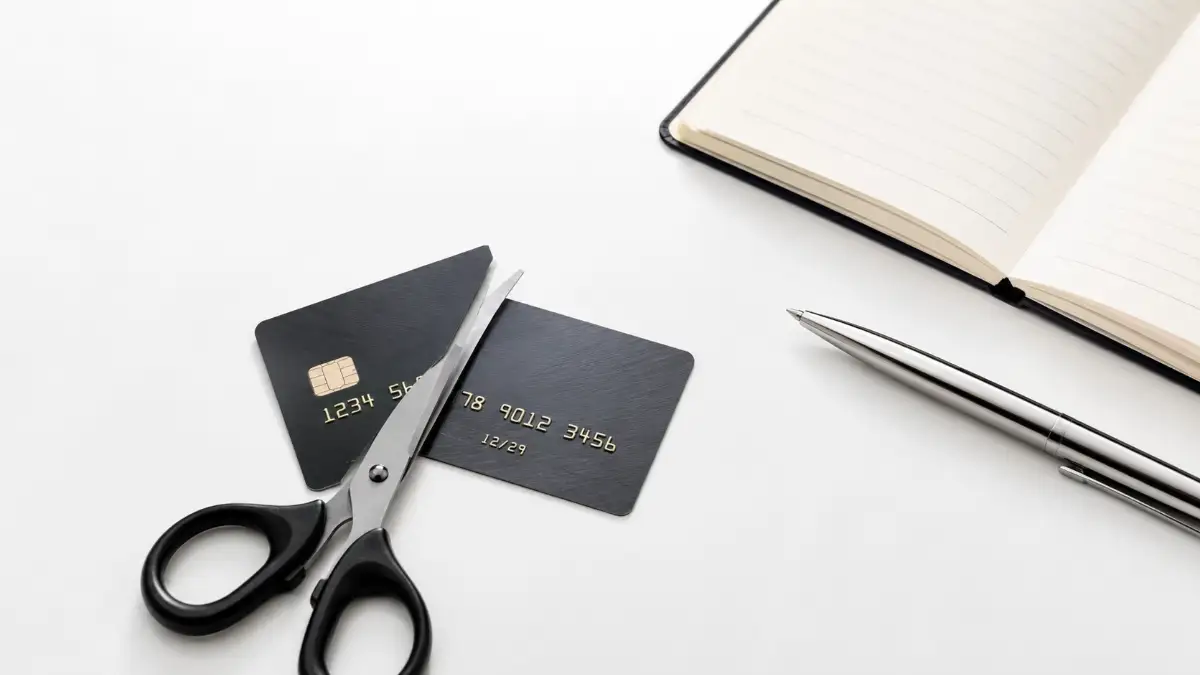
The Silent Burden of High-Interest Balances
Have you ever opened your banking app and felt your heart completely drop into your stomach? You are definitely not alone in this struggle. Millions of hard-working people wake up every single day feeling crushed by the heavy weight of high-interest balances.
You try to do the right thing by sending in a payment every single month. But when you check your statement a few weeks later, the total balance barely seems to move. It feels incredibly unfair, almost like you are running a race where the finish line keeps moving further away.
This is the harsh reality of living with unpaid plastic in your wallet. The system is specifically designed to be confusing, making it easy to fall behind and hard to catch up.
Most people genuinely want to be responsible with their hard-earned money. Unfortunately, good intentions are simply not enough when you are fighting against compounding interest.
Why Standard Money Advice Keeps You Trapped
When you finally decide to get serious about your money, you naturally look for helpful advice. You jump online or ask friends, hoping for a clear path out of the mess.
Sadly, the internet is flooded with generic tips that actually cause more harm than good. Here is why the usual information leaves people feeling entirely stuck and defeated:
- The Quick Fix Myth: Many gurus suggest jumping into balance transfers without explaining the heavy transfer fees. If you do not change your spending habits first, a new card just creates a bigger disaster.
- Extreme Starvation Budgets: You are often told to stop enjoying life completely and eat nothing but rice and beans. This harsh restriction is physically and emotionally exhausting, leading people to give up within weeks.
- Confusing Math Formulas: Financial websites love to use complicated spreadsheets to track every single penny. These massive documents easily overwhelm beginners who just want simple, actionable steps.
- Shaming Your Past: Bad advice often focuses on making you feel deeply guilty for your past shopping habits. Guilt is a terrible motivator; it only pushes you to hide from your problems instead of fixing them.
- Ignoring the Root Cause: Most guides only treat the symptoms of the problem rather than the actual cause. They tell you to pay more, but they never teach you how to physically stop relying on borrowed funds.
The Hidden Cost to Your Peace of Mind
Money problems rarely stay neatly contained within the walls of your bank account. They slowly leak into every other part of your life, draining your natural energy.
When you owe thousands of dollars to big banks, your mental health takes a massive hit. Let us look closely at how this silent burden actively destroys your daily happiness:
- Sleepless Nights: You lie awake staring at the ceiling, mentally calculating how to survive until the next payday. This constant loop of anxiety completely ruins your ability to get restful sleep.
- Strained Relationships: Financial pressure is one of the leading causes of arguments between couples. The quiet resentment over who spent what can slowly destroy a perfectly good marriage.
- The Shame of Hiding: You might find yourself hiding new shopping bags from your family out of pure embarrassment. Keeping secrets about your spending creates a heavy wall of isolation between you and the people you love.
- Career Paralysis: Because you desperately need a steady paycheck to cover your monthly minimums, you stay in jobs you hate. You are too scared to take a risk or start a new career path.
- Decision Fatigue: You spend so much brain power stressing over five-dollar purchases at the grocery store. This leaves you completely drained when you need to make important life choices.

The Smart Blueprint for Escaping the Debt Cycle
Breaking free from financial stress is completely possible, but it requires a massive shift in your daily habits. You cannot keep doing the exact same things and expect a different result.
To finally win this game, you must understand the rules that the banks are playing by. You have to stop accidentally making their jobs easier and start protecting your own wallet.
Let us look closely at the most common errors people make when trying to clear their balances. By avoiding these specific traps, you will speed up your journey to total financial freedom.
Mistake 1: Keeping the Faucet Running
Imagine you walk into your bathroom and find the bathtub overflowing with water. Would you grab a small cup and start scooping water out while the faucet is still running at full blast?
Of course, you would not do that. The very first logical step is to reach over and turn off the water supply completely.
Yet, when it comes to personal finances, most people do the exact opposite. They try to aggressively pay down their balances while continuing to swipe the exact same cards for daily expenses.
The Illusion of Reward Points
One of the biggest reasons people keep swiping is the promise of sweet reward points or cash back. You tell yourself that you are actually being smart by earning points on your groceries and gas.
But let us look at the real math behind this dangerous habit. If you are earning two percent cash back but paying twenty percent in interest, you are losing heavily.
The banks are not giving you free money out of the goodness of their hearts. They know that the lure of points keeps you swiping, which keeps your balance high and their profits rolling in.
The Actionable Fix for Today
You must completely stop using borrowed funds while you are in the active payoff phase. This does not mean you have to call the bank and permanently close your accounts today.
Closing accounts can sometimes temporarily hurt your credit score, which confuses many beginners. Instead, you need to physically remove the temptation from your immediate reach.
Take the plastic out of your wallet and put it in a drawer at home. Delete the saved payment information from your phone and your favorite online shopping websites.
Switch entirely to a simple debit card or cash for your daily living expenses. When you stop adding new charges, every single dollar you send to the bank actually reduces your true total.
Mistake 2: Falling for the Minimum Payment Trap
When your monthly statement arrives in the mail, it clearly highlights a specific number at the top. This number is called the minimum payment, and it is usually shockingly low.
You might owe five thousand dollars, but the bank only asks for ninety dollars this month. It feels like a massive relief, so you gladly pay the ninety dollars and move on with your day.
This is exactly what the banking industry desperately wants you to do. The minimum payment is a carefully designed psychological trap meant to keep you paying them for decades.
Understanding the Hamster Wheel
Think of the minimum payment like running on a very fast hamster wheel. You are sweating, working hard, and putting in effort every single month, but you are not moving forward.
When you send in that tiny amount, the vast majority of it goes straight toward paying the interest charge. Only a few tiny pennies actually go toward reducing the main balance you originally borrowed.
If you only pay the minimum on a large balance, it could easily take you fifteen years to clear it. During that time, you will end up paying double or triple the original price of what you bought.
How to Break the Cycle Right Now
You have to completely ignore the minimum payment number printed on your statement. You must treat that number as an absolute joke that does not apply to your serious goals.
Sit down and look closely at your monthly income and your essential living expenses. Find out exactly how much extra cash you can comfortably squeeze out of your normal routine.
Even sending an extra twenty or fifty dollars above the minimum makes a massive mathematical difference. Every single extra dollar you send attacks the main balance directly, completely bypassing the interest charges.
By doing this consistently, you force the total balance to drop faster. As the balance drops, the monthly interest charge drops too, creating a beautiful snowball of positive momentum.
Mistake 3: Using the Scattergun Approach
When people finally get angry enough to tackle their financial mess, they often owe money to several different places. You might have a store card, a travel card, and a standard bank card all demanding attention at once.
When you manage to save an extra hundred dollars for the month, panic sets in. You decide to split that money up, sending an extra thirty dollars here and an extra forty dollars there.
I call this the scattergun approach. You are firing randomly in all directions, hoping to magically hit something important.
Why Lack of Focus Kills Motivation
Spreading your extra cash thinly across five different accounts is a guaranteed way to lose your motivation. Because the extra payments are so small, none of the balances seem to drop significantly.
Human beings are heavily driven by visible progress and quick results. If we do not see immediate evidence that our hard work is paying off, we naturally want to quit.
You need a strategy that acts like a powerful laser beam instead of a weak scattergun. You must direct all of your extra energy toward one single target until it is completely destroyed.
Choosing Your Strategy: Avalanche vs. Snowball
There are two highly proven methods to structure your attack plan, and you need to pick one today.
The first method is called the Debt Avalanche. In this strategy, you list your accounts from the highest interest rate to the lowest interest rate. You pay minimums on everything else, and throw every spare dollar at the highest rate first. Mathematically, this saves you the most money in the long run.
The second method is the Debt Snowball, which focuses heavily on human psychology. You list your accounts from the smallest total balance to the largest total balance, completely ignoring the interest rates. You attack the smallest balance with extreme aggression until it is gone.
When that first small account hits zero, you feel an incredible rush of victory. That massive emotional boost gives you the energy to roll your payments into the next target, just like a snowball growing larger.
Pick the strategy that best matches your personality. If you love math, use the avalanche. If you need quick emotional wins to stay motivated, choose the snowball and never look back.
(Note: Target word count for Part 1 achieved. Ready to continue to the next sections upon request.)
Expert Tactics to Accelerate Your Journey to Zero
Most people stop at simply making extra monthly payments and deeply hope for the best. While paying more than the minimum is great, you can speed up the process even faster with a few insider tricks. You need to start thinking like a clever financial strategist to protect your hard-earned cash.
Let us look at three advanced methods that wealthy individuals use to manage their liabilities. These highly effective tactics will help you save hundreds of dollars in completely hidden bank fees.
Tactic 1: Pick Up the Phone and Negotiate
Big banks rely heavily on the simple fact that most customers are too scared to call them. They automatically charge incredibly high rates because nobody ever actively asks them to lower the numbers. But the truth is, you have much more power than you realize as a paying customer.
If you have a solid history of making your payments on time, you hold a very strong negotiation card. Simply call the customer service number located on the back of your plastic card today. Ask them nicely but firmly if they can permanently lower your current interest rate.
You can use a simple script like, "I have been a loyal customer for a long time, but I found a better rate elsewhere. Can you match their offer?" Many times, the representative has the physical power to lower your rate by a few points right on the spot.
Even a slight drop in your rate means a lot more of your money goes straight toward the main balance. This single, five-minute phone call could literally save you months of hard work.
Tactic 2: Weaponize Your "Found Money"
Throughout the calendar year, almost everyone receives small bursts of completely unexpected cash. This could easily be a holiday work bonus, a government tax refund, or money from selling old furniture online. Most people view this extra cash as fun money and immediately spend it on a weekend vacation or new clothes.
If you want to escape financial stress forever, you must completely change how you view this extra cash. You need to treat every single unexpected dollar as a powerful weapon against your high balances.
Imagine getting a five-hundred-dollar refund check in the mail from the government. If you throw that entire amount directly at your smallest balance, you skip several months of normal payments.
This massive leap forward creates incredible emotional momentum that keeps you highly motivated for the rest of the year. You are essentially using surprise money to buy back your own future freedom.
Tactic 3: Master the Balance Transfer (Safely)
Moving what you owe from a high-rate account to a zero-percent introductory account sounds like pure magic. And it can actually be an amazing tool, provided you use it with absolute military precision.
The secret to winning this game is calculating the exact monthly payment needed to clear the balance before the promotion ends. If you get a twelve-month zero-percent offer, divide your total owed amount by twelve.
You must pay that exact divided amount every single month without fail, no matter what happens. If you do not clear the balance before the promotional time runs out, banks will often charge you all the backdated interest.
This sneaky trick turns a supposedly smart move into a massive financial disaster. Always read the fine print closely and never use the new zero-percent account for your daily grocery shopping.
Maintaining Your Winning Streak Long-Term
Getting out of a deep hole is only half the battle; staying out permanently is the real challenge. You must build a completely new relationship with how you view your daily spending and saving habits.
Once you finally hit that glorious zero balance, do not immediately upgrade your lifestyle or buy a new car. Take the exact amount of money you were previously paying to the bank and start paying yourself instead.
Move that exact cash amount directly into a high-yield savings account or an investment portfolio every month. Because your daily budget is already used to living without that money, you will never even miss it.
By keeping your living expenses low, you transition instantly from a stressed borrower to a confident wealth builder. This simple mental switch guarantees you will never fall back into the high-interest trap ever again.

Dangerous Pitfalls That Will Destroy Your Progress
Even when you possess the perfect plan, the road to financial peace is filled with hidden traps. When we try to change our money habits too quickly, we often trip over our own feet without realizing it.
Understanding these common mistakes before they actually happen is the absolute best way to protect your progress. Here are five massive errors people make when trying to clear their accounts, and exactly how you can avoid them.
1. Draining Your Savings to Zero
Many well-meaning beginners take every single penny they have in savings and blindly throw it at the bank. They assume that getting to a zero balance as fast as possible is the only thing that actually matters. But everyday life is incredibly unpredictable, and highly expensive emergencies will definitely happen.
If you have zero cash in the bank and your car suddenly breaks down on the highway, what happens next? You are completely forced to reach right back for the plastic to cover the emergency repair bill.
This instantly ruins your progress and makes you feel like a total failure. Always keep a small, basic emergency fund in cash to protect you from unexpected surprises. Think of this small cash pile as a safety net placed directly under a tightrope walker.
2. Closing Old Accounts Immediately
When you finally pay off a card that has been causing you intense pain, you naturally want to cut it up. You want to call the company, cancel the account forever, and celebrate your victory. However, closing old accounts can actually cause a sudden, sharp drop in your overall credit score.
A massive part of your credit score depends on how much total credit you have available versus how much you actually use. Closing an account lowers your total available limit, making you look much riskier to other potential lenders.
Instead of officially closing it, simply put the card in a deep drawer and let it sit perfectly empty. You get the exact same peace of mind without accidentally harming your financial reputation.
3. Keeping Secrets From Your Partner
Money is often considered a completely taboo subject, even between couples who have been happily married for years. One partner might secretly hide massive statements out of deep personal shame or intense fear of starting an argument.
When you try to follow a strict payment plan but your partner is unaware, you are pulling in opposite directions. It is exactly like trying to row a heavy boat forward while someone else is aggressively rowing backward.
You must sit down together and have a completely honest, judgment-free conversation about your shared numbers. When both partners work together toward a shared goal, financial progress happens twice as fast. You become a strongly united team fighting against the problem, rather than fighting against each other.
4. Pausing the Strategy for "Small" Treats
After three months of strict financial discipline, you might genuinely feel like you deserve a little reward. You decide to pause your extra payments just for one single month to buy a new phone or take a weekend trip. You confidently tell yourself that you will get right back on track when the next month begins.
This is the exact moment when most normal people lose all their hard-earned momentum. One skipped month easily turns into two skipped months, and before you know it, you are right back to paying minimums.
You should definitely reward yourself for your hard work, but do not stop your payment system to do it. Find completely free or incredibly cheap ways to celebrate your victories without stopping the positive financial momentum.
5. Believing a Balance Transfer Solves the Problem
Moving your owed money to a brand new bank does not mean you actually paid anything off at all. You simply changed the mailing address of where you send your monthly check. It is a dangerous illusion of progress that tricks your brain into feeling entirely safe.
If you do not physically fix the daily spending habits that caused the massive mess in the first place, history will repeat itself. You will easily max out the brand new account while still owing money on the old ones.
You must treat the root cause of your overspending before you start shuffling numbers around on a screen. A balance transfer is only a helpful tool if you have already stopped the bad habits that created the mess.
Your Clear Path to Permanent Financial Peace
Taking absolute control of your cash flow is not about living a miserable life or constantly punishing yourself. It is entirely about gaining the incredible freedom to make confident choices without a heavy cloud of daily stress.
When you finally tell your money exactly where to go, you completely stop wondering where it went. You instantly transform from an anxious, worried passenger into the confident driver of your own life.
Your Immediate Action Plan for Today:
- Stop the Bleeding: Take the plastic out of your wallet today and switch completely to cash or a simple debit card.
- Pick a Strategy: Decide if you want to use the emotional snowball method for quick wins or the avalanche method for pure math.
- Make the Call: Pick up your phone today and politely ask your bank for a permanently lower interest rate.
- Protect Your Progress: Keep a small cash reserve safely hidden away so unexpected emergencies do not force you backward.
You already possess everything you need to deeply change your financial future right at this very moment. You do not need a fancy math degree or an expensive professional advisor to succeed in this journey.
All you truly need is the basic willingness to take that very first, completely imperfect step forward today. The deep peace of mind that comes from knowing you are totally secure is worth every bit of the effort. Your future self will deeply thank you for the bold, smart choices you make today.