
How a Simple Cash Advance Turned Into a Nightmare
When an unexpected car repair or medical bill wipes out your checking account, borrowing $300 against your next paycheck feels like an instant fix. But behind the bright storefront signs and easy paperwork sits a repayment structure that catches millions of borrowers off guard. The small upfront fee looks harmless at first, yet it often triggers months of high-interest debt and relentless stress. In this practical guide, I will break down the true annual math behind short-term borrowing, show you how lenders make rollovers so expensive, and share simple, proven ways to protect your paycheck without wrecking your credit.
Have you ever stared at your bank account and wondered where all your hard-earned money went? You are definitely not alone. Millions of everyday people face unexpected emergencies and turn to short-term lenders because they feel completely trapped. The rent is suddenly due, the grocery shelves are empty, or a massive medical bill arrives out of nowhere. You walk out of the cash advance store with money in hand, feeling a brief sense of deep relief.
But that sweet relief quickly turns into pure panic. Just two weeks later, you have to pay back the original amount plus the extra fees. Because your paycheck is already stretched incredibly thin, you realize you cannot afford the full payment. So, what happens next? You roll the balance over. You pay another expensive fee just to buy yourself two more weeks of breathing room.

Before we dive into the details, here’s what you need to know:
- The 400% Reality: A simple $15 fee for two weeks equals an annual percentage rate of nearly 390% to 400%.
- The Rollover Trap: Paying only the renewal fee keeps your balance identical while quietly costing you hundreds of extra dollars.
- Your Legal Defense: Most state laws require lenders to offer an Extended Payment Plan (EPP) if you request it before your due date.
- Safer Options Exist: Payday Alternative Loans (PALs) from credit unions cap interest rates at 28%, saving your paycheck from repeat debt cycles.
Unmasking the Math: The True Cost of Borrowing
When you need money fast, you usually do not have the time to sit down and do complicated math. Lenders know this perfectly well. They design their pricing to look as friendly and affordable as possible. They usually present their fees as a simple flat rate rather than a standard interest rate.
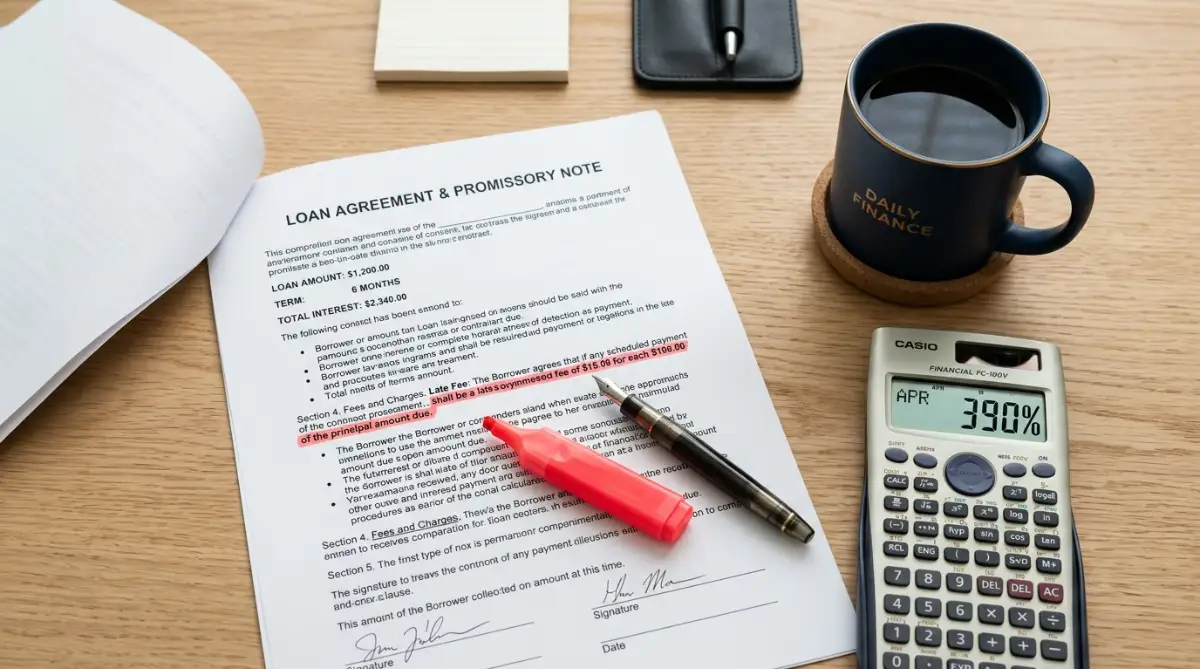
For example, a lender might say it only costs $15 to borrow $100 for two weeks. When you are desperate, spending fifteen dollars to solve a massive emergency sounds like a great deal. However, this simple flat fee masks a terrifying mathematical reality that keeps people in debt for months.
Myth vs Reality: The Interest Rate Illusion
- The Common Myth: A $15 fee on a $100 loan simply means you are paying a 15% interest rate, which sounds very similar to a normal credit card.
- The Harsh Reality: That 15% charge is only for fourteen days. When you calculate how much that costs over a full year, the true rate shoots up to nearly 400%.
Let us look closely at how the Annual Percentage Rate (APR) actually works in the real world. The APR measures the total cost of borrowing money over an entire year. This is the only fair way to compare different types of loans.
To find the true APR of a standard cash advance, you have to do a little bit of basic math. A year has 365 days. A typical cash advance lasts for 14 days. If you divide 365 by 14, you get about 26. This means there are 26 two-week periods in a single year. If you multiply the 15% flat fee by 26 periods, you get a shocking 390% APR.
How Different Borrowing Options Compare
To understand just how expensive this really is, we need to compare it to normal financial products. Seeing the numbers side by side helps put the exact danger into a clear perspective.
As you can clearly see from the table, short-term lenders charge hundreds of times more than traditional banks. This massive gap in pricing is the main reason why borrowing small amounts can destroy your financial health so quickly.
My biggest mistake was focusing only on the bi-weekly payment amount instead of looking at the total long-term cost. I learned the hard way that ignoring the true APR is exactly like ignoring a hidden leak in a boat; eventually, you will completely sink. Always ask the loan officer for the official APR in writing before you sign any documents, even if they try to rush you through the paperwork.
If you are struggling to understand how interest builds up so fast, this short video breaks down the math perfectly.
The Hidden Danger of the Rollover Cycle
The extremely high APR is only the first part of the problem. The real damage happens when you cannot afford to pay the money back on your next payday. Short-term loans are designed to be very easy to get but incredibly hard to pay off.
When your due date arrives, you are expected to pay the original loan amount plus the flat fee in one giant lump sum. If you borrowed $300 and the fee was $45, you suddenly need $345 in cash. Most people who live paycheck to paycheck simply do not have that much extra money lying around.
Because you cannot pay the full $345, the lender offers you a seemingly helpful solution. They allow you to pay just the $45 fee to extend the loan for another two weeks. This is commonly known as a loan rollover.
While this feels like a helpful lifeline at the time, it is actually a carefully planned financial trap. If you roll that $300 loan over four times, you will pay $180 in fees. After paying all that money, you still owe the exact same $300 you originally borrowed. Your balance never goes down, but your wallet keeps getting lighter every single month.
Here is a clear breakdown showing how a simple $300 loan snowballs over eight weeks when you only pay the bi-weekly extension fee:
Notice how you have handed over $180 in pure fees—more than half the original loan amount—without reducing your actual $300 balance by a single penny.
How Bank Drafts Drain Your Checking Account
When you sign a contract for a cash advance, you are usually required to give the lender direct access to your checking account. You either hand them a post-dated check or sign an electronic authorization form. This gives them the legal right to pull the money directly from your bank on your due date.
This automatic access causes massive problems if you do not have enough funds available. The lender will try to withdraw the money exactly when they promised. If your account is empty, your bank will charge you an expensive Non-Sufficient Funds (NSF) fee, which is often around $35.
But the nightmare does not stop there. The lender might try to pull the money again the very next day. This triggers a second bank fee. Within just a few short days, you could easily owe your bank over $100 in extra penalties, on top of what you already owe the lender. This brutal cycle of banking penalties pushes everyday people even deeper into severe financial trouble.
The Zero Benefit Rule for Your Credit Score
Many people mistakenly believe that paying off a high-interest loan will help improve their bad credit. This is a very logical assumption. After all, if you borrow money and pay it back on time, your credit score should go up, right?
Unfortunately, this rule does not apply to most short-term cash advances. Traditional banks and credit card companies report your good payment history to the major credit bureaus every month. This continuous reporting helps you build a strong financial reputation over time.
Short-term lenders, however, rarely report positive payments to the credit bureaus. They simply do not spend the money or time to send your good history to the agencies. Therefore, successfully paying off these expensive loans does absolutely nothing to help your credit score.
The system is entirely one-sided. If you pay on time, nobody knows about it. But if you fail to pay, the lender will quickly sell your debt to a collection agency. That collection agency will immediately report your failure to the credit bureaus, which will severely damage your score. You take on all of the financial risk with absolutely none of the long-term rewards. Understanding this specific detail is incredibly important for anyone trying to rebuild their financial future.
Smart Strategies to Break Free from Expensive Borrowing
When you are caught in a cycle of high-interest debt, it often feels like you are drowning. Every paycheck seems to disappear before you even have a chance to touch it. But no matter how bad your situation looks right now, you always have a way out. Escaping this heavy burden requires a mix of smart planning, knowing your legal rights, and taking back control of your income.
One of the most powerful secrets that short-term lenders will never voluntarily share with you is the Extended Payment Plan (EPP). Depending on the specific state laws where you live, many cash advance businesses are legally required to offer you extra time to pay back your balance without charging you any additional fees. The catch? You usually have to ask for it before your actual due date.
Instead of waiting until your bank account is empty, you can walk into the store or call their corporate office and specifically request an EPP. This forces the lender to freeze the interest and break your large lump-sum payment into smaller, manageable pieces. The Consumer Financial Protection Bureau (CFPB) provides strict guidelines on how these lenders must treat you when you ask for help. Asserting your rights early is often the best defense against rolling over your debt.
Copy-Paste Phone Script for Freezing Rollover Fees:
"Hello, I am calling regarding my active account [Account Number]. Under our state regulations, I would like to formally request an Extended Payment Plan (EPP) for my current balance before my upcoming due date. Please confirm the paperwork needed to spread this balance across multiple pay periods with no additional rollover fees or interest."
If you absolutely must borrow money to handle a sudden crisis, skip the storefront signs and look closely at local credit unions. Many of these non-profit institutions offer Payday Alternative Loans (PALs). These are small-dollar loans designed specifically to help people avoid predatory lending traps. Because they are regulated directly by organizations like the National Credit Union Administration, their interest rates are strictly capped at a fraction of what traditional cash advance stores charge. They also give you several months to pay the money back comfortably.
Long-term protection, however, comes from how you manage your money on a daily basis. The smartest move you can make today is learning how to build an emergency fund from scratch, even if you only start with ten dollars a week. Having a tiny cushion of cash completely changes how you respond to unexpected bills.
To find that extra ten dollars, you need a highly intentional plan for your paycheck. I highly recommend learning the smart blueprint for zero-based budgeting, which assigns a specific job to every single dollar you earn. When you tell your money exactly where to go, you completely remove the desperate panic that sends people running to high-interest lenders in the first place.

The Dangerous Traps People Fall Into When Trying to Escape
The Debt Juggling Trap
The most common mistake is trying to put out a fire with gasoline. Many people realize they cannot pay off their first cash advance, so they go to a completely different lender across town to take out a second loan. They use the new money to pay off the old debt.
This creates a terrifying domino effect. Now, you have a brand new fee to pay, a new due date, and a fresh inquiry on your financial record. Within just a few weeks, people often find themselves juggling three or four different high-interest loans at once. Juggling debts never fixes the lack of cash; it only multiplies the heavy fees you have to pay.
The Ostrich Effect
When the phone starts ringing non-stop from aggressive collection agents, the natural human reaction is to hide. You might block their numbers, throw away their letters without opening them, and simply hope the problem magically disappears.
Ignoring a lender is one of the worst things you can possibly do. These companies have aggressive legal departments. If you ignore them for too long, they will take you to court. If they win a default judgment because you did not show up, they can legally garnish your wages. Having your employer deduct money directly from your paycheck for a bad debt is both embarrassing and financially devastating. If you ever face legal threats from a lender, reaching out to organizations like the National Consumer Law Center can help you understand exactly how to protect your income safely.
Rushing Into Quick Fixes
Another major pitfall is jumping into the first debt relief program you see advertised on late-night television. Many companies promise to cut your debt in half, but they charge massive upfront fees and often tell you to stop paying your bills entirely, which destroys your financial reputation.
Before you sign up for any service, you need to understand the real differences between your options. For example, learning the smart way to compare debt consolidation strategies can save you thousands of dollars. Moving high-interest debt to a safe, lower-interest option requires careful math, not a rushed emotional decision driven by fear.
Your Blueprint for a Stress-Free Financial Tomorrow
Reading about high interest rates and financial traps can feel overwhelming. However, having this knowledge is exactly what gives you the power to change your life right now. You are no longer in the dark about how these lending systems work against you. You know how the math is designed to keep you trapped, and more importantly, you know that you have better, safer alternatives.
Your Action Plan for the Next 48 Hours:
- Stop the Bleeding: If you currently have an outstanding cash advance, do not roll it over. Call the lender immediately and clearly ask for an Extended Payment Plan. Write down the name of the person you spoke with and the exact terms they offer.
- Protect Your Bank Account: If you fear a lender is going to trigger massive overdraft fees by pulling money you do not have, speak directly with your local bank branch manager. Ask them about your right to revoke automatic electronic payments (ACH authorizations).
- Track Your Cash: Sit down with a blank piece of paper tonight. Write out exactly what you earn and exactly what you owe. Honesty with yourself is the very first step toward total financial freedom.
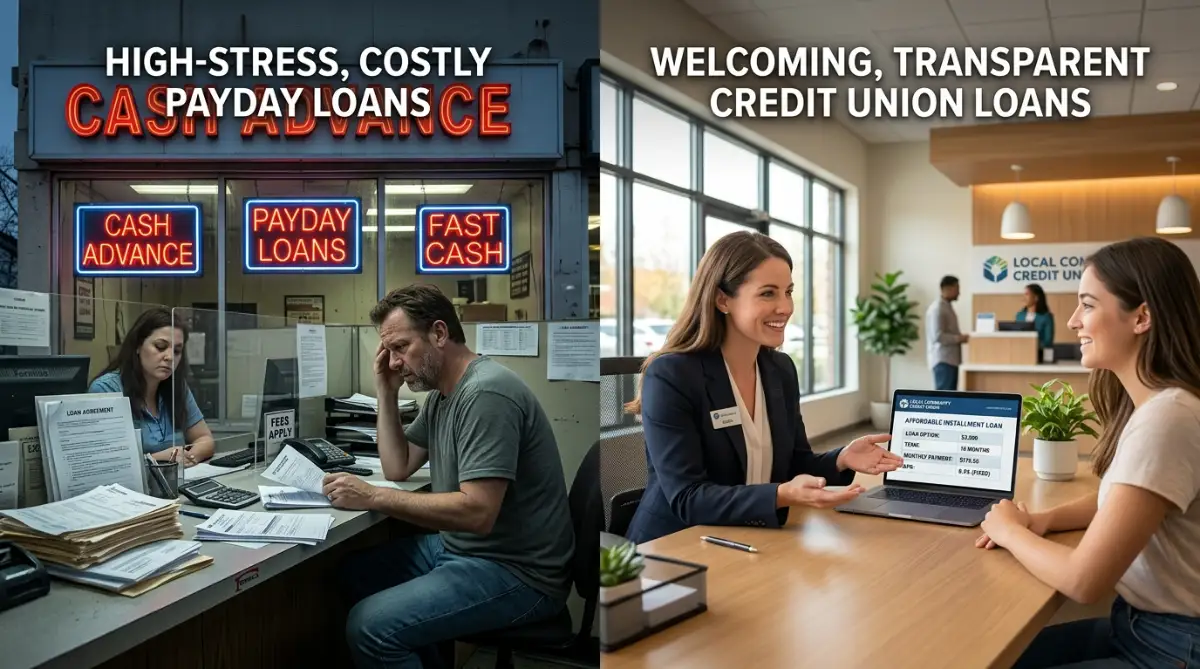
Taking back your peace of mind is not a race. It is a steady, daily walk toward better habits. My own financial stress used to keep me awake until 3 AM every night, staring at the ceiling in pure panic. But the day I finally stopped borrowing from expensive lenders and started managing my own small income intentionally, my entire life completely transformed. You have the exact same power to take control today, and your future self will be incredibly thankful that you did.
Questions People Often Ask About Short-Term Lending
Can payday lenders actually press criminal charges against me?
No, you cannot be arrested or go to jail simply for owing money on a standard cash advance or personal debt. While aggressive debt collectors might imply that you have committed fraud to scare you, failure to pay back a loan is a civil matter, not a criminal one.
Will closing my bank account stop the automatic loan payments?
Closing your checking account is a highly risky move. If you close the account with pending transactions, the bank might still honor the lender's request, leaving your closed account with a massive negative balance and pushing you into direct conflict with your own bank.
Is it possible to negotiate the payoff amount with a cash advance store?
Yes, many lenders are actually willing to negotiate a lower settlement amount if your debt has already gone into collections. They would much rather accept a smaller, guaranteed chunk of money from you today than spend months chasing you for the full amount.
Disclaimer: The information provided in this article is strictly for educational and informational purposes and does not constitute formal legal or financial advice. Always consult with a certified financial advisor or legal professional before making major decisions regarding debt settlement, loan agreements, or bankruptcy.