
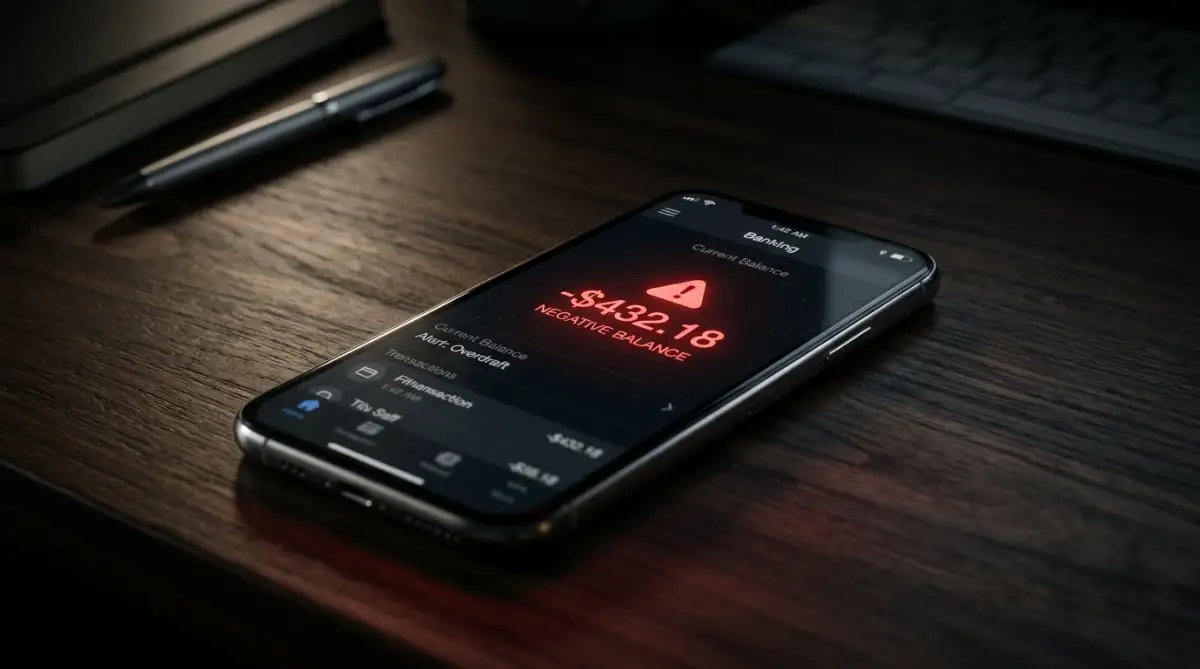
The "Courtesy" Illusion: The False Sense of Overdraft Protection
You swipe your debit card for a four-dollar coffee, grab your cup, and walk out. Everything feels fine.
Then you check your banking app hours later and see a negative balance paired with a thirty-five-dollar penalty. That cheap coffee just cost you thirty-nine bucks.
Banks love to brand overdraft protection as a friendly safety net. They frame it as a courtesy service designed to save you from embarrassing checkout moments.
Don't buy into that framing.
It isn't a safety net built for your benefit. It's a high-margin profit machine designed to extract cash from accounts that are already running on fumes.
When you opt into standard overdraft coverage, you aren't getting financial security. You're handing your bank full permission to authorize transactions you can't afford—and bill you handsomely for the privilege.
They decide which transactions clear, when they clear, and how many times they can slap you with a penalty in a single business day.
Think about that.
The Overdraft Protection Quick Summary
- Opt-in isn't mandatory: Federal rules require you to opt in for debit and ATM overdraft coverage; you can opt out anytime to stop fees instantly.
- The cost is disproportionate: A typical penalty runs between thirty and thirty-five dollars, even if you only overdraw your balance by a few cents.
- Banks control the sequence: Financial institutions often reorder transactions behind the scenes, maximizing the number of fees they can charge.
- Real alternatives exist: Linking a backup savings account, utilizing no-fee digital buffers, or simply letting transactions decline saves hundreds each year.

Mechanical Breakdown: How Overdraft Fees Drain Your Account
Overdraft programs don't just happen by accident. They operate on rigid, calculated transaction workflows that catch consumers off guard.
Most people assume their transactions process chronologically. That's rarely how standard checking ledgers handle your money during nightly settlement batches.
There are three major systemic traps that drain customer accounts:
- Transaction Reordering (High-to-Low Posting): Instead of processing purchases in the exact order you swiped, some systems batch pending charges and clear the largest payments first. If you've got a hundred dollars in your account and clear an eighty-dollar utility bill alongside three small five-dollar purchases, posting the big bill first wipes your balance instantly. That leaves each tiny five-dollar swipe to trigger its own separate thirty-five-dollar fee.
- Silent Recurring Micro-Debits: Automated streaming subscriptions, cloud storage bills, and software renewals process without manual confirmation. If an automated draft hits your account just hours before your paycheck deposits, the system triggers an immediate penalty.
- Double-Dip Transfer Charges: Even if you choose "linked-account protection," many traditional institutions still hit you with an automatic transfer fee just to move your own money from savings to checking.
Here's how traditional opt-in overdraft coverage compares to running a true self-managed buffer:
Pro Tip: Call your bank's customer service number or open your mobile banking app right now. Navigate to your account settings, find your debit card overdraft consent preferences, and select "Opt Out." Once you opt out of Regulation E coverage, your debit card will simply decline at the register if you're short on funds, completely eliminating surprise thirty-five-dollar penalty charges.
The Zero-Fee Defensive Shield
Turning off overdraft coverage sounds intimidating to a lot of people. Nobody wants to deal with a declined card at a payment terminal.
The alternative, however, is far worse.
When you establish a zero-fee defensive stance, you take away the bank's ability to issue expensive credit on your behalf. If your account holds twelve dollars and you attempt to spend fifteen, the payment processor simply rejects the request at the point of sale.
No fees trigger. No penalties hit your statement.
Your balance stays at twelve dollars instead of sinking to negative twenty-three. It's a clean, instant boundary that prevents a momentary budget shortfall from turning into an expensive financial headache.
Understanding how banking algorithms clear your daily transactions is the fastest way to protect your hard-earned money. Take a look at this detailed breakdown of how modern retail banks structure their transaction fees and how you can beat the system:
Practical Setup: Implementing Zero-Fee Overdraft Alternatives Across Your Accounts
You don't have to keep paying the bank for the privilege of spending your own money.
Building a zero-fee safety system isn't complicated. It just takes deliberate setup across your primary banking portals.
Start by linking a secondary funding source to your checking ledger. Most retail institutions let you tie a secondary savings account or a dedicated line of credit to your main checking balance.
If a debit clears and exceeds your balance, the system automatically pulls the exact difference from your secondary account.
That prevents the transaction from triggering a punitive penalty.
Here's how to configure these protections across different banking environments:
- Major Traditional Banks (Web & Portal): Log into your dashboard, select your primary checking account, and locate "Overdraft Services." Toggle off "Courtesy Overdraft Coverage" for ATM and everyday debit transactions. Then, select "Add Backup Account" to connect your liquid savings account as your automated transfer source.
- Credit Unions (Online Banking): Credit unions usually offer lower transfer fees or free linked-account transfers. Open your transfer preferences, select "Share Transfer Protection," and link your primary share savings account to your checking ledger.
- Fintech & Mobile Neobanks (iOS & Android): Modern app-based accounts often include built-in zero-fee buffers. Open your mobile app's security settings, enable "No-Fee Overdraft Spotting," and set your transaction limits to prevent auto-debits from pulling your balance below zero.
- Operating System Device Alerts (iOS & Android): Enable real-time push notifications inside your mobile banking app. Set an immediate push alert for any debit exceeding twenty dollars and an urgent ping whenever your balance dips below one hundred dollars.
The Zero-Fee Account Defense Protocol
Run through this operational checklist whenever you open a new checking account or audit an existing balance:
- Verify that your Regulation E consent status reads "Opted Out" for all ATM and debit card point-of-sale swipes.
- Establish a dedicated liquid cash buffer by setting up emergency fund rules to absorb unexpected pending transactions.
- Link an eligible secondary deposit vehicle while understanding the core differences between savings accounts and CDs so your backup funds remain instantly accessible.
- Schedule recurring bill payments two business days after your direct deposit date rather than on the exact day your paycheck lands.

Critical Traps That Trigger Surprise Overdraft Penalties
Even disciplined spenders get blindsided by bank fees when they don't understand ba