
The Hidden Trauma of a Plunging Credit Score
I remember staring at my laptop screen in absolute disbelief, feeling my heart drop into my stomach. A single missed credit card payment had just wiped out months of hard work, dropping my score by almost 100 points overnight. I felt completely defeated, embarrassed, and frankly, a little angry at myself. I had always been so careful with my finances, but life happened, things got crazy, and a small oversight turned into a massive financial disaster. It felt like I was being punished endlessly for one simple, human mistake.
When you get hit with a late payment mark on your credit file, the emotional toll is incredibly heavy. You suddenly feel like you have a giant red flag attached to your name. Every time you think about applying for an apartment, a car loan, or a mortgage, a wave of panic sets in. You know that lenders will look at that one little mistake and judge your entire financial character based on it.
The worst part is the constant, nagging anxiety that wakes you up in the middle of the night. You wonder if this one mistake will ruin your plans to buy a home for your family. You start calculating how much extra interest you will have to pay because your score dropped from the "excellent" tier down to "fair" or "poor." It feels like the financial system is rigged against everyday people who are just trying to survive.
People all around us are silently dealing with this exact same nightmare every single day. A missed bill due to a medical emergency, a job loss, or simply a chaotic week can trigger a chain reaction of financial stress. Suddenly, your credit cards slash your limits, making your credit utilization spike, which drops your score even further down.
It feels like you are trapped in a deep hole with no ladder to climb out. You might even feel ashamed to talk about it with your friends or your spouse. But I am here to tell you that you are not stuck forever, and there is a very clear way out of this mess.

The Real Truth About Your Financial Profile
Before we jump into the exact steps to clean up your profile, we need to understand the basic rules of the game. A lot of people think that once a negative mark hits their credit history, they simply have to wait seven long years for it to fall off. This is one of the biggest myths in the personal finance world today.
Lenders and credit bureaus are run by human beings, and human beings make exceptions all the time. The systems they use are incredibly flawed and full of technical errors. This means you have multiple realistic angles to attack this problem and win.
You just need to know exactly which strings to pull and how to communicate effectively with the right decision-makers. You do not need to hire expensive, shady credit repair companies to do this for you. You have all the power in your own hands to dispute, negotiate, and resolve these issues directly from your living room.
Why Does One Mistake Hurt So Much?
Your payment history makes up the largest chunk of your overall credit score. In fact, it accounts for a massive portion of the calculation models used by major scoring companies. When a creditor reports that you are 30 days past due, the algorithm immediately labels you as a higher risk.
The drop in your score is usually much more severe if you previously had a perfect, spotless record. It seems unfair, but the system penalizes good borrowers the hardest when they slip up. However, this same fact actually works in your favor when you try to negotiate a removal.
Because you have a great track record overall, creditors are much more likely to listen to your side of the story. They want to keep you as a long-term customer who pays interest and uses their services. If you present your case the right way, they will often bend their own rules to keep you happy and loyal.
Strategy 1: The Art of the Goodwill Adjustment
The absolute best and most effective way to handle a legitimate missed payment is by asking for a goodwill adjustment. This is basically a formal, polite request asking your creditor to forgive the mistake and delete the negative mark out of the kindness of their heart. It sounds almost too simple to work, but it is highly successful if you do it correctly.
You cannot just send a generic, copy-pasted message to a basic customer service chat agent. Those front-line workers do not have the system permissions to alter your credit reporting data. You have to bypass them entirely and go straight to the higher-ups.
You want to target the executive customer service team, the office of the president, or even the CEO of the company. These high-level employees have the authority to make manual adjustments to your account instantly.
Crafting a Story They Cannot Ignore
When you sit down to write your letter, you need to appeal to their human side. Start by highlighting how long you have been a loyal customer and how much you value your relationship with their bank. Make sure to clearly state that you take full responsibility for the missed deadline.
Do not make up fake excuses or lie about what happened. Be honest about the specific hardship that caused the oversight. Whether you were in the hospital, dealing with a sudden family crisis, or lost your job, explain the situation briefly and respectfully.
After explaining the hardship, emphasize that the issue is fully resolved and you have taken steps to ensure it never happens again. Mention that you have set up automatic payments for the maximum amount. Finally, explain exactly why you need the negative mark removed, like trying to get approved for a mortgage to buy your first home.
Pro Tip: I learned the hard way that sending just one letter is rarely enough. When I tried this for my own account, my first three letters were completely ignored or rejected by automated systems. It was only after I sent my fourth letter directly to a vice president I found on LinkedIn that I finally got the late mark successfully deleted.
How to Deliver Your Message for Maximum Impact
Do not rely solely on regular email or the bank's internal messaging center. While email can sometimes work, a physical letter holds significantly more weight in today's digital world. Print your letter on high-quality paper and sign it by hand with a blue pen.
Send the letter using certified mail with a return receipt requested. When an executive assistant signs for a physical, certified piece of mail, they are forced to log it and take it seriously. It bypasses the standard junk mail filters and demands direct attention.
Here is an incredibly helpful video that breaks down exactly what to say when contacting your bank to negotiate a removal.
The Power of Gentle Persistence
If you get a rejection letter back in the mail, do not give up. Creditors often send out automated denial letters just to see if you will go away quietly. Treat a "no" as merely a request for more information.
Wait about two weeks, update your letter slightly, and send it to a different executive within the same company. Sometimes it just takes finding the right person on the right day who is in a generous mood. Persistence is the true secret weapon in personal finance.
Strategy 2: Hunting for Technical Inaccuracies
Sometimes, the late mark on your report is simply not accurate. By law, everything reported about you to the credit bureaus must be one hundred percent factual, verifiable, and completely accurate. If a creditor gets even one tiny detail wrong, the entire negative item must be removed from your file.
This gives you a massive advantage because big banks process millions of data points every single day. They make typographical errors constantly. You need to become an absolute perfectionist and audit your credit reports from all three major bureaus.
What Exactly Should You Look For?
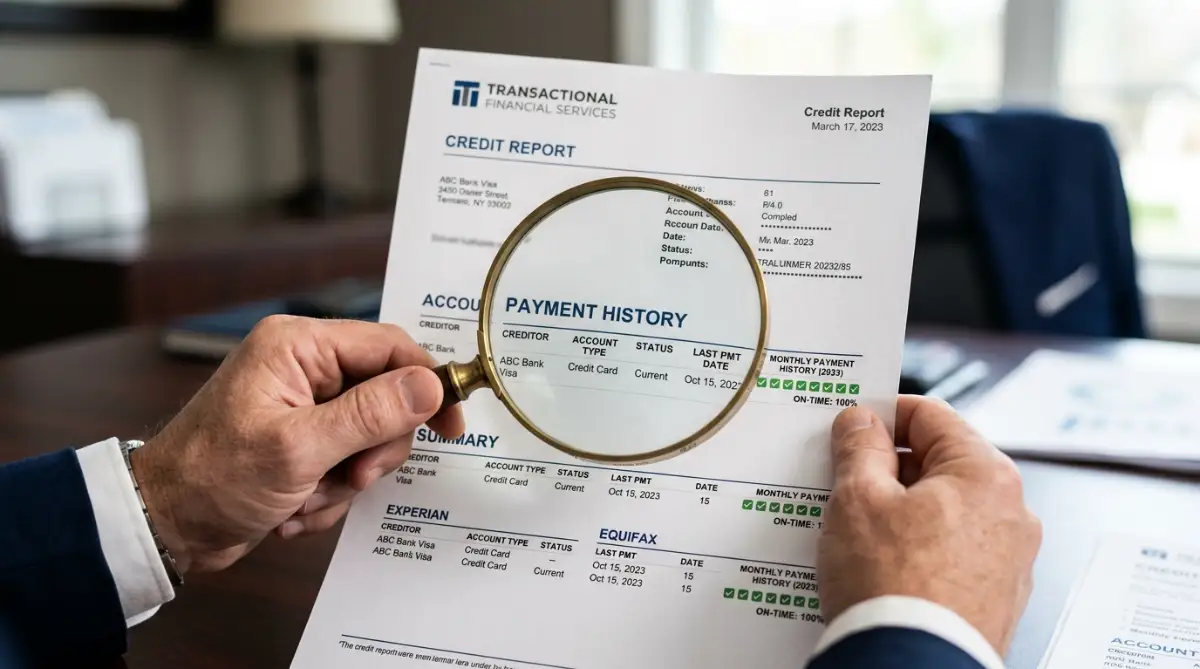
You need to pull your completely free official reports and place them side-by-side on your desk. Look at the exact date the late payment was supposedly reported. Does the date match across all three reports, or is one bureau showing a different month?
Check the balance that was reported on the day you were marked late. Is the dollar amount perfectly identical on every single report? Look at the account opening date, the last active date, and the account number itself.
If you find a discrepancy where one bureau says you were late in May, but another says June, you have caught them in a clear violation. Because both statements cannot be legally true at the same time, the data is unverified and legally invalid.
Quick Facts About Credit Reporting Laws:
- The Fair Credit Reporting Act (FCRA) protects you from unfair reporting practices.
- Bureaus have exactly 30 days to investigate a dispute you file.
- If the creditor fails to respond to the bureau's investigation within that 30-day window, the negative mark is automatically deleted by default.
Filing a Dispute the Right Way
A huge mistake people make is filing their disputes online through the credit bureau websites. When you click that "dispute" button online, you are agreeing to their complex terms of service. You also give up your right to provide extensive, detailed evidence in your own words.
Instead, you must always dispute errors using physical mail. Draft a strong dispute letter pointing out the exact technical error you found. Attach a highlighted copy of your credit report showing the mismatch, along with copies of your identification.
Send this dispute packet via certified mail directly to the credit bureaus. When they receive your physical packet, a human being is forced to open it, scan it into the system, and initiate a formal investigation with the creditor. This creates a highly trackable paper trail that holds them legally accountable.
Understanding the Investigation Process
Once the credit bureau gets your dispute, they use an automated system to ping your original creditor. They ask the creditor to verify the specific details you challenged. If the creditor cannot produce the actual paperwork proving the exact dates and amounts within 30 days, you win.
Many times, especially with older accounts, banks simply do not have the staff to dig through old archives to verify minor details. They will let the 30-day timer expire because it costs them too much money to fight you. When that timer hits zero, the credit bureau has no choice but to erase the late mark from your history.
Strategy 3: The Auto-Pay Negotiation Tactic
If a goodwill letter does not work and there are no technical errors to dispute, you still have another creative option. You can try to negotiate directly over the phone using the promise of future reliability. This works best if the missed deadline was very recent, like within the last month or two.
Banks spend a fortune trying to acquire new customers. They really do not want to lose you to a competitor just because you are angry about a negative mark. You can use this customer retention concept to your distinct advantage.
Making the Strategic Phone Call
Call the customer service number on the back of your card and calmly ask to speak to the retention department. Explain that you are extremely upset about the negative reporting and you are strongly considering closing your account and moving to a different bank. Stay polite, but firm in your disappointment.
Offer them a win-win compromise. Tell them you will gladly enroll in their automatic payment program right now, while on the phone, linking your primary checking account. In exchange, ask them to submit a courtesy request to delete the recent late report.
Many supervisors have the direct authority to approve this trade-off. They get to secure a reliable, automated revenue stream for the bank, and you get your clean record back. It is a simple negotiation tactic that saves face for everyone involved.
Myth vs Reality: Fixing Your Credit
Myth: Paying off a late account completely removes the late mark from your report.
Reality: Paying an overdue balance updates the status to "Paid," but the historical late mark remains. You still have to actively request a deletion or dispute it.
Myth: Closing the credit card account will make the late payment disappear.
Reality: Closed accounts with negative history can stay on your profile for up to seven years. In fact, closing the account might hurt your score even more by reducing your available credit.
Myth: You have to hire a lawyer to dispute unfair marks.
Reality: You can absolutely do this yourself for the cost of a few postage stamps. The laws were designed specifically to empower everyday consumers.
Taking control of your financial reputation requires patience and a little bit of strategic thinking. You are fighting against massive automated systems, but a well-written letter and a sharp eye for detail can cut right through the red tape. Your score does not define your worth, and you have every right to fight back to protect your future.
Beyond the Basics: Insider Secrets to Outsmart the System
If your initial goodwill letters and basic disputes do not get the job done, you should never throw in the towel. The credit bureaus and big banks are counting on you to get frustrated and walk away. They intentionally make the process feel like running into a brick wall.
But you have a few heavy-hitting strategies left in your arsenal that completely change the power dynamics. When you learn how to legally force their hand, you stop asking for favors and start demanding compliance. This is where you separate yourself from the average consumer and start playing the game like a pro.
One of your strongest weapons is escalating the issue to federal regulators. If a bank ignores your valid certified mail dispute, you can file a formal complaint directly with the Consumer Financial Protection Bureau (CFPB). This government agency was built specifically to protect regular people from unfair banking practices.
When you submit a complaint through their portal, it does not just go to a low-level customer service rep at your bank. It goes straight to the bank's executive legal and compliance team. Suddenly, ignoring you becomes a massive compliance risk for them, and they often delete the negative mark just to close the federal complaint.
The "Method of Verification" Tactic
Another highly effective secret involves challenging the credit bureaus on their own internal processes. If you send a dispute and they reply saying the negative item was "verified," you do not have to accept that answer. You have specific Fair Credit Reporting Act rights that allow you to push back much harder.
You can send a secondary letter demanding their "Method of Verification." By law, the bureau must provide you with a detailed description of exactly who they contacted and how they verified the information. They must provide the business name, address, and telephone number of the person they spoke with.
In the real world, credit bureaus almost never call anyone manually. They use an automated computer system called e-OSCAR that simply matches digital codes. Because they cannot actually provide you with the specific human contact details they used to verify the debt, they are backed into a legal corner and often forced to delete the item.
Securing Your Financial Comeback
Once you successfully get that negative mark wiped away, you have to completely overhaul your daily financial habits. You never want to experience this kind of gut-wrenching anxiety again. The best defense against future late payments is creating a system that practically runs itself without your constant attention.
Start by building a completely customized zero-based budgeting plan for your household. This method ensures every single dollar you earn has a specific job before the month even begins. When you know exactly where your money is going, you will never accidentally miss a due date because your checking account ran dry.
You should also keep a detailed paper trail of every single letter you send to the bureaus. Because you will be handling sensitive documents with your social security number, make sure you secure your digital financial documents using safe, encrypted folders. This way, if a deleted late payment mysteriously reappears on your report later, you have the exact proof needed to squash it instantly.
Once your score jumps back up to the excellent tier, you can start leveraging that new number for better deals. You can stop accepting terrible interest rates and start negotiating lower personal loan rates with absolute confidence. Your healthy credit profile becomes a tool to generate wealth, rather than an anchor holding you back.
The Dangerous Traps That Will Destroy Your Progress
When you are desperately trying to fix a tanking score, panic makes you do irrational things. You just want the pain to stop, so you start looking for shortcuts that seem promising but are actually incredibly toxic. Falling into these common traps can permanently damage your profile and set your progress back by years.
You must stay incredibly disciplined and avoid letting your emotions drive your financial decisions. I have seen so many smart people make tiny, impulsive mistakes that ended up costing them thousands of dollars in interest. Let's walk through the absolute worst things you can do while trying to clean up your history.
The Online Dispute Illusion
The absolute biggest trap you can fall into is using the shiny "Dispute Now" button on a credit bureau's website. It looks so easy and convenient, but it is a massive mistake. When you dispute online, you are forced to choose your reason from a tiny dropdown menu of pre-written options.
This automated system strips away all the specific, human context of your situation and turns your complex argument into a simple two-digit code. The system makes it incredibly easy for the creditor's computer to automatically verify the debt and reject your claim. You also lose your ability to attach extensive, printed proof of their technical errors.
Worse yet, by using the online portal, you often blindly agree to mandatory arbitration clauses hidden in their terms of service. This means you waive your right to sue them if they break the law during the investigation. Always stick to certified physical mail to protect your legal rights.
Falling for the "Pay to Delete" Scam
Another huge pitfall happens when people deal with older late payments that have gone into collections. A shady debt collector might call you and aggressively promise to remove the negative mark if you pay them today over the phone. They use pressure tactics to make you hand over your debit card number immediately.
The harsh reality is that collectors often lie just to get their commission. Once you pay the money, they simply update the account status to "Paid Collection," which still looks terrible to future lenders. The negative historical mark stays firmly planted on your report.
If you ever decide to pay an old, negative account, you must get a "Pay for Delete" agreement in writing before you send a single penny. If they refuse to mail or email you a signed contract guaranteeing the deletion, do not pay them. You must protect yourself from these predatory verbal promises.
Panic-Closing Your Accounts
When people get mad at a specific credit card company for reporting them late, they often close the account out of pure frustration. It feels like a small victory to cut up the card and cancel the service. However, this emotional reaction is one of the fastest ways to completely tank your score even further.
Closing an account lowers your total available credit limit across your entire profile. If you have balances on other cards, your overall credit utilization ratio will instantly skyrocket. Because utilization makes up a massive portion of the FICO scoring model, your score will plummet rapidly.
Furthermore, you shorten your average age of accounts, which is another major scoring factor. Even if you hate the bank, keep the account open with a zero balance to preserve your good credit age. You can find more helpful advice on navigating these tricky situations by visiting our main financial resource hub for detailed guides.
Relying on Shady "Credit Sweeps"
If you search the internet for quick fixes, you will inevitably find companies promising to "sweep" your entire credit report in 30 days. They guarantee they can erase every single late payment, bankruptcy, or collection for a steep upfront fee. This is entirely illegal, and you are putting yourself in massive danger.
These scam artists often use a tactic where they file fake police reports claiming you were a victim of identity theft. They use these fraudulent reports to force the bureaus to block the negative items temporarily. When the authorities and the banks realize you lied, the negative items return, and you could face severe federal criminal charges for fraud.
Instead of paying a scammer, take the time to learn the legal framework of repairing a damaged credit profile on your own. Doing the hard work yourself ensures the changes are permanent and entirely legal. It is just not worth risking your freedom for a temporary boost in points.
Your Action Plan for Financial Freedom
You now have a complete, highly strategic playbook to take on the credit bureaus and win. This process is not about finding a magic wand; it is about outsmarting flawed automated systems with patience and precision. You are fully capable of doing this without paying anyone a single dime.
Your first step tomorrow morning is to pull your official credit reports from all three major bureaus. Print them out, grab a red pen, and start highlighting every single inconsistency you can find. Treat this audit like it is a part-time job that pays thousands of dollars, because that is exactly how much you will save in future interest.
Next, draft your custom goodwill letters or factual dispute packets based on what you find. Keep your tone professional, stick entirely to the facts, and remember to send everything through certified mail. Do not let a single rejection letter discourage you from sending a second or third attempt to a higher-ranking executive.
Consistency is the only thing that separates the people who successfully fix their scores from those who stay stuck. Set a specific day on your calendar every single week just to check the mail and follow up on your ongoing disputes. The banks have billions of dollars and massive legal teams, but they simply cannot fight against a highly educated, persistent consumer.
Common Questions About Managing Payment History
How much does one late payment drop your score?
A single missed payment can drop an excellent score by anywhere from 50 to 100 points almost instantly. The impact is usually much more severe if you have always had a perfectly clean record beforehand.
Can a 30-day late payment ruin my profile forever?
Absolutely not. While it stays on your record for a long time, the negative impact on your score slowly fades as it gets older. If you keep all your other accounts perfectly current, your score will steadily bounce back over the next few months.
Does a goodwill letter actually work?
Yes, they work surprisingly well if you send them to the right executive-level employees. Banks want to keep good customers, so they are often willing to manually delete a single mistake as a courtesy to keep your business.
What happens if the credit bureau simply ignores my letter?
By law, they have exactly 30 days to investigate your written dispute and respond to you. If they fail to meet this strict deadline, they are legally required to remove the disputed negative item from your file immediately.
Should I just close the card that reported me late?
No, closing the account is a very bad idea. It will shrink your total available credit and make your credit utilization ratio spike, which hurts your score even more. Keep the account open and active, but pay the balance in full every month.
I know exactly how exhausting and unfair this entire battle can feel right now. But I promise you, the immense relief you will feel when you finally see that clean, updated credit report is worth every single stamp and letter you send. Keep pushing forward, stay incredibly persistent, and never let a flawed banking system dictate your financial future.
Disclaimer: The information provided in this article is for educational and informational purposes only and does not constitute financial, legal, or professional advice. Credit scoring models and reporting laws are subject to change. Always consult with a certified financial advisor or legal professional before making major financial decisions or engaging in formal disputes. We are not responsible for any actions taken based on the contents of this website.