
The Day I Was Denied My Dream Apartment (And What I Did Next)
I will never forget the embarrassment of sitting in that leasing office, waiting for the property manager to hand me the keys to my dream apartment. I had a great job, a solid income, and I felt completely ready to move in. Then, she looked at her computer screen, frowned, and told me my application was denied. My credit score was sitting at a miserable 580, and I had absolutely no idea how it got that low. I walked out of that office feeling completely defeated, ashamed, and lost. That painful rejection forced me to take a hard look at my financial habits. I spent the next few weeks obsessing over my credit reports, learning everything I could about how this hidden system actually works.
Living with a poor credit rating is completely exhausting. It feels like a dark cloud following you everywhere you go. You constantly worry about being judged by a simple three-digit number that seemingly controls your entire life.
When your score is low, everything you buy costs significantly more. You get hit with crazy high interest rates on car loans. You might even have to put down massive security deposits just to get a basic cell phone plan or keep your electricity running.
This financial stress spills over into your mental health. You might find yourself losing sleep, dreading unknown phone calls from debt collectors, or feeling too embarrassed to talk about money with your partner. It is a heavy burden to carry.
Every time you swipe a debit card because you cannot get approved for a credit card, you feel left behind. The system feels completely rigged against average people who just made a few simple mistakes in the past.
But I am here to tell you that this number does not define you. You are not stuck with this burden forever.
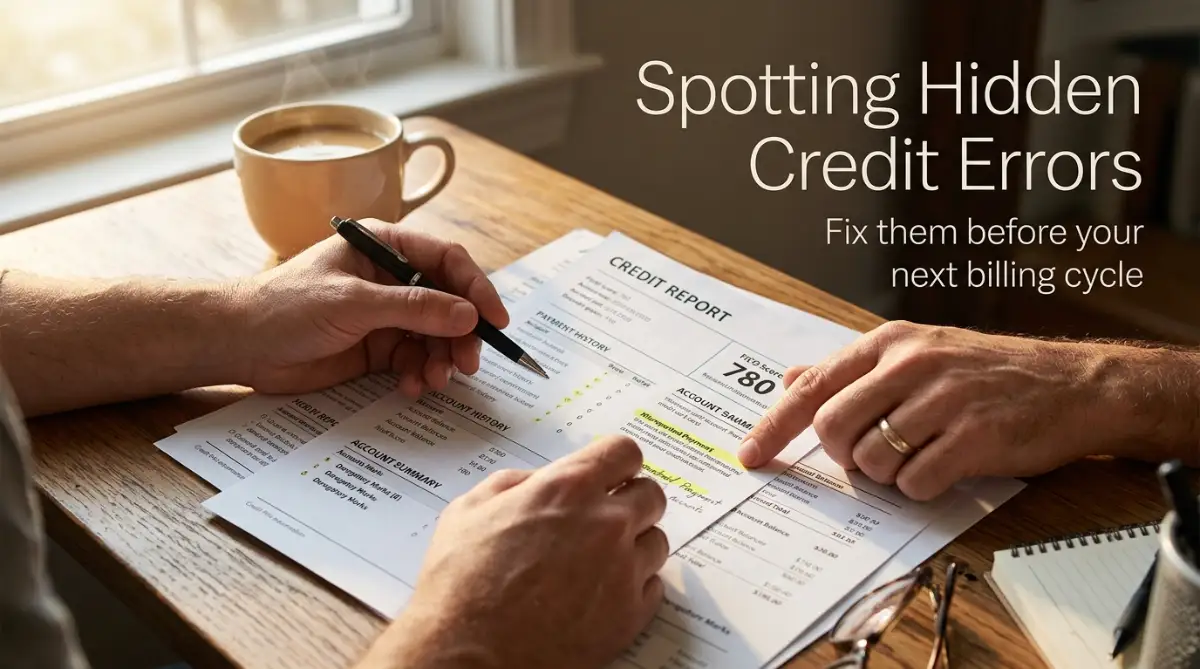
The Hidden Mechanics of Your Credit Profile
Before we start fixing the problem, we need to understand how the system actually judges you. The credit bureaus do not care about your income or your savings account balance.
They only care about how you manage borrowed money. They use a specific mathematical formula to decide if you are a safe bet or a massive risk.
If you want to trick this formula legally and safely, you just need to feed it the right data. Once you understand the rules of the game, making a massive jump in just a few weeks becomes entirely possible.
Myth vs Reality: What Actually Matters?
Strategy One: Hacking Your Credit Utilization Ratio
If you want the fastest, most dramatic increase in your score, you have to focus on your credit utilization. This one factor makes up 30% of your total FICO score.
Utilization simply means how much of your available credit you are currently using. If you have a credit card with a $1,000 limit and you spend $500, your utilization is 50%.
Most financial experts tell you to keep this number under 30%. But if you want a massive boost in just 30 days, 30% is way too high. You need to push this number down to between 1% and 5%.
The Secret of the Statement Closing Date
Here is a major secret that credit card companies do not clearly explain. Your credit card issuer only reports your balance to the bureaus once a month.
They do not report your balance on your due date. They report it on your statement closing date.
If you pay your bill on the due date, but your statement closed a week earlier with a high balance, the bureaus think you are maxed out. Your score drops, even though you pay in full every month.
To fix this immediately, you must pay your balance down to almost zero before the statement closing date. You can easily find this date on your monthly PDF statement or by calling the number on the back of your card.
The Double Payment Method
I highly recommend using the double payment method to master your utilization. You simply make two payments every single month.
Make your first large payment about three days before the statement closing date. Leave just a tiny balance, like $10, to show the card is active.
Then, make your second payment for that remaining $10 right before your actual due date. This forces the credit bureaus to record a near-zero balance, which dramatically shoots your score upward.
I remember the first time I tried this exact trick with my highest limit card. I paid it down three days before the statement closed. My score shot up by 42 points in a single week, and it honestly felt like I had uncovered a legal cheat code for the financial system.
Strategy Two: The Authorized User Shortcut
If you have a very thin credit file or a low score, you can legally borrow someone else's excellent financial history. This is called becoming an authorized user.
You ask a trusted family member or spouse who has a perfect payment history to add you to their oldest, cleanest credit card. You do not even need them to give you the physical card.
How Piggybacking Actually Works
When they add your name to their account, the entire history of that specific credit card is copied onto your personal credit report.
If they have had the card for ten years and never missed a payment, you instantly get ten years of perfect payment history added to your profile. This is completely legal and actively allowed by the major credit bureaus.
However, you must be extremely careful with this strategy. If the primary account holder misses a payment or maxes out their card, that negative data will also show up on your report and drag you down.
Always choose someone who keeps their balance very low and always pays on time. Make sure the specific credit card company reports authorized user data to all three major bureaus before you go through the trouble.
Watch exactly how to implement the Authorized User strategy without making rookie mistakes.
Strategy Three: Wiping Out Silent Errors
You would be absolutely shocked by how many mistakes are hiding on your official credit reports right now. Studies show that a massive number of consumers have errors that are actively lowering their scores.
These errors could be anything from a misspelled name linking you to someone else's bad debt, to an old account that should have been deleted years ago.
You have a legal right to dispute any information that is inaccurate, incomplete, or unverifiable.
Step-by-Step Dispute Process
First, you need to pull your official reports from Equifax, Experian, and TransUnion. You can get these for free every single week.
Print them out and grab a red pen. Look closely at every single account listed. Check the account numbers, the payment statuses, and the dates of last activity.
If you find a late payment mark on a month you know you paid on time, circle it. If you see a collection account you already settled, circle it.
Drafting Your Dispute Letter
Do not use the simple online dispute buttons provided by the bureaus. These automated systems often instantly verify the debt and reject your claim.
Instead, you need to write a physical letter and mail it through certified mail. State very simply that the account is inaccurate and you request its immediate removal.
The bureaus legally have 30 days to investigate your claim. If the original creditor cannot prove the debt is 100% accurate within that time, the bureau must delete it from your file.
Having a negative collection account legally deleted can easily bump your score up by 30 to 50 points overnight.
Strategy Four: The Goodwill Adjustment Technique
We are all human, and sometimes we make silly mistakes. Maybe you missed a $25 minimum payment last year because you were traveling or simply forgot.
That one single late payment can easily knock 60 to 100 points off your score. It is incredibly frustrating.
But if you generally have a good relationship with that bank, you can ask them to simply forgive you. This is done through a Goodwill Letter.
How to Ask for Forgiveness
A Goodwill Letter is a polite, professional message sent directly to the bank's executive office. You are not disputing the late payment, you are admitting fault.
You explain why you missed the payment. Maybe you lost your job, had a medical emergency, or simply made a scheduling error.
Then, you point out that you have been a loyal customer for years and have always paid on time before and after that one specific mistake.
You politely ask them to make a "goodwill adjustment" and remove the late mark from your credit report.
You might have to send this letter three or four times to different departments before you find someone willing to help. But when it works, the negative mark vanishes, and your score rebounds instantly.
Strategy Five: Getting Credit for the Bills You Already Pay
Traditionally, the system only rewards you for paying back banks and lenders. Paying your rent or your phone bill on time never helped your score.
But the system is finally changing. You can now use new tools to add your everyday utility and rent payments to your credit file.
Leveraging Alternative Reporting Tools
Services like Experian Boost allow you to safely connect your bank account to your credit profile. It scans your past transactions for on-time payments to Netflix, your water company, or your cell phone provider.
It then adds these positive payment histories to your official Experian report. Because these count as new, positive trade lines, you can see a small but instant jump in your numbers.
For renters, you can use specialized third-party services that report your monthly rent payments to the major bureaus.
Since rent is usually your largest monthly expense, showing a solid two-year history of perfect rent payments makes your profile look incredibly strong to future lenders.
Strategy Six: Taming the Small Nuisance Balances
Having small balances spread across many different credit cards is actually hurting you more than you realize.
The scoring formula punishes you for having too many accounts with balances, even if the total amount you owe is very low.
For example, owing $50 on four different store cards looks worse to the algorithm than owing $200 on just one major credit card.
The Consolidation Approach
Gather all your credit cards and check the current balances. Find any cards that have tiny balances under $100.
Pay all of these small nuisance balances completely off immediately.
Leave only one or two main cards with a small active balance. By reducing the total number of accounts showing a balance, you will grab a quick and easy handful of points within a few weeks.
This simple cleanup method makes your report look incredibly neat and organized to potential lenders.
Strategy Seven: Avoiding New Credit Inquiries
When you are desperately trying to fix your score, the worst thing you can do is apply for new credit cards or loans.
Every time you formally apply for new credit, the lender performs a hard inquiry on your report.
Each hard inquiry temporarily knocks a few points off your total score.
The Danger of Looking Desperate
If you apply for five different credit cards in a single month, you will lose a significant amount of points.
Worse than the point drop, multiple recent inquiries make you look desperate for money. The algorithm flags you as a high risk.
Unless you are actively using a pre-approval tool that only does a soft pull, completely freeze your applications for at least 30 to 60 days.
Let your current accounts age naturally. Pay everything on time, keep your utilization practically at zero, and let the system slowly recognize your new, responsible habits.
Improving your financial standing is not magic. It is simply about understanding what the computer algorithm wants to see and feeding it exactly that information. If you take immediate action on these practical steps today, your next billing cycle could reveal a completely different financial reality.
Mastering the Long Game: Next-Level Credit Strategies
Now that we have covered the immediate fixes, we need to talk about building an unshakable financial profile. Hacking your utilization and removing errors will give you that initial 100-point jump. But keeping that high number requires a slightly different approach.
The algorithms rewarding your behavior want to see long-term stability and smart decision-making. You have to prove to lenders that you are not just temporarily playing the system. You need to show them that you are genuinely low-risk over a long period.
Many people see their numbers shoot up, get excited, and immediately fall back into bad habits. I want to make sure you never have to sit in a leasing office and feel the sting of rejection again.
The Credit Limit Increase Trick
One of my favorite advanced tricks does not even require you to pay down more debt. Instead, you simply ask your bank to increase your total available credit limit.
Remember how we talked about keeping your utilization under 5%? Well, if you have a card with a $1,000 limit, keeping your balance under $50 can be really tough.
But what if you call your bank and ask them to raise your limit to $3,000? Suddenly, that same $50 balance looks like an incredibly tiny drop in the bucket. Your utilization ratio instantly drops, and your score gets a beautiful boost.
How to Ask the Right Way
You can usually request a limit increase directly through your bank's mobile app. Look for an option that says "Request Credit Line Increase" under your account settings.
Before you click submit, make absolutely sure the bank only performs a soft pull on your file. Most major banks do this automatically now, but it never hurts to send them a quick message to confirm.
If they require a hard pull, simply cancel the request and try a different card. You do not want an unnecessary hard inquiry dragging your progress down.
When they ask for your income on the application, be honest but make sure you include all sources of household income. This makes you look much more capable of handling a larger line of credit safely.
Diversifying Your Credit Mix
The scoring models love to see that you can handle different types of debt responsibly. This concept is known as your credit mix. It actually makes up about 10% of your total official FICO scoring factors.
There are generally two types of accounts: revolving and installment. Credit cards are revolving, meaning the balance changes every month based on what you spend.
Installment accounts are things like auto loans, student loans, or fixed personal loans. You pay the exact same amount every single month until the balance hits zero.
If you only have credit cards, the algorithm sees you as slightly one-dimensional. Adding a small, manageable installment loan can round out your profile perfectly.
A Smart Installment Strategy
Please do not go out and buy a brand-new car just to improve your score. Taking on massive debt to build credit is a terrible financial idea.
Instead, look into something called a credit-builder loan. These are offered by many local credit unions and online banks specifically for people trying to improve their profiles.
With a credit-builder loan, the bank holds the money in a locked savings account while you make small monthly payments. They report these positive payments to the bureaus every single month.
Once the term is over, you get access to all the money you paid in. You successfully build a strong installment history without actually going into traditional debt.
The Fail-Safe Automation Setup
Human error is the single biggest threat to your financial success. We get busy, we forget things, and sometimes a bill simply slips our mind.
A single missed payment can destroy months of hard work instantly. To prevent this, you absolutely must set up an automated fail-safe system for your minimum payments.
Log into every single account you own and turn on autopay for the minimum balance due. Do this even if you plan to pay the full balance manually every month.
If life gets crazy and you forget to log in, the system will automatically pull the minimum amount. You might pay a tiny bit of interest, but your perfect payment history remains completely protected.
Heartbreaking Pitfalls That Destroy Your Progress
Over the years, I have seen incredibly smart people make devastating mistakes with their money. Usually, they make these errors because they read bad advice online or listen to outdated financial myths.
When you are desperately trying to fix a broken financial past, panic often sets in. You might start making emotional decisions instead of logical ones.
I want to walk you through the most dangerous traps hiding in plain sight. If you avoid these specific pitfalls, your path to a high score will be smooth and completely stress-free.
The "Close the Old Account" Trap
This is by far the most common and destructive mistake people make. Let's say you finally pay off a credit card that caused you a lot of stress in the past.
Your first instinct might be to call the bank, cancel the card, and cut up the plastic into tiny pieces. You feel a massive sense of relief doing this.
However, doing this actually triggers a major drop in your credit score. When you close that old account, you instantly lose all the available credit attached to it.
This causes your overall utilization ratio to spike upward immediately. Furthermore, eventually, that long payment history will fall off your report, shortening your average age of accounts.
Unless the card has a ridiculously high annual fee that you cannot afford, keep it open forever. Put a tiny subscription on it, like Spotify, and set it to autopay. Put the physical card in a drawer and let it silently build your history.
The Cash Register Temptation
We have all been there. You are standing at the checkout counter of your favorite retail store with an armful of clothes.
The cashier smiles and says, "Would you like to save 20% on your entire purchase today by opening a store card?" It sounds like an amazing deal in the moment.
But you must politely decline this offer every single time. Retail store cards are notoriously bad for your financial health.
First, applying triggers a hard inquiry that drops your score right there at the register. Second, these cards usually give you incredibly low limits, like $300.
If you buy $250 worth of clothes on a $300 limit, your utilization on that specific card shoots up to over 80%. The algorithm panics, seeing you as a high risk, and your overall score takes a massive hit before you even leave the mall.
Falling for the Scam Artists
When you are feeling financially vulnerable, you become a massive target for predatory companies. You will likely see ads for companies promising to magically erase all your bad debt for a huge upfront fee.
These are almost always scams. According to the Consumer Financial Protection Bureau guidelines, no one can legally remove accurate, negative information from your file.
These shady companies just take your money and send out generic dispute letters that you could have easily written yourself for the cost of a postage stamp. Even worse, some try to sell you a fake social security number to create a new profile, which is highly illegal.
You must focus on avoiding expensive credit repair scams by doing the work yourself. The legal methods we discussed earlier are completely free and actually work.
Ignoring the Power of Medical Debt Rules
Many people assume that a $50 unpaid medical bill will ruin their lives forever. They panic and sometimes take out high-interest payday loans just to settle minor hospital charges.
But the rules regarding medical debt have changed dramatically in recent years. The reporting agencies are much more forgiving when it comes to healthcare-related collections.
For example, paid medical collection debts are no longer included on your major reports. Also, unpaid medical collections under $500 do not even appear on your file anymore.
If you have a large medical bill, most hospitals will work with you to set up a zero-interest payment plan. Do not let fear push you into making bad financial decisions. Always communicate with the billing department directly.
Mishandling High-Interest Bank Loans
When your numbers start looking better, you might get flooded with offers for personal loans in the mail. Banks love to target people whose scores are actively rising.
Taking out a high-interest personal loan to consolidate debt can be a smart move, but only if you genuinely understand the math behind it. Many people jump at the first offer without realizing they are getting ripped off on the interest rate.
If you decide to consolidate, you need to learn how to negotiate better personal loan rates before signing any paperwork. Do not just accept whatever terms the bank throws at you.
Remember, you are the customer, and as your profile gets stronger, you have the actual power to demand better treatment. Always shop around with local credit unions before accepting a loan from a major national bank.
Operating Without a Blueprint
Trying to fix your credit without fixing your daily spending habits is like putting a band-aid on a broken arm. It might look better temporarily, but the underlying problem is still there.
If you do not know exactly where every single dollar of your paycheck is going, you will eventually rack up high balances again. You simply cannot outsmart bad spending habits.
You need to take complete control of your cash flow. I highly recommend spending an afternoon learning about managing your monthly budget effectively.
When you give every dollar a specific job, you stop relying on credit cards for emergency purchases. Building a small cash emergency fund is the absolute best way to protect your newly improved credit score.
Overlooking Digital Security
Finally, one mistake that completely blindsides people is identity theft. You can do everything right for years, only to have a hacker ruin your financial life overnight.
As you start collecting financial documents, PDF reports, and dispute letters, you need to store them safely. Do not just leave sensitive information sitting on your unencrypted desktop.
Take some time to learn about protecting your financial documents online. Use strong passwords for your banking apps and always enable two-factor authentication.
You also have the right to place a free security freeze on your credit files through the major bureaus. This completely blocks anyone from opening new accounts in your name while you sleep.
The Ultimate 30-Day Action Plan
We have covered a massive amount of ground today. I know it can feel completely overwhelming to look at all these strategies at once.
But you do not need to do everything today. You just need to take one small step at a time. Breaking this down into a simple, weekly checklist makes the entire process incredibly easy.
I want to give you a clear roadmap for the next four weeks. If you follow this timeline, you will see exactly how fast your situation can turn around.
Week 1: The Diagnostic Phase
Your only goal for the first week is to gather information. Go to the official government-mandated website to get your free reports from all three bureaus.
Read through Federal Trade Commission consumer rights so you understand exactly what you are looking at. Print out your reports and grab a red pen.
Spend an hour highlighting any tiny error, late mark, or collection account you see. Do not stress about fixing them yet; just identify the targets.
During this week, you should also write down the statement closing dates and current balances for every credit card you own. Knowledge is your greatest weapon right now.
Week 2: The Attack Phase
Now it is time to take aggressive action. Look at the balances you wrote down and find the accounts with the highest utilization.
Use the double payment method we talked about earlier. Pay those specific balances down to almost zero just three days before their statement closing dates.
Next, draft your physical dispute letters for any errors you found in week one. Keep the letters simple, professional, and clear.
Head to the post office and mail these dispute letters via certified mail. This ensures you have a legal paper trail proving exactly when the bureaus received your request.
Week 3: The Optimization Phase
During the third week, you want to focus on positive additions. Reach out to a trusted family member and ask if they would be willing to add you as an authorized user.
Explain exactly how the process works and reassure them that you do not even want the physical card. Show them you are taking this seriously.
This is also the perfect week to sign up for alternative reporting tools. Link your checking account and get your utility bills added to your profile as positive trade lines.
If you have any old, small nuisance balances under $100 sitting around, wipe them completely out. Clean up the clutter so your report looks highly professional.
Week 4: The Maintenance Phase
By the fourth week, you have done all the heavy lifting. Now, you need to set up your safety nets to protect your incoming progress.
Log into all your bank accounts and set up your automatic minimum payments. Verify that every account has autopay turned on.
Check to make sure different scoring models, like the VantageScore model differences, are reacting positively to your changes. You can track this for free through most major banking apps.
Finally, celebrate your hard work. You have taken total control of a system that most people simply ignore out of fear.
Common Questions About Fixing Your Profile
Can paying off a collection agency improve my numbers?
Yes and no. Under older scoring models, a paid collection still hurts your score because the negative mark remains. However, newer models ignore collections once they have a zero balance, which can instantly boost your overall profile.
How long do hard inquiries actually hurt me?
A hard inquiry stays on your official report for two full years. However, they only actively affect your calculation for the first 12 months. After that first year passes, the algorithm completely ignores them.
Will using a normal debit card help build my history?
No, regular debit card transactions do not report to the major bureaus at all. Because you are using your own cash, the banks have no way to measure your actual borrowing risk. You must use borrowed money to generate data.
Does my checking account balance affect my FICO score?
Absolutely not. The bureaus do not have access to your daily bank account balances, your savings, or your overall net worth. They solely calculate risk based on your credit lines and loan repayment history.
What happens if I can only afford the minimum payments?
Making only minimum payments is perfectly fine for your payment history, keeping you safe from late marks. However, if your overall balance stays high, your utilization remains elevated, which will continue dragging your score down over time.
Your New Financial Reality Begins Now
You have everything you need to completely rewrite your financial story. Remember, the system is just a mathematical game, and now you hold the exact rulebook in your hands.
Do not let past mistakes make you feel ashamed or trapped. I have been exactly where you are, feeling entirely hopeless, but taking that first small step changed my entire life. You deserve a future filled with financial peace, and starting today, you are completely capable of building it.
Disclaimer: The content provided on Naxus Journal is for informational and educational purposes only. I am not a certified financial planner, and this article does not constitute formal financial or legal advice. Credit score improvements vary by individual circumstances. Always consult with a licensed financial professional before making major financial decisions or disputes.