
The Daily Battle: Living With Reactive and Easily Irritated Skin
I still remember standing in front of my bathroom mirror, holding back tears as my cheeks turned bright red and itchy from another pricey cream. It felt like my face was constantly at war with me, and no matter what I tried, everything just made it hurt worse. If you are reading this right now, I know that exact pain and daily frustration all too well.
I spent years hiding my face at home because almost every new cream left my skin burning red and painfully tight. I felt completely defeated and exhausted by expensive products that promised miracles but only made my reactive skin worse. It was not until I threw away the fancy bottles and stripped my routine down to simple basics that my face finally began to heal.
Waking up and looking in the mirror should not feel like a daily gamble. But if you have reactive skin, you already know the sinking feeling of discovering unexpected redness or random dry patches on your cheeks. You buy a highly rated, expensive "hypoallergenic" face wash, hoping for a miracle. Instead, your face feels tight, itchy, and looks like you just spent hours in the hot sun.
Trying to build a simple skincare routine for sensitive skin often feels like walking through a minefield. You become afraid to test new items. Every single cream or serum holds the potential for a painful, burning reaction that takes weeks to calm down.
So, why do so many people fail to find a proper solution? Often, the internet feeds us completely wrong information, making the situation much worse.
- Following trending influencers: Many popular internet routines use aggressive active ingredients like high-strength retinol or strong chemical peels. These are simply too harsh for a compromised skin barrier.
- The "more is better" myth: People mistakenly believe that applying ten different serums will fix their problems. In reality, layering too many chemicals causes extreme irritation and contact dermatitis.
- Trusting "natural" labels: Skincare companies use terms like "all-natural" to sell products. However, natural ingredients like essential oils and botanical extracts are massive triggers for allergic reactions.
- Over-exfoliating the skin: Physical scrubs with walnut shells or sugar physically tear the outer layer of your face. This strips away your natural protective oils, leaving you completely vulnerable to bacteria.
This constant cycle of trial and error does more than just hurt your face. It deeply impacts your mental peace and daily confidence.
- Avoiding social events: You might find yourself canceling dinner plans or staying home simply because your face is experiencing a severe flare-up.
- The heavy makeup trap: To hide the redness, you apply thick layers of foundation and concealer. This traps sweat and dirt, leading to even more breakouts and irritation by the end of the day.
- Constant daily anxiety: You start worrying about simple things, like stepping out into the cold wind or sitting under an air conditioner, knowing it might trigger a stinging sensation.
- Loss of self-esteem: Looking at perfectly smooth faces on social media makes you feel entirely alone in your struggle, slowly destroying your confidence.
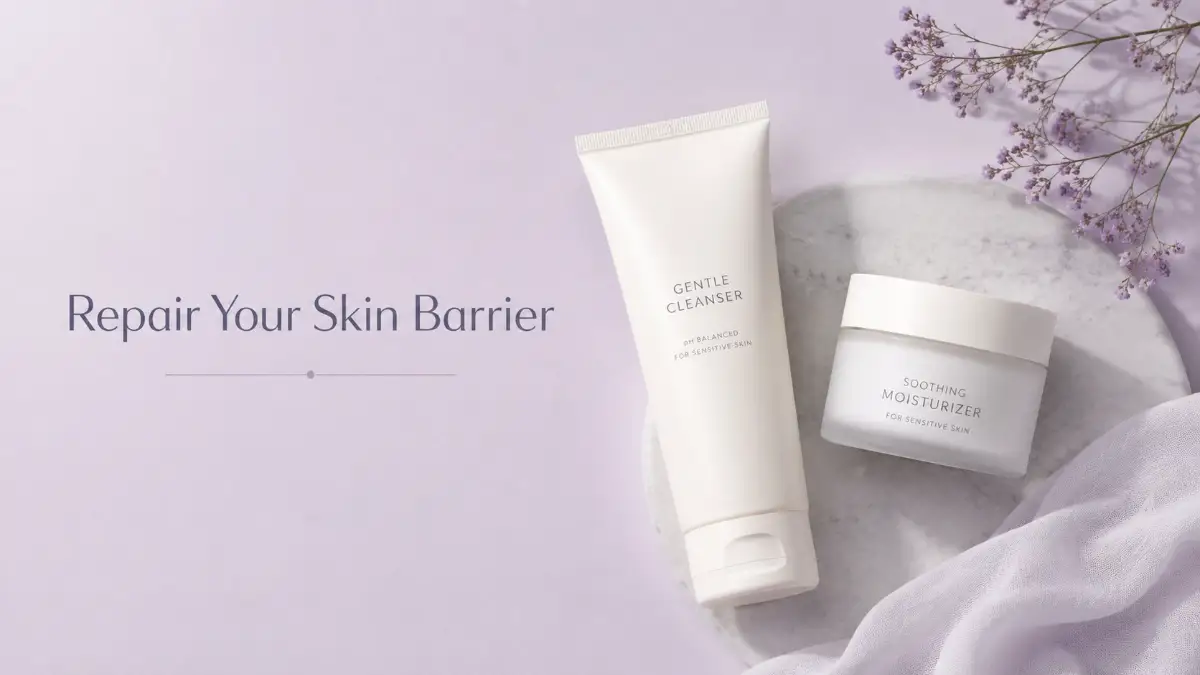
The Core Foundation: 3 Gentle Steps to Reset Your Complexion
If you are tired of the burning and the redness, we need to completely reset how you treat your face. You do not need a complicated, twelve-step morning ritual. You just need a routine that respects your natural biology.
Let's walk through the first three science-backed steps to calm your face. We will focus on rebuilding your natural defenses so you can finally experience lasting relief.
Step 1: The Right Way to Cleanse Without Stripping Your Face
The very first step to any effective routine is washing your face. But for us, washing is usually where the nightmare begins.
Most traditional foaming cleansers contain harsh chemicals called sulfates (like SLS). These chemicals create that thick, satisfying lather we all love. However, sulfates are essentially the same ingredients used in dish soap to cut through heavy grease.
When you use them on your face, they completely strip away your natural lipid barrier. This lipid barrier is a microscopic layer of oil and water that keeps bad bacteria out and good moisture in. Think of your skin barrier as the roof of your house. If you rip the shingles off the roof, the rain will pour straight inside.
When you wash away your lipid barrier, your face instantly feels tight, "squeaky clean," and dry. This tight feeling is not a sign of clean skin; it is a cry for help. It means your face is currently unprotected.
How to Wash Correctly
To fix this, you must switch to a non-foaming, creamy, or gel-based cleanser. Look for labels that clearly say "fragrance-free" and "soap-free."
When you wash, temperature matters immensely. Never use hot water, even in the middle of winter. Hot water melts away your natural oils and brings blood to the surface, causing massive redness.
Always use lukewarm water. Splash your face gently, apply a coin-sized amount of your gentle cleanser, and massage it with your fingertips for just thirty seconds.
Rinse it off completely, and then use a dedicated, clean microfiber towel to dry your face. Do not rub the towel aggressively. Instead, gently pat the moisture away, leaving your face slightly damp for the next step.
Step 2: Locking in Hydration and Calming Inflammation
Now that your face is clean and slightly damp, we need to add moisture immediately. This step is about stopping transepidermal water loss (TEWL).
TEWL is a scientific term for moisture evaporating from your face into the dry air around you. Sensitive types naturally suffer from very high rates of TEWL. Because your protective barrier is weak, water escapes constantly, leaving your face feeling like dry, cracked desert soil.
You need a moisturizer that acts like a thick, protective blanket. But you must be incredibly careful about the ingredients inside that blanket.
The Best Ingredients for Reactive Types
You want to look for products that contain a mix of humectants, emollients, and occlusives.
Humectants, like Glycerin or Hyaluronic Acid, grab water from the air and pull it deeply into your cells. Imagine them like tiny molecular sponges soaking up water.
Emollients and occlusives, like Ceramides, Squalane, or Shea Butter, sit on the surface. They fill in the tiny microscopic cracks between your cells and build a protective wall so the water cannot escape. Ceramides, in particular, are the natural "glue" that holds your skin cells together.
Ingredients You Must Strictly Avoid
Just as important as what you include is what you avoid. Fragrance is the absolute number one enemy of a reactive complexion.
Many brands add artificial perfumes to make their creams smell like roses or fresh citrus. These chemical fragrances offer zero biological benefits. They only exist to make the product smell nice, but they are the leading cause of allergic contact dermatitis.
You must also avoid essential oils like lavender, peppermint, or eucalyptus. People often think these are safe because they come from plants. However, in the real world, poison ivy is also a plant, and you would never rub that on your face!
Always choose a rich, boring, completely unscented cream. Apply a generous layer while your face is still slightly wet from washing. This traps that surface water underneath the cream, giving you maximum hydration for the rest of the day.
Step 3: Shielding Your Skin with Non-Irritating Sun Protection
Want to see how to apply mineral sunscreen smoothly without leaving a white cast or rubbing your delicate face? Watch this quick 2-minute video guide before moving on to our long-term healing habits below!
We cannot talk about an effective daily routine without discussing sun protection. Ultraviolet (UV) rays from the sun are incredibly damaging to everyone.
For someone with easily irritated skin, UV rays are a complete disaster. Sun exposure directly increases inflammation, makes redness much worse, and completely breaks down your already weak barrier. You must wear sunscreen every single day, even if it is cloudy or raining outside.
However, picking a sunscreen is usually a terrible experience. Most sunscreens burn the eyes, sting the cheeks, and cause massive breakouts. This happens because most popular options are chemical sunscreens.
Why Chemical Sunscreens Hurt
Chemical sunscreens use active ingredients like Oxybenzone or Avobenzone. These chemicals work by absorbing UV rays, turning them into heat, and then releasing that heat from your body.
While this science is effective for normal people, that trapped heat causes severe flushing and stinging for anyone with reactivity or conditions like Rosacea. The chemical filters themselves are also known irritants.
The Mineral Sunscreen Solution
Your best and safest option is a 100% Mineral Sunscreen (also known as a physical sunscreen). You need to check the active ingredient list on the back of the bottle.
The only active ingredients listed should be Zinc Oxide or Titanium Dioxide.
Mineral sunscreens work entirely differently. Instead of absorbing heat, they sit directly on top of your face like a physical shield. They immediately reflect the sun's rays away from your body, acting exactly like tiny microscopic mirrors.
Zinc Oxide is incredibly special. It is naturally highly soothing and anti-inflammatory. In fact, Zinc Oxide is the exact same ingredient doctors use in baby diaper rash cream to quickly heal severely irritated skin.
How to Apply It Successfully
Applying mineral sunscreen can sometimes leave a slight white cast on darker complexions. To avoid this, look for a tinted mineral sunscreen. These contain mild iron oxides that blend seamlessly into your natural tone while blocking harmful rays.
You need to apply a generous amount—about two finger lengths worth of product—to cover your entire face and neck. Do not rub it in aggressively.
Aggressive rubbing creates physical friction, which causes immediate redness. Instead, spread the sunscreen evenly and gently pat it down into your face until it disappears.
By mastering these three basic steps—gentle cleansing, safe moisturizing, and mineral sun protection—you create an unbreakable foundation. You stop attacking your face with harsh chemicals and finally give your cells the peaceful environment they need to heal themselves naturally.
Once you have mastered the basic steps of gentle cleansing and deep moisturizing, you need a smart strategy to maintain those wonderful results. Building real resilience takes time and requires you to fully commit to repairing the damaged skin barrier before you try anything complicated. I always tell my readers to think of their face like a recovering patient who needs absolute rest.
You cannot rush the healing process, no matter how desperately you want quick, overnight results. A very common issue is skipping the absolute basics, such as applying sunscreen wrong or completely forgetting it on a cloudy afternoon. Unprotected sun exposure will instantly reverse all the amazing progress you have made with your gentle cleansers.
To truly achieve long-term success, we have to look far beyond just the plastic bottles sitting in your bathroom cabinet. You need to start actively identifying sensitive skin triggers that hide quietly in your daily environment. Sometimes, the real enemy causing your redness is your harsh laundry detergent or the extreme temperature of your morning shower.
I also know many of you struggle with tired, puffy eyes due to the daily stress of managing frequent facial flare-ups. Instead of reaching for highly active, burning eye creams, it is much safer to reduce dark circles naturally using very gentle, cooling methods. Let's walk through the advanced habits that will keep your face completely calm, soft, and protected for the long haul.
Expert Habits to Build Long-Term Skin Resilience
Solving your daily redness is only half the battle. The true goal is teaching your biology how to defend itself naturally without relying on heavy medications. You want to reach a point where stepping into a cold wind does not instantly make your cheeks burn.
To achieve this level of natural defense, we need to adopt a few highly professional habits. These are the exact secrets top dermatologists share with their private clients. They are incredibly simple, but they make a massive difference in how your face looks and feels every single day.
The Non-Negotiable Rule of Patch Testing
Imagine buying a brand new, expensive car without taking it for a test drive first. You would never do that, yet people constantly buy a new face cream and immediately rub it all over their forehead and cheeks. For reactive types, this blind trust is a recipe for an absolute disaster.
Take it from someone who learned the hard way: I used to slather brand-new moisturizers all over my face, only to suffer two full weeks of angry flare-ups.
My biggest mistake back then was assuming expensive products were automatically safe, so I would smear them all over my face without testing them first. Once I finally committed to patch testing a small drop behind my ear for two days, I saved myself from countless painful flare-ups and weeks of regret.
My biggest pro tip is to always test a tiny dab behind your ear for 48 hours before letting any new product touch your cheeks.
You must patch test every single new bottle you bring into your home. To do this correctly, apply a tiny drop of the new cream right behind your ear or on the soft inside of your forearm. Leave it completely alone for at least 48 hours.
Reactions do not always happen within the first five minutes. Sometimes, a severe allergic response takes two full days to build up under the surface. If that tiny spot turns red, itchy, or bumpy, throw the product in the trash immediately and save your face from weeks of unnecessary pain.
Managing Your Environmental Temperature Triggers
We talk a lot about what we put onto our bodies, but we rarely discuss the invisible air around us. Extreme changes in temperature are massive triggers for sudden flushing. When you walk from a freezing winter street directly into a heavily heated room, your blood vessels expand violently.
This rapid expansion pushes blood to the surface, causing that hot, burning sensation across your cheeks. You need to manage these environmental shocks carefully. If you work in an office with very strong air conditioning, that cold air is literally sucking the water out of your cells.
To fight this, keep a small, basic humidifier right next to your desk or bed. Adding physical moisture back into the room air completely stops your face from drying out. This one tiny lifestyle change can drastically reduce that tight, uncomfortable feeling you get halfway through your workday.
Introducing Healing Serums with Extreme Caution
Eventually, your protective barrier will start to feel strong again. You might look in the mirror and decide you want to target specific issues, like fading old acne marks or smoothing out a rough texture. This is when people normally buy aggressive acids or strong retinol serums.
If you have a reactive history, you must ignore those harsh chemicals completely. Instead, you should only look for highly soothing, restorative ingredients. Centella Asiatica (often called Cica) and Panthenol (Vitamin B5) are absolutely incredible for calming an angry complexion.
When you do introduce a safe, calming serum, only use it once a week at first. Think of it like adding strong spices to a soup. You want to add just a tiny drop, stir it in, and wait to see how your body handles the new addition before dumping the whole bottle in.
The Hidden Dangers Inside Your Bedroom
You spend eight entire hours every night pressing your face against a fabric pillowcase. If you are washing those bed sheets with heavily perfumed, artificial laundry pods, you are basically rubbing synthetic fragrance directly into your pores all night long.
Switch to a completely hypoallergenic, baby-safe laundry detergent for your pillowcases and bath towels. Look for labels that clearly state "free and clear" of all dyes and perfumes. Your face touches your pillowcase more than any other object in your life, so it needs to be perfectly clean.
Additionally, consider investing in a pure silk pillowcase. Standard cotton fibers are actually quite rough on a microscopic level. They grab your face, cause friction, and absorb your expensive moisturizers, while smooth silk allows your face to glide effortlessly and retain its hydration.

5 Dangerous Skincare Habits You Must Stop Immediately
Even with the best products sitting on your bathroom counter, your daily habits can easily ruin your progress. Many of the things we are taught to do by beauty magazines are actually terrible for our cellular health. Let's break down the biggest traps you need to avoid to protect your peace of mind.
1. The Endless Product Hopping Cycle
When a moisturizer does not fix our redness by Tuesday, we usually throw it away and buy a completely different brand by Wednesday. This constant switching is incredibly stressful for your biological system. Your cells need a stable, boring environment to heal properly.
Think of your face like a newly planted garden. If you constantly dig up the seeds to check on the roots, the flowers will never actually grow. You must give any simple, safe routine at least four to six weeks of consistent daily use before judging if it actually works for you.
2. Scrubbing Your Face with Makeup Wipes
Makeup remover wipes are marketed as a fast, convenient way to clean up after a long day at work. However, they are secretly one of the most damaging items you can ever touch. The textured paper acts like microscopic sandpaper, tearing away your delicate outer layers.
Worse than the physical scratching are the chemical preservatives soaked into the wipes. Because wipes sit wet in a plastic bag for months, companies load them with harsh preservatives to prevent mold. Never drag these chemical-soaked papers across your eyes or cheeks. Always use a soft, liquid cleanser and water instead.
3. Skipping the Morning Water Rinse
Many people believe that if they washed their face perfectly before bed, they do not need to wash it again in the morning. While you absolutely should not use a soapy cleanser twice a day, skipping the morning rinse entirely is a big mistake.
While you sleep, your body naturally pushes out sweat, dead skin cells, and excess sebum. If you just wake up and immediately rub heavy sunscreen over that nighttime sweat, you will trap bacteria directly into your pores. Always splash your face with plain, lukewarm water every morning to gently wash away the night's residue.
4. Applying Heavy Organic Oils on Compromised Skin
There is a huge internet trend telling people to use pure coconut oil or thick olive oil to cure severe dryness. While these oils are wonderful for cooking a healthy dinner, they are terrible for reactive facial issues. Heavy kitchen oils are highly comedogenic, meaning they aggressively block your pores.
When your pores are permanently blocked by a thick layer of coconut oil, heat and sweat become trapped underneath. This creates the perfect breeding ground for painful, underground cystic acne. Stick to scientifically formulated, non-comedogenic moisturizers that let your cells breathe naturally.
5. Ignoring Your Internal Diet and Daily Hydration
You can buy the most expensive, luxurious French creams in the world, but they will not help if your internal engine is constantly dehydrated. Everything you put into your stomach eventually shows up directly on your face.
Drinking highly caffeinated energy drinks and eating heavily spiced, hot foods forces your blood vessels to dilate violently. This creates a permanent, flushed redness that no topical cream can ever fix. Drink plenty of plain water daily and monitor how certain spicy meals immediately change the color of your cheeks.
Your Final Roadmap to a Calm, Glowing Complexion
Living with a highly reactive, unpredictable face can honestly feel incredibly exhausting. It drains your daily confidence and makes getting ready in the morning feel like a stressful chore. But you do not have to live in fear of the next big, painful flare-up.
By stepping completely away from complicated, harsh chemical routines, you are taking control back into your own hands. You now understand the science of protecting your natural moisture barrier. You know exactly why gentle, boring, and fragrance-free choices are actually your biggest weapons.
Remember that true healing takes genuine patience. Do not judge your progress by looking in the mirror every single hour. Give your body the safe, quiet time it needs to rebuild its invisible defenses.
Start tonight by throwing away the rough scrubs, the heavily perfumed lotions, and the harsh daily habits. Embrace the quiet power of simply washing, hydrating, and protecting. Your skin is incredibly smart, and once you finally stop attacking it, it will beautifully heal itself.
Trust me, once I let go of complicated trends and embraced a quiet, basic routine, my daily confidence completely transformed. You do not need ten expensive serums to fix your face—you just need gentle care, simple ingredients, and a little time to rebuild.
Taking back control of your skin starts with just one simple choice today, so throw away the harsh products and give your face a chance to rest. Trust the process, be patient with your body, and watch your natural glow return step by step!
Disclaimer: The content in this article is meant for educational purposes only and should not replace professional medical advice. Always consult with a qualified & certified dermatologist or healthcare professional before making changes to your skincare routine, especially if you have serious pre-existing skin conditions, severe allergies, or open wounds.