

The Price Tag Lie: What Nobody Tells You About Your First Home
You find the listing online. The hardwood floors look spotless, the kitchen has brand-new quartz countertops, and the monthly mortgage calculator shows a number you can comfortably afford.
You start imagining where your couch will go.
Then reality hits you like a sack of bricks.
Buying a house isn't just about trading rent checks for mortgage payments. It's a complex, high-stakes financial puzzle where small oversights snowball into thousands of dollars in wasted cash. Most first-time buyers don't lose money because they picked an ugly house; they lose money because they fell into predictable, avoidable traps long before closing day.
Here's the hard truth: enthusiasm is your biggest financial enemy during this process. When emotions run the show, rational budgeting flies right out the window.
We want you to hold onto your hard-earned cash. Let's break down the hidden potholes so you can walk into settlement with complete confidence.
The First-Time Homebuyer Quick Summary
-
Get pre-approved, not pre-qualified: Always secure a verified mortgage pre-approval letter before browsing neighborhoods.
-
Keep your reserves intact: Don't wipe out your emergency fund just to hit a specific down payment percentage.
-
Budget for the extras: Expect closing costs to add an extra 2% to 5% of the total loan balance.
-
Freeze your credit profile: Avoid new credit cards, car loans, or job changes until the deed is in your hand.
-
Hire your own inspector: Never rely on seller disclosures or quick drive-by appraisals.
4 Expensive Traps You Must Avoid Before Making an Offer
Getting the keys starts months before you tour an open house. If you botch the groundwork, you'll pay for it every single month for the next thirty years.
Let's dissect the first four major traps that drain beginner bank accounts.
1. House Hunting Before Getting a Verified Pre-Approval
Falling in love with a property you can't finance is the quickest way to break your heart and your budget.
Many beginners scroll through real estate apps for weeks, attend open houses, and talk to listing agents without knowing their true borrowing power. That's backwards.
A quick online pre-qualification isn't enough. Pre-qualification is just an automated guess based on numbers you type into an online form. Lenders don't verify your tax returns, bank statements, or debt ratios at that stage.
A verified pre-approval, on the other hand, means an underwriter has combed through your actual financial records. It tells you your hard budget ceiling. More importantly, serious sellers won't even look at your offer without one.
Don't waste weekends touring half-million-dollar houses if the bank only clears you for four hundred thousand. It leads to frustration, rushed decisions, and bad deals.
2. Draining Every Penny to Reach a 20% Down Payment
There's an old myth that you must put down 20% to buy real estate.
It's simply false.
While putting 20% down eliminates private mortgage insurance (PMI), completely emptying your savings account to hit that number is dangerous. Homes demand cash immediately after closing.
Water heaters burst. Pipes leak. Lawnmowers need buying.
If you spend every spare dollar on your down payment, you'll end up turning to high-interest credit cards the second your HVAC system acts up. That puts you in a worse spot than paying thirty dollars a month in mortgage insurance.
Look at how loan options actually stack up for first-time buyers:
| Loan Type | Minimum Down Payment | Credit Score Typical Minimum | Best Suited For |
|---|---|---|---|
| Conventional Loan | 3% - 5% | 620+ | Buyers with solid credit and steady income |
| FHA Loan | 3.5% | 580+ | Buyers with lower credit or past financial hiccups |
| VA Loan | 0% | Typically 580 - 620 | Active military, veterans, and eligible spouses |
| USDA Loan | 0% | 640+ | Buyers in qualifying rural and suburban zones |
Think about your balance sheet as a whole. Preserving an emergency cushion of three to six months worth of living expenses is far smarter than squeaking by with zero dollars in checking.
3. Forgetting the Sneaky World of Closing Costs
Most people save for the down payment and stop there. They completely forget that closing costs require cold, hard cash on settlement day.
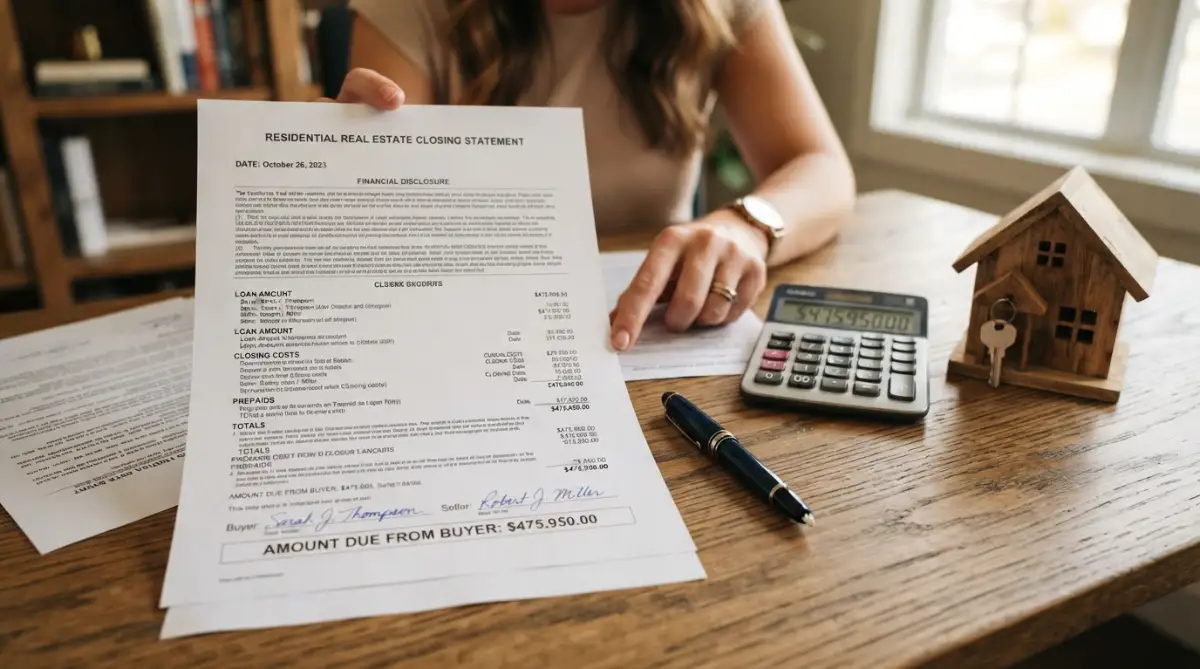
Closing costs cover origination fees, appraisal charges, attorney expenses, title searches, government transfer taxes, and upfront escrow deposits for property taxes and homeowners insurance. They aren't rolled into your regular monthly loan balance unless you negotiate specific terms.
Typically, closing costs run between 2% and 5% of your total loan amount.
On a $350,000 purchase, that means you need between $7,000 and $17,500 in liquid cash on top of your down payment.
If you show up to closing day short on funds, the deal stalls, your earnest money deposit is on the line, and the seller can walk away with your deposit.
Pro Tip: When you receive your Loan Estimate from lenders, jump straight to "Page 2, Section C." That's where third-party services you can shop for live, like title insurance and settlement agents. Shopping around for title insurance alone can easily save you $800 to $1,500.
4. Making Big Financial Moves During Mortgage Underwriting
Watch this breakdown to see why small financial shifts create huge red flags for mortgage underwriters:
You got pre-approved, your offer was accepted, and closing is set for three weeks from now. You're home free, right?
Not even close.
Underwriters pull your credit report a second time right before funding the loan. If anything changes, your approval vanishes overnight.
People make this blunder all the time. They celebrate their pending purchase by financing brand-new furniture for the living room, leasing a new truck, or opening a department store card for appliances.
That sudden spike in your debt-to-income (DTI) ratio can push you over the lending threshold.
Even innocent actions cause chaos. Depositing large sums of undocumented cash, changing jobs, switching banks, or moving money between accounts can freeze your underwriting file.
Keep your finances boring and completely unchanged until every document is signed and the keys are in your hand.
5. Skipping the Home Inspection to Win a Bidding War
Desperation makes smart people do reckless things.
When inventory runs tight and multiple buyers chase the same property, someone always suggests waiving the inspection. It's pitched as a quick way to make your offer stand out.
Don't do it.
Wiping out your inspection rights is financial Russian roulette. That charming bungalow might look pristine on surface level, but you can't see the cracked sewer line beneath the basement slab.
You can't smell the active black mold behind fresh coats of paint.
Fixing a failed foundation or replacing a rotted roof will run you twenty to forty thousand dollars. If you waive your inspection, that bill comes straight out of your pocket.
Sellers who know their house has hidden defects love buyers who skip inspections. Don't be that buyer.

6. Confusing a General Home Inspection with Specialized Inspections
You hired a licensed general home inspector. That's a great start, but it isn't the finish line.
General inspectors look at the overall condition of a property. They check whether outlets work, test water pressure, and inspect roof shingles from the ground or a ladder.
They don't have X-ray vision.
General inspectors won't dig into underground pipes, check chimney flues, or test for airborne hazards. That's where major surprises hide.
If you're buying an older home, you need targeted trade inspections.
Always book a sewer scope. A plumber runs a small camera through the main drain line out to the city connection. A five-hundred-dollar camera check can spot collapsed clay pipes that cost ten thousand dollars to dig up.
If the area has rocky soil or unventilated basements, check for radon gas. The EPA Radon Protection Guide highlights that elevated radon levels cause severe respiratory issues over time, yet testing for it costs almost nothing.
Test the chimney. Test for wood-destroying insects.
A few hundred dollars spent on specialized inspections during your due diligence window will save you from buying an outright money pit.
7. Blindly Trusting Real Estate Search Portals for Property Values
Online real estate aggregators are great for scrolling through photos on the couch.
They're terrible at pricing homes accurately.
Those automated valuation algorithms don't know that the house down the street has high-end custom cabinets while your target property has warped laminate from twenty years ago.
They simply calculate basic public records, square footage, and zip code averages.
Relying on an automated algorithm to decide your initial bid can cause you to overpay by thousands. It can also cause you to submit lowball offers that get immediately thrown in the trash.
Understanding true neighborhood value requires pulling actual settled comps from the local Multiple Listing Service (MLS). You've got to study closed transactions, not active wishful list prices.
Learning how to read real estate market cycles gives you the upper hand here. It helps you see whether local neighborhood prices are cooling off or heating up before you put cash on the table.
Platform Playbook: Optimizing Your Property Alerts for Real Opportunities
Most buyers set up casual app notifications and get flooded with stale listings. Let's fix that right now.
-
Zillow & Redfin (Mobile App Setup): Turn off broad city-wide notifications. Draw custom geographic boundary maps around your target school districts or transit routes. Filter out properties labeled "Under Contract" or "Pending." You only want alerts for properties marked "Active" or "Price Reduced." Set alert frequency to "Instant" so you don't receive batches six hours after a home hits the market.
-
Direct MLS Client Portals (Desktop Setup): Have your buyer agent create an automated MLS feed directly through their regional system rather than consumer websites. Third-party sites often scrape data with a fifteen-to-thirty-minute delay. In hot submarkets, that delay means other buyers book showing slots before your app even pings you. Verify that your agent enables "Direct Agent Remarks" in your portal so you can see seller deadlines right away.
Post-Inspection Repair Negotiation Email Template
When your inspection report reveals serious problems, don't scream at the seller. Keep it strictly business.
Use this clear, professional email template to send your repair or credit request through your buyer agent:
Subject: Request for Repairs / Financial Credit – [Insert Property Address]
Hi [Agent Name],
We've reviewed the comprehensive home inspection report for [Property Address] with our inspector. While we love the home and want to move forward, the report revealed several safety and structural defects that need resolution before closing:
- [Issue 1: e.g., Main electrical panel shows double-tapped breakers and requires replacement by a licensed electrician].
- [Issue 2: e.g., Active water leak identified under master bathroom subfloor].
- [Issue 3: e.g., HVAC heat exchanger is cracked, posing a carbon monoxide concern].
Rather than having the seller manage contractors before settlement, we request a seller closing credit of $[Insert Realistic Dollar Amount] to address these repairs directly after closing.
Attached are the relevant pages from the inspection report alongside two contractor estimates.
Please present this addendum to the listing agent today. We appreciate the seller working with us to reach a fair solution.
Best regards,
[Your Name]
Inspection Negotiations: Do's vs. Don'ts
| Do This | Avoid Doing This |
|---|---|
| Focus your repair requests on structural, electrical, plumbing, and roof defects. | Asking for fixes on small cosmetic blemishes like chipped paint or squeaky doors. |
| Demand financial closing credits instead of asking the seller to do actual repairs. | Letting the seller hire the cheapest handyman they can find to cut corners. |
| Attach formal licensed contractor bids to justify your credit requests. | Throwing out random, unverified dollar numbers that irritate the seller. |
| Be ready to walk away if the seller refuses to fix major safety hazards. | Accepting massive foundation defects out of fear that you won't find another house. |
Hidden Traps That Surprise Unprepared Homeowners
You signed the papers, the keys are yours, and you're unpacking boxes.
Don't let your guard down just yet. Some of the nastiest financial traps don't trigger until months after you unpack your kitchen dishes.
8. The Brutal Post-Sale Property Tax Assessment Reset
This is the sneakiest trap in residential real estate.
When you review your initial loan estimate, your lender estimates your monthly property taxes based on what the current seller pays.
Here's the catch: the seller might have bought the home fifteen years ago for half the current price.
Local municipalities don't keep taxes capped at old rates. Once a property transfers at a higher purchase price, the county tax assessor resets the home's assessed value to match that new sales price.
Twelve months down the road, you receive a shocking letter from your loan servicer.
Your property taxes jumped by four hundred dollars a month. Even worse, your escrow account has a shortage from the previous year, meaning you have to pay the back-taxes immediately.
To prevent this shock, visit your local county tax assessor website before buying. Calculate your property taxes using your actual offer price, not the seller's historic tax bill.
9. Waiving Purchase Contingencies Blindly
A purchase contract isn't just an offer to buy; it's a legal document loaded with protective safeguards.
These safeguards are called contingencies. They let you walk away with your earnest money deposit intact if something goes sideways.
First-time buyers often drop these clauses to make their offers look more attractive. It's a massive gamble.
If you drop your financing contingency and your loan falls through at the eleventh hour, the seller can legally pocket your entire deposit. On a four-hundred-thousand-dollar house, that could mean waving goodbye to ten or twenty thousand dollars.
The same rule applies to appraisal contingencies. If the home appraises for less than your offer price, an appraisal clause lets you renegotiate the price or back out penalty-free.
Take the time to understand your legal rights by reading our breakdown on how a real estate contingency protects your money. Protecting your hard-earned deposit is always more important than winning an overpriced bidding contest.
Before submitting any legal contract, study the loan disclosure tools published by the Consumer Financial Protection Bureau to ensure you understand every dollar moving across the table. For personalized guidance on down-payment assistance programs, check the verified state resources directly on HUD's Homebuyer Portal.
What to Do Right Now
Pull out your current savings statement and divide your funds into two distinct piles: your actual down payment and an untouchable three-month emergency reserve.
Call your lender today and request a formal Loan Estimate breakdown so you can spot every third-party service you're allowed to shop for.
Draw your hard budget line right now, and promise yourself you won't cross it for any property, no matter how nice the countertops look.
Frequently Asked Questions
Can I change jobs while looking for a home?
Changing jobs during the buying process can derail your mortgage approval immediately. Lenders demand proof of consistent, predictable income, especially within the same industry. If you must switch jobs, talk to your loan officer before accepting any offer.
How much cash should I keep left over after closing?
Try to keep at least three to six months of total living expenses in an accessible savings account. Unforeseen plumbing breaks, moving fees, and sudden utility deposits always pop up during your first sixty days of ownership.
Is a home warranty worth buying as a first-time buyer?
Home warranties often sound better than they actually are. They come with high service fees, strict exclusions, and long repair delays. Setting aside your own monthly maintenance fund gives you far faster and more reliable repairs.
What happens if the home appraises lower than my offer?
If your contract includes an appraisal contingency, you can ask the seller to lower their price to match the appraised value. If they refuse, you can either cover the cash gap out of pocket or walk away with your earnest money deposit intact.
Disclaimer: This guide is provided for educational and informational purposes only and does not constitute formal financial, legal, or real estate advice. Real estate laws, tax structures, and lending standards vary widely by jurisdiction and personal circumstances. Always consult with a licensed mortgage broker, certified financial planner, and real estate attorney before executing binding contracts or making major financial commitments.