
The Hidden Trap in Home Buying: The Stress of Losing Your Life Savings
Imagine spending years saving every single dollar for your dream home. You skip vacations, eat out less, and put your dreams on hold. Finally, you find a beautiful house that looks absolutely perfect on the outside.
You quickly sign the contract because you do not want to lose the house to another buyer. A few days later, you discover the foundation is cracked and will cost thousands of dollars to fix. If you do not have a safety net in your contract, you face a horrible choice.
You must either buy a broken house or walk away and lose your entire earnest money deposit. This is the painful reality that many home buyers face when they do not understand how contracts work.
I still get a pit in my stomach when I think about the first time I tried to buy a house. I found what I thought was my dream home, rushed to sign the papers without understanding the fine print, and nearly lost my entire $15,000 deposit when the roof turned out to be a disaster. That terrifying near-miss taught me a hard lesson about protecting my money, and I do not want you to go through that same nightmare.
Why Most Buyers Fall Into This Costly Trap
Many people make major mistakes during the home buying process because of a few simple reasons:
- Listening to biased advice: Some buyers trust pushy agents who only want to close the deal quickly.
- Rushing in an active market: Buyers often feel pressured to skip safety clauses to make their offers look better to the seller.
- Believing everything looks good: People assume a beautiful coat of paint means the entire house is in perfect condition.
- Ignoring the contract details: Buyers often sign papers without reading the fine print that actually protects their bank accounts.
How Contract Mistakes Can Ruin Your Peace of Mind
The financial damage is only one part of the problem. The emotional toll of a bad real estate deal can affect your whole life:
- Sleepless nights: You will constantly worry about losing your hard-earned money to a seller.
- Loss of confidence: A bad experience can make you terrified of ever trying to buy a home again.
- Family stress: Money problems and contract fights often cause major arguments with your loved ones.
- Feeling completely helpless: Knowing you signed a bad deal without a way out is a terrible feeling.
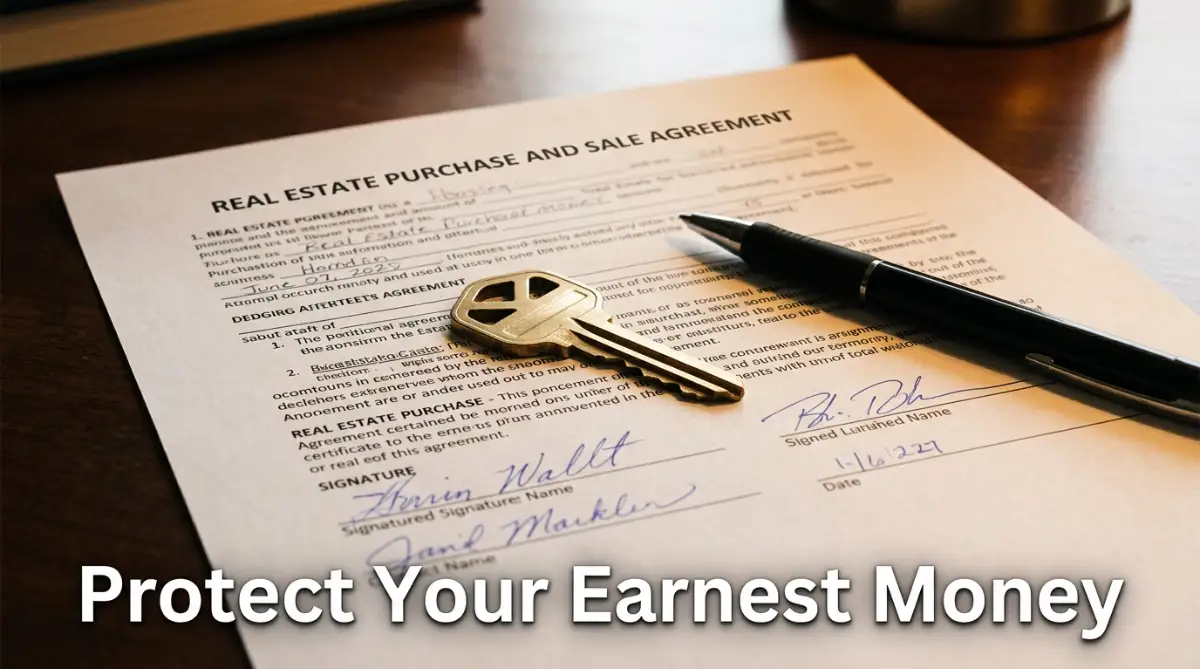
Your Legal Shield: What Is a Real Estate Contingency?
A real estate contingency is a special clause in your purchase agreement that makes the deal depend on certain events. Think of it as an official escape hatch for your contract. If the conditions in these clauses are not met, you can walk away from the deal.
Best of all, you get to keep your earnest money deposit. Without these clauses, you are locked into the contract no matter what happens to the house or your loan. Let us look at how these protective shields work in real-life situations.
Want to see exactly how these legal escape hatches work in real life? Watch this quick video breaking down real estate contingencies before you read about the specific protective clauses below!
The Home Inspection Contingency: Uncovering Hidden Traps
The home inspection clause is one of the most important tools you can use. It gives you the right to hire a professional inspector to check the house from top to bottom. They will look at the roof, the plumbing, the wiring, and the foundation.
The Moldy Basement Scenario:
Imagine you fall in love with a house during an open house. The walls look great, and the yard is beautiful. However, the inspector crawls under the house and finds toxic mold hidden behind the basement drywall.
Fixing this issue will cost over ten thousand dollars. Because you have an inspection contingency, you do not have to pay for this.
You can ask the seller to fix the mold before you buy. If they refuse, you can cancel the contract and get your deposit back. This simple clause saves you from moving into a hazardous environment.
How to Use This Step Today:
- Write it in the offer: Always make sure your agent includes a home inspection clause in your initial offer.
- Hire your own inspector: Never use an inspector recommended by the seller or the seller's agent.
- Set a realistic timeline: Give yourself at least ten days to get the inspection completed and review the report.
The Appraisal Contingency: Staying Safe from Overpaying
An appraisal contingency ensures you do not pay more for a home than it is actually worth. Your mortgage company will send an independent appraiser to evaluate the home. They will compare the house to other homes that recently sold in the neighborhood.
The Overpriced House Scenario:
Let us say you agree to buy a house for $400,000. However, the appraiser looks at the neighborhood sales and says the house is only worth $370,000. Your bank will not lend you more than the actual appraised value of the home. This leaves a gap of $30,000.
If you have an appraisal contingency, you are protected. You can ask the seller to drop the price to $370,000. If the seller says no, you can walk away with your deposit, completely free of any penalty.
How to Use This Step Today:
- Protect your loan: Make sure your contract states the purchase depends on the home appraising for the full purchase price.
- Prepare to negotiate: Use a low appraisal as leverage to get the seller to lower their asking price.
- Know your limits: Be ready to walk away if the seller refuses to match the appraised value.
The Financing Contingency: What if the Bank Says No?
Getting pre-approved for a loan is not the same as getting final loan approval. Many things can go wrong with your mortgage during the closing process. A financing contingency protects you in case your loan falls through.
The Unforeseen Job Loss Scenario:
Imagine you get pre-approved and find a great home. Two weeks before closing, your company downsizes, and you lose your job. Because you no longer have an income, the bank cancels your loan. Without a financing clause, the seller could sue you for breaching the contract.
With a financing contingency, you are safe. You can show the seller that the bank denied your loan, and you can cancel the contract safely.
How to Use This Step Today:
- Keep your credit clean: Do not buy a new car or open new credit cards while waiting to close on your house.
- Watch the deadlines: Make sure your financing clause gives you enough time to get final approval from your bank.
- Communicate quickly: If your loan gets denied, notify the seller in writing immediately to get your deposit back.
The House Sale Contingency: Preventing Double Mortgages
If you already own a home, you usually need to sell it before you can buy a new one. A house sale contingency makes your new purchase depend on the successful sale of your current home.
This prevents you from getting stuck paying two mortgages at the exact same time. It gives you peace of mind while you wait for a buyer for your old house.
How to Use This Step Today:
- Be honest with the seller: Let them know right away that your purchase depends on selling your current home.
- Set a strict time limit: Usually, sellers will give you 30 to 60 days to find a buyer for your old house.
- Price your home correctly: Ensure your current home is priced to sell quickly so you do not lose the new house.
Myth vs. Reality: Real Estate Contingencies
- Myth: Contingencies make your offer look weak.
- Reality: Most sellers expect reasonable contingencies. It shows you are a serious buyer who understands the process.
- Myth: You do not need an inspection if the house is brand new.
- Reality: New homes can have major building mistakes. An inspection is always necessary to catch builder shortcuts.
- Myth: You can use contingencies to back out of a deal for any reason.
- Reality: You must have a valid, contract-based reason to cancel, or you will lose your deposit.
Expert Insight: Balancing Safety and Appeal
You want your offer to be attractive to the seller, but you also need to protect your money. The best approach is to keep only the most important clauses.
For example, never skip the home inspection or appraisal clauses unless you are a highly experienced investor. You can make your offer stronger by offering a quick timeline for the inspection rather than skipping it entirely. This shows the seller you respect their time while still keeping your safety shield in place.
When I finally bought my current home, my biggest mistake was almost skipping the inspection just to beat out another buyer. My agent stopped me, and thank goodness she did—the inspector found a hidden plumbing leak that would have cost me thousands to fix out of pocket. Pro tip: Never let the fear of losing a house push you into giving up your right to inspect it first.
Advanced Strategies to Protect Your Investment
When you buy a home in a busy housing market, simply having basic clauses in your agreement is not enough. You need to know how to use these legal safeguards like a seasoned real estate professional.
Using advanced methods can help you win the house you want while keeping your hard-earned money safe. Let us look at how you can strengthen your purchase contract without scaring away eager sellers.
The Kick-Out Clause: Knowing Your Rights as a Buyer
A house sale contingency is incredibly helpful when you need to sell your current house first. However, many sellers do not want to wait around forever while your old house sits on the market.
To solve this problem, sellers often request a kick-out clause in the contract. This clause allows the seller to keep showing their property to other potential buyers.
If they receive a better offer, they will give you a short window of time, usually 72 hours, to make a big decision. You must either remove your house sale contingency and proceed with the purchase, or walk away and let the seller accept the new offer.
Knowing how to handle this pressure is key to keeping your earnest money safe. It allows you to stay in the game without taking on the heavy burden of paying two mortgages at once.
Using the Appraisal Gap Guarantee to Stay Competitive
In active markets, buyers often offer more than the actual asking price to win a bidding war. If the home appraises for less than your high offer, your lender will not cover the full amount.
An appraisal gap guarantee is a smart clause that solves this issue directly. You agree to pay a specific, limited amount of cash out of pocket if there is a gap between the appraisal and your offer price [1].
For example, you can write in your contract that you will cover a gap of up to five thousand dollars. If the gap turns out to be fifteen thousand dollars, you still hold the right to walk away from the deal with your deposit.
This strategy shows the seller you are serious while keeping a firm limit on your financial risk. It is a highly effective way to balance your competitiveness with smart money management.
Keeping Your Financial Standing Safe During Escrow
One of the worst mistakes you can make is ignoring your credit files after your offer gets accepted. Your lender will check your credit report one final time just before they release the mortgage funds.
If they notice major changes, they can instantly deny your loan, which ruins your chance of buying the home. This is why keeping your credit in top shape during the home buying window is an absolute necessity.
If you are currently trying to clean up your credit history, make sure you look into restoring a poor credit history without falling for scams to keep your profile clean and safe.
You should also keep a close eye on your household budget during this transitional phase. Many buyers drain their accounts on furniture before the keys are in their hands.
Using a structured system like organizing your money with a zero-based budget can help you track every dollar and maintain the exact cash reserves your bank requires.
For more detailed information on how contracts work and how they protect consumer finances, you can read the official guidelines on Investopedia's real estate contingency resource page [1]. This can give you a deeper understanding of contract law basics.
The Safe Path to Mortgage Approval
- Keep your credit profile stable: Avoid applying for new credit cards and prevent large balance shifts during the closing process.
- Maintain your pre-approval status: Keep your finances predictable so your mortgage lender does not change their minds before final signing.
- Secure a smooth mortgage closing: Arrive at the closing table with your final mortgage funding fully approved and ready for transfer.

Dangerous Blind Spots: How Simple Contract Errors Can Cost You Thousands
Even with the best intentions, a single small mistake in your contract language can cost you your dream home. Many buyers do not realize how strict real estate laws really are.
If you do not pay close attention, you might accidentally waive your rights without knowing it. Let us examine the most common traps that catch buyers off guard.
Missing the Strict Contract Deadlines
Real estate contracts operate on highly strict timelines. Every contingency you include in your offer will have a specific expiration date.
If you have ten days to perform a home inspection, you must deliver your repair requests to the seller by the tenth day. If you submit your requests on the eleventh day, you have legally missed your chance.
The seller can refuse to make any repairs, and you will still be locked into buying the house. Always write down every single deadline on your calendar and set multiple reminders.
Confusing Active and Passive Contingency Removals
Different regions use different rules for removing contingency clauses from contracts. In an active removal system, you must sign a physical document to officially remove your safety net.
In a passive removal system, the safety net disappears automatically once the deadline passes. If your contract uses passive removal and you do not ask for an extension before the deadline, you lose your protection.
Always ask your agent to explain how contingency removal works in your local area. Never assume your money is safe just because you have not signed a new paper.
Taking Big Financial Risks Before Your Loan Closes
Your debt-to-income ratio is a highly important factor that banks use to approve your mortgage. Taking on any new debt while your home loan is in escrow can immediately disqualify you.
Many excited buyers go out and buy appliances or vehicles on credit cards before closing. This sudden change in your debt level can cause your bank to cancel your mortgage.
If you must manage existing debts, focus on paying off high credit card balances instead of taking on new ones.
Additionally, if you have other debts like personal loans, look into forcing banks to lower personal loan interest rates to free up extra cash flow.
You can find more detailed rules about how lenders calculate your mortgage risks on the official Consumer Financial Protection Bureau website. This will help you keep your mortgage application completely safe.
Important Financial Restrictions During Escrow
- Avoid large purchases: Do not purchase large appliances, electronics, or furniture on store credit before you officially close.
- Do not take on new debt: Do not finance a new vehicle or apply for any personal loans while waiting for mortgage approval.
- Keep existing accounts open: Do not close any old credit card accounts or change jobs suddenly during the purchase process.
Relying on Verbal Agreements with the Seller
In the world of real estate, verbal agreements are completely meaningless. If a seller tells you they will fix the roof before you move in, but it is not written down, they do not have to do it.
Every single agreement, promise, and repair request must be written down and signed by both parties. If the seller promises to leave the washer and dryer, make sure those appliances are listed directly in the contract.
If a dispute arises later, the written contract is the only document the court will look at. Protect yourself by documenting every single conversation in writing.
Taking Control: Your Action Plan for a Safe Home Purchase
Buying a home is one of the biggest financial decisions you will ever make in your life. By using real estate contingencies correctly, you can take all the fear out of the process.
These clauses are not there to make things difficult for the seller. Instead, they exist to make sure the transaction is fair, safe, and honest for everyone involved.
Now that you know how to protect your earnest money, you can search for a home with total confidence. Talk to your agent, ask the right questions, and never sign a contract that makes you feel uncomfortable.
With the right safety nets in place, you can focus on the exciting part of the journey. You will soon be moving into your new home with complete peace of mind.
Your Step-by-Step Contingency Action Plan
- Review your contract timelines: Walk through every deadline with your real estate agent the very day the contract is signed.
- Schedule inspections early: Book your home inspection within the first 48 hours to give yourself plenty of time for negotiations.
- Keep your finances steady: Maintain stable bank accounts and do not make any sudden changes to your credit file.
- Get everything in writing: Make sure all repair agreements are officially documented and signed by the seller.
Looking back, learning how to use these contract safety nets completely changed my home buying experience from stressful to empowering. You have the power to protect your hard-earned savings while still getting the keys to a house you love. Take a deep breath, use these tools to your advantage, and step into your new home with total confidence today!
Disclaimer: The stories and tips shared in this article are based on my personal experiences and general knowledge. I am not a real estate attorney or a licensed financial advisor. Real estate rules can change a lot depending on where you live, so always talk to a local professional before you sign any legally binding contracts or hand over your money.