
The Real Struggle of Finding Medical Cover When You Work for Yourself
Working for yourself is amazing right up until you get sick. Suddenly, that freedom feels like a giant financial trap. I used to dodge doctor visits just to save a few bucks, terrified that one bad emergency would wipe out my business bank account. If you are stressing over how to afford medical cover without going broke, you are in the right place. Let's cut through the confusing jargon and fix this together.
When I finally left my 9-to-5 job to start my own business, I was super excited but terrified of losing my company medical benefits. I actually spent weeks staring at confusing insurance websites, completely lost and worried that one bad accident would wipe out all my hard work. Trust me, I know exactly how overwhelming it feels to balance your health and your shrinking budget at the same time.
Without a big company backing you up, a single illness feels like a threat to your entire career. You work hard to build your dream, but your health feels like a ticking time bomb.
Many independent workers struggle to find the right coverage because of the following reasons:
- The market is flooded with complex terms that sound like a foreign language to everyday people.
- Online advice often pushes high-commission plans that benefit brokers rather than your actual family needs.
- Many blog posts give outdated advice that does not apply to the current rules of your local area.
- Spam calls from aggressive insurance agents make you feel rushed into making a bad buying decision.
- You might pick a plan with low monthly payments, only to find out it covers almost nothing when you get sick.
This constant search for answers affects your life in deep ways:
- Living without a safety net creates a constant background noise of worry in your daily life.
- You start avoiding regular checkups because you fear the bills, which puts your long-term health at risk.
- This anxiety slowly drains your creative energy, making it harder to focus on growing your business.
- You feel like a second-class citizen compared to friends who have easy corporate health packages.
- The pressure of choosing the wrong plan makes you feel stuck, frozen, and unable to make any decision at all.
Let's look at a quick breakdown of how your medical coverage reality changes the moment you ditch the 9-to-5 lifestyle:
Seeing it laid out like this makes it obvious why you need a totally different strategy now that you are the boss.
Let us look at a simple example to show how heavy this burden is. Imagine a self-employed writer who spends years building a steady list of clients.
One day, they slip on ice and break an arm. If they do not have the right coverage, they face thousands of dollars in hospital bills. On top of that, they cannot type, which means their income stops completely. This double hit can destroy years of savings in a single afternoon.
Most people think they only have two choices. They think they must pay a massive monthly fee they cannot afford, or go completely without coverage and pray. But this is a false choice. The truth is that there are ways to find good plans without going broke.
You just need to know how to look past the confusing jargon and sales pitches. Let us break down the exact steps to help you regain control over your health and your wallet.
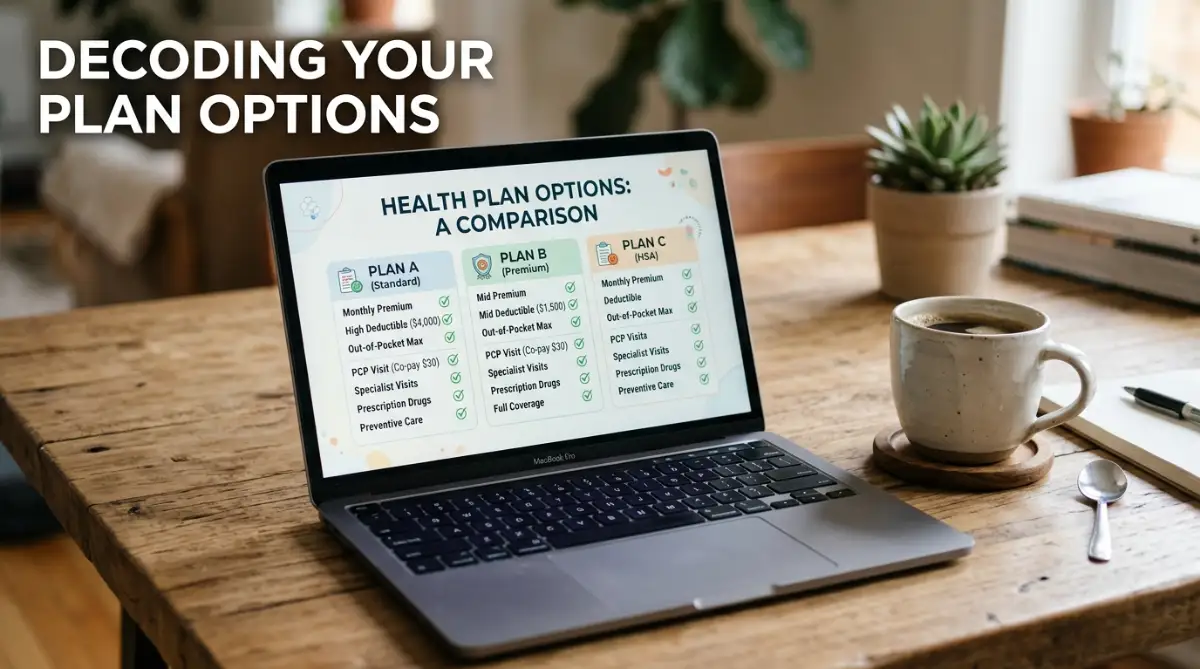
Your Clear Guide to Navigating Health Coverage Alone
Understanding the Language of Insurance Plans
Before you spend a single dollar, you need to understand what you are actually buying. Insurance companies use acronyms that make things look harder than they really are.
Let us translate them into simple terms so you can make a smart choice.
Health Maintenance Organizations (HMO):
- These plans require you to see doctors within a specific local network.
- You must get a referral from your primary care doctor to see any specialist.
- They usually have lower monthly costs, but they offer less freedom to choose your doctors.
Preferred Provider Organizations (PPO):
- These plans let you see almost any doctor you want without a referral.
- You pay less if you stay inside their network, but you still get some coverage if you go outside.
- They cost more each month, but they are great if you have a favorite doctor you want to keep seeing.
High-Deductible Health Plans (HDHP):
- These plans have very low monthly payments, but you pay a lot of money yourself before the insurance kicks in.
- They are ideal for healthy, younger people who rarely visit the doctor but want protection against major emergencies.
- You can pair these plans with a special savings account to save money tax-free for future medical needs.
If all these insurance terms still feel like a confusing foreign language to you, take a quick break and watch this simple breakdown below. It makes understanding things like HMOs and deductibles so much easier, and once you watch it, the rest of this guide will make total sense!
How to Calculate Your Real Medical Needs and Budget
Do not just buy the cheapest plan you find online. That is a trap that often costs more money in the long run. Instead, look at your health history over the past few years. Think about how often you actually go to the clinic.
Do you have a condition that requires regular medication? Or do you only see a doctor once a year for a standard checkup? Let us look at two different freelancers to see how this works in real life:
The Healthy Solo Freelancer:
- Meet Alex, a healthy designer who rarely gets sick.
- He only needs a plan for peace of mind in case of major accidents.
- A plan with a high deductible and low monthly fees works well for him because he rarely needs care.
The Family Provider:
- Meet Sarah, a freelance web developer with two kids.
- Her children need regular checkups, and she takes daily medication.
- A plan with higher monthly fees but low copays makes much more sense for her budget.
Using the Self-Employed Tax Deduction to Save Money
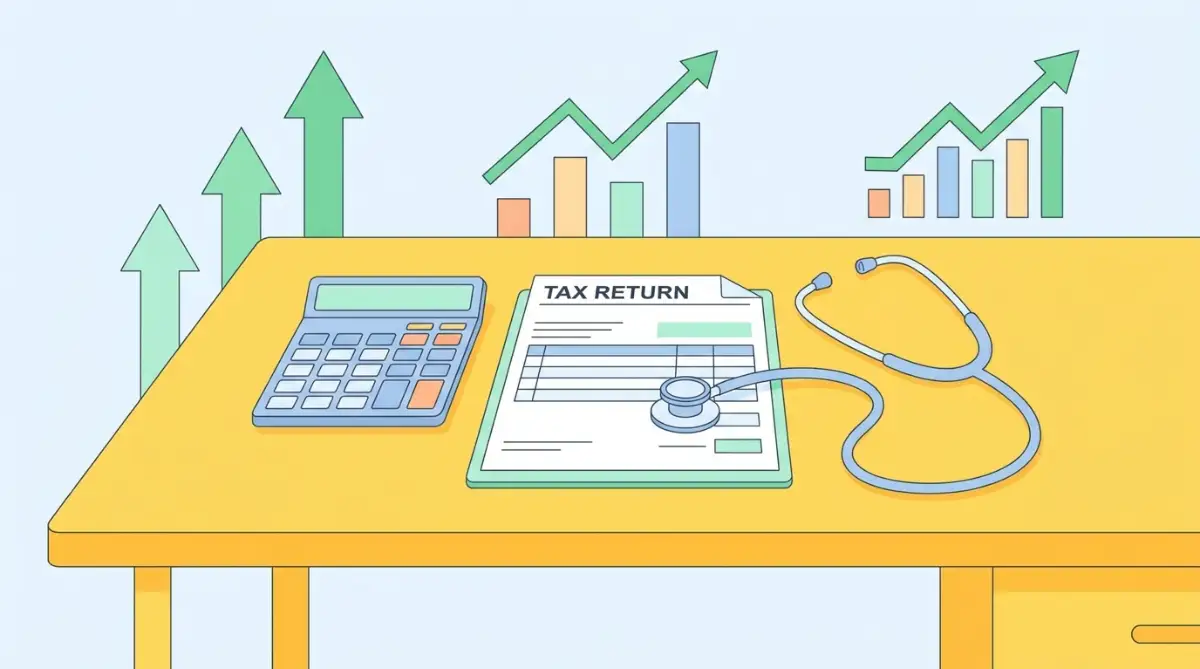
One of the best secrets of working for yourself is how the tax system can help you pay for your coverage. Many people do not know this exists. If you are self-employed and make a profit, you can write off your health insurance costs on your tax return.
This is not a standard business deduction. It is an "above-the-line" deduction, which means it lowers your adjusted gross income directly. You do not even need to itemize your taxes to get this benefit. This makes your actual cost of insurance much lower than the price tag shows.
I totally missed out on this deduction during my first two years of freelancing because I thought it was only for big companies with employees. Once my accountant showed me how to write off my premiums, it felt like I gave myself an instant raise. Do not make my mistake—always tell your tax person about your monthly health payments!
Exploring Alternative Group and Association Plans
You do not have to buy a plan completely on your own. There is power in numbers, even when you work solo.
Look into professional organizations related to your field of work. Many of these groups offer health plans to their members at a lower rate.
Freelancers Union:
- This group offers access to various health plans designed specifically for independent workers.
- Membership is free, and they can help you find coverage that fits your lifestyle.
Local Chambers of Commerce:
- Sometimes, your local business group offers group health options for small business owners.
- This allows you to pool your risk with other local owners to get cheaper rates.
Alumni Associations:
- Check with the college you attended, as they often negotiate special rates for their graduates.
- This can be an easy way to find high-quality coverage at a discount.
Myth vs Reality in Self-Employed Insurance
Let's clear up a few common misunderstandings that might be keeping you from getting the safety net you deserve. I see people fall for these traps all the time:
Expert Tips for Comparing Different Insurance Quotes
When you are looking at different options, always look at the Maximum Out-of-Pocket Limit. This is the absolute most you will have to pay in a single year for covered services. Once you hit this limit, the plan pays 100% of your medical bills. This number is your ultimate safety shield.
Another tip is to check the Formulary, which is the official list of drugs the plan covers. If you take regular medication, make sure your drugs are on that list before you sign the contract. A cheap plan can quickly become expensive if you have to pay full price for your prescriptions.
Lastly, call your favorite doctors and ask them directly which plans they accept. Do not rely solely on the directories on insurance websites, as those lists can be outdated. A quick phone call can save you a massive headache later on.
The Power of a Health Savings Account (HSA)
If you choose a high-deductible plan, you should absolutely pair it with a Health Savings Account. This is a special bank account just for medical costs.
The money you put into this account goes in tax-free, grows tax-free, and comes out tax-free when you use it for doctor visits or medicine.
It is like a secret savings account that helps you build a medical nest egg over time. If you do not use the money, it stays in your account and rolls over to the next year.
This is a great tool for freelancers who want to turn their insurance costs into a smart financial asset.
Smart Ways to Lower Your Monthly Health Insurance Bills
The Hidden Benefit of Bundling Your Coverage
Many self-employed people do not realize they can save money by looking at their entire financial picture. If you buy your dental, vision, and health plans from different places, you might be wasting cash.
Many private insurance companies offer a package discount if you buy multiple plans from them at the same time. This is a very simple trick that can shave a good percentage off your monthly bill.
Let's pause for a quick Q&A based on the top questions I get from fellow self-employed friends when they are trying to save money:
Q: Do I really need to buy dental and vision too?
A: Honestly, it depends on your body. If you wear glasses or have a history of bad teeth, bundling them will save you cash. Otherwise, just stick to a solid everyday health plan.
Q: Can I just use those cheap medical discount cards instead of real insurance?
A: Please don't do this! Discount cards are not insurance. They might save you ten bucks on pills, but they will not help you if you end up in the emergency room. Always get a real policy.
Keeping a close eye on your budget also helps you find the extra funds you need for these packages. For instance, when you learn how to pay off your credit card balances, you free up extra money that can go directly toward better medical coverage.
Saving money in one area of your life makes it much easier to protect your health in another.
Using Professional Networks to Negotiate Better Rates
When you work by yourself, you do not have the bargaining power of a giant corporation. This is why joining a local business association or a freelancer group is a smart move.
These groups often pool their members together to apply for health insurance as a single large entity. This group buying power can get you access to rates that are usually kept secret from individual buyers.
You should check with local community groups, trade associations, or even your college alumni network to see if they offer these benefits. You might find a high-quality plan at a fraction of the standard price.
Utilizing Telehealth to Save on Doctor Visits
Many modern health plans now offer free or very cheap virtual doctor visits through your phone or computer. This is a fantastic option for freelancers who cannot afford to spend half a day sitting in a clinic waiting room.
You can get medical advice, get a prescription filled, or talk to a therapist without leaving your home office. This saves you both the cost of travel and the loss of working hours.
Before you book an in-person appointment for a minor issue like a cold or a skin rash, check if your plan has a telehealth partner. This simple habit can save you hundreds of dollars in copays over the course of a single year.
How to Keep Your Medical Costs Low for the Long Run
Buying your plan is only the first part of your journey to staying healthy and financially safe. To keep your costs low over time, you must stay active and use the free services your plan already offers.
Preventive care, like yearly physical exams and standard screenings, is completely free on almost all major plans. You should never skip these free checkups because finding a small health issue early is always cheaper than treating a major illness later.
According to a helpful guide on understanding health insurance basic terms, taking care of minor symptoms early protects your savings from massive hospital bills.
Managing your general financial health is just as important as managing your body. For example, learning how to lower your high personal loan rates is another great way to make sure your monthly medical bills do not overwhelm your bank account.

The Expensive Traps Freelancers Fall Into When Buying Coverage
Mistake 1: Only Looking at the Monthly Price Tag
Many self-employed workers choose the plan with the cheapest monthly payment because they want to save money right now. This is a highly dangerous trap that can end up costing you thousands of dollars if you get sick.
A low monthly payment almost always means you have a very high deductible. This means you will have to pay a massive amount of your own money before your insurance provider pays a single penny for your care.
If you have a medical emergency, a cheap plan can leave you with a mountain of debt that ruins your financial security. Always balance the monthly cost with the amount you have to pay when you actually visit the hospital.
I learned this the hard way during my first year as a freelancer when I bought the absolute cheapest plan I could find online. When I finally needed to see a doctor for a bad flu, I ended up paying completely out of pocket because my deductible was way too high. Now, I always tell my self-employed friends to treat a slightly higher monthly payment as a smart investment in their peace of mind.
Mistake 2: Ignoring the Network of Covered Doctors
Imagine buying a brand-new plan, driving to your favorite doctor, and finding out they do not accept your insurance. This happens to self-employed people all the time because they fail to check the provider network before signing up.
Every insurance company has a specific list of doctors, clinics, and hospitals they agree to work with. If you go outside this network, you might have to pay the entire bill yourself.
Always call your doctor's office directly to verify if they accept the plan you want to buy. You can also use online resources like Healthline to search for highly rated local clinics that work with your specific insurance provider.
Mistake 3: Forgetting to Budget for Hidden Out-of-Pocket Costs
Your monthly premium is only one part of what you will actually pay for healthcare. You must also plan for copays and coinsurance, which are the small fees you pay during each doctor visit or when picking up medicine.
If you go to the doctor frequently, these small costs can quickly add up to hundreds of extra dollars each month.
Using a clear planning tool like making a zero-based budget can help you track these small medical expenses. When you know exactly where every dollar goes, you will never be surprised by a sudden medical bill.
Mistake 4: Failing to Update the Insurance Portal with Income Changes
If you buy your health plan through a government exchange, your monthly premium is usually based on your estimated yearly income. Since freelance income goes up and down constantly, your estimate might be very different from your actual earnings.
If you make much more money than you estimated and forget to report it, you might have to pay back your tax discounts when you file your taxes.
To avoid a painful surprise during tax season, update your online insurance profile whenever you sign a major client or lose a source of income. This keeps your monthly payments accurate and protects your savings.
Mistake 5: Skipping the Fine Print on Prescription Drugs
Not all insurance plans cover the same medicines. Many self-employed people buy a plan only to find out their daily medication is not on the approved list.
This approved list of medicines is called a formulary, and it can change from year to year.
Before you enroll in any plan, search their online directory for the exact name of the medicines you take. Make sure they are covered at a reasonable price, or you might end up paying full price at the pharmacy.
Your Simple Action Plan for Tomorrow
# A Step-by-Step Checklist to Get Covered
Protecting your health is the absolute best investment you can make for your independent career. When you do not have to worry about sudden medical bills, you can focus all your creative energy on growing your business.
Do not let the fear of complex terms and paperwork stop you from taking this important step.
Here is a quick checklist you can use to start your search tomorrow morning:
- Gather your tax documents from the past year to estimate your net business income.
- Write down a list of your daily medications and any doctors you absolutely want to keep seeing.
- Compare at least three different plans using an online portal or by speaking with a free insurance broker.
- Set up a health savings account if you choose a plan with a high deductible so you can save money tax-free.
If you have a lower credit score, you can also learn how to clean up your credit history to build an even stronger financial base for your business. Take action today because your peace of mind and your health are worth every single effort.
# A Word from the Expert on Staying Protected
Running your own business is an exciting journey, but it requires you to be your own safety net. You do not have a human resources department to hand you a benefits package, but you have the power to build your own security.
Think of health insurance not as an annoying monthly expense, but as a shield that protects your hard work from disappearing during a medical emergency.
You have the tools, the knowledge, and the step-by-step guide to make a highly smart decision. Take a deep breath, look over your options, and choose a plan that lets you sleep peacefully at night.
Getting my health insurance sorted was one of the scariest parts of working for myself, but it ended up being the most freeing step I ever took. You do not have to live in fear of a random medical bill wiping out your hard-earned savings. Grab a cup of coffee, use the simple checklist above, and take control of your health today—because you and your business absolutely deserve that safety net.
Disclaimer:
The information shared in this article is based on my personal experiences and research as a freelancer, and it is meant for educational purposes only. I am not a licensed insurance broker, tax professional, or financial advisor. Health care laws, pricing, and coverage options change frequently and depend heavily on your specific location and income. Please talk to a certified professional or a licensed local agent before making any final choices about your coverage or taxes.