
The Sudden Disaster and the Shock of a Denied Claim
You pay your home insurance bill every month, trusting that you are totally safe if disaster strikes. But what happens when water ruins your living room and the insurance agent calmly says, "Sorry, your policy does not cover this"? I see homeowners get completely blindsided by denied claims all the time. Let's fix that right now so you never end up paying thousands out of pocket for a disaster you thought was covered.
You feel a heavy pit in your stomach, but you try to stay calm. You pay your homeowners insurance premium every single month without fail. You quickly call your agent, expecting support and quick financial help.
Instead, you hear the cold, flat words: "I am sorry, but your policy does not cover this." Your heart drops as you realize you are entirely on your own. This is the painful reality for thousands of homeowners who do not know their policy exclusions.
I will never forget the day a heavy storm flooded my basement, ruining years of my family photos and expensive furniture. I called my agent, fully expecting my standard policy to save the day, only to be told I had zero coverage for "groundwater flooding." It was a tough lesson that cost me thousands of dollars out of my own pocket. I wrote this guide so you never have to feel that same heartbreaking shock when you need help the most.
Before we dive into the details, here’s what you need to know:
- Standard policies do not cover floods, earthquakes, or slow maintenance leaks.
- You need separate, cheap "endorsements" to cover sewer backups and sump pump failures.
- Keep a digital video inventory of your belongings on your phone to prove what you own.
- Never throw away damaged items before the claims adjuster sees them in person.
Why Homeowners Fail to Find the Right Answers
- Relying on bad advice: Many people trust tips from neighbors or family members who do not understand insurance laws.
- Skipping the fine print: Insurance policies are incredibly long and filled with confusing legal terms that are hard to read.
- Assuming full safety: We naturally believe that "all-risk" coverage means every single disaster is fully paid for.
- Waiting for a disaster: Most people only look at their policy rules after the damage has already happened to their home.
- Ignoring localized threats: Homeowners often forget that specific hazards in their state require special add-on coverages.
How Denied Claims Hurt Your Peace of Mind
- Constant financial anxiety: The fear of a sudden storm can keep you awake at night when you lack proper coverage.
- Loss of hard-earned savings: Paying out of pocket for major foundation repairs can instantly wipe out your bank account.
- Broken trust in the system: Feeling cheated by an insurance company makes you feel unprotected in your own home.
- Delaying home repairs: Living in a damaged house because you cannot afford repairs can harm your family's health.
Understanding these exclusions is the only way to protect your wallet and your home. Let us look at what your standard policy leaves out and how you can fix it.
What Standard Home Insurance Ignores
Standard home insurance policies are great for sudden accidents like fires or windstorms. However, they have very clear boundaries on what they will not pay for. Let us break down the most common exclusions so you do not get caught off guard.
Earth Movement: Why the Ground Beneath You is Not Covered
Your home insurance protects your house from falling objects, but it does not protect you from the ground shifting. If an earthquake occurs, a standard policy will not pay for the cracks in your walls or a collapsed roof. This exclusion also applies to landslides, mudslides, and sinkholes.
For example, imagine a heavy rainstorm causes a hill behind your house to slide. The mud pushes through your back door and ruins your brand-new kitchen.
Even though rain caused the slide, your insurer will deny the claim because earth movement is excluded.
How to Protect Your Home from Earth Movement
- Buy an earthquake endorsement: You can add this rider to your current policy for an extra fee.
- Get a separate policy: In high-risk states, separate earthquake insurance is widely available.
- Look into sinkhole coverage: Some states require insurers to offer sinkhole protection, so make sure to ask your agent.
Myth vs. Fact: Earth Movement
- The Myth: My all-risk policy covers everything, including a minor landslide in my backyard.
- The Fact: Earth movement is almost universally excluded from standard policies. You need a separate earthquake or earth-movement endorsement to get a single penny for this kind of damage.
Water Damage: The Line Between Leaks and Floods
Water damage is one of the most confusing parts of any insurance policy. If a pipe bursts suddenly in your bathroom, your policy will usually pay for the repairs. However, if water rises from the ground outside and enters your home, that is legally a flood.
Standard home insurance policies never cover flood damage. This means heavy rain, overflowing rivers, and storm surges are completely excluded. If a hurricane brings a storm surge that floods your living room, your standard policy will pay zero dollars.
Key Steps to Get Flood Protection
- Contact the NFIP: The National Flood Insurance Program provides coverage to homeowners in participating areas.
- Look into private flood insurance: Private companies often offer higher coverage limits than government programs.
- Check your local flood maps: Even if you do not live near a river, heavy rains can cause localized flooding.
If you are still confused about what kinds of water damage your policy actually covers, watch this quick video breakdown below. It makes the rules super easy to understand and will help you apply the rest of the tips in this guide!
Quick Check: Will My Policy Pay for the Water Damage?
Wear and Tear vs. Sudden Accidents
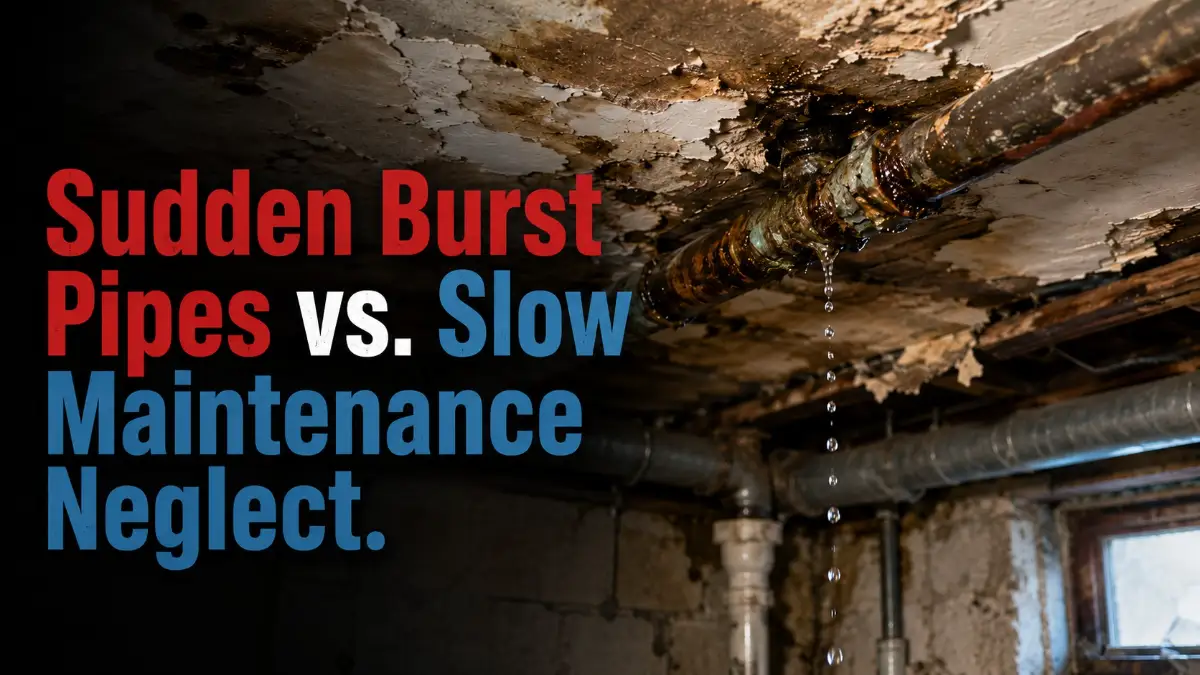
Insurance is designed to protect you from sudden, unexpected accidents. It is not a maintenance contract for your house. If your roof is twenty years old and starts to leak slowly, your insurer will not buy you a new roof.
They expect you to paint, seal, and repair your home over time. If a claims adjuster sees that a leak was caused by years of neglect, your claim will be rejected. This includes issues like rusted pipes, rotting wood, and mold growth.
For example, if you ignore a tiny plumbing leak under your sink for months, the wood will eventually rot. Because you did not fix the leak when it started, the insurance company will say you neglected the home.
How to Prove You Maintain Your Home
- Keep all your receipts: Save bills from plumbers, roofers, and electricians to prove you take care of your property.
- Take annual photos: Walk around your home once a year and take photos of your roof, pipes, and water heater.
- Schedule regular inspections: Having a professional look at your roof every few years can catch issues early.
Sewer Backups and Sump Pump Failures
When heavy rains overload the city sewers, water can back up into your home through the drains. This dark, dirty water can cause massive damage to your basement flooring and walls.
Unfortunately, standard homeowners insurance does not cover sewer or drain backups. It also does not cover water that overflows because your sump pump stopped working. If your power goes out during a storm and your sump pump dies, the flooding is your financial responsibility.
Adding Water Backup Coverage
- Ask for a water backup endorsement: This is usually a cheap add-on that costs very little per year.
- Install a battery backup: Keep your sump pump running during power outages with a marine battery backup system.
- Use smart water sensors: Place small sensors near your drains to warn you of rising water.
Pest Infestations: The Quiet Destroyers
Termites, rats, mice, and squirrels can cause thousands of dollars in structural damage. They chew through wood, eat electrical wires, and ruin insulation. However, insurers view pest control as a basic part of home maintenance.
Because of this, damage caused by insects, rodents, or birds is almost always excluded. If termites destroy the wooden support beams under your living room, you must pay for the repairs yourself.
Keeping Pests Out of Your Budget
- Schedule annual termite inspections: Many pest control companies offer yearly inspections for a small fee.
- Seal gaps and cracks: Walk around your foundation and fill any holes with steel wool and caulk.
- Keep wood away from your foundation: Store firewood and mulch far away from your home's main walls.
The Surprise Limit on High-Value Items
Your standard policy covers your personal belongings like clothes, furniture, and electronics. However, there are strict limits on high-value items. If you own expensive jewelry, fine art, rare coins, or high-end musical instruments, you might face a surprise.
For example, if your home is robbed and your luxury watch is stolen, your policy might limit jewelry payouts to a small amount. Even if you have fifty thousand dollars in overall personal property coverage, the limit for jewelry might be very low.
How to Fully Insure Your Valuables
- Get an appraisal: Have a professional value your items and save the official document.
- Schedule your personal property: Add a specific rider or floater to your policy for each expensive item.
- Take clear photos: Document your jewelry and art pieces with clear photos and store them in the cloud.
Government Action and Acts of War
In rare cases, your home might be damaged due to government orders or military actions. If the local government seizes or destroys your property for safety reasons, standard insurance will not pay for the loss.
Acts of war, nuclear hazards, and chemical contamination are also universally excluded. These events are considered too massive for any single insurance company to cover. While these situations are uncommon, it is important to know that they are completely off the table.
Understanding Extreme Exclusions
- Nuclear hazard exclusions: Damage from nuclear accidents is handled by federal programs, not private insurance.
- Eminent domain: If the government takes your land for a highway, this is a legal issue, not an insurance claim.
- War exclusions: Standard policies in every country exclude damage from military conflicts.
Intentional Damage and Fraud
This exclusion also applies if a family member living in your home causes intentional damage.Always protect your home and keep your claims completely honest to avoid legal trouble.
The Consequences of Fraudulent Claims
- Immediate policy cancellation: Your insurer will drop your coverage instantly if they detect fraud.
- Legal prosecution: Insurance fraud is a serious crime that can lead to heavy fines and jail time.
- Difficulty getting future coverage: A record of fraud makes it almost impossible to buy home insurance in the future.
Power Failure and Off-Premises Utility Issues
If a lightning strike hits your house and fries your TV, your policy will usually cover the damage. However, if a power plant miles away shuts down, the rules change.
Damage caused by a power outage that starts off your property is generally excluded. For example, if a major blackout causes all the food in your freezer to spoil, a standard policy might not cover it.
Some companies offer small endorsements for food spoilage, but the main policy does not automatically include it.
Staying Safe During Power Failures
- Use high-quality surge protectors: Guard your expensive electronics against sudden power spikes.
- Ask about food spoilage coverage: Check if your agent can add a cheap rider for freezer contents.
- Invest in a backup generator: A home generator can keep your appliances running during long utility outages.
Advanced Strategies to Bulletproof Your Home and Policy
Now that you know what standard insurance leaves out, you must take active steps to protect your property.
Many homeowners think they are helpless against strict insurance rules. But with a few smart moves, you can gain complete control over your home’s safety and your financial future.
Let us look at the top strategies that will help you prepare before you ever have to write a claim.
Master Your Annual Policy Audit
You should never let your home insurance policy sit in a drawer and gather dust. Insurance companies change their rules and coverage limits more often than you might think.
Every year, you should set aside thirty minutes to read through your declarations page. This page is a simple summary of your entire policy.
It lists exactly how much coverage you have for your dwelling, your personal property, and your liability. Compare these numbers with current local building costs to make sure you are not underinsured.
If building materials in your town have become more expensive, your old limits might not be enough to rebuild your home. You can easily check local construction rates by talking to a local contractor or real estate agent. Adjusting your coverage limits early is the best way to avoid a terrible financial shock later.
Build a Strong Evidence Locker
When a disaster strikes, your memory is your worst enemy. Under stress, you will easily forget half of the items you owned in your basement or living room. That is why you need a digital evidence locker.
Once a year, take your phone and walk slowly through every room in your house. Open every closet, drawer, and cabinet while recording a high-definition video. Slowly describe each item, when you bought it, and how much it cost.
Store this video on a secure cloud storage drive like Google Drive or Dropbox. You should also upload digital copies of receipts for major purchases like TVs, computers, and furniture.
If your house suffers a total loss, this cloud folder will save you weeks of stress and protect you from denied claims.
A few years ago, I made the mistake of trying to list everything I owned from memory after a small kitchen fire, and I completely forgot to include some of my most expensive appliances. Now, I spend ten minutes every New Year's Day walking through my house with my phone, recording a quick video of my belongings. This simple habit gives me total peace of mind and proves exactly what I own if I ever need to file another claim.
Tie Your Insurance Strategy to Your Financial Health
Preparing for home emergencies is not just about choosing the right policy. It is about organizing your overall personal finances so you can handle a high deductible. If you choose a higher deductible, your monthly premium will drop significantly.
However, you must have that deductible cash ready in a dedicated emergency savings account. You can easily find the extra money for this fund by organizing your monthly spending.
Learning the beginner's blueprint to zero-based budgeting can help you set aside emergency cash without feeling stressed. Additionally, did you know that your credit rating affects how much you pay for home insurance?
In most states, insurance companies use credit-based insurance scores to decide your monthly premium. If your credit is in bad shape, you will pay much higher rates for the exact same coverage.
If you want to lower your premium payments, you should learn how to fix a damaged credit score as soon as possible. A healthier credit file translates directly into lower insurance bills, leaving you with more money to buy proper add-on coverages.
To get a better grip on your cash flow and build your emergency reserves, you can also learn how to say goodbye to credit card balances to free up extra money every month.
Negotiate Custom Endorsements with Your Agent
Do not settle for a basic, off-the-shelf policy if you live in a risky area. Call your insurance agent and ask about specific riders, also known as endorsements. These are cheap add-ons that change the rules of your basic policy.
For instance, ask your agent about a water backup endorsement to cover sump pump failures. This rider usually costs very little money per year but can save you tens of thousands of dollars in repairs.
You should also check the official FEMA Flood Map Service Center to see if your home sits in a flood zone. If your home has any flood risk, ask about buying a policy through the National Flood Insurance Program. Taking these steps ahead of time turns a standard policy into a custom shield for your family.

Severe Pitfalls That Can Destroy Your Claims and Finances
Filing an insurance claim can feel like walking through a minefield. Even a tiny mistake can give your insurance company a legal reason to deny your claim entirely. Let us examine the major traps you must avoid to keep your money safe.
Trap 1: Waiting Too Long to Report the Damage
Many homeowners wait days or even weeks to file a claim after a storm. They might want to clean up first, or they might simply be too busy with work. This is a massive mistake that can ruin your chances of a payout.
Every policy has a rule that requires you to give "prompt notice" of any loss. If you wait too long, the insurance company will argue that the damage got worse because of your delay. They will claim that your neglect caused the extra destruction, and they will reject your payout.
Trap 2: Throwing Away Damaged Items Too Early
It is natural to want to clean up and throw away ruined carpets, drywall, or furniture after a leak. However, if you throw away the evidence, the claims adjuster cannot verify your loss. They cannot pay you for a ruined leather sofa if they cannot physically see it.
Instead of throwing items away, move them to a safe spot in your yard or garage. Keep every single piece of damaged property until the adjuster has personally inspected it and taken photos.
If you must throw away items for health reasons, take dozens of clear photos and videos from multiple angles first.
Trap 3: Signing Quick Settlement Agreements
After a disaster, your insurance company might offer you a quick check within a few days. While this cash seems helpful, it is often a trap. Accepting this initial check and signing a release form might prevent you from asking for more money later.
In many cases, hidden damage like mold or structural cracks shows up weeks after the initial storm. If you have already signed a final settlement, you will have to pay for these new repairs yourself. Never rush into signing a release form until a trusted contractor has inspected your home completely.
To learn more about how insurance companies calculate these payouts and actual value, you can read the Investopedia guide on replacement cost.
Trap 4: Failing to Prevent Further Damage
Your insurance policy is a two-way street that requires your cooperation. You have a legal duty to prevent further damage to your property after an accident. If a tree falls through your roof, you cannot just leave the hole open to the rain.
You must take immediate action to protect your home from additional harm. This means putting a temporary tarp over the roof, turning off the main water valve during a leak, or boarding up broken windows. If you fail to take these steps, your insurer will only pay for the initial damage and deny the rest.
Trap 5: Giving Inconsistent Statements to the Adjuster
When you speak to a claims adjuster, write down your facts carefully beforehand. If you tell one story to your agent and a slightly different story to the adjuster, they will suspect fraud. Keep your explanation simple, clear, and perfectly honest.
Do not guess about dates, times, or the exact cause of the damage if you do not know. It is always better to say, "I am not sure, let me double-check," than to give incorrect information. Consistent communication is the key to building a strong, successful claim.
Your Action Plan for Total Peace of Mind
Protecting your home from insurance exclusions does not have to be an overwhelming task. By taking small steps today, you can save yourself from massive stress and financial loss tomorrow.
You now have the exact knowledge needed to secure your property and your wallet. Here is a quick, practical checklist you can complete this weekend to take control of your policy.
Your Weekend Home Safety Checklist
- Locate your policy: Find your physical policy documents or download the PDF from your insurer's website.
- Highlight the exclusions: Read the section labeled "Exclusions" and write down what is not covered.
- Shoot a home inventory video: Spend fifteen minutes recording every room and upload the file to the cloud.
- Call your insurance agent: Ask for a quick quote on water backup and flood coverage.
- Check your deductible: Make sure you have enough cash in your emergency fund to cover your deductible if something goes wrong.
Your home is likely your biggest financial asset and the place where your family makes memories. Do not leave its safety to chance or confusing legal language. Take action today, update your coverage, and sleep peacefully knowing your family is fully protected.
Disclaimer: The information shared in this article is based on my personal experiences and general research, and is meant for educational purposes only. I am not a licensed insurance agent, lawyer, or financial advisor. Because insurance policies change often and rules differ depending on where you live, please talk to a professional insurance agent to understand your specific coverage before making any financial decisions or filing a claim.