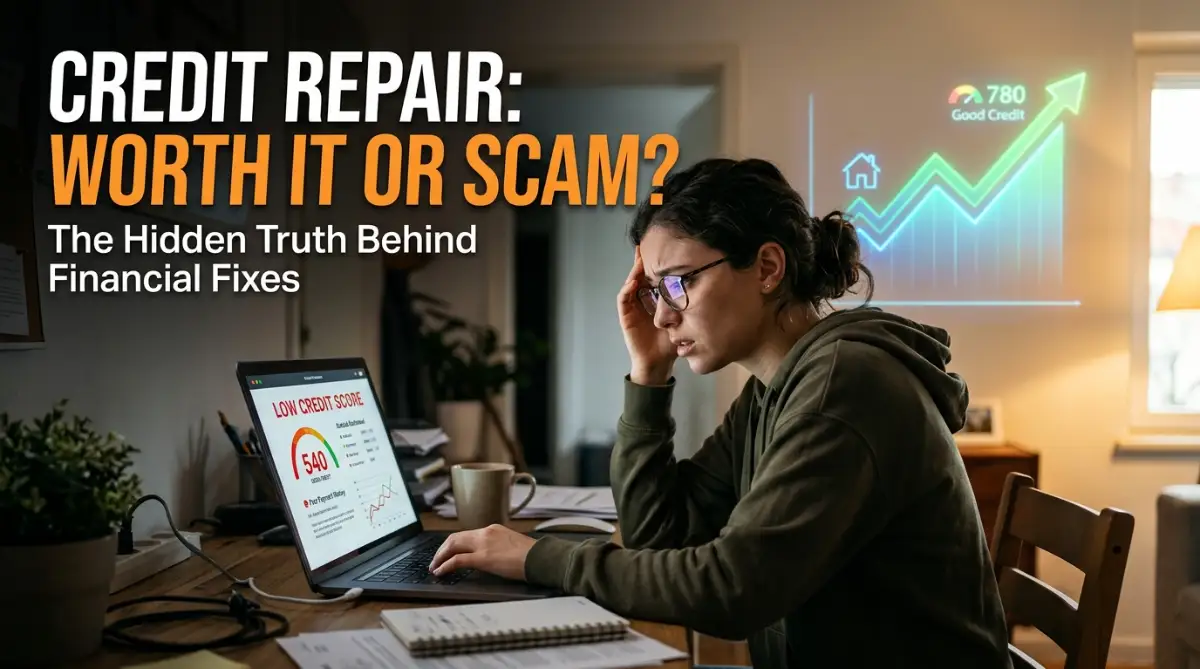
Hitting Rock Bottom With My Credit (And How It Almost Broke Me)
I still remember the exact moment my heart sank into my stomach. I was sitting in a small, poorly lit car dealership office, holding my breath as the salesman typed on his computer. My hands were sweating, and my mind was racing with anxiety about his final decision.
He looked up with a tight smile and told me my auto loan application was completely denied. At that exact moment, I felt entirely worthless and deeply embarrassed. I realized my low credit score was controlling my entire life, keeping me trapped in a miserable cycle of financial stress.
That single rejection sent me down a dark rabbit hole of panic and heavy desperation. I started frantically searching for quick fixes online, hoping someone could just wave a magic wand and erase my past mistakes. I felt like I was drowning in unpaid debt while everyone around me was effortlessly moving forward.
Bad credit does not just affect your wallet; it completely destroys your everyday mental peace. You wake up every single morning dreading the constant ringing of your phone from aggressive debt collectors. It feels like a dark storm cloud follows you everywhere, constantly reminding you of unpaid bills and past money mistakes.
Everyday tasks suddenly become giant, impossible mountains to climb when your score is dangerously low. You get turned down for basic apartments, meaning you have to settle for unsafe neighborhoods just to have a roof over your head. Even setting up simple electricity or internet services requires massive security deposits that you simply cannot afford to pay.
The constant stress slowly leaks into your personal relationships, causing bitter arguments with your family over money. You feel entirely paralyzed, wondering if you will ever be able to buy a home or provide a stable life for your loved ones. This heavy emotional burden makes you a perfect target for agencies promising a fast, easy, and overnight fix.
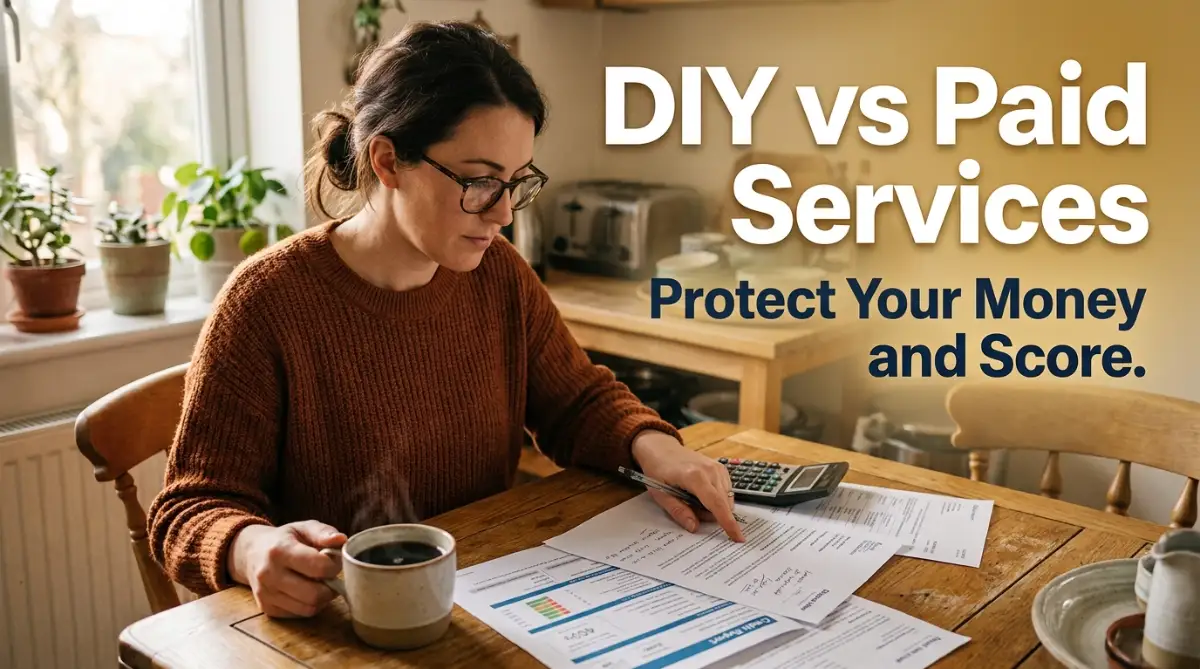
The Reality Behind Paid Financial Fixes: Magic Wand or Money Pit?
When you are feeling desperate and cornered, a company promising to wipe your financial slate clean looks like an absolute lifesaver. You see their flashy ads on social media, filled with glowing reviews from people who claim their scores jumped hundreds of points in days. They confidently promise to remove late payments, bankruptcies, and heavy collections for a monthly fee.
However, the glossy marketing often hides a very simple and somewhat disappointing truth. These companies do not have a secret relationship with the major reporting bureaus. They do not possess a hidden legal loophole that instantly forces negative marks to disappear from your history.
Instead, they are simply doing exactly what you have the legal right to do for yourself entirely for free. Under the law, every consumer has the right to challenge inaccurate, incomplete, or unverifiable information on their personal report. These agencies simply write standard letters on your behalf and mail them to the bureaus.
Think of it like hiring someone to clean your incredibly messy bedroom. You can certainly pay a professional cleaning service a lot of money to come in, organize your clothes, and sweep the floor. They will do a fine job, but they are not doing anything magical that you could not do with a little time and elbow grease.
The main difference is that a cleaning service might charge you a few bucks, whereas these agencies often demand hundreds or thousands of dollars. They stretch the process out over many months to keep billing your credit card over and over again. You might end up paying a massive amount of cash just to have a stranger print out a generic template from the internet.
How The Basic Dispute Process Actually Works
To truly understand if you should hand over your cash, you first need to understand the mechanics of the dispute system. In the United States, your financial history is tracked by three major companies: Equifax, Experian, and TransUnion. These massive data brokers collect your payment history from lenders and compile it into a detailed report.
Sometimes, lenders make honest mistakes and report a late payment that you actually paid on time. Other times, identity thieves might open an account in your name, leaving you with massive debts that do not belong to you. When this happens, you have the right to demand an investigation.
When you or an agency sends a formal challenge, the bureau has roughly 30 days to investigate the claim. They must reach out to the original lender and ask them to verify the specific debt in question. If the lender cannot prove the debt is valid, accurate, and belongs to you, the bureau must delete it from your file.
Paid agencies heavily rely on this exact 30-day window to show you quick results. They will often challenge every single negative mark on your file all at once, hoping lenders are too busy to respond in time. Sometimes, this aggressive tactic actually works temporarily, and a few items fall off your record.
But here is the catch that these agencies actively try to hide from you. If the lender later provides proof that the debt is valid, that negative mark will instantly reappear on your file. You might celebrate a temporary score increase, only to watch it crash back down a few months later.
Identifying The Big Red Flags of a Scam
Unfortunately, this specific industry is absolutely flooded with shady actors and outright scammers looking to steal your money. Because their target audience is already vulnerable and desperate, scammers easily manipulate them with big promises. You have to be incredibly careful and protect your wallet by watching out for huge warning signs.
The biggest red flag to watch out for is a demand for upfront payment before any services are performed. Federal law strictly prohibits these agencies from charging you a single penny before they successfully complete the services they promised. If a representative asks for hundreds of dollars on day one, you should immediately hang up the phone.
Another massive warning sign is when an agency confidently guarantees a specific score increase in a specific timeframe. No one, absolutely no one, can accurately predict how the bureaus will respond to a challenge. If a company promises to boost your number by 100 points in 30 days, they are straight up lying to you.
Some of the worst scammers will even tell you to completely stop communicating with your current lenders. They might advise you to stop making your regular monthly car or credit card payments while they work on your case. This is a highly dangerous trap that will only drag your score down further and result in serious legal trouble.
In extreme cases, fraudulent actors will try to sell you a completely new identity to start fresh. They might offer you a nine-digit number called a CPN (Credit Privacy Number) and tell you to use it instead of your Social Security Number. Doing this is a federal crime, and following their advice could actually land you in prison.
The Truth About Removing Accurate Negative Marks
Many people are drawn to these services because they are told that even accurate late payments can be permanently erased. Let me be perfectly clear: if you legitimately missed a payment, no agency can legally force a bureau to remove it. True and accurate information must remain on your report for up to seven years.
There is no secret formula or hidden legal clause that overrides this basic rule of the reporting system. Scammers will often flood the bureaus with frivolous challenges, hoping to break the system or exhaust the lenders. This might cause a temporary glitch, but accurate information always finds its way back onto your file.
If an agency claims they can wipe out legitimate bankruptcies, real foreclosures, or accurate collection accounts, they are selling you a fairy tale. You cannot simply pay a fee to pretend your past financial mistakes never happened. Healing your financial profile requires time, patience, and newly established positive habits.
I used to think paying someone was the only way out because I was terrified of confusing legal jargon. But once I sat down and read a basic dispute letter, I realized I was just paying a company to print a piece of paper and mail it for me. Trust me, you are more than capable of handling this yourself if you dedicate just one hour a weekend.
If you are feeling completely lost and want a visual breakdown of how to challenge unfair negative marks on your report, this resource is an absolute game-changer. Watch this highly detailed walkthrough before you ever hand over your hard-earned money to a third party.
Do-It-Yourself: Taking Control of Your Financial Destiny
The good news is that taking charge of your own financial profile is incredibly empowering and completely free. You do not need a fancy law degree or a background in banking to clean up your own file. You just need a little bit of organization, some stamps, and the willingness to advocate for yourself.
Your very first step is to obtain a free copy of your history from all three major bureaus. You can do this once a week through official, government-mandated websites without paying a dime or entering a credit card number. Print these documents out and grab a bright red highlighter.
Sit down at your kitchen table and carefully read through every single page, line by line. You are looking for things like misspelled names, old addresses you never lived at, or accounts you simply do not recognize. You should also check for duplicate collection accounts, where the same exact debt is listed twice by different companies.
Once you identify the errors, you need to draft a simple, clear, and direct letter to the bureau. You do not need to use confusing legal terms or quote complicated federal laws. Just clearly state what the error is, why it is wrong, and attach copies of any proof you might have, like a cleared check.
Send these letters through certified mail so you have hard proof of exactly when the bureau received them. This starts their 30-day investigation clock, putting the pressure directly on them to do their job correctly. It might take a few rounds of letters to get things fixed, but the money you save is absolutely worth the effort.
Building Positive Habits for Long-Term Success
Simply removing negative items is only one half of the puzzle when it comes to achieving a great score. You also need to actively flood your file with positive, responsible behavior to prove you are a safe bet for lenders. This requires a strong commitment to changing the bad habits that got you into trouble in the first place.
Start by setting up automatic payments for every single one of your bills, no matter how small they are. Payment history makes up the largest chunk of your overall score, so you can never afford to miss a due date again. Even setting a simple alarm on your phone can save you from a devastating 30-day late mark.
Next, focus on paying down the current balances on any revolving accounts you have open right now. Lenders want to see that you are using a very small portion of the total limit available to you. Keeping your balances incredibly low shows the banks that you are responsible and not desperate for borrowed cash.
If you cannot qualify for a traditional card right now, look into securing a beginner option backed by a cash deposit. These special accounts are designed specifically for people with bad history and report your good behavior to the bureaus every month. Use it to buy a tank of gas once a month, pay it off immediately, and watch your numbers slowly climb.
The Real Cost of Impatience
At the end of the day, building a strong financial profile is a marathon, not a sprint. We live in a world where we expect instant gratification and overnight solutions to our deepest problems. But true financial stability takes genuine effort, massive consistency, and a lot of patience.
When you pay a third party out of desperation, you are usually just throwing good money after bad. You are funding someone else's business instead of using that cash to pay down your actual, real-life debts. Taking the slow and steady DIY route keeps your money in your pocket where it belongs.
Remember, nobody cares about your financial well-being as much as you do. By educating yourself and taking direct action, you regain complete control over your own life. You will never again have to sit in a sweaty dealership office, wondering if your past mistakes will ruin your future.
Next-Level Strategies To Supercharge Your Financial Health
Once you understand the basic dispute process, you are already ahead of most people who blindly pay third-party companies. But simply mailing out standard letters is just the bare minimum when it comes to rebuilding your financial life. If you really want to see massive improvements, you need to apply a few expert-level strategies that banks rarely talk about.
These advanced methods require a bit more direct communication and strict discipline on your part. However, they are completely legal, highly effective, and entirely free to execute from the comfort of your own home. By taking these smart steps, you can clean up a damaged credit score much faster than any expensive agency ever could.
Let's explore some of the most powerful insider tactics you can start using this exact week. These are the exact same methods that savvy financial experts use to protect their own money and maintain excellent standing.
The "Pay for Delete" Negotiation Strategy
Sometimes, you might actually owe the money that a collection agency is demanding from you. If a debt is completely accurate and legally yours, a standard dispute letter will not make it magically disappear. This is exactly where the highly effective "pay for delete" strategy comes into play.
Collection agencies buy your old debts for pennies on the dollar, meaning they are desperate to get any amount of cash from you. You can use this desperation as massive leverage to negotiate a mutually beneficial deal. You simply offer to pay a portion of the debt in exchange for them completely removing the negative mark from your record.
You must always get this agreement in writing before you send them a single penny. If you just talk to them on the phone and pay the bill, they will simply update the account to "Paid Collection." A paid collection still looks terrible to future lenders and hurts your overall numbers almost as much as an unpaid one.
Once you have a signed letter from the agency agreeing to delete the file upon payment, you can safely send a cashier's check. Keep a copy of that signed agreement forever, just in case the bureau fails to update your file. This simple negotiation tactic can instantly wipe away ugly collection marks that would normally haunt you for seven long years.
Hacking Your Utilization Ratio for Rapid Growth
Your credit utilization ratio is essentially the amount of borrowed money you are currently using compared to your total available limit. This single factor makes up a massive thirty percent of your entire score, making it incredibly powerful. If you want to see a fast jump in your numbers, manipulating this ratio is the absolute smartest move you can make.
Most financial advisors tell you to keep your balances below thirty percent of your total limit. But if you want to see elite, top-tier results, you should strictly aim to keep your balances below ten percent. For example, if you have a card with a one thousand dollar limit, you should never let the balance cross one hundred dollars.
An excellent pro tip is to pay down your current card balances right before your statement closing date, rather than waiting for the actual due date. Banks usually report your current balance to the major bureaus on the statement closing date. By paying early, you force the bank to report a highly impressive zero or near-zero balance to the scoring models.
To maintain these low balances, you need to gain absolute control over your daily spending habits. I highly recommend setting up a beginner-friendly zero-based budgeting plan to track where every single dollar goes. When you stop wasting money on random purchases, you have much more cash available to keep those card balances practically invisible.
Piggybacking as an Authorized User
If you have a very thin file or a history filled with late payments, getting approved for new accounts is nearly impossible. One highly effective shortcut is to ask a trusted family member or spouse to add you as an authorized user on their oldest, cleanest card. This is commonly known in the financial world as "piggybacking."
When someone adds you as an authorized user, the entire positive history of that specific account is instantly copied onto your personal file. You immediately inherit their long payment history, their high limit, and their perfect on-time record. You do not even need to possess the physical plastic card or make any purchases for this strategy to work perfectly.
However, you must be incredibly careful about whose account you choose to jump onto. If the primary cardholder suddenly maxes out their limit or misses a payment, that negative behavior will also show up on your report. Only ask someone who is extremely responsible with their money and consistently pays their bills in full every single month.
Navigating the Dangerous Statute of Limitations
Many people panic when a shady debt collector threatens to sue them over a medical bill or personal loan from a decade ago. What these aggressive collectors completely hide from you is that every single state has a strict legal time limit for collecting old debts. This time limit is legally known as the statute of limitations.
Depending on where you live, collectors generally have between three to six years to take you to court over an unpaid bill. Once that specific time window expires, the debt becomes legally "time-barred," meaning they can no longer successfully sue you for the money. You can easily read the official federal guidelines on debt collection to understand your legal protections.
If you are dealing with very old debts, you might want to try and aggressively lower your personal loan rates through direct bank negotiation instead of dealing with shady third-party buyers. Collectors will often try to trick you into making a tiny five-dollar payment on an ancient, expired debt. They do this because making even a single small payment instantly restarts the legal clock, allowing them to drag you into a lawsuit.

Dangerous Financial Traps That Will Destroy Your Progress
Rebuilding your financial reputation is a delicate process that requires extreme caution and a lot of common sense. When you are eager to see fast results, it is incredibly easy to fall into hidden traps that actually push your score lower. Avoiding these massive pitfalls is just as important as disputing the negative marks on your file.
Countless people accidentally sabotage their own hard work simply because they listen to terrible advice they found on social media. Some of these mistakes will just cause a temporary drop in your points, but others can literally land you in severe legal trouble. Let's break down the most dangerous errors you must absolutely avoid at all costs.
Committing Fraud with Fake Identity Theft Claims
There is a highly illegal scam floating around social media right now known as a "credit sweep." Shady internet gurus tell you that you can wipe your entire slate clean in 24 hours by filing a fake police report. They instruct you to falsely claim that you were a victim of massive identity theft, forcing the bureaus to instantly block all negative items.
Do not ever listen to this terrible advice under any circumstances. Lying on a federal police report or submitting false documents to the government is a serious crime that comes with heavy prison time. The major bureaus use highly advanced systems to investigate these claims, and they easily catch people who are faking it.
If you are a genuine victim of fraud, you should follow the proper channels and report it through the official government identity theft portal. However, if you spent the money yourself, you need to take absolute responsibility for the debt. Trying to cheat the legal system will only bring massive fines and criminal charges directly to your front door.
While we are on the topic of fraud, you must also be proactive about securing your personal financial data online. Scammers often steal your private banking information from unprotected cloud folders and open new loans in your name. Keeping your sensitive documents heavily encrypted prevents real identity theft from destroying your hard-earned progress.
The Massive Mistake of Closing Old Accounts
When you finally pay off a card that has been causing you terrible stress, your very first instinct is usually to cancel it immediately. You might grab a pair of scissors, chop the plastic into tiny pieces, and call the bank to shut down the account forever. Surprisingly, this satisfying action is actually one of the worst things you can possibly do for your overall profile.
The scoring algorithms heavily reward consumers who have a very long, established history of managing borrowed money. When you close your oldest account, you instantly lower the average age of your entire financial history. A shorter history makes you look like an unpredictable, brand-new borrower in the eyes of major lending institutions.
Instead of closing that old, zero-balance account, simply put the physical card in a desk drawer and leave it open. You can use it once every six months to buy a cup of coffee just to keep the bank from closing it due to inactivity. Keeping these older accounts open and completely empty does wonders for your total utilization ratio and average account age.
Disputing Accurate Marks Online for Quick Fixes
When you check your file online, the major reporting agencies make it incredibly tempting to just click a big red "Dispute" button. They want you to use their digital portals because it saves them a massive amount of time, money, and human resources. However, using these fast online portals severely limits your legal rights and drastically lowers your chances of winning.
When you submit a challenge online, you are often forced to choose your argument from a small drop-down menu of generic reasons. You cannot fully explain your unique situation or attach detailed, complex physical evidence to support your case. Even worse, clicking through their digital system sometimes means you secretly agree to binding arbitration, giving up your right to sue them later.
You should always send your challenges through physical, certified mail using the standard postal service. A physical paper trail forces a real human being to actually open your envelope and process your specific documents. It takes a little more effort than clicking a mouse, but a solid paper trail is your greatest weapon against stubborn reporting bureaus.
Taking Back Your Power and Peace of Mind
At the end of the day, hiring a flashy agency to fix your past mistakes is rarely worth the high financial cost. These companies thrive on your anxiety, charging you thousands of dollars for simple paperwork you can easily handle on your own. True financial healing does not come from a magical internet service; it comes from taking direct control of your own daily habits.
By educating yourself on consumer laws and demanding accuracy from the reporting bureaus, you completely shift the balance of power. You no longer have to live in deep fear of aggressive debt collectors or embarrassing rejections at the bank. Implementing modern financial strategies gives you the absolute freedom to build the exact life you want.
Remember that bouncing back from a bad money situation takes a lot of time, massive patience, and raw determination. There will definitely be frustrating months where your numbers stay completely frozen, but consistency will always win the long game. Protect your wallet, stay away from guaranteed overnight scams, and trust in your own ability to rebuild.
I used to think my awful money mistakes would permanently ruin my chances of ever having a normal, happy life. But the day I finally stopped looking for expensive shortcuts and started mailing my own letters, everything changed for the better. My journey was not easy or fast, but taking back control of my own future was the best decision I ever made.
Common Questions About Fixing Your Financial Profile
Can I legally remove accurate late payments from my history?
No, you cannot legally force a bureau to remove a late payment if it is completely accurate and verifiable. Accurate negative information must stay on your file for up to seven years. However, you can sometimes politely ask the original lender for a "goodwill adjustment" if you have a great track record with them.
How long does it actually take to see improvements?
If you are disputing basic errors, you might see small score changes in about 30 to 45 days after the investigation finishes. But if you are trying to rebuild from massive damage like a bankruptcy, it can take six months to a year of perfect payment habits. There are no instant overnight fixes in the real financial world.
Does checking my own score drag my numbers down?
Checking your own personal numbers through official free apps or government sites is considered a "soft inquiry" and does not hurt you at all. You can safely check your own standing every single day without losing a single point. Only "hard inquiries" from lenders (like when you apply for a new car loan) cause a temporary dip.
Should I pay off a debt that is in collections?
Paying off a collection account is usually a good idea, but you should always try to negotiate a "pay for delete" agreement first. If you just pay it without an agreement, it updates to a "paid collection" which still hurts your overall profile. Always get everything in writing before handing your money over to a debt collector.
What should I do if a credit repair company scammed me?
If you paid upfront fees or were given false promises, you should immediately report the company to the Federal Trade Commission (FTC). You can also file a complaint with your state's Attorney General office. Additionally, contact your bank to explain the fraud and request a chargeback on your credit card.
Disclaimer: The information provided in this article is strictly for educational and informational purposes only and does not constitute formal legal or financial advice. We strongly recommend consulting with a certified financial planner or legal professional regarding your specific financial situation. Always review the terms and conditions of any financial product or service before making any decisions.