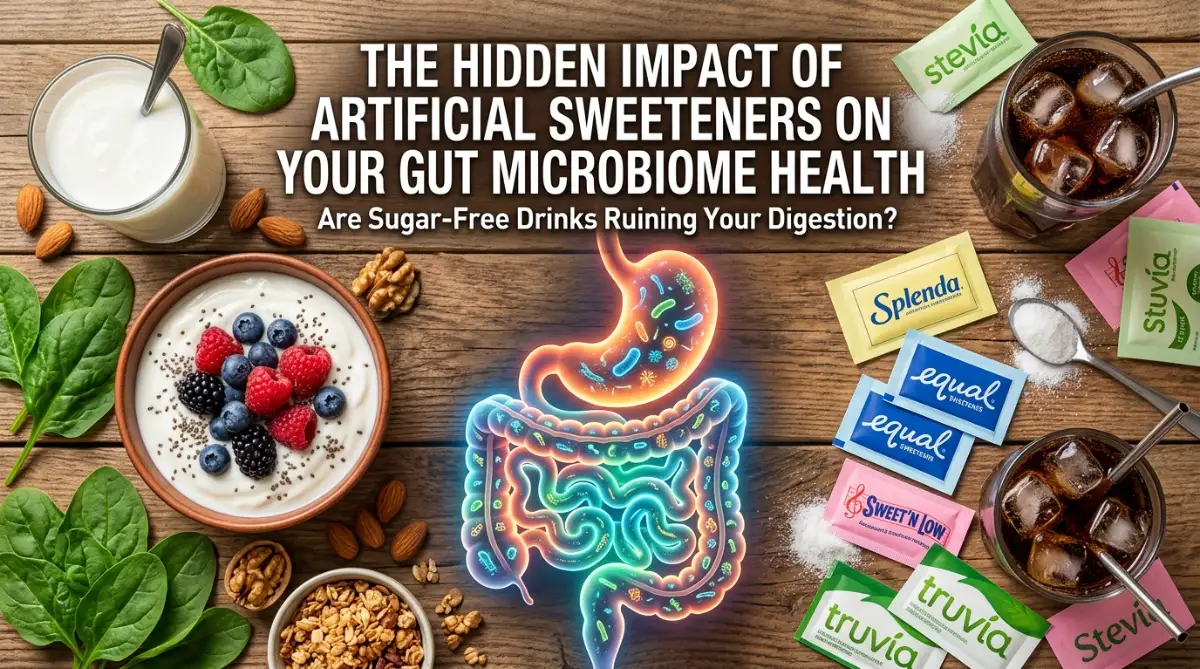
My Personal Battle with the "Sugar-Free" Illusion
I used to think I was making the smartest choice for my body by drinking three diet sodas a day. I proudly swapped my regular sugar for those little yellow and pink packets in my morning coffee. I honestly believed I was hacking my health by cutting out all those extra calories. But after a few months, my body started sending me some very confusing signals.
My stomach was constantly bloated, no matter what I ate for lunch or dinner. I felt sluggish all afternoon, and my mood swings were entirely out of my control. I could not understand why I felt so terrible when I was supposedly following a "clean" diet.
It took me a long time, and a lot of frustrated nights, to realize that the problem was not my lack of willpower. The actual problem was hiding in plain sight inside my favorite sugar-free drinks. My daily habit was slowly damaging the good bacteria in my stomach.
Millions of people are walking around right now with this exact same heavy, uncomfortable feeling in their stomachs. You might be one of them, wondering why your digestion feels completely broken despite your best efforts. We are constantly told by clever marketing that zero calories means zero consequences.
People are drinking artificially sweetened beverages to lose weight, only to find themselves struggling with intense sugar cravings. They try to be healthy, but end up with embarrassing gas, stomach cramps, and extreme fatigue. This constant physical discomfort easily ruins your mental peace and makes everyday tasks feel exhausting.
This is a very real struggle that messes with your daily confidence. It is incredibly frustrating to feel like your own body is fighting against you. But you are absolutely not alone in this experience, and more importantly, you can fix it.

What Really Happens Inside Your Stomach
To understand why those fake sugars cause so much trouble, we first need to look at how your digestive system actually works. Think of your gut microbiome as a massive, bustling garden inside your stomach. This garden is home to trillions of tiny living bacteria that work hard to keep you healthy.
When this microscopic garden is balanced, you feel energetic, your digestion is smooth, and your immune system is strong. These good bacteria help break down your food and absorb the nutrients your body desperately needs. They even help produce serotonin, which is the chemical responsible for keeping you happy and calm.
But this delicate environment requires the right kind of fuel to survive. Natural foods like apples, oats, and spinach act like high-quality fertilizer for your internal garden. Your good bacteria thrive on real, whole ingredients that come directly from the earth.
Now, imagine pouring chemical weedkiller all over your beautiful, healthy garden. That is exactly what happens when you consume artificial sweeteners like sucralose, aspartame, or saccharin. These fake sugars are created in a laboratory, and your body does not recognize them as real food.
Because your stomach cannot easily break down these synthetic chemicals, they travel straight to your lower intestine. Once they arrive there, they start interfering with your healthy bacteria. Studies show that certain zero-calorie sweeteners can actively reduce the number of good bacteria in your gut.
When the good bacteria start dying off, the bad bacteria suddenly have room to multiply and take over. This imbalance is called dysbiosis, and it is the root cause of so many uncomfortable health problems. Your digestive system simply cannot function properly when the bad bacteria outnumber the good ones.
Silent Warning Signs of a Damaged Microbiome
Your body is incredibly smart and will always try to tell you when something is wrong. The tricky part is that we often ignore these warning signs or blame them on stress and lack of sleep. One of the biggest red flags of a damaged gut is chronic, painful bloating.
If your stomach swells up like a balloon right after you drink a diet soda, your microbiome is crying out for help. The bad bacteria in your gut feast on these artificial chemicals and produce excess gas as a result. This gas gets trapped in your digestive tract, causing that tight, uncomfortable feeling.
Another massive warning sign is experiencing completely uncontrollable sugar cravings. You might think drinking a diet soda will satisfy your sweet tooth, but it actually tricks your brain. The incredibly sweet taste tells your brain that calories are coming, but the calories never arrive.
Because your brain feels cheated, it sends out intense signals demanding real sugar. This is why you might find yourself raiding the pantry for cookies or chocolate just an hour after drinking a sugar-free beverage. Your confused gut bacteria are literally sending signals to your brain, demanding more junk food.
You might also experience deep, unexplainable brain fog throughout your workday. Remember that your gut and your brain are connected by a massive network called the vagus nerve. If your stomach is inflamed from artificial sweeteners, your brain will feel sluggish and tired too.
Skin issues like sudden acne breakouts or strange rashes can also point back to your digestion. When your microbiome is unbalanced, it creates systemic inflammation that often shows up right on your face. Healing your skin almost always starts by fixing what you put into your stomach.
My Realization About Natural Alternatives
I remember the exact day I decided to stop using artificial sweeteners completely. I had a massive headache and felt heavily bloated after drinking a large sugar-free iced coffee. I realized I was poisoning my own system just to save a few calories.
Pro Tip from My Experience: I started replacing my chemical sweeteners with a tiny drop of pure, organic honey or a splash of real maple syrup. I was terrified of the extra calories at first, but my bloating disappeared within three days! My energy levels skyrocketed because my body finally knew how to process real, natural ingredients instead of laboratory chemicals.
When you make the switch to real food, your body thanks you almost instantly. It is so much better to consume a small amount of natural sugar than a large amount of synthetic chemicals.
A Simple Action Plan for Digestive Healing
If you are ready to evict the bad bacteria and restore your internal garden, you need a solid plan. The good news is that your gut microbiome can heal and rebuild itself remarkably fast. You just need to stop feeding it the wrong things and start giving it the right support.
Identify and Eliminate the Hidden Chemicals
The first step is becoming a detective in your own kitchen. You need to start reading the ingredient labels on everything you buy from the grocery store. Artificial sweeteners hide in places you would never expect.
Check your protein powders, your chewing gum, and even your daily multivitamins. Look for words like aspartame, sucralose, acesulfame potassium, and saccharin on the back of the package. If you see any of these long, complicated chemical names, put the item back on the shelf.
You do not have to throw everything away in one single day. Try swapping out just one artificially sweetened item per week to make the transition easier. Small, consistent changes are always more successful than trying to change your entire life overnight.
Welcome Natural Earth-Grown Replacements
Once you remove the bad stuff, you need to find healthy ways to satisfy your sweet cravings.
Are you looking for the best natural ways to sweeten your food without causing stomach problems? Watch this quick video to learn about safe, gut-friendly alternatives!
Stevia is a fantastic option because it comes from the leaves of a real plant. It does not spike your blood sugar and it is generally very gentle on your digestive system. Just make sure you are buying 100% pure stevia extract, not a blend mixed with other hidden chemicals.
Monk fruit extract is another incredible natural option that tastes very similar to regular sugar. It is packed with antioxidants and has been used safely in Eastern medicine for hundreds of years. Using real cinnamon or vanilla extract can also trick your brain into tasting sweetness without any sugar at all.
Feed Your Good Bacteria with Prebiotics
Now that you have stopped the chemical attacks, it is time to feed the remaining good bacteria. This is where prebiotic foods become your absolute best friends. Prebiotics are special types of plant fibers that your body cannot digest, but your gut bacteria love to eat.
Think of prebiotics as the ultimate superfood for your internal garden. Garlic and onions are incredibly powerful prebiotics that you can easily add to almost any dinner recipe. They not only make your food taste amazing, but they also help healthy bacteria multiply rapidly.
Green bananas and oats are also fantastic sources of this helpful fiber. Try adding half of a slightly green banana to your morning smoothie for a massive digestion boost. When your good bacteria eat these fibers, they produce special acids that heal the lining of your stomach.
Introduce Powerful Probiotic Heroes
While prebiotics feed the good bacteria you already have, probiotics actually add new healthy bacteria to your system. You want to send in as many microscopic good guys as possible to fight off the bad bacteria. Fermented foods are the absolute best way to do this naturally.
Plain, unsweetened yogurt or kefir are packed with billions of live, active cultures. Make sure you check the label to confirm that the yogurt contains "live and active cultures" before you buy it. You can sweeten it yourself at home with fresh blueberries or a tiny drizzle of raw honey.
If you do not eat dairy, sauerkraut and kimchi are incredibly powerful, plant-based probiotic foods. Just one spoonful of fresh, unpasteurized sauerkraut contains more probiotics than an entire bottle of expensive pills. Try adding a small scoop to your lunchtime salad or sandwich.
The Truth About Hydration and Digestion
Many people rely on diet sodas simply because they hate the taste of plain water. But proper hydration is absolutely non-negotiable if you want a healthy, thriving digestive system. Water is the natural river that flushes toxins and waste out of your stomach.
If plain water bores you, start infusing it with fresh, natural ingredients. Toss a few slices of cucumber, lemon, and a sprig of fresh mint into a large glass pitcher. This creates a spa-like drink that tastes incredibly refreshing without a single drop of fake sugar.
Sparkling water is also a great tool for breaking a diet soda addiction. The fizzy bubbles give you that satisfying throat hit you crave from a soda. Just make sure the sparkling water is flavored with real fruit oils and not artificial sweeteners.
Breaking the Cycle of Diet Culture
We have been brainwashed to believe that the only way to be healthy is to consume as few calories as possible. This toxic mindset completely ignores how our bodily systems actually function. Your health is not just a math equation of calories in versus calories out.
The quality of the ingredients you put into your body matters infinitely more than the calorie count. A 100-calorie apple provides fiber, water, vitamins, and energy for your good bacteria. A zero-calorie diet soda provides nothing but chemical confusion and digestive stress.
It takes time to unlearn these diet culture myths. You have to give yourself grace and patience as you transition away from synthetic products. Your taste buds will actually change and adapt as you eat more real food.
Things that used to taste perfectly sweet will suddenly taste like harsh, fake chemicals to you. Once your gut begins to heal, your natural energy will return, and the afternoon brain fog will lift. You will finally experience what it feels like to have a calm, happy, and fully functioning digestive system.
Next-Level Strategies to Repair Your Digestion Fast
Now that we have removed the chemical sweeteners from your daily routine, it is time to actively rebuild your internal defense system. You cannot just remove the bad stuff and expect your stomach to magically heal overnight. You need to introduce specific, powerful habits that encourage your good bacteria to multiply and thrive.
One of the most effective ways to give your digestive system a break is by practicing mild intermittent fasting. This does not mean you have to starve yourself for days on end. Simply giving your stomach a full twelve hours of rest overnight can completely transform your digestion.
When you stop eating by seven in the evening and wait until seven the next morning to eat breakfast, your body does something amazing. This resting period activates a cleaning process inside your stomach called the migrating motor complex. Think of this process as a tiny internal street sweeper that pushes out leftover waste and dead bacteria.
Managing your daily food intake is surprisingly similar to strict financial planning. Just like the beginner's blueprint to zero-based budgeting: give every dollar a purpose, you need to give every single calorie a healthy purpose. You want to spend your daily calorie budget on foods that actively pay you back with good health and high energy.
The Magic of Polyphenol-Rich Foods
If prebiotics are the basic food for your gut bacteria, polyphenols are like a high-end luxury feast. Polyphenols are powerful plant compounds found in deeply colored natural foods. When you eat these specific foods, your body cannot absorb the compounds early on, so they travel straight down to your hungry microbiome.
The good bacteria absolutely love polyphenols and use them to create anti-inflammatory chemicals for your entire body. Wild blueberries are one of the absolute best sources of these healing compounds. Tossing a handful of fresh or frozen blueberries into your morning oatmeal is a simple, delicious way to start healing.
Dark chocolate is another fantastic, gut-friendly treat that naturally contains high amounts of polyphenols. You just need to make sure you are buying chocolate that contains at least seventy percent real cacao. This gives you a wonderful, sweet treat without relying on any artificial sweeteners.
You can also sip on green tea throughout the afternoon instead of reaching for a diet soda. Green tea is packed with a specific type of polyphenol that directly feeds the bacteria responsible for keeping you thin and energetic. According to experts explaining the brain-gut connection at Johns Hopkins Medicine, the foods you consume directly influence your mood and mental clarity through these chemical reactions.
Why Your Sleep Cycle Controls Your Stomach
We rarely connect our bedtime habits to our stomach pain, but the two are intimately linked. Your gut microbiome actually has its very own circadian rhythm, just like your brain does. When you stay up late scrolling on your phone, your gut bacteria get entirely confused and stressed out.
A lack of deep sleep actively reduces the diversity of the good bacteria in your stomach. When you wake up tired, your body naturally craves quick energy, which usually leads to grabbing a highly processed, artificially sweetened energy drink. This creates a terrible cycle where poor sleep leads to bad food choices, which then leads to worse sleep.
To break this cycle, you need to create a calming, screen-free bedtime routine. Try drinking a warm cup of peppermint or chamomile tea about an hour before you want to fall asleep. These herbal teas naturally soothe the muscles in your digestive tract and prepare your body for deep rest.
Healing your damaged digestion takes real time and consistent effort. It is very much like learning how to fix a damaged credit score without falling for scams, because there are no magic pills that provide instant overnight success. You have to build up your biological savings account day by day with smart, consistent choices.
The Chewing Technique Nobody Talks About
We live in a world where everyone eats lunch while staring at a computer screen or driving a car. Because we are so distracted, we usually swallow our food practically whole. This is a massive disaster for your gut health, regardless of how healthy the actual food is.
Digestion does not start in your stomach; it actually starts in your mouth with your saliva. When you do not chew your food thoroughly, your stomach has to work ten times harder to break down those large chunks. This extra effort creates excess gas, painful bloating, and horrible acid reflux.
Try to put your fork down between every single bite during your next meal. Count your chews and aim to chew each bite at least twenty times before swallowing. This simple, entirely free habit will instantly reduce your post-meal bloating and help your body absorb far more nutrients.
Dangerous Diet Traps That Will Ruin Your Progress
When you finally decide to fix your stomach issues, it is very easy to fall into clever marketing traps. The health and wellness industry is constantly trying to sell you shortcuts that often do more harm than good. You have to protect yourself from these common mistakes if you want to achieve lasting comfort.
Falling for the "Sugar Alcohol" Illusion
Many people realize that aspartame and sucralose are bad for them, so they switch to products sweetened with sugar alcohols. You will see ingredients like erythritol, xylitol, or maltitol heavily advertised on "keto-friendly" or "diabetic-safe" snacks. While these are slightly better than purely synthetic chemicals, they still cause massive digestive chaos.
Sugar alcohols naturally draw extra water into your digestive tract. If you eat a whole protein bar sweetened with maltitol, you will likely spend the rest of the afternoon rushing to the bathroom. They also ferment extremely quickly in your stomach, blowing you up like a painful, walking balloon.
Medical professionals discussing artificial sweeteners and sugar substitutes at the Mayo Clinic often warn patients about the severe laxative effects of consuming too many sugar alcohols. You should treat these products as a very rare indulgence, not a daily dietary staple.
Wasting Money on Miracle Probiotic Pills
When your stomach hurts, the most tempting thing to do is buy an expensive bottle of probiotic pills from the pharmacy. We are conditioned to believe that we can solve any physical problem by swallowing a capsule. But taking probiotics without changing your diet is a complete waste of your hard-earned money.
If you are still drinking diet sodas and eating highly processed junk food, those expensive good bacteria will die the moment they reach your stomach. They have absolutely no healthy fiber to feed on, so they simply cannot survive. You must fix the environment inside your gut first before you introduce new bacteria.
Many people waste hundreds of dollars on fancy, overhyped supplements that do absolutely nothing. Instead of buying expensive pills, you should learn to save your money, much like discovering how to force your bank to lower your personal loan rates to stop overpaying for things. Focus on buying affordable, whole foods like onions, garlic, and plain yogurt instead.
Obsessing Over Dietary Perfection
Another huge mistake is becoming completely terrified of eating anything that might upset your stomach. Stress and anxiety actually damage your gut microbiome just as much as artificial sweeteners do. When you worry obsessively about every single bite of food, your brain releases a stress hormone called cortisol.
High levels of cortisol actively reduce blood flow to your digestive system. This means that even if you are eating the healthiest, most organic salad in the world, your body cannot digest it properly if you are deeply stressed. You might end up feeling bloated simply because you were anxious while eating.
You have to find a healthy, relaxed balance in your daily life. If you accidentally drink a diet soda at a party, it is not the end of the world and your gut will recover. Perfection is entirely impossible, and aiming for general consistency is what actually heals your body long-term.
Finding reliable, honest information is the best way to protect your long-term wellness without unnecessary stress. We always aim to provide this exact kind of trustworthy, balanced guidance at Naxus Journal.
Your Action Plan for Lasting Stomach Comfort
You now possess the exact knowledge needed to completely turn your digestive health around. You understand how those sneaky, zero-calorie chemicals have been quietly sabotaging your energy and your mood. More importantly, you know exactly how to feed your body the natural ingredients it has been begging for.
Your stomach lining acts as a powerful security firewall for your entire body. Similar to understanding the hidden dangers of cloud storage and how end-to-end encryption saves you from external threats, a strong gut barrier blocks harmful toxins from leaking into your bloodstream. By removing artificial sweeteners, you are patching up the holes in your internal security system.
Start tomorrow morning by making just one simple swap in your routine. Trade your artificially sweetened coffee creamer for a splash of whole milk and a tiny drop of pure maple syrup. Notice how much better your stomach feels by lunchtime, and use that positive momentum to fuel your next healthy choice.
The USDA dietary guidelines for Americans consistently emphasize the importance of prioritizing whole, unprocessed foods for a reason. Real food heals you from the inside out, providing lasting energy that no synthetic chemical could ever match.
A Quick Word Before You Go: I know exactly how overwhelming it feels to constantly battle with your own stomach. But I can promise you, from my own personal journey, that the moment you drop the fake sugars, a heavy fog will lift from your life. My energy is better than ever, and I am so excited for you to finally experience that exact same freedom and relief!
Common Questions About Sugar Substitutes and Stomach Pain
Can my gut actually heal if I stop drinking diet soda today?
Yes, your digestive system is incredibly resilient and heals remarkably fast. The cells lining your stomach actually replace themselves every few days. Once you remove the toxic chemicals, your good bacteria will begin multiplying and restoring balance almost immediately.
How long does it normally take to rebuild healthy stomach bacteria?
Most people start feeling noticeable relief from severe bloating within just three to five days of quitting artificial sweeteners. However, deeply repairing a highly damaged microbiome usually takes around three to four weeks of consistent, healthy eating. Adding fermented foods like plain yogurt will significantly speed up this recovery timeline.
Is stevia completely safe for a highly sensitive stomach?
Pure stevia extract is generally considered the safest option because it comes directly from a natural plant leaf. It does not ferment in your gut the way synthetic chemicals do, meaning it rarely causes painful gas. Just ensure you read the label carefully to verify it is not secretly blended with erythritol or aspartame.
Why do sugar-free chewing gums make me feel so incredibly bloated?
Sugar-free gums are typically loaded with a sugar alcohol called xylitol, which your body struggles to break down properly. Furthermore, the physical act of chewing gum forces you to swallow large amounts of excess air. This combination of trapped air and fermenting sugar alcohols creates severe, painful stomach swelling.
Do zero-calorie sweeteners accidentally slow down my natural metabolism?
They do not directly slow down your metabolic rate, but they severely confuse your body's natural insulin response. Because they trick your brain into expecting real calories, they often trigger intense cravings for high-carbohydrate junk food later in the day. This constant craving cycle makes it incredibly difficult to maintain a healthy body weight.
Disclaimer: The content provided in this article is for informational and educational purposes only and is not intended as medical advice. Always consult with a qualified healthcare professional or a registered dietitian before making significant changes to your diet, especially if you have pre-existing digestive conditions or chronic health concerns.
![7 Silent Signs You Lack Micro-Minerals [Step-by-Step Fix]](https://naxusjournal.com/storage/uploads/blogs/1785613424_7-silent-signs-you-lack-micro-minerals-step-by-step-fix.webp)