
The Silent Struggle of Living Paycheck to Paycheck
Most financial advice tells you to stop buying lattes or get a six-figure tech job. But when rent eats half your check and grocery prices jump every single week, that advice feels like an insult. You don't need a massive salary to stack $10,000 in the bank—you just need a system that stops invisible money leaks before they start. Here is the exact, no-fluff playbook I used to break the paycheck-to-paycheck cycle and build real cash security.
My stomach would tie in knots every time the phone rang, terrified it was another unexpected bill I simply could not afford. I would lose hours of sleep doing mental math in the dark, wondering how I was going to stretch a few dollars until the next payday. If you are reading this right now, you probably know exactly what that suffocating chest pain feels like.
You work hard, you try to be completely responsible, but the cost of just existing keeps climbing higher every single day. Normal people are being priced out of a normal life, and it feels deeply unfair. When your paycheck barely covers rent and groceries, saving thousands of dollars sounds like an impossible fantasy reserved for rich people.

Living without a financial cushion drains your daily energy and completely destroys your mental peace. You are one flat tire, one unexpected medical visit, or one broken appliance away from a complete financial disaster. This constant state of panic changes how you interact with your loved ones and steals your joy.
Why does it feel so hard to just get ahead? The truth is, the system is designed to make you spend everything you earn before you even realize it is gone. But you do not have to accept this reality or live in fear forever.
We are going to break down exactly how you can turn this situation around completely, no matter how small your current paycheck is. By changing a few hidden habits and shifting your perspective, you can build a solid wall of financial security around your life.
⚡ Quick Blueprint: How to Save $10K Fast
- Pay Yourself First: Move 10% of your earnings to a separate High-Yield Savings Account the minute you get paid, before paying any bills.
- Stop Daily Leaks: Cutting out just $8 a day in mindless snacks and convenience spending frees up nearly $3,000 every year.
- Audit & Negotiate: Run a 30-day subscription check and use the retention script to slash at least $50/month off your fixed utility bills.
- Automate Friction: Keep your emergency savings at a completely different bank to prevent impulsive transfers back into your checking account.
Rewiring Your Brain for Financial Success
Before we talk about spreadsheets or cutting expenses, we have to fix the way you look at money. Most people view saving as a punishment, like going on a strict diet where you are not allowed to enjoy anything. This negative mindset is exactly why so many budgeting attempts fail within the first few weeks.
You need to flip the script in your head right now. Keeping your money is not about restricting your happiness; it is about buying your future freedom. Every dollar you put away is a tiny soldier that you are sending out to protect your peace of mind.
When you look at a new pair of shoes or a fancy dinner, ask yourself a very simple question. Are you willing to trade your future comfort for a few minutes of temporary excitement today? Once you start viewing your cash as stored energy for your future, walking away from unnecessary purchases becomes surprisingly easy.
The Real Cost of "Small" Daily Habits
We often ignore tiny expenses because they feel completely harmless in the moment. A quick coffee run, a downloaded movie, or a subscription box might only cost a few dollars today. However, these tiny leaks will easily sink a massive ship over time.
Let us look at a simple real-life scenario to understand the math. If you spend just eight dollars a day on random snacks or convenience items, you are burning nearly three thousand dollars annually. That is a massive chunk of your savings goal, completely wasted on things you probably do not even remember buying.
The True Cost of Daily Micro-Leaks:
Seeing the numbers laid out like this proves that you don't have an income problem as much as an invisible leak problem. Plugging these three holes alone puts you almost halfway to your $10,000 goal in a single year.
You do not need to cut out every single joy in your life, but you must become deeply aware of where your cash is flowing. Start tracking every single penny that leaves your pocket for the next thirty days. You will be absolutely shocked by the hidden leaks draining your bank account.
Pro Tip: I used to think tracking my daily spending was a waste of time because I knew what my big bills were. Once I actually wrote down every small purchase in a cheap notebook, I realized I was throwing away hundreds of dollars a month on random convenience store stops. Getting honest with my own habits was the hardest, but most rewarding, thing I ever did.
Building a Bulletproof Money Strategy
You cannot reach a massive financial goal by simply hoping there is money left over at the end of the month. Hope is a wonderful feeling, but it is a terrible financial strategy. You need a strict, intentional plan that tells every single dollar exactly where it needs to go.
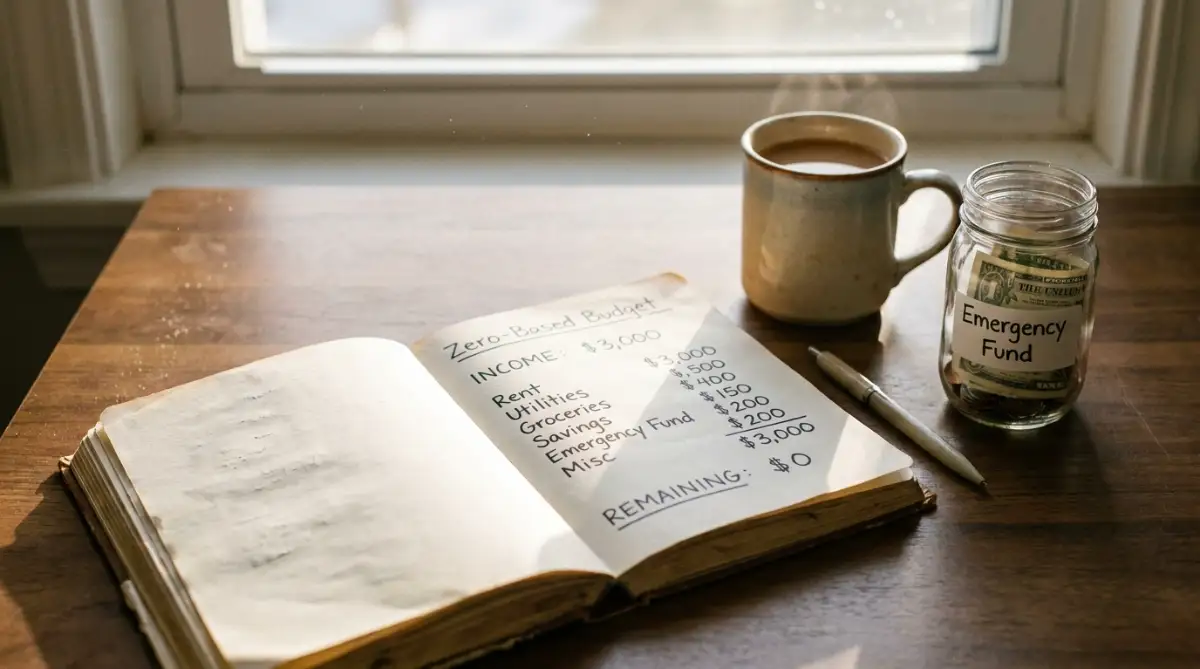
This is where the concept of the Zero-Based Budget comes into play. When you get paid, you assign a specific job to every single penny until your remaining balance is zero. Some dollars go to rent, some go to groceries, and a very specific amount goes directly into your savings account.
If you leave money sitting in your main checking account without a purpose, you will inevitably find a reason to spend it. Your brain will trick you into thinking you are richer than you actually are. Give every dollar a clear job, and watch your financial stress slowly melt away.
Pay Yourself First (The Golden Rule)
Most people pay their landlord, their internet provider, and the grocery store before they ever pay themselves. By the time they finish handing out their hard-earned cash, there is nothing left for their own future. You have to reverse this entire process immediately if you want to succeed.
The moment your paycheck hits your account, transfer a specific percentage directly into a completely separate savings account. Treat this transfer like a mandatory tax or a utility bill that you cannot ignore. You are literally paying your future self before anyone else gets a piece of your labor.
If you wait until the end of the month to save what is left over, you will always find an excuse to spend it. By moving the cash immediately, you force yourself to live on whatever remains in your checking account. This slight psychological trick forces you to naturally adjust your lifestyle to fit your remaining budget.
Automate Your Good Decisions
Willpower is a limited resource, and relying on it to save money every single month is a guaranteed way to fail. You have to make doing the right thing entirely automatic and completely effortless. Set up an automatic transfer with your bank so the money moves without you ever touching a button.
When the process is invisible, you do not feel the emotional pain of parting with your cash. You will simply wake up on payday, and the money will already be safely tucked away. Out of sight completely means out of mind.
If you are tempted to transfer the money back into your checking account, make it difficult to access. Open your savings account at a completely different bank than your everyday checking account. Make sure it takes at least two or three days for the money to transfer back, which kills the urge for impulse spending.
Slashing Your Biggest Monthly Expenses
If you want to keep ten thousand dollars in a short amount of time, skipping a few lattes is not going to be enough. You have to aggressively attack your biggest expenses: housing, transportation, and food. These three categories completely dominate the average person's budget.
Let us start with housing, which is likely eating up half of your monthly income. Can you downsize to a smaller apartment, or find a roommate to split the heavy burden? It might not be the most comfortable choice right now, but sacrificing a little comfort today builds massive security for tomorrow.
If moving is not an option, you need to negotiate your other fixed bills aggressively. Call your internet provider, your cell phone company, and your car insurance agent right now. Tell them you are struggling to make payments and ask for their absolute lowest promotional rate.
The Grocery Store Trap
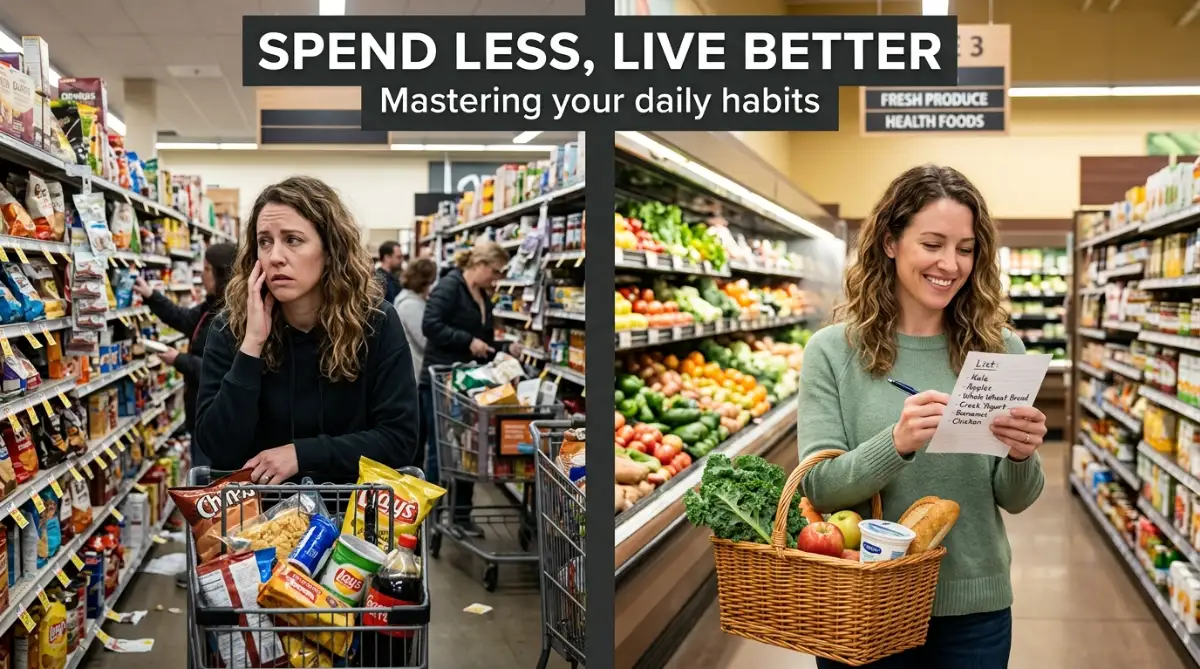
Supermarkets are heavily engineered to make you spend far more money than you actually planned. The layout, the lighting, and the smells are all designed to trigger impulse buys. If you walk into a grocery store without a strict plan, you are walking into a financial trap.
Always carry a detailed list, and make a firm promise to yourself that you will never buy anything that is not on that paper. Try ordering your groceries online for curbside pickup instead of walking through the aisles. This prevents you from tossing random bags of chips or expensive treats into your cart just because they look good.
Eat down your pantry before you ever step foot in a store. Most of us have hundreds of dollars worth of canned goods, pasta, and frozen meat just sitting unused. Challenge yourself to make creative meals out of what you already own for an entire week.

Rethinking How You Get Around
Cars are absolute money pits that drain your wealth through gas, insurance, maintenance, and constant repairs. If you live in an area with decent public transportation, strongly consider leaving your car parked for most of the week. Riding the bus or taking a train is significantly cheaper and gives you time to read or relax.
If you must drive, look into carpooling with coworkers who live along your daily route. Sharing the cost of fuel and parking can easily put hundreds of extra dollars back into your pocket every month. Remember, every single drop of gas you save gets you one step closer to your massive financial goal.
You can also challenge yourself to run errands on foot or by bicycle if the distance is short. Not only does this save a tremendous amount of money, but it is also incredible for your physical health. Small changes in your transportation habits add up incredibly fast over a long period.
Overcoming the Psychological Urge to Spend
Why do we buy things we don't need?
We often shop to fill an emotional void, whether we are feeling stressed, bored, or simply unhappy. Retail therapy provides a very quick hit of dopamine, making us feel good for a few brief moments. However, that good feeling fades rapidly, leaving us with empty pockets and a pile of useless junk.
You must learn to separate your deep emotions from your spending habits immediately. When you feel the urge to buy something, force yourself to wait at least forty-eight hours before handing over your card. This simple cooling-off period gives your logical brain time to step in and stop a terrible decision.
Watch this highly effective breakdown on mastering your money mindset and stopping impulse buys instantly:
During that waiting period, ask yourself if this item will genuinely improve your life in a meaningful way. More often than not, the intense desire to purchase will completely vanish after a day or two. You will realize you did not actually want the item; you just wanted a quick distraction from your daily stress.
Escaping the Comparison Trap
Social media is a massive danger zone for anyone trying to fix their financial life. Every time you open an app, you are bombarded with images of people taking expensive vacations, driving new cars, and wearing designer clothes. It is extremely easy to feel like you are falling behind and need to spend money just to keep up.
You have to remember that social media is a heavily filtered highlight reel, not actual reality. Many of the people flashing expensive lifestyles online are drowning in massive credit card debt behind closed doors. Do not bankrupt yourself trying to impress strangers who do not actually care about your well-being.
Unfollow any influencers or brands that trigger your urge to spend money unnecessarily. Fill your social media feed with personal finance experts, frugal living tips, and motivational content instead. Protect your mental space aggressively, because your environment heavily dictates your financial choices.
The "One In, One Out" Rule
Clutter is a physical manifestation of wasted money and poor impulsive decisions. Take a walk through your home right now and look at all the things you bought but never actually use. To stop this cycle, you need to implement the strict "One In, One Out" rule starting today.
If you want to buy a new piece of clothing, you must sell or donate an old piece first. If you want a new gadget, an old one has to leave your house permanently. This forces you to think deeply about whether the new purchase is truly valuable enough to replace something you already own.
This rule naturally slows down your spending because it requires physical effort before you can buy anything new. It also keeps your living space clean and organized, which dramatically reduces your daily stress levels. You will quickly find that living with less stuff makes you feel significantly happier and much lighter.
The Truth About Saving: Myth vs Reality
There is a lot of terrible advice floating around on the internet about how money actually works. Let us clear up some of the biggest misconceptions that are actively holding you back from your goals.
Understanding these basic truths allows you to ignore the noise and focus entirely on your own execution. Do not let false beliefs stop you from taking action today. Your financial journey is uniquely yours, and the only person you are competing against is yourself from yesterday.
Finding Hidden Money in Your Clutter
Your house is likely full of hidden cash just waiting to be claimed. Go through your closets, your garage, and your basement this weekend to find items you no longer use. Old electronics, gently used clothing, and forgotten furniture can all be turned into immediate cash.
List these items on local marketplaces or dedicated selling apps to clear out your space. Do not worry about getting top dollar; your main goal is simply to turn useless junk back into usable money. Take every single dollar you make from these sales and put it directly into your savings account.
This process serves a double purpose for your financial journey. Not only does it instantly boost your savings balance, but it also physically reminds you of how much money you have wasted in the past. Selling your old clutter is one of the most powerful ways to cure your desire to overspend in the future.
Mastering the Long-Term Wealth Game
Now that you have stopped the immediate bleeding, we need to focus on how to keep this momentum going for the long haul. Saving a massive amount of cash is not just a temporary sprint; it is a permanent marathon that requires serious mental endurance. You have to build systems that protect you from your own worst habits.
If you try to rely on pure motivation every single day, you will eventually burn out and go on a spending binge. The real secret of the wealthy is that they make saving completely boring and entirely automatic. Let us look at a few high-level strategies that will keep your bank account growing even while you sleep.
Protect Your Assets and Stop Buying Replacements
One of the biggest hidden drains on a low-income budget is constantly replacing things you already own because they break down prematurely. We live in a disposable culture, but treating your belongings poorly is a luxury you simply cannot afford right now. If you want to keep your hard-earned cash, you must learn to extend the lifespan of everything you use daily.
For example, constantly buying new electronics because your old ones fail is a massive financial leak. By learning basic maintenance, like taking a few minutes to stop ruining your laptop battery with proven steps, you easily save hundreds of dollars a year. You do not need the newest phone or the fastest computer; you just need to take pride in maintaining what you currently have.
Secure Your Financial Data Intelligently
As you start watching your savings account grow, protecting that money from digital theft becomes incredibly important. You might be checking your bank balances frequently on your phone while sitting at a local coffee shop or library. Doing this on an open, public Wi-Fi network is extremely dangerous and invites hackers right into your bank account.
Losing your emergency fund to a random cyber attack is a heartbreaking nightmare that you can easily avoid. You must understand what a VPN is and how it protects your online privacy on public networks whenever you log into financial apps away from home. A tiny bit of digital caution ensures that the thousands of dollars you sacrificed to save actually stay yours.
The Consumer Financial Protection Bureau clearly warns that digital fraud is destroying the savings of hard-working families every single day. Do not make it easy for thieves to steal the exact security you are working so incredibly hard to build. Set up two-factor authentication on every single banking app right this second.
The Art of the "No-Spend" Challenge
Sometimes, your spending habits get a little messy despite your absolute best intentions. When you feel yourself slipping back into bad routines, you need a hard reset to shock your system back into reality. This is where the highly effective "No-Spend Week" completely changes your financial trajectory.
During a no-spend week, you are strictly forbidden from buying anything except absolute necessities like basic groceries and fuel for work. You cannot buy coffee, you cannot order takeout, and you certainly cannot browse online stores out of boredom. This forces you to get incredibly creative with the resources you already have in your home.
You will quickly realize how much random fluff you normally buy without even thinking about it. Studies in behavioral economics and consumer psychology consistently show that inserting physical friction into the buying process dramatically reduces impulse purchases. Challenge yourself to do one no-spend week every single month, and watch your savings balance absolutely explode.
Negotiate Like a Professional
Most people simply accept the bills they receive in the mail as absolute, unbreakable laws of nature. They pay whatever the internet company or insurance provider demands without ever questioning the final amount. The truth is, almost every single recurring bill in your life is highly negotiable if you just ask.
Set aside one hour this weekend to call every single service provider you currently pay. Be completely polite, but tell them firmly that you are reviewing your budget and looking for ways to cut costs. Ask them directly if they can apply a loyalty discount, a promotional rate, or a better tier to your current account.
My Exact 60-Second Retention Call Script:
"Hi, I love your service, but my monthly bill just climbed out of my budget range. Another provider offered me an equivalent plan for $25 less per month. Before I make the switch today, what loyalty discounts or retention promotions can you apply to keep my account active?"
Say this calmly and stay silent until they respond. Eight times out of ten, the representative will immediately apply a recurring billing credit to avoid losing you.
Customer retention is incredibly expensive for these massive companies. Often, they will gladly shave twenty or thirty dollars off your monthly bill just to keep you from switching to a competitor. If you do this with five different bills, you just magically created over a hundred dollars of extra savings every single month.
The Dangerous Traps That Will Destroy Your Progress
Building wealth on a tight budget is like walking a very narrow tightrope across a massive canyon. One wrong step, or one moment of poor judgment, can easily send you falling right back down into the stressful cycle of debt. You have to actively guard your mindset against the common pitfalls that trap well-meaning people every single day.
Saving money is highly emotional, and your brain will try to trick you into taking the easy way out. It is completely normal to feel fatigued, but giving into these toxic money habits will ruin months of intense sacrifice. Let us break down exactly what you must avoid at all costs.
The Illusion of "Deserving" a Reward
This is arguably the most common and destructive trap for anyone trying to fix their financial life. You work an exhausting fifty-hour week, you are incredibly stressed, and you tell yourself, "I deserve a little treat." That little treat quickly turns into a massive expensive dinner, a new outfit, and completely abandoning your weekly budget.
You absolutely deserve to be happy, but you do not deserve to be broke and terrified of your upcoming rent payment. When you use money to soothe your emotional exhaustion, you are actively robbing your future self of deep, lasting peace. You are trading permanent financial security for a highly temporary dopamine hit that disappears by tomorrow morning.
Find free or incredibly cheap ways to reward yourself for your hard work and intense sacrifice. A long walk, a free movie night at home, or reading a great book can relax you without draining your bank account. Stop tying your personal happiness directly to your ability to spend your hard-earned cash.
The "Extreme Deprivation" Burnout
While you need to cut expenses aggressively, going completely overboard will eventually trigger a massive financial breakdown. If you try to live on plain rice and completely isolate yourself from your friends for a whole year, you will snap. This extreme approach is exactly like crash dieting; it works for a week, and then you binge eat the entire kitchen.
You must build a small amount of "fun money" into your monthly budget, even if it is incredibly tiny. Allowing yourself ten or twenty dollars a month to spend guilt-free on absolute nonsense keeps your morale high. It acts as a pressure release valve that stops you from feeling totally trapped by your own strict rules.
Falling Victim to Lifestyle Creep
Eventually, your hard work will pay off, and you might get a small raise at work or a nice tax refund. The immediate temptation is to upgrade your lifestyle by moving to a nicer apartment or buying a better car. This phenomenon is known as lifestyle creep, and it is the exact reason why even people earning massive salaries are still broke.
If you start making an extra two hundred dollars a month, pretend that money simply does not exist. Route that entire raise directly into your savings account before you ever see it in your checking balance. Continuing to live like you are completely broke, even when you have extra cash, is the ultimate secret to building real wealth.
According to financial experts at The National Bureau of Economic Research, maintaining a static standard of living while income grows is the most reliable predictor of long-term wealth accumulation. Do not let a slightly better paycheck trick you into abandoning the frugal habits that saved your life. Stay humble, keep your expenses incredibly low, and let the extra money work for your future.
Using Credit Cards as an Emergency Plan
Many people mistakenly believe that having a massive credit limit is the exact same thing as having an actual emergency fund. They refuse to save cash because they assume they can just swipe their card if the car breaks down. This toxic mindset completely guarantees that you will be trapped in high-interest debt for the rest of your natural life.
When a crisis hits, you are already highly stressed and incredibly vulnerable. Adding a massive credit card bill with a twenty percent interest rate completely pours gasoline on a raging fire. You will end up paying double or triple the original cost of the emergency just in monthly interest fees.
You must build a cash barrier between yourself and the unpredictable disasters of the real world. Cash does not charge you interest, it never gets declined, and it never sends your stress levels through the roof. Cut up the credit cards if you have to, but never use borrowed money to solve a sudden problem again.
Your Action Plan for Tomorrow Morning
Reading articles about money is completely useless if you do not actively change your daily behavior. You now possess the exact knowledge required to turn a tiny income into a massive, protective wall of savings. The only thing standing between you and complete financial peace is your willingness to actually execute this simple plan.
Do not wait until the first day of next month or your next payday to start this life-changing journey. Start right this very second, exactly where you are, with whatever tiny amount of money you currently have in your pocket. Success is simply the result of hundreds of tiny, boring, and highly disciplined choices stacked on top of each other.
The 24-Hour Checklist
- Audit Your Accounts: Log in to your bank tonight and cancel every single subscription you have not used in the last seven days.
- Move Your Money: Open a high-yield savings account at a completely different bank than your main checking account.
- Automate Your Future: Set up an automatic transfer for exactly ten percent of your paycheck to move the very morning you get paid.
- Empty the Fridge: Commit to eating absolutely every single piece of food in your pantry before you spend another dollar at the grocery store.
You are entirely capable of breaking the cycle of poverty and completely rewriting your family's future story. It will absolutely be uncomfortable at first, and you will definitely have moments where you want to give up completely. But the feeling of checking your bank account and seeing thousands of dollars safely waiting for you is worth every single sacrifice.
Always keep educating yourself and finding new ways to optimize your daily life. You can explore more resources and highly practical advice on our main home page whenever you feel stuck. Remember, small steps forward eventually cover massive distances if you just refuse to stop walking.
I know exactly how terrifying it feels to look at a zero balance and wonder how you will survive the coming week. But my life completely changed the exact moment I stopped making excuses and started aggressively defending my own money. You have incredible power over your choices, so take a deep breath, trust the process, and start building your financial fortress today!
Smart Questions People Always Ask About Hoarding Cash
Is it actually possible to save money if my income barely covers rent?
Yes, but it requires a very aggressive audit of where your invisible money is going every single day. You will likely need to drastically alter your living situation, negotiate your fixed bills, and eliminate every single convenience purchase. It is incredibly difficult, but finding even fifty dollars a month to save builds the momentum you desperately need.
Should I pay off my debts first or build my savings account?
You must always build a small starter emergency fund of at least one thousand dollars before aggressively attacking your debts. If you have absolutely no cash saved, the next unexpected flat tire will force you straight back into using high-interest credit cards. Once you have a tiny safety net built, you can throw all your extra cash at clearing those debts entirely.
How do I deal with friends who always want to go out and spend money?
You have to be completely honest with them about your new financial goals without sounding defensive or angry. Suggest completely free alternatives, like hosting a potluck dinner at your home or going for a nice walk in the local park. True friends will entirely support your healthy boundaries, while those who mock your efforts are probably struggling with deep debt themselves.
Does clipping coupons really save that much money over a year?
While extreme couponing takes massive effort, simply using digital grocery store apps and planning your meals around weekly sales is highly effective. You can easily cut your food bill by thirty percent without spending hours cutting paper coupons at your kitchen table. The real savings come from buying base ingredients on sale and completely avoiding expensive pre-packaged convenience meals.
Where is the absolute safest place to keep my new emergency fund?
You should park your emergency cash in a completely separate High-Yield Savings Account (HYSA) that is backed by government insurance. These accounts pay you a decent amount of free interest every single month just for keeping your money parked there safely. Never invest your emergency cash in the stock market, because you could lose it right before a sudden personal disaster strikes.
Disclaimer: The information provided in this blog post is for educational and informational purposes only and does not constitute professional financial advice. Always consult with a certified financial planner or advisor before making any major decisions regarding your personal budget, investments, or debt management. Your individual financial situation is completely unique.