
The Silent Anxiety of Tax Season Chaos
Stop letting a few pieces of paper ruin your weekend. If you are tired of tearing your house apart looking for a single W-2 or a faded grocery receipt the night before taxes are due, you are definitely not alone. I threw out all the complicated accountant jargon and built a dead-simple filing system that actually works for busy, messy humans. Let's fix your paper problem right now so you never have to panic about tax season again.
Picture this incredibly familiar scene. It is a late Sunday night, and you are sitting on your living room floor completely surrounded by messy piles of paper.
You have random grocery receipts mixed up with important medical bills. You are desperately digging through old shoeboxes trying to find that one specific W-2 form you printed months ago.
Your heart is racing, your head aches, and the official filing deadline is rapidly approaching. Every single tax season feels exactly like a terrifying final exam that you completely forgot to study for.
Before we dive into the details, here’s what you need to know:
- Stop sorting immediately: Grab a single cardboard box and gather all your scattered papers before trying to organize anything.
- Keep categories simple: Sort your messy paperwork into just four simple buckets: Income, Major Deductions, Daily Expenses, and Trash.
- Beat fading ink: Snap photos of thermal store receipts right away so the text doesn't fade before April.
- Build a micro-habit: Spend just 15 minutes a week updating your folders to stop the paper mountain from ever building up again.
Why Standard Financial Advice Fails You
When you try to find a simple solution online, things usually get even worse for you. The internet is full of confusing, robotic advice that leaves everyday people completely stranded.
- Overcomplicated Systems: Many financial blogs tell you to buy expensive color-coded filing cabinets right away. This advice is completely overwhelming and usually makes you quit before you even start the project.
- The Software Trap: You might read that a fancy new mobile app will magically solve all your paper problems. But trying to learn a brand-new digital tool while you are already stressed only multiplies your deep frustration.
- Ignoring Human Habits: Most generic tax checklists completely ignore the fact that you are a busy person. They expect you to act like a perfect robot who files away every receipt the exact second you buy something, which is simply not realistic.
- Heavy Scare Tactics: Experts often use intense legal jargon that makes you terrified of making a tiny mistake. This fear paralyzes you, causing you to avoid your paperwork entirely until the very last possible minute.
Here are a few common lies we tell ourselves about organizing our finances, and what actually works in the real world:
The Heavy Cost to Your Mental Peace
This ongoing, silent struggle with your financial records takes a very heavy toll on your daily emotional well-being. It is never just about a few messy papers on a desk.
- Constant Background Stress: Even when you are watching a movie or playing with your kids, a dark cloud of unfinished paperwork constantly hangs over your head.
- Heavy Personal Guilt: You constantly beat yourself up for being unorganized. You wonder why other people seem to manage their adult lives so easily while you are struggling with basic envelopes.
- Severe Relationship Friction: Tax anxiety almost always spills over into your personal life. Snapping at your partner because you cannot find a specific charity donation receipt is an incredibly common, painful reality.
- Fear of Financial Loss: Deep down, you know your messy system is actively costing you money. The terrifying thought of missing out on massive legal deductions because of a lost piece of paper completely destroys your financial confidence.
This heavy emotional burden happens to completely smart, hardworking people every single day. The root cause of your stress is absolutely not laziness or a lack of personal intelligence.
You are simply trying to navigate a highly complex legal requirement without a proper, logical roadmap. Managing a household budget is already a massive job on its own.
When you add the heavy pressure of government tax reporting on top of it, your personal system naturally breaks down. Think of your financial documents like the puzzle pieces of a massive, thousand-piece puzzle.
If you just dump all the pieces onto a table in a giant pile, completing the puzzle feels impossible. You will stare at the messy pile, feel an instant wave of deep exhaustion, and walk away.
But if you take a few moments to logically sort out all the edge pieces first, the entire project suddenly feels highly manageable. Sorting your financial life requires that exact same gentle, logical approach.
You do not need to become a certified accountant to permanently stop the panic. You just need a practical, forgiving system that works perfectly with your messy human life, not against it.
By simply organizing the pure chaos into a few predictable piles, you can completely transform tax season forever. You will successfully move from a state of pure panic to a state of quiet, unshakable confidence.

The Stress-Free Blueprint: Organizing Your Money Like a Pro
Before we jump into the exact steps, watch this quick video to see a real-life example of how this simple sorting system actually looks in action. It will make the rest of this guide so much easier to follow!
Let us walk through a highly practical strategy to tame your paperwork once and for all. This specific system is designed for real people who sometimes leave receipts in their jacket pockets.
We will break this massive chore down into simple, bite-sized actions that you can start right this minute. By following these exact steps, you will build a safety net that protects your money and your sanity.
The Great Gathering and The "Master Inbox" Strategy
The very first step is entirely about stopping the current bleeding and gaining clarity. Before you can properly organize anything, you must know exactly what you are dealing with.
Right now, your highly important financial documents are likely scattered across your entire house. You probably have some stuffed in your car dashboard, a few buried in your email inbox, and others hiding under a coffee cup on your desk.
To fix this massive problem, you need to create one single, physical gathering point. We call this highly effective action the master inbox strategy.
Taking Immediate Physical Control:
Grab a simple cardboard box, a large plastic bin, or even a spare laundry basket from your bedroom. Walk through your house and simply toss every single financial document you find directly into this box.
Do not try to read them, do not try to sort them, and absolutely do not stress about what they mean. Your only mission right now is gathering the scattered items together.
Taming Your Digital Clutter:
Next, you must apply this exact same gathering logic to your messy digital life. Create one new master folder on your computer desktop and simply name it "Tax Prep Staging".
Spend just fifteen minutes searching your email inbox for the words "receipt," "invoice," and "statement." Download those specific attached files and drag them straight into that one single desktop folder.
By bringing all your physical and digital puzzle pieces into two highly specific locations, you gain immediate control over the chaos. You no longer have to wonder where things are hiding in the background.
The massive, terrifying mountain of paperwork is now just a single, manageable box sitting quietly in the corner of your room.
Building Your Logical Sorting Buckets
Now that you have successfully gathered all your documents, it is time to give them a proper home. The absolute biggest mistake beginners make here is creating way too many specific categories. If you create thirty different folders for thirty different expenses, your brain will feel instantly overwhelmed. You will suffer from deep decision fatigue and you will simply stop sorting your papers.
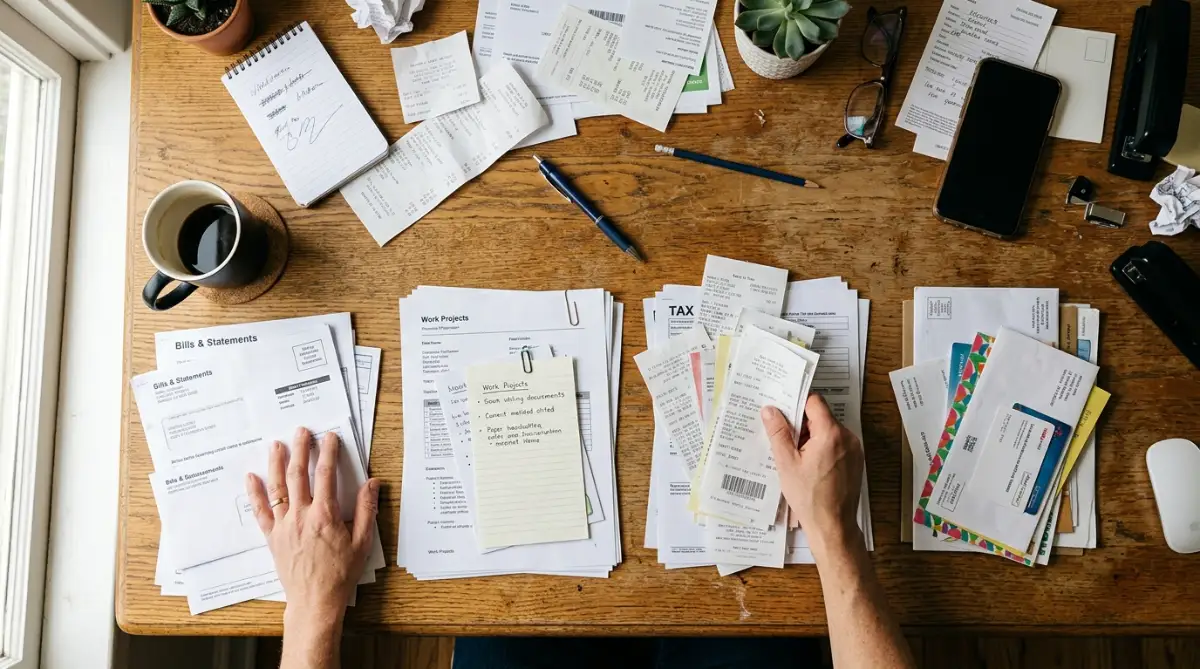
Instead, you need to build broad, highly logical buckets based on how actual tax filing works. We highly recommend using the simple Four Bucket Framework to keep things incredibly easy.
Bucket One: Important Income Records
This specific pile is for anything that proves money legally entered your bank account. It includes your standard W-2 forms from your main employer, 1099 forms from side hustles, or bank interest statements.
If a document clearly shows you getting paid by someone, it instantly goes straight into this pile.
Bucket Two: Major Wealth Deductions
This pile holds the highly valuable paperwork that will directly lower your final tax bill. Think of local property tax statements, mortgage interest letters from your bank, and heavy unexpected medical bills. These documents act like a protective shield for your money, so keep them closely guarded.
Bucket Three: Daily Expenses and Receipts
This is usually the thickest and messiest pile of the entire group. It includes your charity donation receipts, small business expense supplies, and continuing educational costs.
Do not overthink this bucket; if you bought something that might save you money on taxes, drop it in here.
Bucket Four: The Liberating Trash Pile
This is by far the most rewarding bucket of all. Many of the papers currently sitting in your gathering box are completely useless for tax purposes.
Expired grocery coupons, random ATM balance slips, and generic bank marketing letters belong directly in the paper shredder. Tossing these items away instantly makes you feel significantly lighter.
Still not sure what to keep or toss? Here is a quick cheat sheet for common paper clutter to help you decide in seconds:
When you sort your documents into just these four main areas, you drastically reduce your daily stress. Think of it exactly like sorting your laundry into whites, darks, and towels.
You do not overthink every single sock; you just toss it into the obvious, broad pile. This broad sorting method keeps your personal momentum moving rapidly forward.
You will be completely amazed at how quickly that massive gathering box empties out when you only have four simple choices to make.
The Hybrid Storage System (Bridging Physical and Digital)
Here is a hard-earned tip from my own tax season nightmare: always snap a quick photo of paper receipts on your phone the day you get them, before dropping them into your accordion folder. I learned this the hard way after losing hundreds of dollars in deductions when cheap thermal store receipts faded into blank paper before tax day arrived.
Once your papers are logically sorted, you must store them safely so they actually survive until tax day arrives. We live in a modern world that is completely half digital and half physical.
Trying to force yourself to be completely paperless is often a frustrating, failing battle for most everyday people. Instead, you should happily embrace a highly flexible hybrid storage system.
Securing Your Physical Papers:
For your physical papers, go to a local store and buy a simple, high-quality accordion folder. These specific folders are highly inexpensive, take up very little desk space, and naturally expand as you add more papers.
Label the internal plastic tabs to perfectly match the four main buckets we created in the previous step. Now, whenever a physical receipt enters your house, you simply drop it into the exact correct slot.
It takes less than five seconds to do, keeping your desk entirely clean and organized.
Mirroring Your Digital World:
For your digital PDF files, you need to deeply mirror this exact same structure. Inside your computer's main document area, create a permanent folder named "Current Tax Documents."
Inside that main folder, create small sub-folders clearly labeled "Income," "Deductions," and "Receipts." Whenever a digital bank statement arrives in your email, immediately save it directly into the matching digital folder.
This specific mirroring technique is incredibly powerful because it quickly builds lasting muscle memory. Your brain learns that whether a document is made of physical paper or digital pixels, it always follows the exact same logical path.
If the government ever audits you or you need to prove a business purchase, you know exactly where to look. You will simply check your physical accordion folder, and then quickly check your matching digital folder.
There is absolutely no more guessing, and no more frantic midnight searching through old shoe boxes. This beautiful system acts as a highly reliable safety net for your money, giving you ultimate peace of mind every single day.
Upgrading Your Strategy: Pro-Level Organization Secrets
Now that you have your physical and digital buckets completely set up, you have already won half the battle. Your basic sorting system is fully active and ready to catch incoming paperwork.
But true financial peace does not just come from a one-time cleaning session. To keep your new system running perfectly, you need to develop a few highly effective daily habits.
These expert-level secrets will make sure your desk never becomes a terrifying mountain of paper ever again. Let us look at how the most organized people maintain their financial lives with almost zero daily effort.
The Power of the "15-Minute Financial Friday"
Here is a game-changing habit that saved my sanity: I put a recurring 15-minute calendar alert on my phone every Friday at 4 PM. Taking just a few minutes before the weekend to drop loose receipts into my folder completely stopped the dreaded mountain of paper from piling up.
The absolute best way to handle your money tasks is in very small, highly predictable doses. If you wait three months to file your receipts, the job becomes deeply exhausting and intimidating.
Instead, I want you to try setting up a simple weekly maintenance habit. We call this highly effective routine the "15-Minute Financial Friday."

Building the Routine:
Pick one specific day of the week, grab a fresh cup of coffee, and sit at your desk. Set a simple timer on your phone for exactly fifteen minutes.
During this short window, take any random receipts from your pockets and drop them into your physical accordion folder. Then, open your email and drag any new digital invoices straight into your master tax folder.
Why This Tiny Habit Works:
Because you are only dealing with one week of documents, the entire process takes almost no mental energy. You never feel overwhelmed, and you actually begin to enjoy this quiet, organized moment.
When the timer rings, you completely stop working and walk away to enjoy your weekend. This simple fifteen-minute commitment completely eliminates the massive panic you usually feel every single spring.
Capturing Fading Evidence Instantly
Here is a highly frustrating reality about modern store receipts that most people completely forget. Many modern cash registers use cheap thermal paper that relies on heat to print the letters.
This specific type of ink fades away incredibly fast, especially if it sits in a warm place.
The Blank Paper Disaster:
Imagine saving an important business lunch receipt in your wallet for six entire months. When tax season finally arrives, you pull it out only to find a completely blank white strip of paper.
The government auditor will never accept a blank piece of paper as legal proof of an expense. You completely lose that valuable money-saving deduction simply because the cheap ink faded away.
Your Immediate Solution:
To actively prevent this disaster, you must treat your smartphone camera as your best financial friend. The exact second a cashier hands you a physical receipt for a major purchase, lay it flat on the counter.
Take a very clear, focused photo of the receipt before you even leave the store. Once the picture is on your phone, you instantly have a permanent digital backup that will never fade.
You can then easily email that photo directly to yourself and drop it into your digital tax folder on Friday.
Creating an Invisible Digital Safety Net
Even the most organized physical folder in the world can be destroyed by a sudden house fire or a bad roof leak. Relying entirely on a single cardboard box to protect your financial future is highly dangerous.
You absolutely must have a secure, automatic backup system for your most valuable documents.
Automating Your Peace of Mind:
You do not need to be a technology expert to set up a proper digital safety net. Simply choose a highly trusted cloud storage provider, like Google Drive or Dropbox.
Set up their free desktop application so it automatically watches your "Current Tax Documents" folder. Every single time you drop a new PDF or photo into that folder, the software instantly copies it to the internet.
The Ultimate Protection:
This invisible process happens completely in the background while you are working. If your computer suddenly crashes or your physical house floods, your financial records remain completely untouched and safe.
You can simply log into your cloud account from any other computer and immediately download all your sorted documents. This simple digital automation gives you an incredible sense of personal security and lasting peace.

The Hidden Traps: Five Costly Filing Errors to Avoid
Even with a beautiful sorting system, human nature can sometimes lead us down the wrong path. Many smart taxpayers accidentally make small mistakes throughout the year that cause massive headaches later.
If you do not know exactly what to look out for, you might accidentally ruin your own organized system. Let us carefully examine the five most common traps people fall into, and exactly how you can step right over them.
1. The Muddy Water Effect: Mixing Personal and Business Funds
This is the single most common mistake made by new freelancers and small business owners. They often use one single personal credit card to buy both their household groceries and their business supplies.
When you look at that credit card statement later, the personal and business items are completely tangled together.
The Heavy Cost of Tangled Money:
Trying to separate these expenses at the end of the year is an absolute nightmare. You will waste dozens of hours trying to remember if a specific Amazon purchase was for office paper or personal reading books.
The Simple Fix:
I learned this lesson the hard way after spending three full days trying to separate my grocery bills from my office supplies on a single bank statement. Trust me, opening a separate free checking account for my side business was the absolute best thing I ever did for my sanity. It automatically does the sorting work for me all year long, so I never have to guess what I bought.
You must immediately open a completely separate checking account and credit card dedicated entirely to your business. Never buy a personal coffee with the business card, and never buy office supplies with your personal card.
This simple physical boundary forces your expenses to stay perfectly clean and separated without any extra mental effort.
2. Trashing Asset Purchase Records Too Early
Many people mistakenly believe that all receipts are created equal. They follow generic advice telling them to throw away all paperwork after three years.
While this rule works fine for a simple utility bill, it is a massive mistake for large physical assets.
The Danger of Early Shredding:
Imagine you spend fifteen thousand dollars to completely remodel your home kitchen. That specific expense directly adds massive legal value to your property.
If you sell your house ten years from now, you will absolutely need those remodeling receipts to prove the new value and lower your final tax bill.
The Simple Fix:
Create a special, permanent physical folder clearly labeled "Long-Term Assets & Home Improvements." Place any receipts related to major home repairs, stock purchases, or property upgrades directly into this permanent safe zone.
Never throw these specific documents away until long after you have completely sold the actual asset.
3. Ignoring Digital Security and Basic Passwords
As we move more of our financial lives to computer screens, we accidentally create new security risks. Many people download highly sensitive bank statements and simply leave them sitting open on a shared family computer desktop.
These documents contain your full legal name, your home address, and highly private account numbers.
The Risk of Open Doors:
If your laptop is ever stolen from a coffee shop, a stranger instantly has complete access to your financial identity. They can easily use those downloaded tax forms to open fake credit cards in your name.
The Simple Fix:
You must always protect your main computer with a strong login password that your children or roommates do not know. Additionally, if you use a cloud storage system for your tax folder, turn on two-factor authentication immediately.
Adding just one extra layer of digital security heavily protects your family from the absolute nightmare of identity theft.
4. Waiting Until April to Ask Professional Questions
Human beings naturally want to procrastinate on things that make them feel slightly anxious. Because of this fear, most people wait until the final week of filing season to contact a tax professional.
This is the absolute worst possible time to ask a highly complex financial question.
The Accountant Rush Hour:
During the final weeks of the filing season, certified accountants are working massive overtime and are deeply stressed. They simply do not have the extra time to sit down and teach you how to properly categorize a confusing business expense.
The Simple Fix:
If you experience a major life change, like having a new baby or starting a side business, ask your accountant for advice in November. By asking your questions during their quiet off-season, you get highly detailed, thoughtful answers.
This proactive planning ensures your documents are perfectly organized exactly the way your accountant wants them long before the deadline hits.
5. Storing Physical Folders in Dangerous Locations
We talked earlier about the danger of fading thermal receipts, but overall physical storage is equally important. Many people take their beautiful, newly organized accordion folders and throw them into a damp basement or a hot attic.
They treat their important financial history just like a box of cheap holiday decorations.
The Environmental Damage:
Extreme heat completely destroys printer ink, while heavy basement moisture invites destructive mold and paper-eating insects. If you store your master tax folder in these harsh environments, it might be completely ruined when you actually need it.
The Simple Fix:
Always store your physical tax folders inside the main living area of your climate-controlled home. A simple bottom drawer in your bedroom desk or a small metal fireproof safe in your closet is absolutely perfect.
Keep your papers away from direct sunlight, heavy moisture, and extreme heat to ensure they survive for decades.
Your Journey to Ultimate Financial Peace Starts Now
You do not need to become a certified accountant to conquer tax season panic once and for all. Take control of your money today by dropping those messy desk papers into one simple box, and give yourself the calm, stress-free spring you truly deserve.
Taking complete control of your financial paperwork is truly one of the greatest gifts you can ever give yourself. We started this journey by acknowledging the heavy, exhausting anxiety that messy paper piles naturally cause.
But you now hold the exact blueprint to completely eliminate that dark cloud from your life forever. You understand the incredible power of the master inbox, the simplicity of the four-bucket sorting system, and the safety of hybrid storage.
The Real Reward of Organization:
This journey is not just about keeping the government auditors happy. It is entirely about reclaiming your lost weekend hours and lowering your daily household stress.
When you perfectly organize your financial documents, you build massive personal confidence. You finally feel like a highly capable adult who is in total command of their own hard-earned money.
Your Immediate Next Step:
Do not simply read these words and go back to your stressful daily routine. I want you to take one tiny, positive action the moment you finish reading this sentence. Go grab a simple cardboard box, walk over to your messy desk, and just start tossing those loose papers inside. You do not have to solve the whole puzzle today; simply gather the scattered pieces into one place.
You completely deserve to experience a calm, boring, and wonderfully stress-free tax season this year. Take a deep breath, trust your new system, and start building your organized financial future right now.
Disclaimer: The information provided in this article is for educational and informational purposes only and does not constitute professional tax, legal, or financial advice. Tax laws, deduction eligibility, and filing requirements vary based on individual circumstances and local jurisdictions. Always consult with a certified public accountant (CPA) or a qualified tax professional regarding your specific situation before making financial decisions.