
The Silent Anxiety of Waiting for Payday
I still remember staring at my bank app, watching my balance drop to single digits. My next paycheck was five days away, and I felt a heavy, painful knot in my stomach. Every time I went to the grocery store, I mentally calculated every single item before reaching the checkout line. I tried using fancy budgeting apps and complex spreadsheets, but I just felt more overwhelmed and confused. My financial life felt like a leaky bucket, and I had absolutely no idea how to plug the hidden holes.
This is the harsh reality for so many of us today. We work incredibly hard all month long, yet we barely have anything to show for it when the bills are paid. The mental toll this takes on a person is heavy. You wake up worrying about money, and you go to sleep stressing over unexpected expenses.
Living this way means you are constantly in survival mode. If your car breaks down or a medical emergency happens, your entire financial world falls apart. You are forced to use high-interest credit cards just to buy basic groceries. This constant juggling act destroys your peace of mind and makes it impossible to plan for a better future.
The worst part is the silent shame that comes with being broke. You start declining invitations to dinner or skipping family events because you simply cannot afford to participate. You tell your friends you are busy, but the truth is you are terrified of spending an extra ten dollars.
We often blame ourselves for this situation, thinking we are just bad with money. We believe that if we just made a little bit more money, all our problems would magically disappear. But the truth is, a higher income without a proper plan will just lead to bigger expenses.
So, how do we actually break out of this exhausting cycle? How can we manage the small amount of money we do have so it works for us, rather than against us?

Uncovering the Myths Keeping You Broke
Before we can fix your money problems, we need to address the lies we tell ourselves. Many of us have a deeply misunderstood idea of what managing money actually looks like. We assume it means cutting out all joy, never drinking coffee, and living a miserable life.
Let me share a quick reality check. Budgeting is not about restricting your freedom; it is about giving yourself permission to spend without guilt. When you know exactly where your money is going, you stop worrying about whether you can afford something.
Let's look at a common comparison between what people think budgeting is, and what it actually should be in real life.
When you are living paycheck to paycheck, the fantasy version of managing money will only set you up for failure. You cannot aim for perfection. You have to aim for progress.
Finding Your Financial Baseline
The very first thing you must do is figure out your actual survival number. This is not the amount of money you want to spend; this is the bare minimum you need to keep a roof over your head and stay alive.
We call this protecting your "Four Walls". These include your food, basic housing and utilities, essential transportation, and basic clothing. If you do not have enough money to cover anything else, these four categories must be funded first.
Write down exactly what your rent or mortgage costs. Add the average cost of your electricity and water bills. Calculate the exact amount you need for gas or public transportation to get to work. Do not include eating out at restaurants in this number. This is strictly about buying basic groceries to keep you fed.
Watch This Quick Video to Understand Your Baseline Better:
If you are struggling to separate your needs from your wants, this quick breakdown will completely change the way you view your daily spending habits.
[Insert YouTube Video Link Here]
Once you have this survival number, subtract it from your total monthly take-home pay. Whatever is left over is the money you can use to pay off debt, save, or spend on lifestyle choices. If your survival number is higher than your income, you have a massive emergency on your hands. You either need a second job immediately, or you must drastically cut a major expense like moving to a cheaper apartment.
Tracking the Invisible Money Leaks
Here is a tough pill to swallow. You probably make enough money to survive, but your invisible spending habits are draining your bank account. These are the small, unnoticeable purchases you make every single day that add up to hundreds of dollars by the end of the month.
I am talking about the random subscription boxes, the extra streaming services you never watch, and the quick convenience store runs for a soda. Because these purchases are so small, your brain does not register them as a threat to your financial security.
To stop this, you have to become painfully aware of your spending. For the next thirty days, I want you to write down every single thing you buy. Do not use an automated app that connects to your bank. I want you to physically write it down on a piece of paper or type it into a simple note on your phone.
When you force yourself to manually record a purchase, you feel the emotional weight of that transaction. You will naturally start spending less simply because you do not want to write it down again.
My Personal Wake-Up Call
I used to think tracking pennies would make me miserable and steal all my free time. But my biggest realization was that ignoring my small daily habits was actually what kept me broke. Once I started writing down every single coffee run for just one week, my entire perspective shifted, and I found an extra hundred dollars hiding in my routine.
Implementing the Zero-Based Strategy
Now that you know what you need to survive and where your extra money is leaking, it is time to give every single dollar a specific job. This method is incredibly powerful for people living on a tight income.
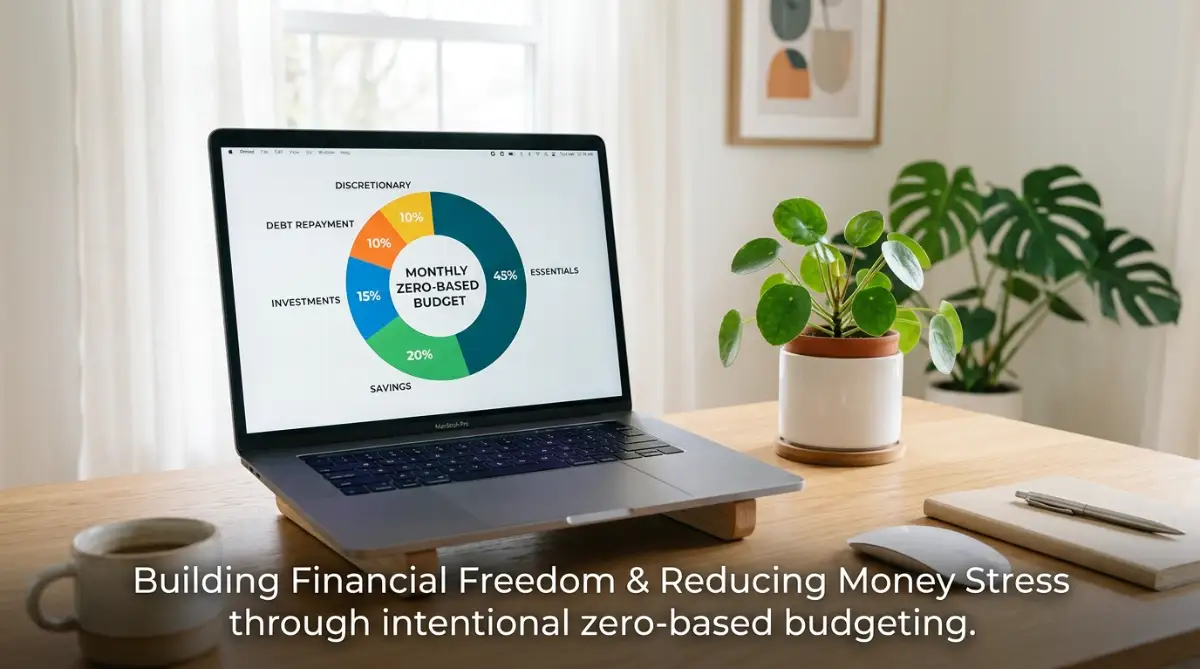
The concept is beautifully simple. Your income minus your expenses should always equal zero. If you make two thousand dollars a month, you must assign exactly two thousand dollars to specific categories before the month even begins.
If you have fifty dollars left over after paying bills and buying groceries, you do not just leave it floating in your checking account. Money left without a purpose will always be wasted on something pointless. You must assign that fifty dollars to an emergency fund, a debt payment, or even a specific fun category.
By telling your money exactly where to go, you take back control. You are no longer reacting to your life; you are actively designing it.
Dealing with Irregular Incomes
But what if your paychecks are not the same every month? What if you are a freelancer, a tipped worker, or someone whose hours change constantly?
This is where most traditional financial advice fails people. If you do not know how much you are going to make, you cannot easily plan your categories. The solution is to budget based on your lowest possible earning month.
Look back at your last six months of income. Find the month where you made the least amount of money. You must build your entire base budget on that lowest number.
If you happen to make more money than that base number in a good month, that is extra profit. You can then throw that extra cash directly into savings or use it to crush your credit card debt faster.
Expecting the Unexpected
One of the main reasons people quit trying to manage their money is because life happens. You finally create a perfect plan, and three days later, your child gets sick and needs medicine. You feel defeated and throw the whole plan in the trash.
You have to accept that unexpected things are completely normal. They are not emergencies; they are just life. Cars need repairs, clothes get torn, and school trips happen.
To fix this, you need to create a specific category in your plan called the "Buffer" or "Miscellaneous" fund. Even if you can only put twenty dollars a month into this category, do it. When the inevitable random expense pops up, you won't have to ruin your entire plan. You just pull the money from your buffer category.
Having this tiny safety net provides a massive psychological boost. It proves to you that you are capable of handling small bumps in the road without falling back into debt.
The Power of Cash Envelopes
If you are someone who constantly overspends with a debit card, you might need a physical barrier to stop you. Swiping a piece of plastic does not trigger any emotional response in your brain. Handing over crisp physical bills, however, physically hurts a little bit.
Take the categories you struggle with the most—usually groceries, eating out, and entertainment. Go to the bank and withdraw the exact amount of cash you assigned to these categories. Put that cash into labeled envelopes.
When you go to the grocery store, you only take the grocery envelope. If the cashier tells you your total is one hundred and ten dollars, but you only have one hundred dollars in your envelope, you have to put something back. There is no overdrafting. There is no borrowing from another category.
This system forces you to be highly disciplined. It is extremely difficult at first, but it is one of the fastest ways to completely change your spending behavior. You will suddenly become very good at hunting for discounts and buying generic brands when you realize your cash is running out.
Building a stable financial life when you have very little money is undeniably hard work. It requires patience, honesty, and a willingness to face your current reality head-on. But the peace of mind that comes from knowing exactly where you stand is worth every ounce of effort. You can break this cycle. You just have to take that first brave step today.
Moving Beyond Survival: Mastering Your Money Game
Once you stop the immediate financial bleeding, you need a system to keep your head above water permanently. Surviving on a tight income requires a shift in how you view every single transaction. You cannot just track your spending and hope for the best.
You have to actively manipulate your bills and your habits so they work for you. Many people think building wealth requires a massive salary, but it actually starts with extreme resourcefulness. Let’s look at some advanced strategies that can fundamentally change your relationship with your bank account.
The Magic of the Half-Payment Method
One of the biggest reasons people fail at managing their money is the timing of their bills. If your rent is due on the first of the month, that single paycheck gets completely wiped out. This leaves you scrambling to buy groceries for the next two weeks.
Instead of letting one paycheck take the massive hit, you can use the half-payment strategy. You simply take half the amount of your biggest bills out of your first paycheck and set it aside. Then, you take the remaining half out of your second paycheck.
For example, if your car payment is four hundred dollars, you move two hundred dollars from your first check into a separate checking account. When the bill is actually due, you already have half the money waiting there. This smooths out your cash flow and stops the panic of massive bill weeks.
Automating Your Good Intentions
Human willpower is extremely limited, especially when you are stressed about making ends meet. If you manually transfer money into your savings account every month, you will eventually talk yourself out of it. You might decide you need that twenty dollars for a takeout dinner because you had a hard day.
To beat this psychological trap, you must remove yourself from the equation entirely. Set up an automatic transfer with your bank to move a tiny amount of money the exact morning you get paid. Even if it is just ten dollars a paycheck, that money disappears before you even see it.
According to research from the National Endowment for Financial Education on building healthy habits, removing the decision-making process is the most effective way to build long-term financial security. When you automate your savings, you never feel the pain of parting with the money. It just slowly grows in the background while you live your life.
Fighting the Interest Rate Monster
When your income is low, paying high interest on loans feels like carrying a heavy backpack up a steep hill. Every dollar you send to the bank in interest is a dollar stolen from your own family. You must aggressively attack your highest interest rates first.
Do not just accept the interest rate your bank gave you on day one. You can actually call your lenders and negotiate better terms, especially if you have a history of on-time payments. Learning how to force your bank to lower your personal loan rates can literally save you hundreds of dollars over the year.
If they refuse to lower your rate, look into transferring the balance to a zero-percent interest credit card. Just be extremely careful to pay it off before the promotional period ends. Your goal is to stop paying fees for the privilege of borrowing money.
Gamifying Your Grocery Trips
Food is usually the one category where you have the most control over your daily spending. However, walking into a grocery store with a hungry stomach and no list is a recipe for a financial disaster. Grocery stores are perfectly designed to make you spend more money on impulse items.
To beat them at their own game, try exclusively using online grocery pickup services. When you order your groceries on an app, you can see the running total right on your screen. If you go over your limit, you simply remove an item from your digital cart before checking out.
There is no embarrassment of asking a cashier to put something back. You avoid the candy aisle entirely and only buy exactly what you planned. This one simple shift can easily save a family fifty to a hundred dollars a month.
Sinking Funds for Forgotten Expenses
Christmas happens on the exact same day every single year, yet millions of people go into debt every December. Car registrations, back-to-school supplies, and annual subscriptions are not emergencies. They are highly predictable expenses that we simply choose to ignore.
You fix this by setting up "sinking funds" for these specific events. If you know you need three hundred dollars for holiday gifts in six months, you divide that number by six. You now know you need to save exactly fifty dollars a month starting today.
If you are using the beginner's blueprint to zero-based budgeting, you just create a specific line item for these upcoming events. By the time the event arrives, the cash is sitting right there waiting for you. The stress of the holidays completely disappears.
Traps That Keep You Stuck in the Paycheck Cycle
Even with the best intentions, it is incredibly easy to slip back into old, comfortable habits. Managing a tight income requires constant vigilance, and there are hidden traps everywhere. Many of these mistakes feel completely harmless in the moment, but they slowly poison your long-term progress.
Let's look at the emotional and tactical errors that quickly derail people who are trying to get ahead. Understanding these traps is just as important as knowing how to save money.
The Danger of Extreme Deprivation
When people first get serious about their money, they often go on an extreme financial diet. They cut out all fun, stop eating out entirely, and refuse to spend a single penny on entertainment. While this looks great on paper, it is a psychological disaster waiting to happen.
Just like an extreme food diet, extreme budgeting leads to intense feelings of deprivation. Eventually, your willpower breaks, and you end up "binge spending" on a massive, unnecessary purchase. You might successfully avoid a five-dollar coffee for three weeks, only to blow two hundred dollars on clothes you do not need because you feel miserable.
You must intentionally plan for a little bit of fun in your life. Give yourself a small amount of "blow money" every single paycheck. When you know you are allowed to buy a treat without guilt, the urge to sabotage your whole plan completely fades away.
Falling for the "Easy Fix" Illusion
When you are desperately trying to make ends meet, the promise of quick cash is incredibly tempting. Late-night commercials and shady websites constantly promote easy ways to wipe away your debt or fix your financial history overnight. These offers prey on your stress and desperation.
The reality is that payday loans and quick-fix credit repair companies will only drag you deeper into the mud. The Consumer Financial Protection Bureau (CFPB) clearly warns about payday loan traps, explaining how their massive interest rates are designed to keep you borrowing forever. You end up paying back triple what you originally borrowed.
If your credit history is hurting your ability to rent an apartment or get a decent job, do not pay a scammer to fix it. There are completely legal and free ways to rebuild your reputation. You can easily learn how to fix a damaged credit score without falling for scams by disputing errors yourself and paying your minimums on time.
Ignoring the Hidden Subscription Bleed
We live in a world where almost every service has become a monthly fee. You sign up for a free trial of a streaming service, an editing app, or a delivery program, and you completely forget about it. These small charges quietly eat away at your bank account while you sleep.
Ten dollars here and fifteen dollars there might not seem like a big deal. However, when you add up five different unused subscriptions, you are throwing away nearly a thousand dollars a year. That is money that could have paid for a car repair or funded a small family vacation.
You need to sit down with your last three bank statements and highlight every single recurring charge. If you have not used the service in the last thirty days, cancel it immediately. You can always sign back up later if you truly miss it, but right now, you need that cash.
Using Credit Cards as an Emergency Fund
It is completely normal to feel a false sense of security when you have a high credit limit. You might think that if the engine falls out of your car, your credit card will save the day. This is one of the most dangerous lies you can tell yourself.
Credit cards are not a safety net; they are a highly expensive trap door. If you put a thousand-dollar emergency on a card and only pay the minimum balance, it will take you years to pay it off. The interest charges will eventually cost you more than the original emergency itself.
The Federal Trade Commission strongly advises against relying on credit for emergencies, as it quickly spirals into unmanageable debt. Your only true safety net is cash sitting in a bank account that you can access immediately. Prioritize building a small cash reserve before you focus on anything else.
Your Roadmap to Permanent Financial Peace
Breaking out of the paycheck-to-paycheck cycle is rarely easy, but it is entirely possible. It does not require a fancy degree or a massive lottery win. It simply requires a stubborn commitment to being honest about your current situation.
You have learned how to find your survival baseline and track your invisible spending habits. You now understand the power of giving every single dollar a job and avoiding the psychological traps of extreme deprivation. These are not just theories; they are the exact steps millions of people have used to take back their freedom.
Take this journey one small step at a time. Do not try to fix your entire financial life by tomorrow morning. Focus on tracking your money today, and then focus on making a solid plan for your next paycheck.
For more practical tools and everyday advice on managing your income, you can always explore our main resource hub at Naxus Journal. We are constantly sharing real-world strategies to help regular people protect their hard-earned money. Keep learning, keep adjusting, and never let a bad month discourage you.
I know exactly how suffocating it feels to worry about every single dollar. My own journey started with a messy notebook and a lot of frustration, but choosing to finally face my numbers completely changed my life. You have the power to write a completely new story for your future, and it all starts with the very next choice you make.
Real Questions From People Managing Tight Incomes
How do I budget when my income changes every single week?
When your income is unpredictable, you must base your plan on your absolute worst-performing month. Cover your basic survival needs with that low number first. Any extra money you make on good weeks should immediately go toward your debt or your emergency cash fund.
What should I do if my expenses are higher than my income?
You have a mathematical emergency that requires immediate action. You cannot budget your way out of a severe income shortage. You must drastically cut a major expense, like moving to a cheaper living situation, or immediately pick up a side job to increase your cash flow.
Is it really worth it to save five dollars a week?
Yes, absolutely. Saving small amounts is not about getting rich quickly; it is about building the psychological habit of keeping money. Once your brain gets used to saving five dollars, it becomes much easier to save fifty dollars when your income finally increases.
Should I pay off debt or build an emergency fund first?
You need a small starter emergency fund before you attack your debt aggressively. If you throw all your money at credit cards but have zero cash, you will just use the cards again when a tire pops. Save up a small cash buffer first, then attack the high-interest loans.
How do I stop myself from panic buying on payday?
The best way to stop the payday spending spree is to have your bills paid automatically the same day your check clears. If you move your money into savings and bill accounts before you wake up, the temptation is gone. You simply cannot spend cash that is no longer sitting in your main account.
Disclaimer: The information provided in this blog post is for educational and informational purposes only and does not constitute professional financial advice. Every individual's financial situation is unique. Please consult with a certified financial planner or advisor before making any major financial decisions, taking out loans, or aggressively altering your debt repayment strategy. We are not responsible for any financial losses or damages resulting from the use of this information.