
Staring at a Flatlined Traffic Dashboard: My Early Blogging Nightmare
I still remember the exact moment my heart sank while staring at my Google Analytics dashboard. I had just spent three exhausting months writing highly researched, deeply helpful articles for my brand-new blog. I decided to host this blog on a subdomain because a popular tech guru on a forum said it was the easiest way to keep things organized.
I thought I was making a smart, technical decision for my website. But week after week, my organic traffic graph looked like a completely flat line. It felt incredibly frustrating to see competitors with much lower-quality content outranking me on the first page of search results.
My main website was getting decent traffic, but my blog—sitting quietly on that separate subdomain—was treated like a complete stranger by search engines. I poured my energy into sharing posts on social media, but without search engine love, it felt like screaming into an empty room.
This simple structural choice slowly destroyed my motivation and peace of mind. I started doubting my writing skills, wondering if I was just not good enough to succeed in this industry. Everyday bloggers face this exact same silent struggle, losing sleep over technical setups they barely understand.
We write to be heard, to share knowledge, and hopefully, to earn a living through avenues like Google AdSense. But when a technical hurdle like a subdomain blocks that organic growth, it drains your energy and makes you want to quit entirely.
If you are currently watching your blog struggle to gain traction on a subdomain, I want you to know that you are not alone. I have been in those exact same shoes, and there is a very logical reason why this happens.
The Great Divide: How Search Engines Actually View Your Setup
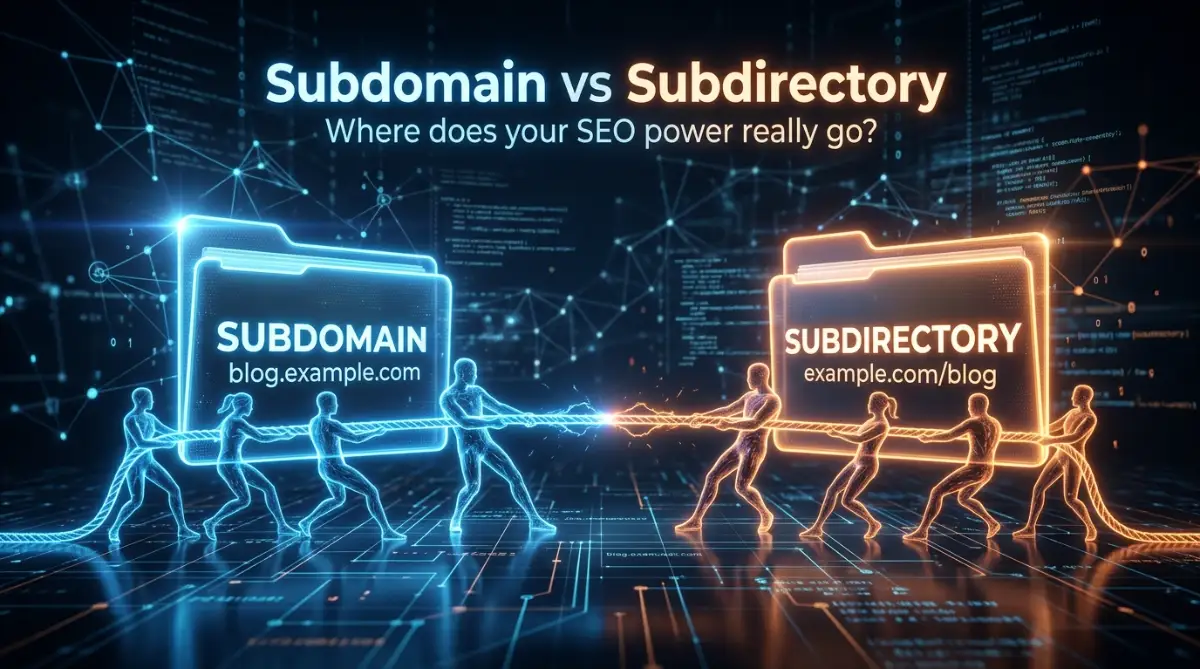
When you start a blog, you usually face a massive crossroad regarding where to put it. You can either place it on a subdirectory, like yourwebsite.com/blog, or you can isolate it on a subdomain, like blog.yourwebsite.com. To a normal human eye, these two URLs look almost identical.
However, search engine bots do not read websites the same way human beings do. To them, the way you structure your URLs tells a massive story about how your brand is organized. A subdirectory acts like a brand-new room you just built inside your existing house.
When guests visit, they immediately know this new room belongs to your main house. But a subdomain is treated completely differently by web crawlers. It is essentially viewed as a separate, detached guest house sitting entirely off your main property.
Search engines will often see your subdomain as an independent entity with its own distinct identity. This means all the trust, authority, and ranking power your main domain has built up over the months will not automatically flow into your new blog.
You are essentially forcing your blog to start from absolute scratch. This is why you can publish an amazing article on a subdomain, and search engines might completely ignore it for weeks. They simply do not trust this "new" entity yet.
Here is a quick video that perfectly breaks down the technical differences between these two setups. Watch this before we move deeper into the SEO consequences!
The Link Equity Trap: Why Your Hard Work Goes Unnoticed
Let's talk about the absolute most important currency in search engine optimization: backlinks. Whenever another reputable website links to your content, they are essentially casting a vote of confidence for you. This vote passes down something called link equity, which helps push your pages higher in search results.
If you host your blog on a subdirectory, every single backlink pointing to your blog articles helps strengthen your main website. It acts as a massive team effort where every player contributes to the same exact score. The authority flows upwards to your homepage, making your entire brand much stronger.
But when you choose a subdomain, this beautiful teamwork completely falls apart. If a huge publication links to an article on your subdomain, the link equity stays trapped on that subdomain.
Your main website gets almost zero direct benefit from that hard-earned backlink. You end up dividing your SEO power into two separate buckets instead of pooling it into one massive, powerful resource.
I actually learned this the hard way during my second year of managing content sites. I realized my main domain had an authority score of 45, but my subdomain blog was stuck at a miserable 12. My pro tip here is to always keep your content under one single roof unless you are a massive enterprise; dividing your link-building efforts will only double your workload and halve your results.
This divided effort is exactly why many new bloggers struggle to get Google AdSense approval on their subdomains. Ad networks want to see consistent, high-quality organic traffic flowing through a trusted domain. When your SEO power is split, getting that initial burst of trusted traffic becomes incredibly difficult.
Crawl Budget Confusion and Indexing Nightmares
Search engines have limited resources, and they cannot spend all day scanning every single page on the internet. They assign a specific "crawl budget" to your website, which dictates how many pages they will check per day.
When you keep your blog on a standard subdirectory, search bots flow naturally from your homepage directly to your blog posts. They follow your internal links seamlessly, discovering your new content almost instantly.
A subdomain disrupts this natural flow of traffic for these automated bots. Because it is viewed as a separate entity, search engines have to allocate a completely separate crawl budget just for your blog.
If your main website is not incredibly popular, search engines might simply decide your subdomain is not worth their immediate time. You might hit publish on a beautifully written 2000-word guide, only to find it remains unindexed for weeks.
This indexing delay completely kills your momentum. You cannot rank for trendy, time-sensitive topics if search bots take three weeks just to notice your page exists.
The Psychological Impact on User Trust
We spend a lot of time talking about robots and algorithms, but we often forget about the actual human beings clicking our links. User experience is a massive ranking factor in modern search algorithms. If people do not trust your link, they will not click it, which destroys your click-through rate (CTR).
When an everyday internet user sees a URL like clothingstore.com/blog, it instantly feels safe and cohesive. It clearly indicates they are reading an official publication from the main brand they already trust.
However, seeing blog.clothingstore.com can sometimes cause a tiny moment of hesitation. For less tech-savvy users, extra words at the front of a URL can look a bit strange or even slightly spammy.
If users hesitate and skip your link in the search results, search algorithms immediately take notice. The algorithm assumes your page is not relevant or trustworthy, and they push you further down the rankings.
It is a vicious cycle where a slight lack of user trust directly impacts your organic traffic numbers. Keeping a clean, simple, and recognizable URL structure is one of the easiest ways to secure user confidence.
Myth vs Reality: Breaking Down Subdomain SEO
There is so much conflicting information out there about website architecture. I want to clear up the noise by comparing what people say versus what actually happens in the real world of search optimization.
Looking at this reality, it becomes very obvious why relying on a separate subdomain often leads to endless frustration. It is not that you cannot rank a subdomain; you absolutely can. But you are essentially choosing to run a marathon while wearing a heavy backpack.
Why make the journey to page one harder than it already needs to be? Search optimization is already highly competitive without adding unnecessary technical roadblocks to your path.
The Exception to the Rule: When Does It Actually Make Sense?
Now, to be completely fair and objective, subdomains are not inherently evil. There are a few highly specific situations where using one is actually a smart business decision.
If your blog serves a completely different audience or targets a completely different geographic region, a separation might be necessary. For example, large international companies often use setups like uk.brand.com to separate their language bases.
Another valid reason is if your blog requires an entirely different server infrastructure. Sometimes, a company's main app is built on a highly complex, custom-coded framework that cannot support a simple blog. In those cases, installing WordPress on a subdomain is a simple technical workaround.
But notice how these examples only apply to massive corporations or highly complex technical setups? For 99% of regular content creators, affiliate marketers, and AdSense publishers, these exceptions do not apply.
If your main goal is simply to publish helpful information and drive organic readers to your words, simplicity is your best friend. Sticking to a standard folder structure keeps all your hard-earned SEO power completely centralized.
The Migration Reality: Fixing the Architecture Mistake
If you are reading this and realizing your blog is currently stuck on a subdomain, do not panic. You can fix this issue, though it requires a bit of careful technical planning.
Moving your content from a subdomain to a subdirectory is called a site migration. It involves physically moving your blog files and setting up proper permanent redirects for your old URLs.
When you set up 301 redirects, you are officially telling search engines that your content has a new permanent home. This process carefully passes the SEO value from your old subdomain directly into your main website.
I have personally helped several bloggers execute this exact migration. Almost every single time, they experienced a noticeable bump in their organic traffic within just a few weeks.
Suddenly, their blog was soaking up the authority of their main website, and their unindexed pages finally saw the light of day. It is a highly rewarding process that instantly makes all your future writing efforts much more effective.
Centralizing Your Content for Long-Term Success
At the end of the day, organic traffic is all about proving your authority to both users and algorithms. Every article you write, every backlink you earn, and every social share you get should work toward building one massive, unified brand.
Scattering your content across different subdomains dilutes your brand identity. It forces you to maintain multiple properties and splits your marketing efforts right down the middle.
By keeping your blog in a simple subdirectory, you create a powerful, centralized hub of information. Search engines love websites that offer deep, comprehensive value all in one single, easily crawlable place.
This simple structural choice sets the foundation for easier AdSense approvals, faster indexing, and a much smoother journey to the first page of search results. Keep your architecture simple, focus entirely on creating highly helpful content, and let your unified domain authority do the heavy liftin