
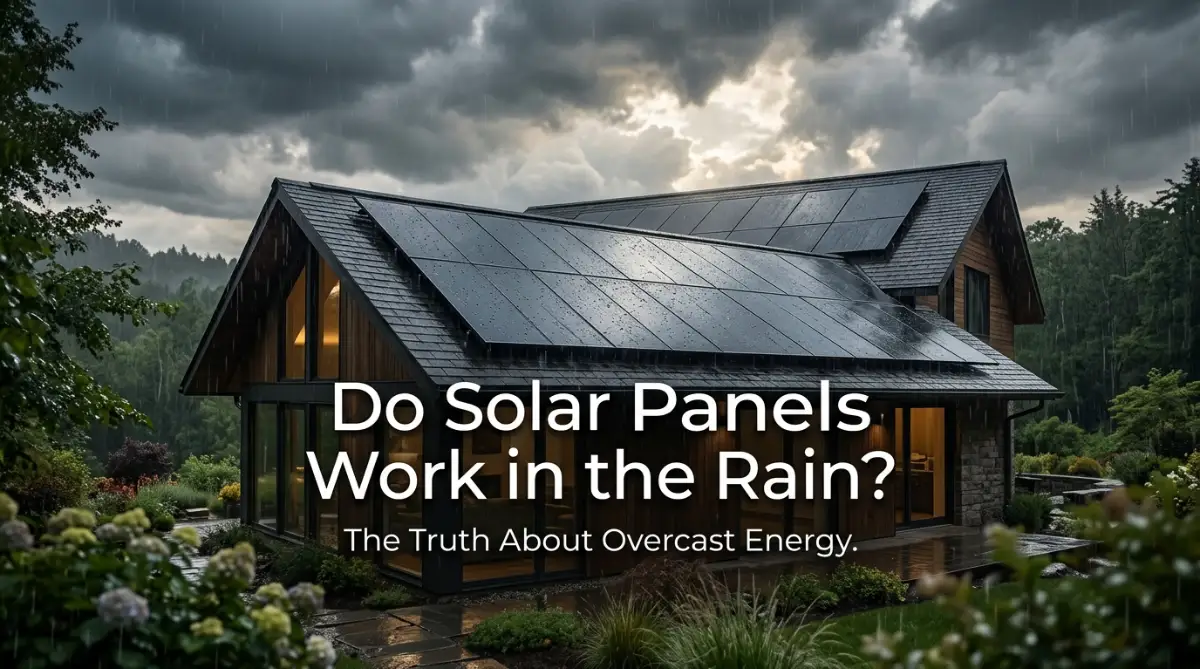
Your rooftop panels aren't dead just because the sky turned charcoal gray.
That dark downpour outside looks like an energy killer. It isn't. Photons still slice straight through storm clouds, and your inverter knows it.
Here's how much power you're actually pulling right now—and why rain might save you cash.
Quick Summary:
-
The 10–25% Baseline: Even during an aggressive thunderstorm, panels keep pulling diffused UV photons. They don't shut down.
-
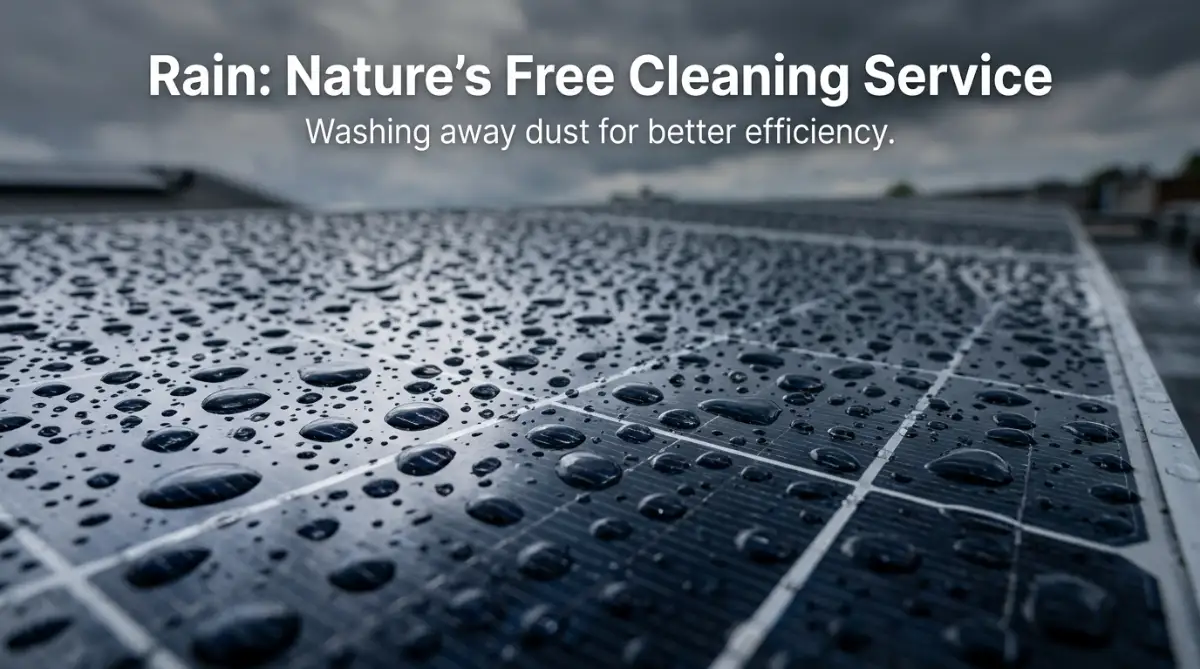
Nature's Free Scrub: Rainstorms blast away baked-in pollen, soot, and bird droppings that quietly steal up to 15% of your sunny-day output.
-
Microinverters Win: Systems using panel-level optimizers beat string inverters on gloomy days because one shaded module won't bottleneck the whole roof.
-
Smart Shifting: Delaying your dryer or EV charge until midday ambient light peaks keeps you completely off the expensive grid.
Staring at Gray Skies: The Anxiety of a Solar Owner
I remember sitting at my kitchen table, nursing a hot cup of coffee, and staring out the window at a deeply gloomy, overcast sky. The rain was coming down in thick sheets, turning my entire neighborhood into a dark, watery mess.
Just a few weeks earlier, I had spent a massive chunk of my savings installing a beautiful, shiny solar energy system on my roof. The salesperson promised me incredible energy savings and complete peace of mind.
But looking up at those thick black clouds, my stomach tied itself into heavy knots. I honestly felt a sudden rush of panic creeping up my neck.
I grabbed my smartphone and immediately opened my solar monitoring app, fully expecting to see a big, fat zero on the production screen. I thought I had made a terrible financial mistake.
If there is no visible sunshine, how on earth could these expensive glass rectangles generate any electricity for my home?
This is a terrifying feeling that almost every new solar owner experiences at least once. We are taught from a young age that solar power needs bright, blinding sunshine to do its job.
When the sky turns gray and the rain starts pouring, the natural assumption is that our expensive energy system simply goes to sleep. We start stressing out about our next electric bill.
You find yourself obsessively checking the weather forecast, praying for clear skies just so you can run your washing machine without feeling guilty. The heavy burden of not knowing exactly how your system performs under bad weather can make everyday living incredibly stressful.
But what if I told you that this panic is largely based on a massive misunderstanding of how light actually works?
Breaking Down the Clouds: What Actually Happens Up There?
To really solve this headache, we need to look at exactly how solar technology captures energy from the sky. It is completely natural to think that heat and direct sunlight are the main ingredients for electricity.
However, your panels do not actually care about the heat of the sun. They only care about the tiny particles of light called photons.
The Sunburn Analogy You Need to Remember
Think about the last time you went to the beach on a cloudy day. You probably did not bother wearing sunscreen because the sun was hiding behind a thick layer of clouds.
Yet, when you came home, you looked in the mirror and noticed your shoulders were completely bright red and sunburned. How did that happen without direct sunshine?
The answer is ultraviolet (UV) light and ambient light rays. These powerful light particles easily push through thick clouds, fog, and rain to reach the surface of the earth.
Your solar setup works in the exact same way. Even when you cannot see the actual shape of the sun in the sky, those invisible photons are still raining down on your roof.
Myth vs. Reality: The Low-Light Energy Trap
There are so many rumors floating around the internet about solar power and bad weather. Let us clear up some of the biggest misunderstandings right now.
| Common Myth | The Real Fact | Practical Takeaway |
| Solar panels completely shut down when it rains. | Panels never shut down during daylight hours. They keep generating power at around 10% to 25% of their normal capacity using diffused UV light. | You're still pulling free electricity even under dark storm clouds. |
| Heavy rain damages the glass surface. | High-grade modules undergo testing against extreme hail and wind. Normal rainfall won't harm the tempered glass at all. | Rain actually cleans away baked-on dust and boosts post-storm output. |
| You can't run heavy appliances on cloudy days. | Ambient light paired with your grid connection or home battery storage easily covers baseline refrigerator and cooling loads. | Stagger your appliance usage across midday to stay off grid pow |
Why Rain Might Actually Be Your Secret Weapon
Here is an interesting fact that most people completely ignore when they complain about bad weather. Rain is essentially nature's free maintenance service for your roof.
During long, dry, and sunny periods, your panels slowly collect a thick layer of dirt, pollen, bird droppings, and industrial dust. This nasty buildup blocks the sunlight from reaching the sensitive energy cells hidden under the glass.
A heavy layer of dust can easily drop your overall energy production by 5% to 15% over a few months. While a downpour flushes away loose surface dust, heavy grime and mineral deposits still need manual care, which is why knowing how to safely clean rooftop solar panels prevents permanent micro-scratches on factory anti-reflective coatings.
Once the storm passes and the clouds finally break, your freshly washed system will absorb sunlight much faster and generate significantly more power than it did the previous week. So, instead of being angry at the rain, you should actually view it as an automatic cleaning cycle that boosts your future savings.
A Quick Look: Energy Output Across Different Weather Conditions
To help you understand exactly what to expect, I have put together a simple breakdown of how different skies affect your daily power generation. This is based on real-world averages.