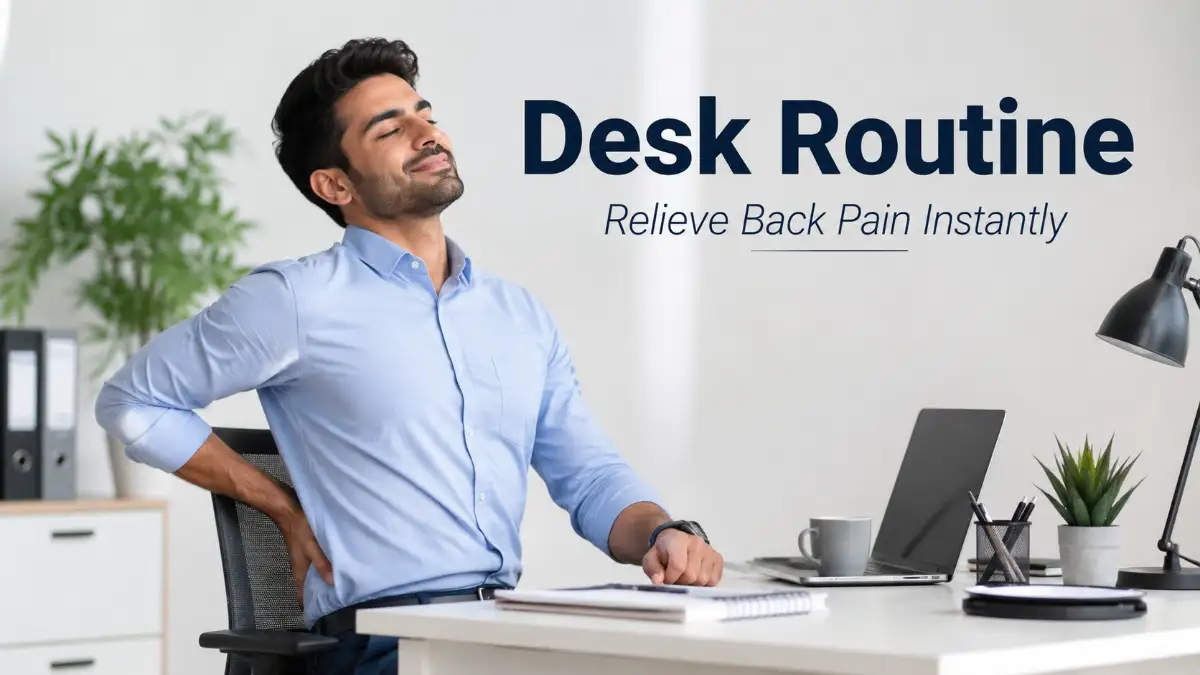
The Silent Struggle of Sitting All Day
I still remember staring blankly at my computer screen, feeling a sharp ache slowly creeping up my spine. My lower back felt like it was locked tightly in a heavy, invisible vice. I honestly used to think this constant aching was just a normal part of having a desk job. Every single time I tried to stand up after a long meeting, I had to awkwardly lean on the edge of my desk for support. The pain was completely ruining my daily focus and making me feel exhausted before the day even ended. I knew I could not keep living with this heavy physical burden, which is why I set out to find a real, practical solution.
Most of us spend hours glued to our chairs without realizing the massive toll it takes on our bodies. Your lower back ends up absorbing all the pressure of a poorly supported upper body. Over time, this daily habit creates a stiff, painful sensation that makes even simple tasks feel impossible.
People everywhere are silently dealing with this frustrating discomfort every single day. You might find yourself shifting constantly in your seat, trying to find just one comfortable position to read an email. This continuous pain slowly drains your mental energy and leaves you feeling completely burned out.
It becomes incredibly hard to enjoy your evenings with family or friends when your body feels broken. You might even find yourself skipping fun activities just because you are afraid of triggering another painful muscle spasm. The emotional weight of this physical problem is often ignored, but it is deeply real.
We often believe that to feel better, we need expensive massages, complicated medical treatments, or hours at the gym. However, the actual root cause is hiding in plain sight right at your workstation. By making a few smart adjustments, you can completely change how your body feels during the day.

Unlocking a Pain-Free Workday: The Core Foundations
To truly fix this issue, we need to understand exactly what happens to our muscles when we sit for hours. Think of your spine like a tall stack of blocks. When those blocks are perfectly stacked, they easily support each other without any extra effort.
But when you lean forward to stare at a screen, you push the top blocks out of alignment. Your lower back muscles are then forced to work overtime just to keep you from falling over. This constant, unnatural pulling is exactly what causes that deep, burning ache you feel by mid-afternoon.
Why Typical Solutions Often Fail
We often hear well-meaning advice telling us to simply "sit up straight." The truth is, forcing yourself into an unnaturally stiff position is incredibly exhausting. Your body is just not designed to remain completely frozen like a statue for eight hours straight.
When you try to maintain a rigidly straight back, your muscles actually become tighter and more stressed. Instead of holding a perfect pose, the secret is finding healthy ways to keep your body moving.
Step 1: Resetting Your Daily Foundation
Before we jump into any physical movements, we must first look at the chair you use every day. Your chair is the main foundation that supports your entire body weight. If your foundation is weak or incorrectly adjusted, no amount of stretching will offer a permanent fix.
Start by adjusting your seat height so that both of your feet rest completely flat on the floor. If your legs are dangling or your knees are pushed up too high, your pelvis tilts backward and puts immense pressure on your spine. Your knees should ideally be at a simple 90-degree angle.
Next, check the natural curve of your lower back, known as the lumbar region. Your chair should gently press against this curve to support it. If your chair lacks this feature, simply grab a small rolled-up towel and place it right behind your lower back.
Step 2: The "Invisible" Desk Movements
Now that your foundation is properly set, let us introduce some gentle, barely noticeable movements. You do not need to roll out a yoga mat in the middle of your office to get meaningful relief. These simple shifts act like small drops of water for a dry sponge, bringing life back to stiff muscles.
The first movement is the seated pelvic tilt. While sitting up naturally, gently rock your hips forward to create a slight arch in your lower back. Hold this mild arch for three seconds, and then slowly rock your hips backward to round your spine.
Do this gentle rocking motion five to ten times whenever you feel stiffness creeping in. This highly effective movement brings fresh blood flow directly to the spinal discs without anyone around you even noticing.
Step 3: Unlocking the Shoulders to Save the Back
It might sound strange, but your shoulder positioning heavily impacts your lower back. When your shoulders slump forward, your chest muscles tighten, and your spine has to overcompensate to keep you balanced. Releasing the tension in your upper body will immediately take the heavy load off your lower back.
Try the classic shoulder blade squeeze to counter this forward slump. Sit up comfortably and imagine you are trying to hold a pencil perfectly still between your shoulder blades. Gently squeeze the blades together, hold for five seconds, and release completely.
You can perform this easy stretch while reading a document or waiting for an online meeting to start. It actively reverses the damage of typing and helps your spine return to a neutral, relaxed position.
Want to see these gentle movements in action? Check out this incredibly helpful video that shows exactly how to melt away tension in under three minutes without drawing any attention to yourself.
Step 4: The Power of Breathing for Spinal Relief
Many people completely overlook how their breathing patterns affect their muscle tension. When we are stressed with deadlines, our breathing becomes very shallow and trapped in the upper chest. This shallow breathing constantly signals to your nervous system that you are in danger, making your muscles tighten up as a defense mechanism.
By switching to deep belly breathing, you can physically send a relaxation signal to your lower back. Place one hand on your stomach and take a deep breath in through your nose. You should feel your stomach naturally push outward against your hand, rather than your chest rising upward.
I used to try forcing my back into a perfectly straight line, thinking that was good posture. My biggest mistake was staying totally rigid, which actually made the pain much worse. Now, I focus on staying relaxed and simply shifting my weight every few minutes, and the difference is massive.
Step 5: The Seated Torso Twist
Sometimes, the sides of your back become incredibly tight and require a gentle stretch. The seated torso twist is an amazing way to release this built-up pressure safely. Ensure your feet are planted firmly on the ground before starting this movement.
Place your right hand directly on your left knee. Slowly and gently turn your upper body to look over your left shoulder. Only twist until you feel a mild, comfortable stretch along the side of your back, and never push into pain.
Hold this exact position for about fifteen seconds while breathing deeply. Then, slowly return to the center and repeat the exact same motion on the opposite side. This movement feels incredibly refreshing after a long typing session.
The Myth vs Reality of Desk Health
Let us quickly clear up some common misunderstandings about working comfortably at a desk. Knowing the actual facts will save you a lot of time and unnecessary frustration.
Myth: You must buy a highly expensive ergonomic chair to stop the pain.
Reality: A simple rolled-up towel and proper height adjustments can make almost any standard chair work perfectly for your body.
Myth: Standing desks completely solve all back issues permanently.
Reality: Standing in one single spot all day can actually cause knee, foot, and lower back issues just like sitting does. The real magic is constantly alternating between sitting and standing.
Myth: You need at least thirty minutes of intense stretching to feel better.
Reality: Doing just two minutes of gentle movement every single hour is highly effective and far more beneficial than a long stretch at the end of the day.
Designing a Simple Daily Habit
Reading about these steps is a great start, but making them a natural habit is what truly changes your life. You need a reliable system to remind yourself to move, especially when your work gets overwhelming. Relying purely on your memory is usually a recipe for failure when deadlines start piling up.
Try setting a quiet, gentle alarm on your phone to go off every forty-five minutes. When you hear that soft chime, take exactly sixty seconds to perform the pelvic tilt and the shoulder squeeze. You do not even need to stop reading your computer screen to do this.
Another highly effective strategy is tying your stretches to existing daily habits. For example, every single time you take a sip of water, quickly check your posture and adjust your shoulders. By connecting movement to things you already do, the routine becomes completely automatic.
Step 6: The Forward Fold for Deep Relief
If your lower back is feeling particularly stubborn and heavy, the seated forward fold provides incredible relief. This stretch gently opens up the small spaces between your vertebrae and stretches out tired muscles. Please make sure your chair is completely stable and not going to roll away before you try this.
Sit near the very edge of your chair with your feet placed slightly wider than your hips. Take a deep breath in, and as you exhale, slowly let your upper body fold forward over your legs. Let your arms hang completely loose toward the floor and let your neck relax entirely.
Stay in this deeply relaxed forward position for about twenty seconds. Imagine all the tension literally pouring out of your spine and down into the floor. When you are ready to come up, use your hands to push against your knees, slowly rolling your back up to a seated position.
Listening to Your Body’s Natural Signals
Your body is incredibly smart and will always tell you when it needs a break. The feeling of stiffness is not an enemy to fight; it is simply a polite request for movement. When we choose to ignore these early warning signals, the stiffness eventually upgrades into sharp, unavoidable pain.
If a particular stretch feels uncomfortable or sharp, immediately stop doing it. Your goal is to find gentle, soothing relief, not to win a flexibility contest at your desk. Everyone has a different level of mobility, so respect your current limits and work within them patiently.
By consistently paying attention to how you feel, you will soon learn exactly which movements your body loves the most. Some days you might need more shoulder squeezes, while other days the gentle twists will feel like absolute heaven.
Real-Life Scenario: The Afternoon Crash
Let us look at a very common scenario that most desk workers experience. It is three in the afternoon, your energy is completely crashing, and your lower back is throbbing. Your immediate reaction might be to slump down further into your chair and just power through the final hours.
Instead of fighting the pain, try taking exactly two minutes to completely reset your body. First, sit up and plant your feet firmly on the ground. Take three deep, slow belly breaths to calm your nervous system.
Next, perform five simple pelvic tilts and then gently twist to each side once. You will immediately notice a sudden rush of fresh energy and a significant decrease in that throbbing pain. This tiny two-minute investment makes the rest of your workday entirely manageable and productive.
Hydration and Spinal Health
You might not realize that drinking plenty of water is incredibly important for a healthy spine. The small discs that sit between the bones of your spine are filled with a jelly-like substance. This protective substance is made mostly of water and acts as a built-in shock absorber for your back.
When you sit all day and forget to drink water, these discs slowly become dehydrated and compressed. A dehydrated spine is much more easily irritated and prone to feeling stiff and painful.
Keep a large glass or bottle of water right next to your keyboard where you can clearly see it. The bonus of drinking more water is that you will naturally have to stand up and walk to the restroom more often. This creates a built-in, mandatory walking break that your spine desperately needs.
Small Changes, Massive Results
Getting rid of daily discomfort does not require totally flipping your life upside down. It simply requires paying a little bit more attention to the small details of how you sit and move. You have the total power to change your physical environment right now, starting with your very next breath.
By actively practicing these invisible stretches, fixing your chair height, and breathing deeply, you are protecting your future health. You are choosing to finish your workday feeling light, energetic, and completely free from nagging aches. Remember to be highly patient with yourself as you build these new, healthy habits into your daily schedule.
Mastering Your Desk Environment for Long-Term Relief
Now that we have covered the basic movements, it is time to look at how we can maintain these good feelings all day long. Getting immediate relief is amazing, but keeping that pain away permanently requires a few smart environmental tweaks. You do not want to keep fixing the same problem over and over again.
The biggest secret to long-term spinal health is treating your daily setup like a personal wellness zone. Think of your workspace as a physical extension of your own body. If your desk is working against you, your muscles will eventually lose the battle, no matter how much you stretch.
Let us start with your computer monitor, which is secretly the boss of your posture. Your eyes naturally want to look straight ahead, and your heavy head will automatically follow wherever your eyes go. If your screen is sitting too low, your neck bends forward, pulling your upper back and eventually straining your lower back.
You want the very top edge of your screen to be exactly at your eye level. You can easily achieve this by placing a few thick books under your monitor base. According to the experts at the Mayo Clinic on workplace ergonomics, keeping your screen at arm's length helps prevent your head from heavily drifting forward.
The Hidden Danger of Mouse Placement
Most people place their computer mouse way too far away from their keyboard. When you have to reach outward to click, you are constantly twisting your right shoulder and pulling your spine out of alignment. This tiny, repetitive reach might not hurt immediately, but after a few hours, it creates a deep knot in your back.
Keep your mouse right next to your keyboard, so your elbow can stay resting gently against your ribs. Your arm should never feel like it is stretching just to scroll through a simple webpage. Keeping your tools close to your body protects your spinal center of gravity.
The Mind-Body Connection in Your Home Office
It is entirely impossible to talk about physical tension without addressing what is happening inside your mind. Whenever you feel overwhelmed by your daily tasks, your nervous system automatically tightens your physical muscles as a defense mechanism. Stress is not just a feeling; it is a heavy physical reaction that lands straight in your lower back.
Sometimes, financial worries or personal deadlines are the true root cause of your physical stiffness. For instance, if you are actively trying to figure out how to fix a damaged credit score without falling for scams, that heavy mental burden literally forces your shoulders to hunch. You might not even realize you are holding your breath while reading stressful emails.
When you manage your daily stressors, you are actually taking a massive step in treating your physical pain. Setting up a solid plan for your life, much like using the beginner's blueprint to zero-based budgeting to give every dollar a purpose, can instantly relieve that heavy subconscious weight. A relaxed mind naturally creates a much more relaxed, flexible spine.
The Temperature Trap
Here is an advanced tip that almost nobody talks about: the temperature of your room affects your back pain. If your office air conditioning is blasting cold air directly onto your shoulders or neck, your muscles will automatically shiver and contract. This constant, invisible muscle contraction leaves your back feeling completely exhausted by lunchtime.
Always keep a light sweater or a warm scarf at your desk if you cannot control the room temperature. Keeping your muscles warm allows them to stay highly flexible and soft. Cold muscles are tight muscles, and tight muscles are always the very first to get injured.
Building Automatic Muscle Memory
You might be wondering how long it takes for these new sitting habits to feel completely normal. In the beginning, sitting correctly will actually feel strange, and you will probably forget to do it often. This is completely normal because your body has adapted to years of bad posture.
Do not beat yourself up when you catch yourself slouching down in your chair. Simply take a deep breath, smile, and gently reset your body back to a healthy position. According to research shared by the National Institutes of Health regarding habit formation, repeating a physical action daily helps it become completely automatic over a few weeks.
Every time you correct your posture, you are quietly training your brain to build strong muscle memory. Soon enough, slouching will actually become the uncomfortable position, and your body will naturally prefer to sit well. Consistency is your absolute best friend on this healing journey.

Hidden Traps That Keep Your Back Aching
When we finally decide to fix our back pain, we usually want immediate, magical results. This totally natural impatience often leads us into some very dangerous traps that can actually make the pain much worse. Let us talk about the most common mistakes people make so you can easily avoid them.
Trap 1: The Gadget Illusion
One of the biggest mistakes I see is people throwing massive amounts of money at expensive ergonomic equipment. They buy premium chairs, special cushions, and high-tech back braces, thinking the product will instantly cure them. A thousand-dollar chair will not fix your back if you still sit in it like a twisted pretzel.
Spending money on gear instead of fixing your daily habits is a massive waste of resources. It is surprisingly similar to trying to stop overpaying and force your bank to lower your personal loan rates without actually changing how you spend your cash. The tool is only helpful if you actually learn the correct technique to use it.
Trap 2: Pushing Through the Pain
Many of us were taught the terrible idea of "no pain, no gain" during our gym classes. We mistakenly bring this aggressive mindset into our stretching routines, thinking that a harder stretch equals a faster recovery. Stretching a tight, angry lower back too aggressively will only cause the muscles to spasm and lock up further.
Your body has a built-in safety mechanism called the stretch reflex. If you force a muscle to stretch too quickly, your nervous system forcefully pulls it back to prevent a tear. This leaves you feeling much stiffer and more miserable than before you started.
Always treat your back stretches like a gentle, friendly suggestion rather than a strict physical demand. If you feel any sharp, biting pain, you have gone way too far and need to pull back immediately. The American Physical Therapy Association heavily warns against pushing past your natural limits when dealing with spinal tension.
Trap 3: The "Weekend Warrior" Syndrome
A very dangerous trap is sitting completely still for five days straight and then doing heavy physical activity on Saturday. Your desk-bound muscles become short, weak, and totally unprepared for sudden, intense lifting or running. This sudden shock to your system is exactly how severe disc injuries happen.
You cannot undo forty hours of terrible sitting with one intense hour of weekend yoga. Your spine desperately needs small, consistent doses of movement sprinkled throughout the entire workweek. Think of movement like drinking water; you cannot just drink three gallons on Sunday and expect to stay hydrated all week.
Trap 4: Relying on Quick Chemical Fixes
When deadlines are tight, it is incredibly tempting to just swallow a few pain pills and keep working. While medication can offer temporary comfort, it completely silences the important warning signals your body is trying to send you. Muting the alarm does not put out the fire happening in your muscles.
If you mask the pain chemically, you will likely continue sitting poorly, causing unseen damage to your spinal discs. Over time, you build up a massive physical debt that eventually demands to be paid. Just like you eventually have to say goodbye to credit card balances with a step-by-step action plan, you must actively pay off your physical tension debt through healthy habits.
Ignoring these early warning whispers usually leads to your body eventually screaming in agony. A minor ache can quickly turn into a severely pinched nerve that keeps you trapped in bed for days. Taking five minutes today to stretch is a very small price to pay to avoid weeks of future misery.
Your Daily Blueprint for a Pain-Free Tomorrow
We have covered a lot of ground, but the absolute best part is how incredibly simple the solution truly is. You do not need to change careers, and you certainly do not need to live with daily physical misery. Your body wants to heal itself; it just needs you to create the right environment for it to do so.
Start your morning by quickly checking your chair height and planting your feet firmly on the ground. Keep your mouse close, your screen at eye level, and a warm sweater nearby. These tiny, one-time environmental adjustments will quietly protect you while you focus deeply on your tasks.
Remember to set that gentle timer so you never go more than an hour without shifting your weight. A simple seated twist or a quiet shoulder squeeze can completely change the trajectory of your afternoon energy. Celebrate those small wins, because every single time you correct your posture, you are being incredibly kind to your future self.
It is totally okay if you mess up and find yourself slouching on a busy day. Healing is never a perfectly straight line, and building new habits always takes a little bit of grace and patience. Just take a deep breath, roll your shoulders back, and start fresh in that exact moment.
I genuinely know how dark and frustrating it feels when your body seems to be working against you during a busy workday. My personal journey taught me that simply showing up for yourself with a few gentle movements every day changes absolutely everything. You have the total power to take back your comfort, and I am so excited for you to start feeling better today.
Common Questions About Desk Back Pain Relief
How often should I stretch at my desk to stop the pain?
You should aim to do a very small, gentle movement every forty-five to sixty minutes. It does not have to be a full workout; even standing up for thirty seconds or doing a few seated twists works wonders. Frequent, tiny movements are always much better than one long stretching session.
Is cracking my back safe when it feels really stiff?
A natural pop when you stretch gently is usually fine, but you should never aggressively twist your spine just to force a crack. Forcing your back to crack can actually overstretch your ligaments and make the joints highly unstable over time. Always let any satisfying pops happen naturally while doing your slow, controlled movements.
Can a standing desk completely cure my lower back pain?
No, a standing desk is not a magical cure for all your physical issues. Standing perfectly still for eight hours can actually cause just as much lower back and foot pain as sitting all day. The best approach is constantly alternating between sitting and standing every single hour.
Why does my lower back hurt so much more in the late afternoon?
By the late afternoon, your core muscles have become completely exhausted from trying to hold you up all day. As these muscles get tired, you naturally start to slouch more, putting heavy pressure directly on your spinal discs. Taking short movement breaks earlier in the day prevents this massive afternoon muscle crash.
Will walking help relieve the tension in my lower back?
Yes, taking a brisk walk is one of the absolute best things you can do for a stiff spine. Walking naturally swings your arms and hips, which gently massages the lower back muscles and brings fresh blood to the area. Even a five-minute walk around your office building can completely reset your physical tension.
Disclaimer: The information provided in this article is for educational and informational purposes only and is not intended as medical advice. Always consult with a qualified healthcare professional or physical therapist before starting any new stretching routines or making significant changes to your physical health practices, especially if you have existing medical conditions or chronic back pain.