
The Smart Way to Merge Your Monthly Bills Without Getting Burned
Juggling five different payment dates every month is exhausting, and it is easy to see why taking out one single loan sounds like the ultimate relief. But here is the catch: rolling all your balances into one account does not make your debt vanish—it only moves it around. If you don't watch out for front-loaded bank fees, stretched-out timelines, and predatory loan traps, you can easily end up owing thousands more than you started with. Here are the exact traps I ran into, and how you can avoid them to clear your balance for good.
But I was so incredibly wrong, and I ended up making things much worse for myself before they ever got better.
When you are drowning in monthly payments, combining everything into a single bill seems like a breath of fresh air. You start thinking about how easy life will be with just one due date and one interest rate to worry about. But the truth is, the banking system is full of hidden traps that are designed to keep you paying interest for as long as possible.
Every single day, thousands of hard-working people look for a way out of their financial stress. They rush into new loan agreements because they are desperate for some immediate relief. Unfortunately, desperation often leads to bad choices. Many people end up paying thousands of extra dollars in interest simply because they did not understand the basic rules of the game. If you do not want to become another sad statistic, you need to know exactly what you are walking into.

Before we dive into the details, here’s what you need to know:
- Moving debt is not paying it off: A new loan only buys you breathing room; if you keep swiping your old credit cards, you will quickly double your total debt.
- Longer terms cost more: Lower monthly bills usually mean stretching your loan over 5 to 7 years, which quietly adds thousands in total interest.
- Keep your old accounts open: Canceling paid-off credit cards damages your credit history length and hikes your credit utilization score.
- Never trade your house for plastic: Avoid using home equity lines (HELOCs) to pay off unsecured credit cards, or you risk losing your home if money gets tight.
The Hidden Traps of Combining Your Balances
Finding a way to merge all your bills together is a solid financial strategy if you do it the right way. It can save you a lot of time, reduce your mental stress, and help you pay off your balances faster. However, it is never as simple as signing a piece of paper and walking away.
Below, we are going to look closely at the biggest errors people make when they try to fix their financial troubles.
Fixing the Symptoms Instead of the Root Disease
The absolute biggest error people make is treating a new loan like a magic wand. They think that once their old credit cards are paid off, their money problems are completely gone. In reality, you have not actually paid off anything yet. You have simply moved your debt from one place to another.
If you do not change the spending habits that got you into trouble in the first place, you are heading straight for a disaster. Think of it like putting a small bucket under a leaking roof. The bucket might catch the water for a little while, but if you never climb up to fix the actual hole, the water will eventually spill over and ruin your floor.
People often get a brand new loan, clear their old balances, and suddenly feel rich. They see a completely empty credit card limit and decide to celebrate by going on a shopping trip or buying a new gadget. Six months later, they are stuck with the massive monthly payment of the new loan, plus a brand new pile of maxed-out credit cards.
Pro Tip: I made this exact mistake early on by using my newly cleared credit card to buy a fancy laptop I did not need. Within a year, my total owed money had doubled, and I realized I had just dug myself a much deeper hole to climb out of. You have to commit to cutting up your credit cards or locking them away until your spending habits change.
The Illusion of the Tiny Monthly Payment
When banks advertise their loan products, they always focus heavily on the small monthly payment. They want you to think about how much extra cash you will have in your pocket at the end of every single month. This sounds like an amazing deal for anyone who is struggling to make ends meet.
However, there is a very dark side to this offer. To give you a smaller monthly bill, lenders have to stretch out the timeline of your loan. Instead of paying off your balances in two years, you might agree to pay them off over five or even seven years. Because you are holding onto the money for a much longer time, the bank gets to charge you a massive amount of extra interest.
If you want to see exactly how bank interest rates eat away at your hard-earned money over time, check out this quick breakdown.
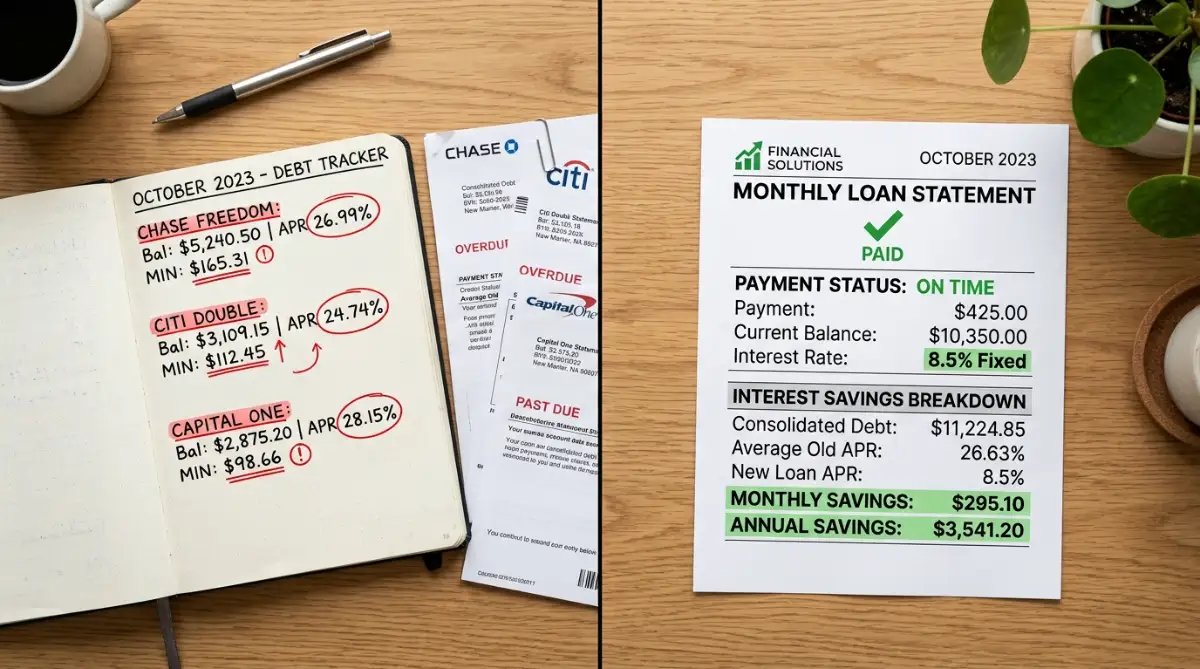
Let's look at a simple breakdown to understand how stretching the timeline actually steals your wealth over the long run.
As you can clearly see in the table, that "cheap" monthly payment actually costs you over two thousand dollars in extra fees by the time you finish paying it off. The goal of fixing your finances is to save money overall, not to make the bank richer while you stay in debt for a decade.
Which Consolidation Route Actually Fits Your Situation?
Before you sign any loan paperwork, look at how the common options compare side-by-side:
Shutting Down Old Accounts Too Quickly
When you finally pay off a credit card that has been causing you pain for years, your first instinct is usually to cancel it immediately. You want to close that account, cut up the plastic, and never deal with that specific bank ever again. While this sounds like a great emotional victory, it is a terrible move for your official credit score.
Your credit score is heavily based on something called your credit utilization ratio. This is just a fancy banking term that measures how much money you currently owe compared to how much credit you are allowed to use. When you close an old account, your total available credit drops instantly.
Even if your overall balances are getting smaller, losing that available credit limit makes it look like you are using a much larger percentage of your money. This sends a negative signal to future lenders.
Expert Insight: Instead of closing old and established accounts, just hide the physical cards in a drawer at home. You can keep the accounts active by paying one small subscription (like a $10 streaming service) every month and paying it off immediately. This protects your credit history length and keeps your score high.
Ignoring the Sneaky Hidden Fees
Another massive trap is completely ignoring the fine print before signing your name on the contract. Nothing in the banking world is ever truly free. When you apply for a new loan or a balance transfer card, there are usually several hidden costs waiting to surprise you.
Balance transfer fees are extremely common. Many credit card companies will gladly let you move your debt over to their zero-percent interest card. But they will quietly charge you a 3% to 5% fee on the total amount you move. If you are moving $15,000, that is an instant $750 fee added straight to your new balance on day one.
Then there are origination fees for personal loans. Some lenders will take a flat percentage right out of your loan amount before they even send the money to your bank account. You might ask for $10,000 to pay off your bills, but they only deposit $9,500. Suddenly, you are short on cash and still owe money to your original creditors.
Myth vs Reality
- The Myth: A 0% introductory rate means borrowing money is completely free for a year.
- The Reality: If you miss a single payment by just one day, many banks will instantly cancel the 0% promotion and hit you with a massive 25% penalty rate on your entire balance. You always have to read the terms and conditions carefully.
Smart Money Moves for Long-Term Relief
Getting approved for a new loan is not the finish line of your financial journey. In reality, it is just the first day of your recovery process. You have simply bought yourself some extra time to fix the underlying issues.
To permanently change your financial health, you have to shift the way you think about your daily spending. When you move multiple balances into one single account, your brain plays a trick on you. It sees all those old, empty credit cards and suddenly tells you that you are completely debt-free.
Behavioral experts call this the "clean slate effect," and it is incredibly dangerous. You feel a sudden rush of relief, which often leads to immediate impulse shopping. To fight this mental trick, you need to set up strong barriers between you and your money.
Pro-Level Daily Habits for Success:
- Freeze the plastic: The moment your old balances are cleared, physically remove those specific credit cards from your wallet. Put them in a ziplock bag, fill the bag with water, and toss it in your freezer. If you want to buy something online, you will have to wait for the ice to melt, giving you hours to rethink the purchase.
- Rethink your windfalls: Whenever you get a tax refund, a work bonus, or birthday money, do not spend it on a vacation. Send 100% of that extra cash straight to your new loan principal.
- Keep learning: Financial education is a lifelong journey. You can regularly review the Federal Reserve's educational resources on consumer credit to better understand how interest rates truly impact your daily life.
You also have to remember that a single monthly payment only works if you aggressively attack the total balance. Paying just the minimum amount required by the bank is a guaranteed way to stay trapped for the next decade. If you want to speed up the process, you should learn how to destroy high-interest credit card debt fast by using the snowball or avalanche method alongside your new loan.
Building wealth is not about how much money you make at your job. It is entirely about how much of your paycheck you actually get to keep at the end of the month.

The Hidden Danger Zones That Will Keep You Trapped
If you are not extremely careful during this transition phase, you can accidentally turn a moderate financial headache into a total nightmare. Let's look at the most dangerous traps people fall into when trying to merge their balances.
Trading Unsecured Debt for Secured Debt
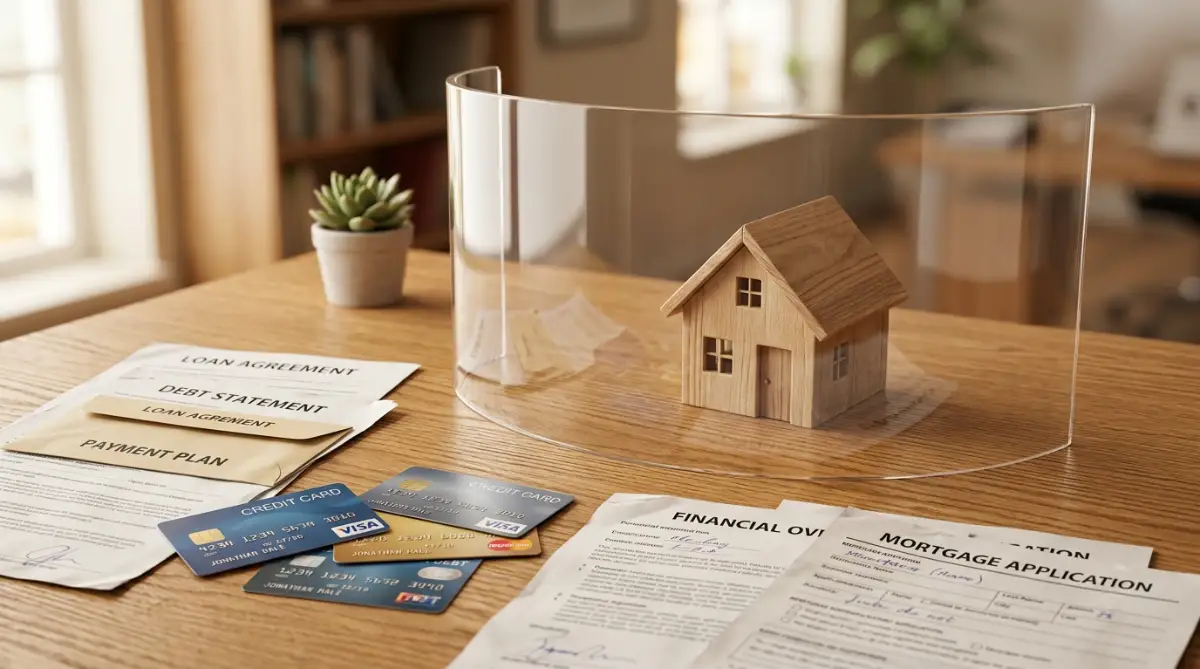
This is perhaps the scariest mistake anyone can make. Credit cards and medical bills are considered "unsecured" debts. This means that if you lose your job and cannot pay your bills, the bank cannot come to your house and take your physical belongings away. They can damage your credit score, but you will still have a roof over your head.
Some lenders will try to talk you into using a Home Equity Line of Credit (HELOC) to pay off your credit cards. They do this because the interest rate on a home loan is usually much lower than a personal loan.
However, you are now putting your actual family home on the line. If another financial emergency strikes and you cannot make that new payment, the bank legally has the right to take your house. You should never risk your family's shelter just to pay off a few pieces of plastic.
Falling for "Debt Settlement" Disguises
Many people search the internet for loan options and accidentally click on aggressive marketing ads for debt settlement companies. These companies sound amazing on the phone. They will promise to magically cut your total owed amount in half within a few weeks.
They are not actually offering you a loan. Instead, they tell you to completely stop paying your banks. They want you to put your monthly payments into a special savings account they control. Their strategy is to let your accounts go into default so they can negotiate a lower payoff amount later.
If you follow this terrible advice, your credit rating will absolutely plummet. You will face aggressive collection calls, massive late fees, and you might even get sued by your original bank. Always review the Consumer Financial Protection Bureau's official warning on debt settlement companies before you sign a contract with a third-party service.
Missing the New Mega-Payment
When you combine everything into one massive loan, your new monthly bill might be larger than any single credit card payment you had before. Even though the overall total is smaller, this single payment takes a big chunk of your paycheck all at once.
If you lose track of your due date, the penalty is severe. Missing a payment on a massive loan will trigger heavy late fees and put a huge red mark on your credit report. Some lenders will even cancel your low promotional interest rate entirely. If you ever find yourself short on cash for the month, you must know how to handle a missed personal loan payment properly by communicating directly with your lender ahead of time.
The 3-Step Safety Filter Before You Sign Any Loan
To make sure your new loan helps you instead of hurting you, run it through this quick checklist:
- The 1% Rate Rule: The new loan's interest rate must be at least 4% to 5% lower than your current average credit card rate to justify any upfront origination fees.
- The Calendar Check: Never pick a repayment term longer than 36 to 48 months unless your monthly cash flow is at immediate risk.
- The Auto-Pay Shield: Set up automated payments for 3 days after your primary payday so you never trigger a late fee or cancel a promotional interest rate.
Your Master Action Plan for a Stress-Free Future
Cleaning up years of messy financial habits takes a lot of courage and extreme honesty. You have to sit down, look at the scary numbers, and admit that your current system is broken. But the good news is that you have the absolute power to change your story today.
You just need a clear, actionable game plan that protects your hard-earned income.
Your Next Steps to Take Today:
- Step 1: Calculate the Real Math. Write down every single balance, interest rate, and minimum payment you currently have. Compare this exact total to any new loan offer you receive. If the new loan does not save you money on interest, walk away immediately.
- Step 2: Read the Fine Print. Search the loan contract for hidden balance transfer fees, origination charges, and early payoff penalties. A trustworthy lender will never hide these costs from you.
- Step 3: Consult the Experts. If the math feels entirely overwhelming, do not guess. Reach out to a certified, non-profit credit counselor. You can find completely free, unbiased guidance through university resources like Michigan State University Extension's guide on financial management, which offers excellent tools for family budgeting.
- Step 4: Build a Safety Net. Your new payment plan will fail if you do not have cash set aside for unexpected repairs. You must prioritize learning how to build an emergency fund from scratch so you never have to rely on a credit card again.
I remember the exact morning I made my final payment and watched my massive loan balance drop to zero. The feeling of absolute freedom was worth every single sacrifice, skipped vacation, and packed lunch. Start taking these small, disciplined steps today, and I promise you will soon experience that exact same peace of mind.
Frequently Asked Questions About Merging Balances
Does getting a new loan hurt my credit score?
Yes, it usually causes a small, temporary drop at first. When a lender checks your background to approve the application, it creates a "hard inquiry" on your file. However, as long as you make every single new payment on time, your score will quickly bounce back and grow even stronger.
Should I close my old bank accounts once they hit zero?
You should almost never close your oldest accounts, even when they are empty. Closing an old account instantly wipes out years of good history and shrinks your total available credit limit. Instead of closing them, just cut up the physical cards or lock them in a safe place so you cannot use them.
Can I use the extra borrowed money for a vacation?
You should absolutely never do this. Borrowing extra cash for fun activities completely destroys the purpose of trying to lower your financial burden. Every single dollar you borrow from a lender must go directly toward clearing your high-interest balances.
What if I get denied for a low-interest personal loan?
If you get denied, it usually means your credit history is currently too damaged or your total balances are too high compared to your income. Do not panic and apply for five more loans, as this will drop your score further. Focus on paying down your smallest balance first, keep paying everything on time, and try applying again in six months.
Disclaimer: The information provided in this article is strictly for educational and informational purposes and should not be considered professional financial advice. Always consult with a certified financial planner or a trusted financial advisor before making any major decisions regarding loans, credit agreements, or debt management.