
A dirty solar panel isn't just an eyesore. It's an invisible leak draining your wallet every sunny afternoon.
Scrubbing tempered glass with the wrong tool or harsh tap water can strip factory anti-reflective layers or trigger thermal shock fractures. That turns a $30 DIY chore into a voided warranty and a four-figure replacement bill.
Here's how to safely restore peak kilowatt production from the ground without scratching a single cell.
Quick Summary:
- Skip midday washing: Cold water on sun-baked solar glass causes instant thermal shock fractures. Wash exclusively at sunrise or dusk.
- Ditch tap water & dish soap: Hard minerals leave permanent calcified scale, while regular soap leaves a sticky film that attracts twice as much dust.
- Zero pressure washers: Motorized high pressure breaches waterproof silicon edge seals and shorts internal busbars instantly.
- Use low-TDS deionized water: A soft telescoping brush paired with pure deionized water dries spot-free with zero physical scraping needed.
The Hidden Stress of Owning a Rooftop Power Plant
I still remember standing in my driveway, staring up at my roof with a sinking feeling in my stomach. A thick, ugly layer of brown dust and bird droppings had completely covered my expensive solar panels. My energy bill had slowly been creeping up over the past few months, and I knew exactly why my system was underperforming.
But the thought of climbing up there and accidentally scratching the glass terrified me. I was so worried about making a costly mistake that would completely ruin my heavy investment. The last thing I wanted was to void my manufacturer warranty just because I used the wrong type of soap or equipment.
If you own a solar system, you probably understand this exact feeling of helplessness. We invest thousands of dollars to gain energy independence and reduce our monthly bills. We expect these shiny panels to sit on our roofs and quietly generate free electricity for decades.
But nobody warns you about the intense anxiety that comes when the dirt starts piling up. You watch your daily energy production drop on your mobile app, and you feel like you are losing money every single day.
You go online to find a quick solution, and you are immediately bombarded with conflicting advice. One person tells you to use a pressure washer, while another warns that high pressure will shatter the glass instantly. Some neighbors swear by heavy-duty detergents, while experts claim chemicals will strip the protective coating right off.
Decoding the Fine Print of Your Solar Agreement
Before you even think about grabbing a hose, we need to talk about the rules set by the people who built your system. Solar companies want your system to last, but they will not pay for damages caused by poor maintenance.
Most major manufacturers include very specific clauses in their warranty agreements regarding physical maintenance. If you use abrasive sponges, harsh chemical cleaners, or high-pressure water, you are instantly breaking their rules.
They use special anti-reflective coatings on the glass to help absorb as much sunlight as possible. If you scrub that coating away with a harsh brush, the panel will permanently lose its ability to generate maximum power. Once that coating is scratched or stripped, the manufacturer will simply cancel your coverage and leave you with a massive replacement bill.
Common Cleaning Myths vs Reality
To clear up the confusion, let us look at some of the most common misunderstandings homeowners have about washing their systems. I created a quick breakdown to show you what people think works versus what is actually safe.
Seeing these facts laid out really highlights how easy it is to make an accidental mistake. This is why following a safe, scientifically backed routine is your best defense against energy loss and broken equipment.
Planning Your Wash: Safety and Timing
You cannot simply wake up on a Saturday afternoon and decide to spray down your roof. The time of day you choose to wash your system is one of the most important factors for safety and success.
Glass expands when it gets hot and shrinks when it cools down. If your panels have been baking under the midday sun, they are incredibly hot to the touch. Spraying cold water from your garden hose onto hot glass causes a rapid temperature change known as thermal shock.
This thermal shock can cause the glass to crack, shatter, or completely spider-web across the entire surface. To prevent this disaster, you must only wash your system early in the morning or late in the evening. Morning is usually the best time because the overnight dew has already started to loosen the stubborn dirt.
Prioritizing Your Personal Safety
No amount of saved electricity is worth risking a terrible fall from your roof. If you have a steep roof or a two-story home, you must prioritize your physical safety above everything else.
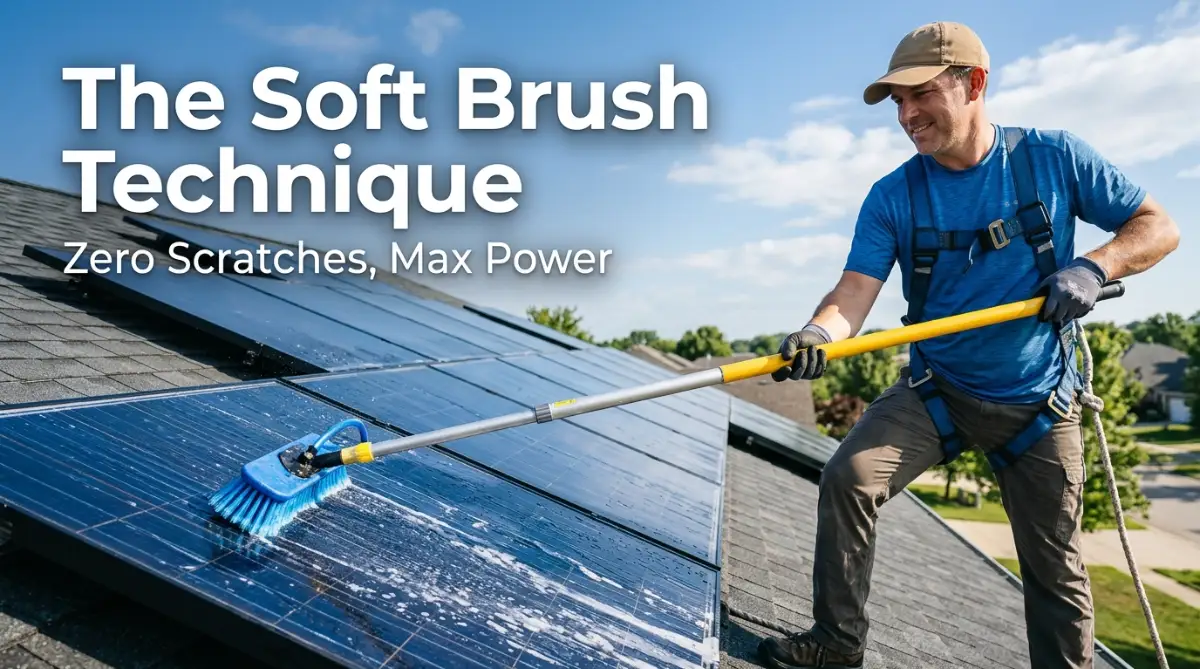
Whenever possible, try to manage the job from the ground using tools with long extension poles. If you absolutely must use a ladder, ensure it is properly secured on flat, solid ground.
Wear shoes with excellent grip, and never step directly onto the solar glass under any circumstances. The surface becomes incredibly slippery the moment water and soap are applied. If you feel dizzy, unsteady, or uncomfortable at any point, climb down immediately and consider hiring a certified professional.
Building Your Damage-Free Cleaning Kit
The secret to a perfect, warranty-safe wash lies entirely in the tools you choose to use. You do not need expensive commercial machines, but you do need items designed specifically for delicate surfaces.
First, you need a high-quality water source, ideally something that will not leave hard mineral deposits behind. Second, you need a highly soft, non-abrasive brush attached to a long, sturdy telescoping pole.
Avoid anything that feels rough to the touch, like kitchen scrubbers, steel wool, or hard plastic bristles. Think of your solar panel glass like the paint on a luxury sports car; you would never scrub a sports car with a hard broom.
I once made the terrible mistake of using hard tap water from my garden hose to rinse my panels on a sunny afternoon. The water dried quickly, leaving behind stubborn mineral spots that actually blocked more sunlight than the original dust. Now, I always attach an inline water filter to my hose, and it makes an unbelievable difference.
The Magic of Deionized Water
If you want to achieve professional results at home, deionized water is your greatest weapon. Tap water is naturally filled with microscopic minerals like calcium and magnesium.
When tap water evaporates on your solar panels, those minerals are left behind as ugly white streaks. These hard water spots create tiny shadows over the solar cells, blocking the sun and reducing your energy output.
Deionized water goes through a special filtration process that removes all of these heavy minerals completely. Because it contains no minerals, it acts like a magnet, pulling dirt off the glass and drying completely spot-free. You can buy portable water deionizer tanks online and easily attach them directly to your standard garden hose.
Before mixing anything into your wash bucket, verify how everyday household liquids interact with specialized solar glass: