
The Hidden Trap of Having No Credit (And How I Finally Escaped)
Getting turned down for an apartment or an auto loan just because you have zero credit history feels like hitting a brick wall. When I started out, I paid for everything in cash and thought I was doing everything right—until my first application got rejected in seconds. The good news? You do not need years of debt to build a solid score. With one simple card backed by your own small deposit, you can teach the credit bureaus to trust you within months.
My complete lack of a financial history suddenly felt like a massive brick wall blocking my future. It was incredibly frustrating to realize that trying to be overly careful with my money actually ruined my chances of getting ahead.
Have you ever felt that silent judgment when a landlord asks for a credit check? I know exactly how embarrassing that can be. Millions of hardworking people face this exact same roadblock every single day. You try to rent a nice apartment, set up your basic home utilities, or buy a car to get to work, and the door slams shut.
The system feels completely backward. You need good credit to get approved for a card, but you need a card to build good credit. It is a frustrating catch-22 that leaves ordinary people feeling stuck in a never-ending loop of financial rejection.
But you do not have to stay trapped in this cycle. There is a very logical, straightforward way to break through this wall, and it starts with understanding a specific financial tool designed entirely for this situation.

Quick Summary: What You Need to Know Before Applying
- Your deposit is your limit: Putting down $200 gives you a $200 credit line. You get this money back when you upgrade or close the account in good standing.
- The 10% rule is critical: Never spend more than $30 on a $300 limit. Low balances trigger fast score increases.
- Automate a single bill: Put one cheap monthly subscription (like music or video streaming) on the card, set autopay to 100%, and put the plastic card away.
- Graduation takes 6 to 12 months: Consistent on-time payments will prompt your bank to return your cash and upgrade you to an unsecured line automatically.
Breaking the Cycle: The Mechanics of Secured Credit Cards
When you are locked out of the traditional banking system, a secured credit card acts as your golden key. Unlike standard cards that rely purely on your past borrowing history and a high trust level, this specific tool uses a much safer approach for the bank.
To put it simply, a secured credit card requires you to put down a refundable cash deposit upfront. This deposit usually dictates your spending limit. For example, if you place a $300 deposit into the locked account, your credit limit becomes $300.
Think of this deposit as financial training wheels. If you rent a bicycle from a shop, the owner might ask for a security deposit just in case you damage the bike or fail to return it. If you return the bike in perfect condition, you get your money back. A secured credit card works on the exact same logic. You are using your own money to prove to the banks that you can be trusted to borrow theirs in the future.
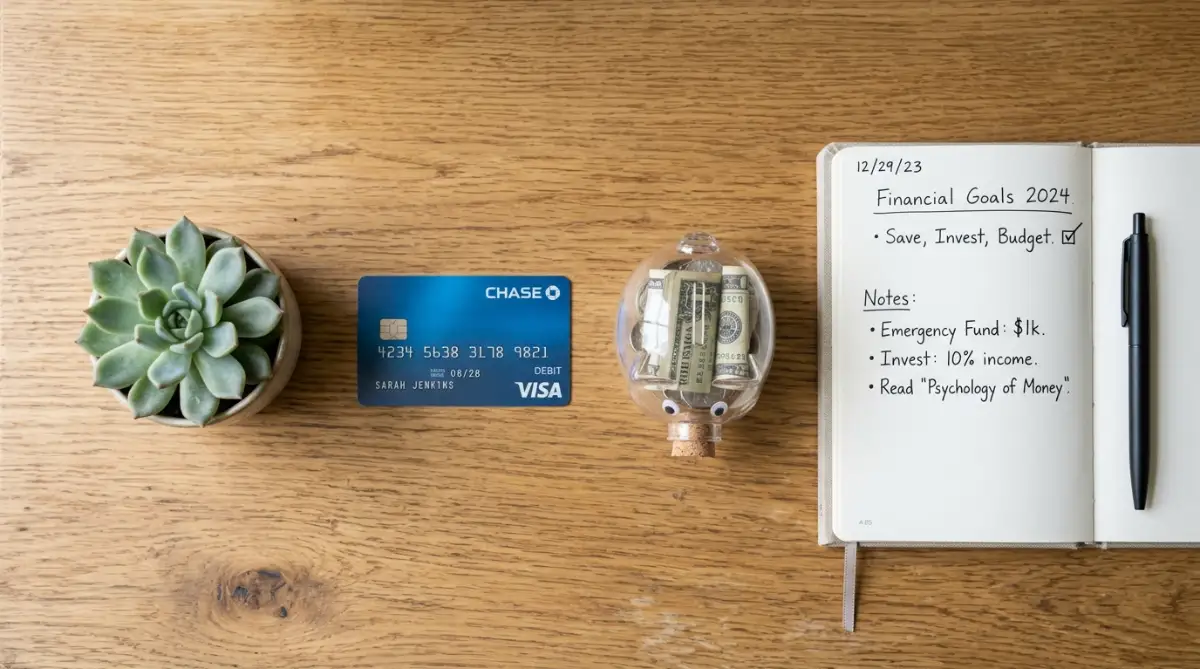
How Credit Bureaus Read Your Daily Habits
To really make this tool work for you, we need to look at the science of how credit scoring models actually function. The three major reporting bureaus do not care about how much money you make or how much cash you keep in your checking account. They only care about your behavioral data over time.
Every time your billing cycle ends, the card issuer sends a report to these bureaus. The mathematical models, like the FICO scoring system, weigh this information heavily. Payment history makes up a massive 35% of your total score. This means that simply paying your bill on time, every single month, sends a strong, positive signal to the algorithm.
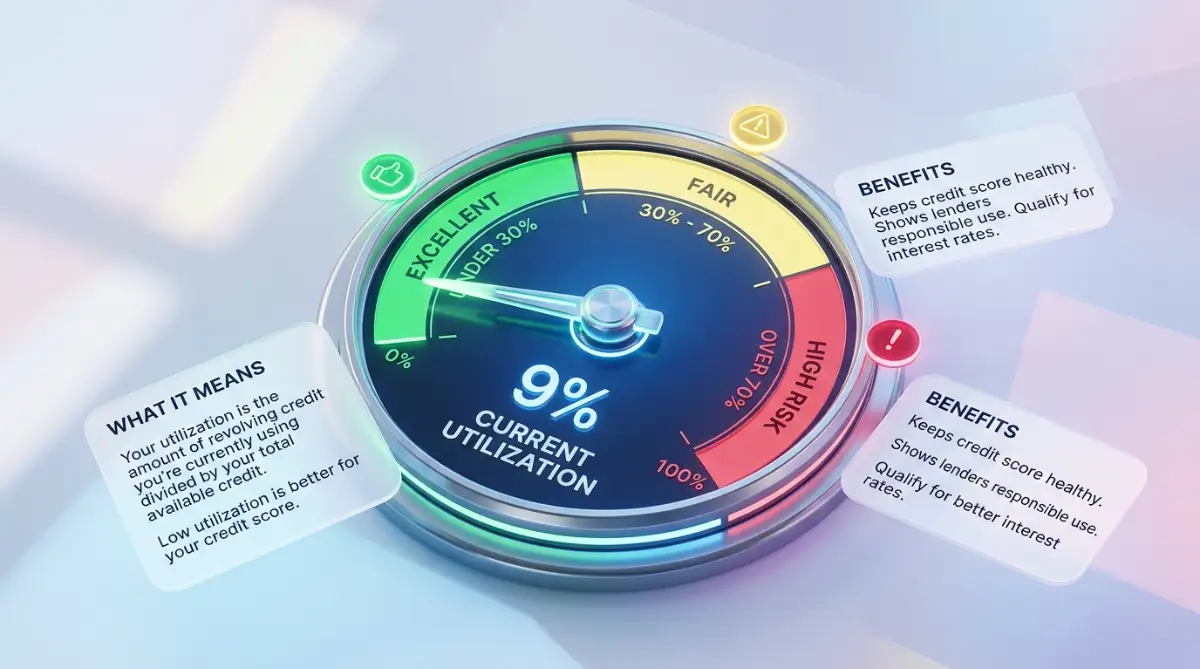
Another 30% of your score is determined by your credit utilization ratio. This is a simple math equation: how much money you owe divided by your total limit. If you have a $300 limit and you spend $290 of it, the algorithm sees you as a high-risk borrower who is desperate for cash. Keeping your balance extremely low proves that you are financially stable.
Here is a quick cheat sheet I use to keep my balance inside the sweet spot:
Always remember: just because your card allows a $300 balance does not mean you should ever swipe that much at once.
I used to think that carrying a small balance from month to month helped my score, but that was a huge mistake. I realized that paying off the full amount every single month not only saves money on expensive interest charges but also shows lenders that I am fully capable of managing my spending without relying on debt.
Here is a quick breakdown of how these cards differ from what you might already be using:
The Power of Keeping Things Simple
One of the best strategies you can use is to treat this new card like a basic utility payment tool. Many experts suggest putting just one small, recurring subscription on the card.
You can attach it to your monthly streaming service or a cheap gym membership. Once you set that up, turn on automatic payments from your main checking account to pay the card off completely before the due date. Put the physical card in a drawer and leave it alone.
Want to understand exactly how the math works behind these systems? Check out this excellent breakdown of credit scoring.
By using this automated strategy, you are generating positive data every single month without the temptation of overspending. The credit bureaus see consistent, on-time payments and a very low utilization rate. This is exactly what the algorithms are programmed to reward.
Dispelling the Common Myths
There is a lot of bad advice floating around the internet about building a financial profile. Let us clear up some of the confusion right now.
- Myth: Applying for multiple secured cards at once will build my profile faster.
- Reality: Every application triggers a "hard inquiry" on your report. Too many of these will actually drop your score and make you look desperate to lenders. Stick to just one reliable card to start.
- Myth: I will lose my security deposit forever.
- Reality: Your deposit is entirely refundable. As long as you pay off your final balance and close the account properly, or successfully upgrade your account, you get every single penny back.
- Myth: Secured cards look bad on my credit report.
- Reality: In almost all cases, the reporting bureaus just see it as a standard revolving credit line. They do not hold a grudge against you for using a secured option. Positive payment history is what truly matters.
The Graduation Process: Moving Forward
The ultimate goal of using this tool is to eventually outgrow it. You do not want your cash locked up in a security deposit forever.
Many modern banks offer a graduation program. After a set period of time—usually between six months to a year of perfect payment behavior—they will review your account automatically. If you have proven your reliability, they will return your initial deposit and transition your account into a standard, unsecured credit line.
This transition is a major milestone. It means you have successfully proven your trustworthiness to the financial system. You now have access to better interest rates, higher spending limits, and the freedom to apply for the things you actually need, whether that is a reasonable car loan or a nice place to live.
Beyond the Basics: Expert Strategies for Long-Term Growth
Once you have your new account set up, the goal is not just to use it, but to master it. Many people assume that simply swiping the plastic and paying the bill eventually leads to a perfect financial profile. While that is a good start, there are specific, lesser-known strategies that can speed up your progress significantly.
The biggest secret revolves around understanding two very different dates on your monthly statement. Every account has a statement closing date and a payment due date.
Most beginners only look at the payment due date. However, the statement closing date is actually the exact day your bank takes a "snapshot" of your balance and sends that information to the reporting bureaus. If you wait until your due date to pay off your balance, the bank has already reported that you owe them money.
To completely outsmart the system, you should practice the early payoff method. Pay your balance down to almost zero a few days before the statement closing date.
Leave a tiny balance—something like two or three dollars—so the bank reports that you are actively using the account. Then, pay off that remaining couple of dollars before your actual due date to avoid any interest charges. Official educational resources from the Consumer Financial Protection Bureau strongly emphasize that maintaining an exceptionally low balance is one of the safest ways to prove your reliability to lenders.
Quick Reality Check: The Two-Date Rule
- Statement Date (The Snapshot): This is the day the bank reports your balance to Experian, TransUnion, and Equifax. Keep your balance under 5% on this exact day.
- Payment Due Date (The Deadline): This is simply the final day to pay off your bill before late fees hit. If you already cleared your balance before the statement date, your due date balance will simply show $0, meaning zero interest owed.
This exact strategy is a powerful tool for safely fixing a damaged credit score without falling for scams. By controlling what the bureaus see, you take full command of your financial reputation.
Another pro-level habit is treating your new limit like cash. Never swipe for a purchase unless you already have the exact amount of money sitting in your checking account, ready to transfer. This completely removes the risk of accidental debt.

The Hidden Traps That Keep You Stuck
Even with the best intentions, it is incredibly easy to make a simple mistake that resets all your hard work. The journey to financial freedom is filled with invisible potholes, and hitting just one can be deeply discouraging.
I remember a close friend who finally saved up a $500 deposit for her first secured account. She was so excited that she immediately used the card to buy $450 worth of groceries and gas. She planned to pay it all off at the end of the month.
She did not realize that maxing out the card instantly spiked her credit utilization to 90%. When the reporting bureaus saw that snapshot, her score actually dropped by several points. She felt completely defeated, thinking the whole system was rigged against her. This is why keeping your spending well below 10% of your total limit is non-negotiable.
Another massive pitfall is the temptation to carry a balance. Some people mistakenly believe that banks want to see you paying interest to prove you are a profitable customer. That is a dangerous myth.
According to FICO's official scoring guidelines, carrying debt from month to month does absolutely nothing to help your score. In fact, it just traps you in a cycle of paying expensive fees. If you ever find yourself struggling with balances, you need to look into proven ways to destroy high-interest credit card debt before it ruins your progress.
A Quick Checklist of Do's and Don'ts:
- Do set up automatic payments for at least the minimum amount, ensuring you never accidentally miss a due date.
- Do monitor your monthly statements for any weird charges or hidden maintenance fees.
- Don't close the account out of frustration. Account age matters heavily. If you get tired of the card, just lock it in a drawer and leave it open.
- Don't apply for a car loan or an apartment lease while you are actively in the middle of rebuilding your history. Wait for the graduation upgrade first.
Missing a payment by just a single day can result in hefty late fees, but missing it by 30 days will severely damage your record for up to seven years. The emotional stress of seeing a 30-day late mark on your fresh report is heavy. Protect your payment history like it is your most valuable asset.
Your Financial Roadmap for Tomorrow
You no longer have to sit back and accept rejection letters from banks and landlords. You now understand the exact mechanics of how to build trust with financial institutions using your own money as a safety net.
The path forward is not about making complicated investments or earning a massive salary. It is entirely about patience, extreme consistency, and mastering your daily habits. By keeping your balances incredibly low and never missing a payment, you force the algorithms to work in your favor.
Here is your immediate action plan to get started:
- Review Your Baseline: Pull a free copy of your current report just to see exactly where you stand right now.
- Save the Deposit: Put aside a small amount from your next two paychecks until you have $200 or $300 saved specifically for your security deposit.
- Choose Wisely: Look for a secured product with absolutely no annual fees and a clear, written path to graduation.
- Automate Everything: The moment your physical card arrives in the mail, attach one small subscription to it and set your bank account to auto-pay the full statement balance every single month.
I still keep my very first upgraded card active today, sitting quietly in my wallet. It serves as a constant reminder of how far my financial journey has come from those days of constant rejection, and I know you have the exact same power to rewrite your story starting right now.
High-Converting Answers to Your Most Pressing Questions
Will my security deposit earn interest while the bank holds it?
It depends entirely on the bank you choose. Some institutions place your security deposit into a high-yield savings account or a Certificate of Deposit (CD), meaning you will actually earn a few dollars in interest over time. However, many basic cards do not offer this feature, so always read the fine print before applying.
Can I add more money later to increase my spending limit?
Yes, most major issuers allow you to send in additional funds after your account is officially open. Adding another $200 to your deposit will directly increase your spending power by $200. This is a smart move because a higher overall limit makes it much easier to keep your utilization ratio low.
How long does it actually take to see a score increase?
Patience is required here. Financial institutions usually report your new account activity within 30 to 45 days after your approval. According to Federal Reserve consumer guides, consistent, positive behavior usually starts showing a noticeable impact on your score within three to six months of regular use.
What happens if my application for a secured card gets denied?
While approval rates are extremely high, denials can still happen if you have a recent bankruptcy, active tax liens, or an unresolved identity theft issue. If this happens, wait for the official letter explaining the exact reason, address that specific problem, and try looking into alternative options like a credit-builder loan through a local credit union.
Disclaimer: The information provided in this article is strictly for educational and informational purposes only and does not constitute professional financial or legal advice. Every individual's financial situation is unique. Please consult with a certified financial advisor or credit counselor before making major financial decisions or applying for new credit lines.