
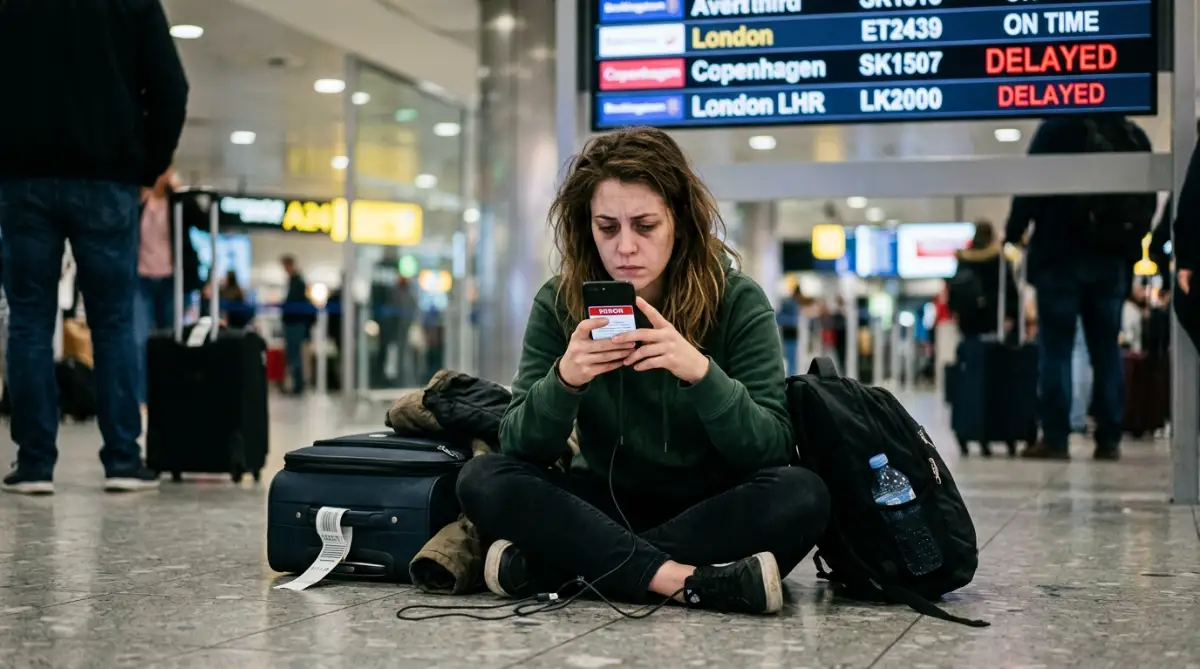
You found a flight deal that looks absolutely too good to pass up. You book it on a discount site and pat yourself on the back for beating the system.
Big mistake.
That massive "bargain" is likely a logistical time bomb. It's a setup waiting to strand you in a foreign terminal with a worthless ticket and no one to call for help.
The Cheap Fare Illusion and the Airport Reality Check
You spot a heavily discounted ticket online. It's an unbelievable deal that promises to save you hundreds of dollars on a multi-leg international trip.
The catch? It's offered by an online travel agency (OTA) you've barely heard of, or perhaps a massive third-party aggregator.
You click "book," feeling pretty smart about your massive savings. But what you don't realize is you've just walked directly into a massive logistical trap.
Saving fifty bucks feels great from the comfort of your living room couch. It feels entirely different when you're sprinting through an unfamiliar terminal, dragging a rolling suitcase, knowing your next plane is boarding in five minutes.
That's the exact moment you realize the cheap fare wasn't a deal at all. It was a liability.
Booking direct flights on third-party sites is usually fine. If a direct flight gets canceled, it's annoying, but the math is simple. You deal with one flight, one delay, and one destination.
But adding a layover into the mix changes the entire equation.
A connecting flight is a fragile chain of events. Every single element needs to go perfectly right for you to reach your final destination. If your first flight leaves ten minutes late, the entire chain breaks.
And when that chain breaks on a third-party ticket, nobody wants to help you fix it.
The Third-Party Connecting Flight Quick Summary
Short on time? Here's exactly why buying multi-leg tickets from random websites is a terrible idea for your stress levels and your wallet:
- The "Self-Transfer" Trap: Many cheap sites sell you two entirely separate tickets masked as one trip. If you miss the second flight, you're officially a no-show.
- The Baggage Nightmare: Airlines won't transfer your checked bags between unrelated carriers. You have to exit security, claim your bags, re-check them, and go through TSA all over again.
- The Blame Game Triangle: When things go wrong, the airline tells you to call the booking site. The booking site tells you to call the airline. You're left holding the bag.
- Zero Legal Protection: Unlike official global airline alliances, third-party "hacker fares" don't come with rebooking guarantees if the first leg is delayed by weather or mechanical issues.
The Hidden Math Behind "Hacker" Fares
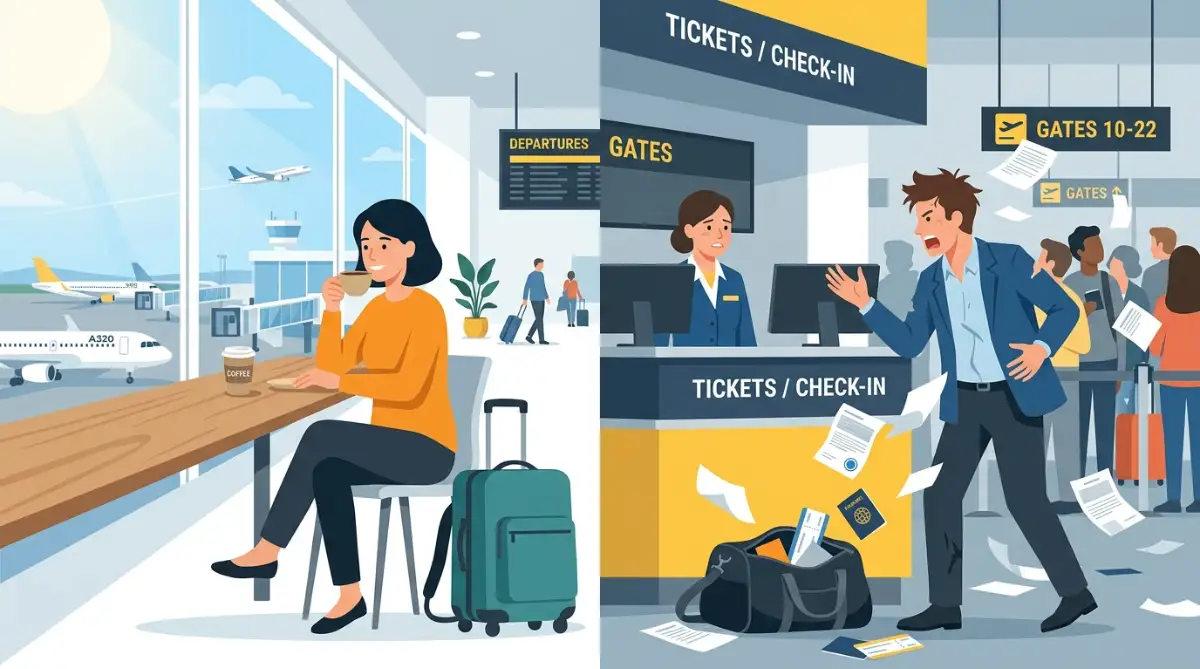
We see a direct booking costing $800, but an aggregator shows a weird combo route for just $450.
Your brain immediately focuses on the $350 savings.
What the booking site hides from you is the very real risk equation. If a 20-minute weather delay causes you to miss that second unrelated flight, you're forced to buy a brand-new, same-day ticket at the airport counter.
That walk-up fare usually runs upwards of $1,000.
You aren't buying a cheap flight. You're buying a highly volatile gamble where the house always wins.
The Mechanics of a "Ghost Connection"
To understand why this is such a bad idea, we need to look at how these massive booking engines actually make their money.
They use software to scrape thousands of flight databases, looking for routes that don't officially exist.
Let's say you're flying from New York to Rome. An airline like Delta might charge $800 for a guaranteed connection through Paris.
But a third-party site's algorithm realizes it can buy a cheap Spirit Airlines ticket from New York to London, and a completely unrelated easyJet ticket from London to Rome.
They bundle these two random tickets together and sell them to you for $550.
It looks like a normal connecting flight on your screen. If you're building a tight solo backpacking itinerary, you might assume this single booking confirmation guarantees your arrival.
It's completely fake.
The industry calls these "self-transfers" or "hacker fares." You're effectively taking two entirely separate vacations back-to-back, with zero safety net between them.
Think about it. Spirit Airlines doesn't care that you have an easyJet flight waiting in London. They don't even know it exists.
If your flight out of New York is delayed by three hours because of a thunderstorm, you're going to miss that second flight.
When you land in London, you can't just walk up to the easyJet desk and ask to be put on the next plane. You didn't miss a connection in their eyes. You just didn't show up for your flight.
Your ticket is void. Your money is gone.
You're now stuck at a random airport, suddenly needing to figure out how to survive a long airport layover while waiting for an expensive replacement flight. That usually costs three times more than the money you originally "saved."
| Feature | Booking Directly With Airline | Third-Party "Self-Transfer" Ticket |
| Baggage Handling | Automatically transferred to final stop. | You must collect and re-check bags manually. |
| Delay Protection | Airline rebooks you for free on the next flight. | You lose your ticket and must buy a new one. |
| Customer Support | Deal directly with the airline desk. | Stuck on hold with an overseas call center. |
| Security Clearance | Stay comfortably inside the secure terminal. | Must exit and go through long security lines again. |
Pro Tip: Always check the fine print on a third-party booking page before entering your credit card. If you see words like "Self-transfer," "Separate tickets," or "Re-check baggage," close the tab immediately. Go directly to the official airline website to book your trip.
The Ultimate Baggage Claim Disaster
Let's imagine the weather is perfect. Your first flight takes off exactly on time, and you land at your layover airport with two hours to spare.
You think you're safe. You're wrong.
If you booked a self-transfer ticket through a discount site and you brought a checked bag, you're about to experience an intense cardio workout.
Traditional airline connections are beautiful because of the automated baggage system. You drop your bag off in your home city, and it magically appears on the carousel at your final destination. Baggage handlers move it between the planes for you.
Third-party tickets don't work like this.
Because you're flying on two unrelated tickets, the first airline will only check your bag to the layover city.
When you land, you can't just walk to your next gate. You have to physically leave the secure area of the airport and walk out to the public baggage claim.
You stand there waiting for the carousel to start. That usually takes thirty minutes.
Once you finally grab your suitcase, you have to run upstairs to the departure hall, find the check-in desk for your second airline, and wait in a massive line to drop the bag off again.
Here's the problem. Most airlines strictly close their baggage drop exactly 45 to 60 minutes before departure.
If the check-in line is long, or the baggage carousel was slow, you'll miss that cutoff window.
The agent will look at you, shake their head, and tell you they can't take the bag.
You're now holding a heavy suitcase you can't take through security, and your plane is leaving in 45 minutes.
Even if you miraculously drop the bag off in time, you still have to go through the entire TSA security line again. You're taking off your shoes, taking out your laptop, and praying the line moves fast.
It's a manufactured nightmare.
Watch this quick breakdown on why self-transfers are a massive trap:
The Customer Service Blame Game
When a delay happens on a single itinerary booked directly with Delta, United, or British Airways, the fix is built into the system.
Their computer flags that you're going to miss your connection. Sometimes, they'll rebook you on the next flight before you even land. You walk up to the customer service desk, they scan your boarding pass, and they hand you a new one.
It's simple.
When you book through a random online travel agency, you enter the customer service void.
You walk up to the airline desk and explain your situation. The agent types away on their keyboard, frowns, and says, "I'm sorry, you didn't buy this ticket from us. You bought it from a travel agency. We can't touch this reservation in our system."
They tell you to call the agency.
You step out of line and dial the 1-800 number on your booking receipt.
You're greeted by a robotic voice, followed by an hour of terrible hold music. When a human finally answers, they're sitting in a call center halfway across the globe.
You explain you missed your flight because the first leg was delayed.
The phone agent calmly explains that it isn't their fault. They didn't fly the plane. They just sold you the ticket. They tell you to go talk to the airline.
You're trapped in a triangle of blame.
The airline refuses to help because you aren't technically their customer. The booking site refuses to help because they claim the airline is responsible for the delay.
Nobody wants to take responsibility. And while they argue over policies, planes are taking off without you.
Smart Booking Playbooks: How to Use Platforms Safely
Most travelers treat aggregators like a retail store. They see a price, click the button, and check out.
That's exactly where the trouble starts.
Instead, you need to treat these platforms like a search engine, not a cash register. Here's exactly how to handle the biggest booking platforms on the web today.
The Google Flights and Skyscanner Strategy
These tools are incredible for finding routes. They scrape everything and show you the cheapest days to fly.
Use them strictly for research.
When you find a great multi-leg route on Google Flights, look at the operating airline. Then, open a new tab, go directly to that specific airline's official website, and recreate the exact same search.
Buy the ticket there. It's that simple.
You get the exact same flight, but now your name is officially in the airline's direct database. If Federal Aviation Administration flight delay data shows a storm rolling in, the airline's system will automatically reroute you.
The Expedia and Booking.com Illusion
These massive online travel agencies often try to sell you their own "trip protection" on multi-leg flights.
Don't fall for it.
If you buy a ticket containing a flight with United and a connecting flight with Spirit, the OTA's protection plan is usually a nightmare to claim.
When you get stranded, they don't instantly book you on a new flight. They make you pay out of pocket for a new, ultra-expensive same-day fare. Then, they ask you to submit a massive stack of receipts for a "potential" refund weeks later.
They hold your money hostage.
Here's a quick reality check on what those aggregator sites actually promise versus what happens at the airport.
| The Third-Party Promise | The Airport Reality |
| "Seamless Trip Protection" instantly covers missed connections. | It doesn't. You pay out of pocket and wait months for a manual refund review. |
| The site coordinates everything with the operating airlines. | Gate agents literally can't access your third-party booking in their computer system. |
Direct Airline Booking (The Gold Standard)
Booking directly with the carrier means you own your reservation.
If a mechanical issue grounds your first plane, a direct booking legally requires the airline to fix the mess. They must put you on the next available flight, even if it belongs to a partner airline.
You just walk up to the desk, and they hand you a new boarding pass. No phone calls. No hold music. Zero stress.
Damage Control: The "Stranded Passenger" Playbook
Let's say you're reading this a bit too late. You already booked a cheap third-party connecting flight, and you just missed your second leg.
The airline desk just turned you away. The booking site hung up on you.
Panic sets in. Don't let it.
First, realize that fighting with the airport gate agent won't work. They literally don't have the software permissions to touch a third-party self-transfer ticket.
Instead, buy the cheapest onward ticket you can find to get home. If you're stuck for the night, read up on how to survive ultra-long layovers in unfamiliar airports to stay safe and comfortable.
Then, prepare to fight the charge with your credit card company.
The Dispute Email Template
If an online travel agency sold you a "guaranteed connection" but left you stranded, you need a paper trail to win a credit card chargeback.
Send this exact message to the OTA's support email to document their refusal to help.
Subject: URGENT: Stranded Passenger - Booking Reference [Insert #] Failure to Provide Service
Message:
"To [Booking Site Name] Support,
I purchased a connecting flight itinerary through your platform under booking reference [Insert #]. Due to a delay on the first leg, I missed the second flight.
Your customer service team has refused to rebook me, which contradicts the service I purchased. The operating airline has confirmed they cannot access this third-party ticket to assist me.
I am now stranded at [Airport Name]. I am purchasing a new ticket out of pocket for [Insert Price]. If you do not issue a full refund for the unused portion of my ticket and cover this immediate out-of-pocket expense within 48 hours, I will file a formal chargeback with my credit card issuer for 'Services Not Provided.'
I expect an immediate resolution."
| The Third-Party Booking Rules | Do This | Don't Do This |
| Finding Fares | Use aggregators to compare route prices. | Don't enter your credit card on the aggregator site. |
| Baggage Rules | Pack only a carry-on if you risk a self-transfer. | Never check a bag on two separate tickets. |
| Layovers | Leave at least 4 hours between self-transferred flights. | Don't trust a 90-minute connection on separate tickets. |
The Most Expensive Traps You'll Face
Beyond just missing a flight, third-party sites hide massive logistical landmines in their terms and conditions.
The biggest and most terrifying trap is the transit visa requirement.
When you book a normal connecting flight through a major hub like London Heathrow or Frankfurt, you stay inside the secure transit zone. You never officially enter the country.
Self-transfer tickets force you to leave that secure zone.
Because you have to collect and re-check your bags, you must pass through local passport control.
If you hold a passport that requires a visa for that specific country, immigration officers will deny you entry.
You can't get to your bags. You can't get to your next check-in desk. You are effectively trapped between borders.
The airline will legally be forced to deport you back to your starting city on the next flight.
Always check IATA's travel center requirements before booking any flight that looks like a self-transfer. If you need a visa just to grab your suitcase, that cheap ticket will turn into an absolute disaster.
Another massive trap involves your accommodations.
When your travel agency ticket implodes and you're delayed by two days, your hotel reservation at your destination starts ticking away.
If you don't show up for the first night, hotels automatically cancel the rest of your stay as a "no-show." Now you're stranded without a flight, and you need to scramble to modify your non-refundable hotel booking from an airport terminal floor.
It's a domino effect of financial loss. And the Department of Transportation's passenger rights offer very little protection when you mix and match different airlines on separate third-party receipts.
Your Immediate Action Plan
Open your favorite flight search engine and find the absolute best route for your upcoming trip.
Take a screenshot of the flight numbers, close that tab, and go type those exact flight numbers into the official airline's website. Pay the extra twenty bucks to book direct, secure your peace of mind, and completely eliminate the risk of a ghost connection.
Frequently Asked Questions
Is it actually cheaper to book flights on third-party sites?
Sometimes, yes. They offer "hacker fares" by combining completely separate tickets from competing airlines. However, if one flight is delayed, you lose the second ticket completely, making it incredibly expensive in the long run.
What happens if I miss my connecting flight on Expedia or a similar site?
If the ticket was a standard airline connection just purchased through the site, the airline will usually rebook you. But if the site sold you a "self-transfer" (two separate tickets), neither the airline nor the site will cover your new ticket out of pocket.
Can airlines help me if I booked through a travel agency?
Usually, they won't. Gate agents are restricted from modifying third-party reservations in their system. They will instruct you to call the agency you bought the ticket from, leaving you stuck on hold while your plane leaves.
Disclaimer: This guide is provided for educational and informational purposes only. Airline policies, baggage rules, and international transit visa requirements change frequently. Always verify specific terms, conditions, and entry requirements directly with your operating airline and relevant government embassies before finalizing any travel bookings.